Plant Features
- Size: About 60 × 60 cm (24 × 24 in)
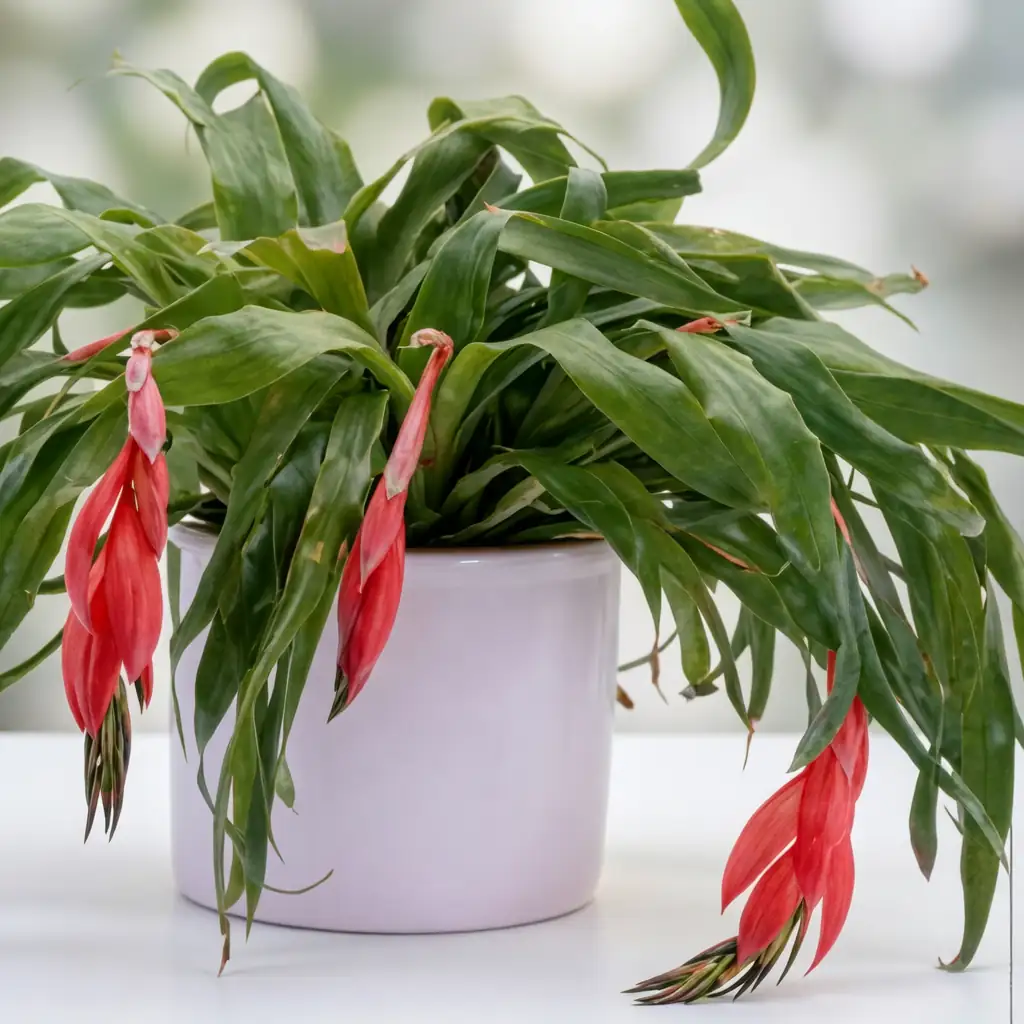
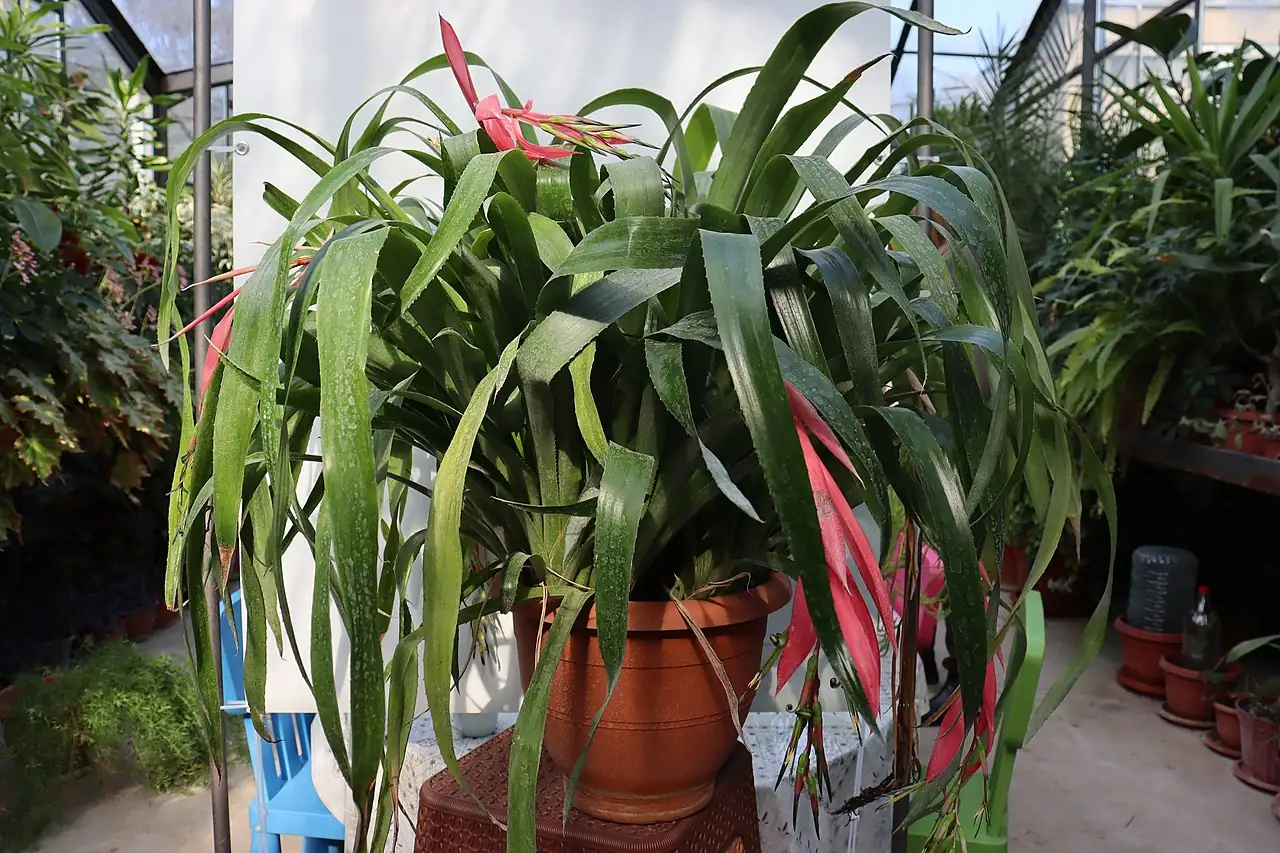
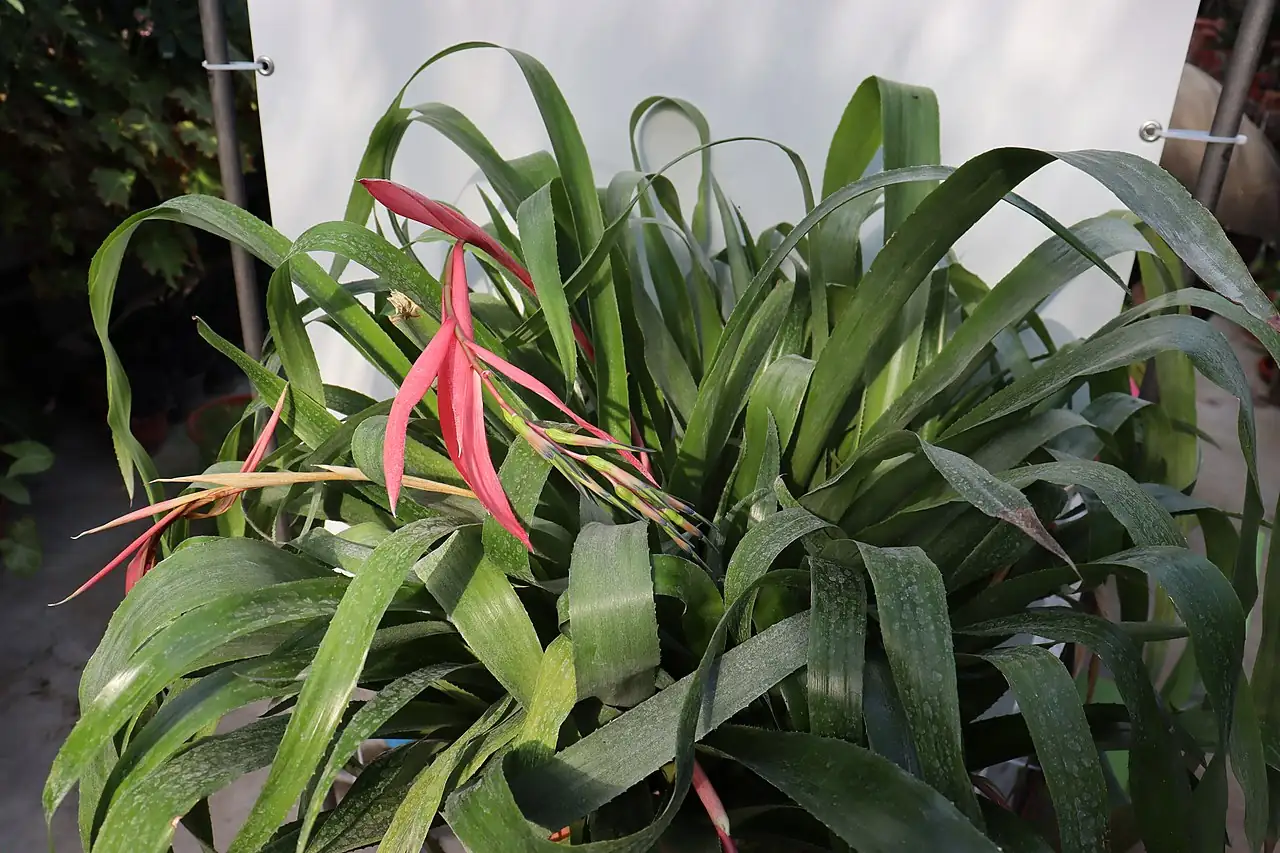
- Foliage: Fountain-forming clumps of narrow, strap-like, gray-green leaves arranged in a tight rosette/clump typical of many bromeliads.
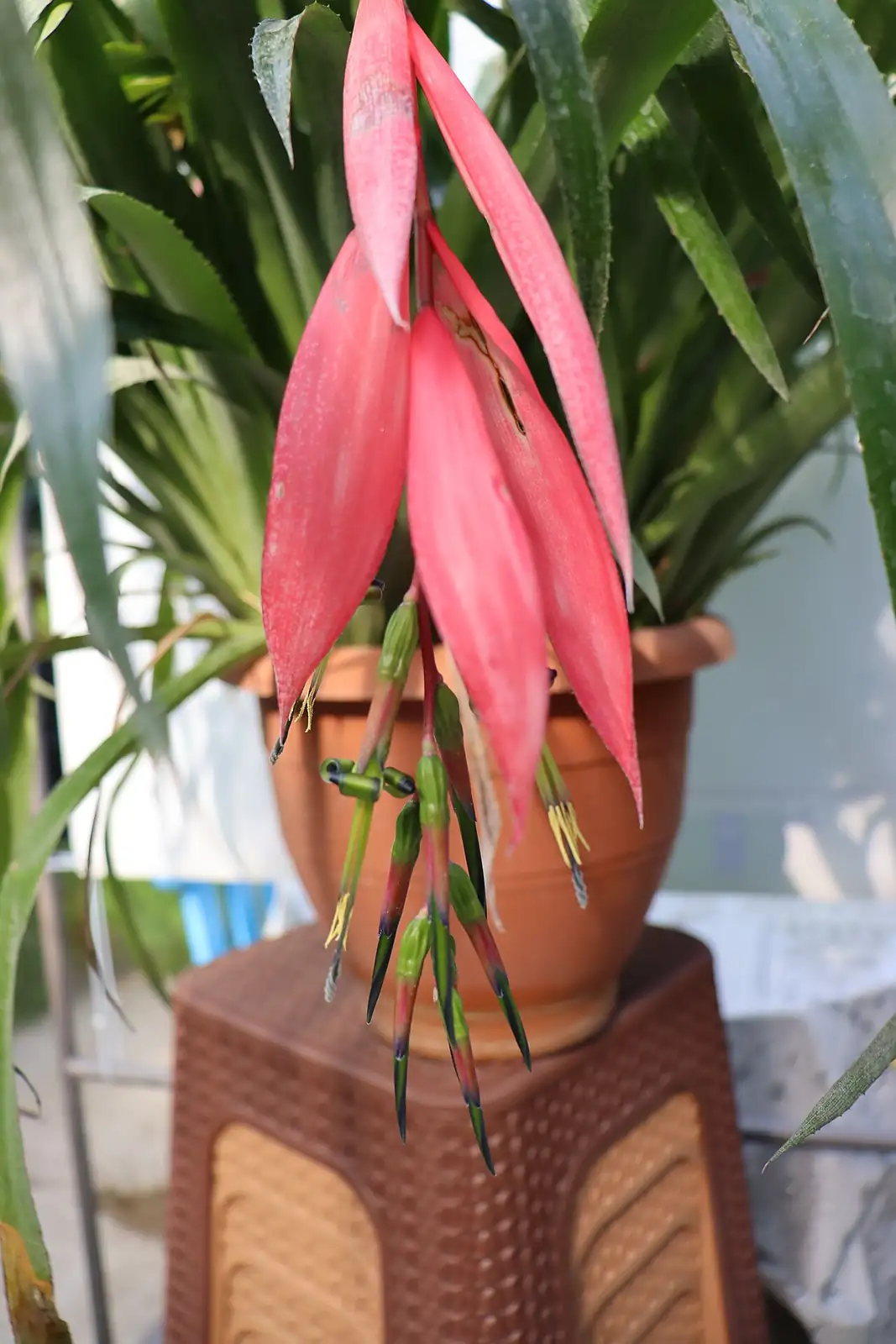
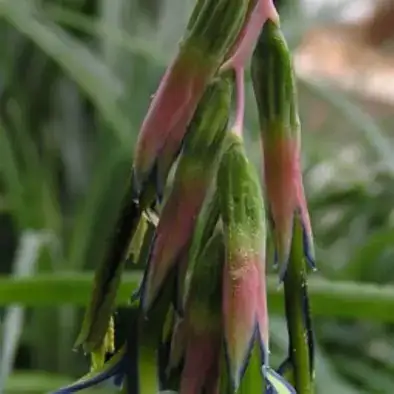
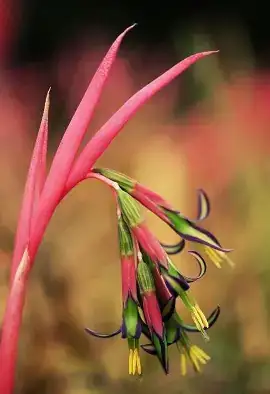
- Flower: Drooping flower spikes with rosy-pink bracts and small lavender to bluish flowers; the bracts provide most of the color and show.
- Flowering Season: Late spring to summer
- Growth Habit: Clump-forming bromeliad that produces offsets (“pups”) and arching, pendant flower stalks; especially attractive in hanging baskets where blooms can drape.
Environment
Sunlight
Bright, filtered/indirect light; tolerates partial shade but avoid harsh midday sun for best foliage and flowering.
Temperature
16–27°C (61–81°F); protect from cold drafts and frost.
Humidity
Prefers high humidity; appreciates regular misting or a naturally humid room (and extra pest vigilance if indoor air is very dry).
Soil
Very airy, fast-draining mix. A good recipe is equal parts orchid bark, perlite, and coconut coir, or a 1:1 blend of orchid bark and all-purpose potting mix. Typically grown in a 12.5–15 cm (5–6 in) pot.
Placement
Near a bright window with filtered light, on a tabletop, or in a hanging basket where flower stems can cascade.
Hardiness
USDA Zone 10–11; minimum about 10–16°C (50–60°F). Not frost tolerant.
Care Guide
Difficulty
Easy; generally forgiving when given bright indirect light, an airy mix, and decent humidity.
Buying Guide
Pick a plant with firm, unblemished leaves and a tight, healthy rosette/clump. Avoid mushy bases or sour-smelling potting mix—common signs of developing rot.
Watering
Keep the mix lightly moist, not soggy. Rainwater or distilled water is preferred. In winter, let the surface dry before watering again. In summer, mist daily; in winter, mist every few days.
Fertilization
Spring–summer: feed monthly with a balanced liquid fertilizer at 1/2 strength. Early spring: a small dose of sea salt (about 1 tsp) diluted in rain/distilled water is sometimes used to encourage flowering; use sparingly and avoid overdoing it.
Pruning
After flowering, cut the spent flower stalk off at the base. Only remove dead or damaged leaves—healthy leaves fuel the plant and future pups.
Propagation
Divide offsets (“pups”) once they reach about 1/3–1/2 the size of the parent. Pot pups into an airy bromeliad/orchid mix and keep them warm and humid until they root in.
Repotting
Use a 12.5–15 cm (5–6 in) container and a very airy mix. In early spring, move younger plants up one pot size if the clump is crowded; avoid overpotting (too large a pot stays wet longer).
📅 Seasonal Care Calendar
Winter: water after the surface dries; mist every few days. Summer: keep evenly/lightly moist and mist daily. Early spring: repot if crowded and (optionally) apply very diluted sea salt to support blooming. Spring–summer: fertilize monthly at half strength.
Pests, Diseases & Safety
Common Pests & Diseases
Can attract mealybugs, scale, and spider mites—especially in dry indoor air. Prevent crown/root rot by using a fast-draining mix and avoiding constantly wet soil; ensure good airflow and remove any decaying leaf litter.
Toxicity
Generally considered non-toxic to people and pets, though the sap may cause mild skin irritation in sensitive individuals.
Culture & Symbolism
Symbolism: A plant of friendship and easy hospitality—fittingly tied to its common nickname “Friendship Plant” and its habit of producing shareable pups.
History & Legends: Popular as a houseplant for decades because it’s adaptable indoors and quickly forms clumps that can be divided and gifted, helping it travel from windowsill to windowsill through friends.
Uses: Primarily ornamental, ideal for tabletops and hanging baskets; valued for its elegant, dangling blooms and clumping, fountain-like foliage.
FAQ
Why isn’t my hanging vase bromeliad blooming?
The most common cause is not enough light. Move it to brighter (still filtered) light, keep it warm (16–27°C / 61–81°F), and feed lightly in spring and summer. Using rain or distilled water can also help if your tap water is hard.
Should I keep water in the central cup?
It can hold a little clean water, but indoors many growers prefer focusing on lightly moist, airy potting mix plus misting to reduce rot risk. If you do keep water in the cup, refresh it often so it doesn’t stagnate.
Fun Facts
- It’s a natural clump-former, which makes it one of the easiest bromeliads to propagate simply by sharing offsets.
- The showiest “petals” are actually colorful bracts; the true flowers are the smaller lavender-blue blooms.