Plant Features
- Size: About 45 × 45 cm (18 × 18 in)
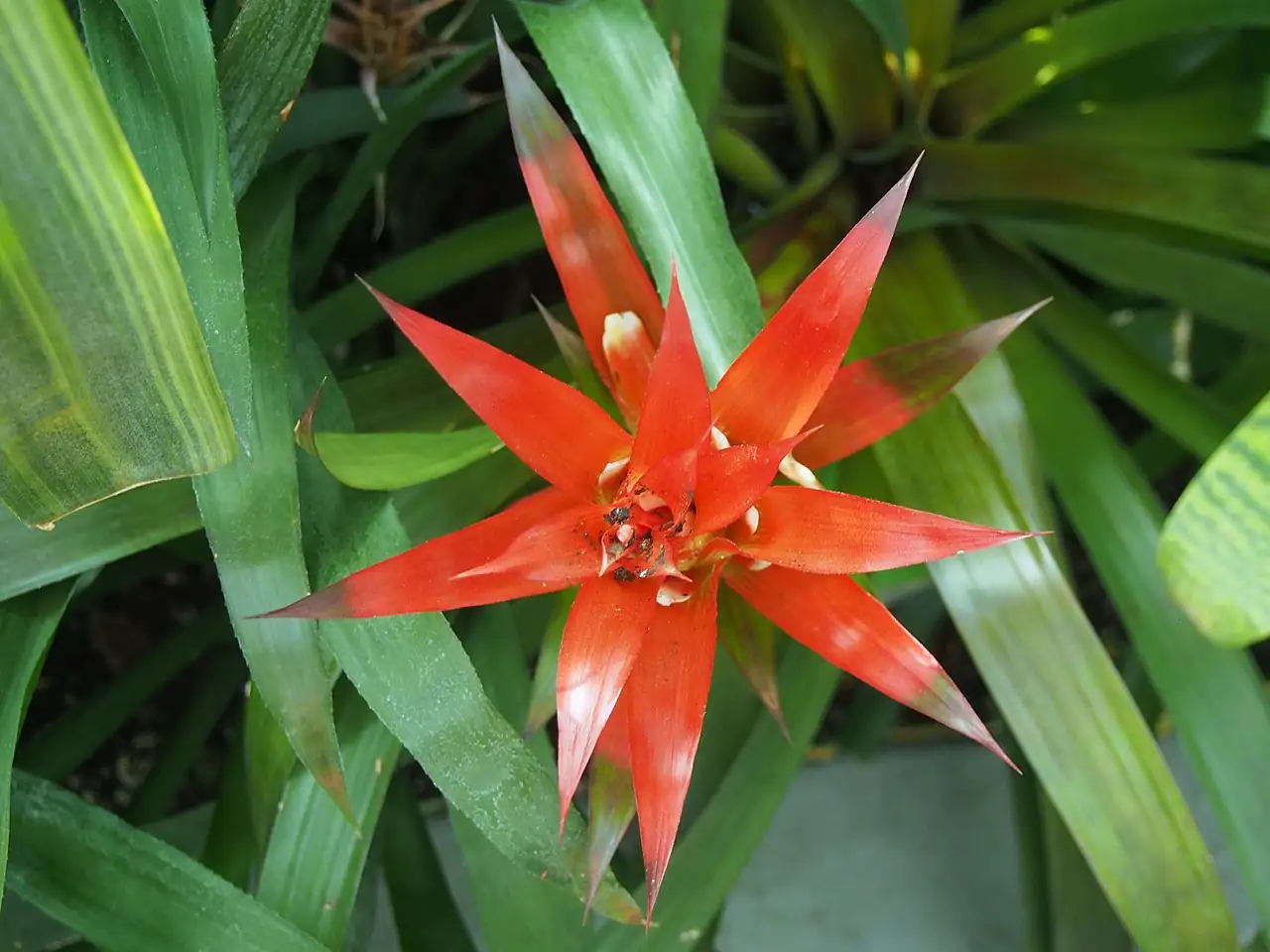
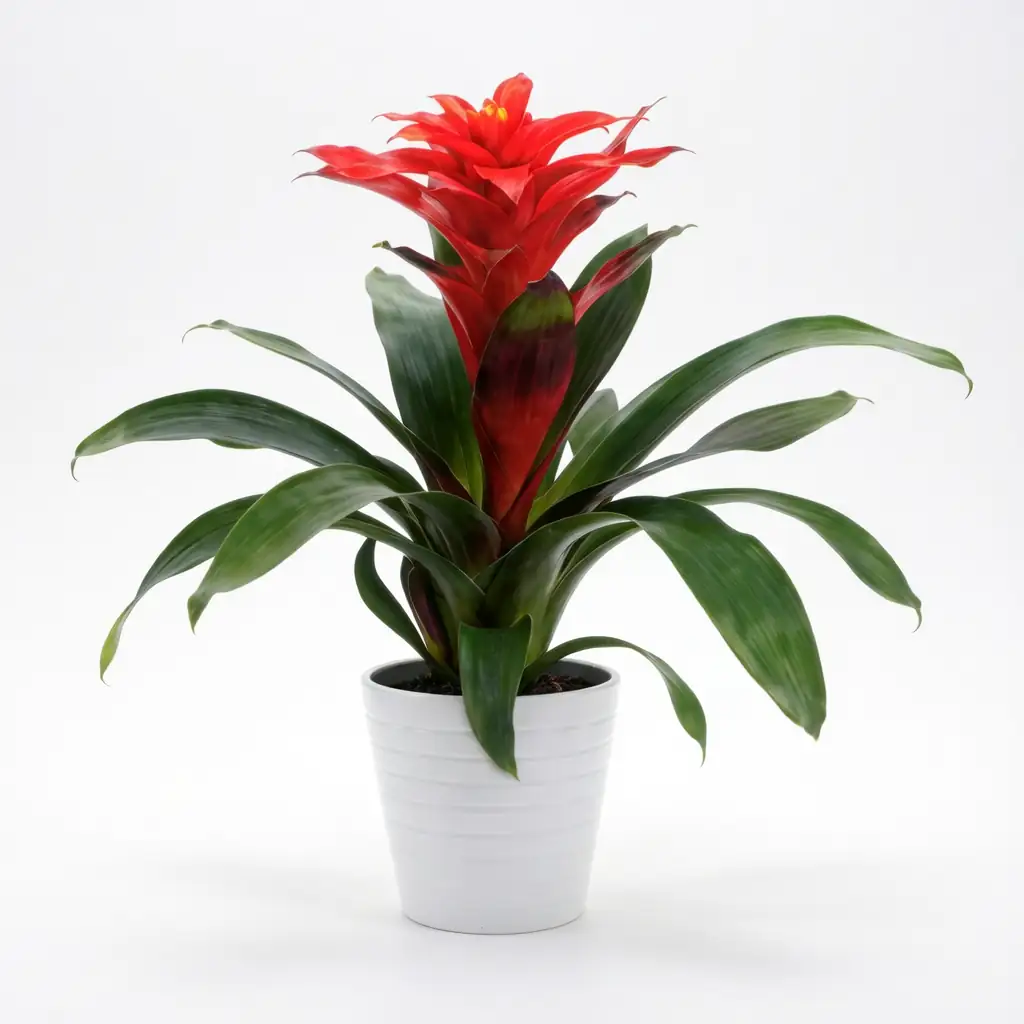
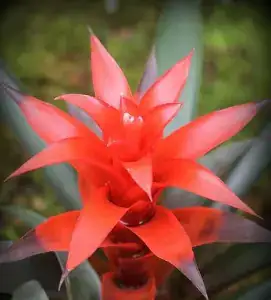
- Foliage: Glossy, strap-like green leaves arranged in a tight rosette that forms a central “cup” (tank).
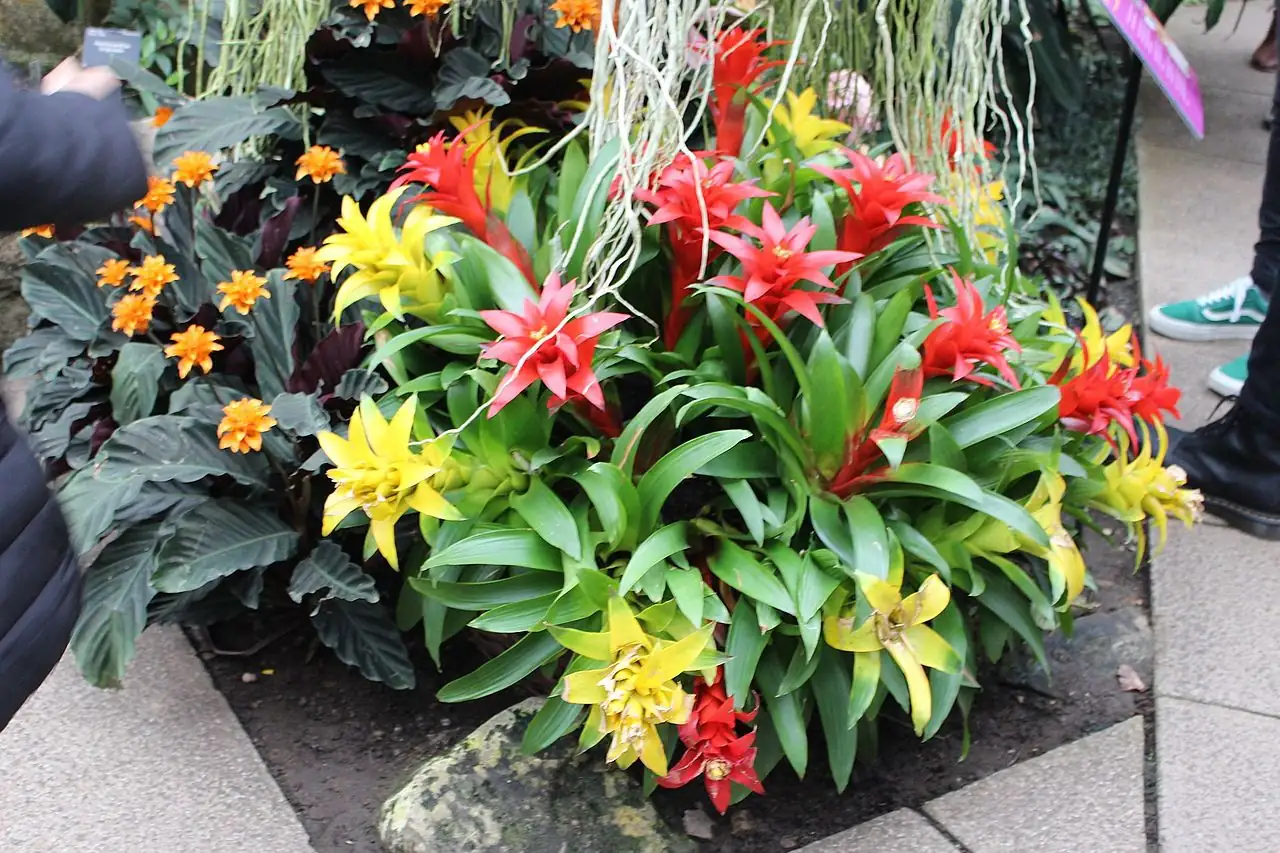
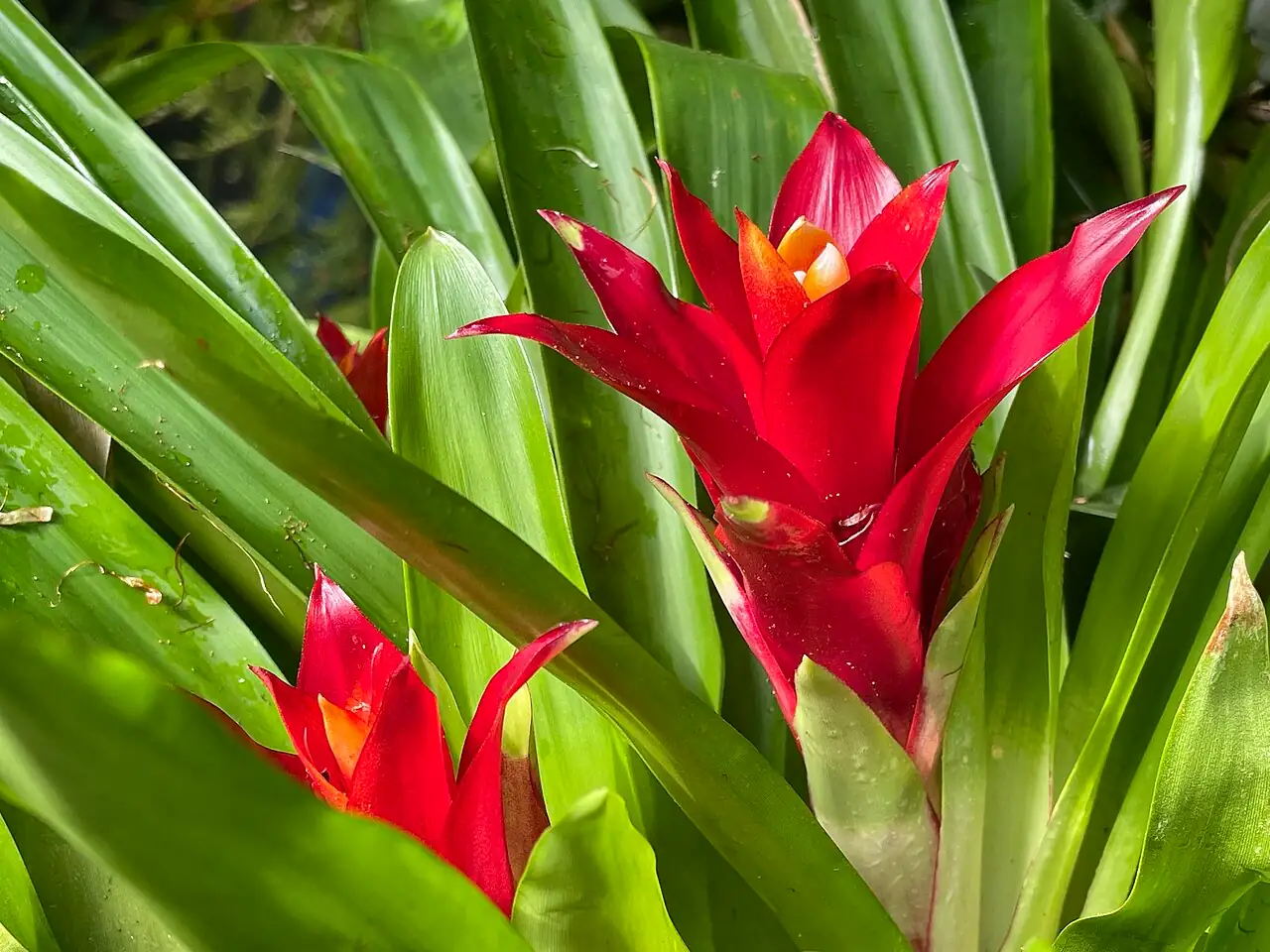
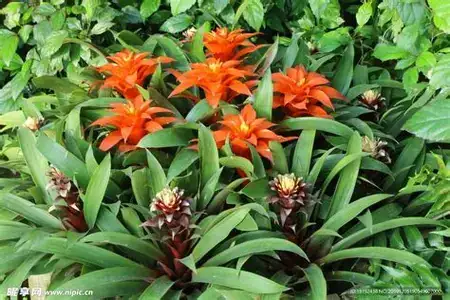
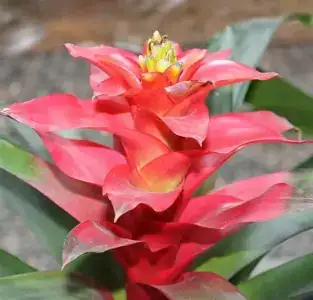
- Flower: A showy upright spike that looks like fireworks: long-lasting orange or red bracts with tiny white or yellow flowers nestled within.
- Flowering Season: Indoors: any time of year (often depends on maturity and growing conditions rather than a strict season).
- Growth Habit: Compact rosette; the flower spike emerges from the center of the leaf rosette.
Environment
Sunlight
Bright, filtered light or partial sun; avoid harsh midday direct sun.
Temperature
18–27°C (64–81°F); keep above 10°C (50°F) to avoid chilling stress.
Humidity
Prefers high humidity, ideally 50–70%+.
Soil
Airy, fast-draining bromeliad/orchid-style mix (e.g., equal parts orchid bark, perlite, and coconut coir; or 1:1 orchid mix and all-purpose potting mix).
Placement
Indoors in a 10–12.5 cm (4–5 in) pot; best near an east or bright north window, or set back from a sunny south/west window for bright indirect light.
Hardiness
Not frost-tolerant. Outdoors only in USDA Zones 10–12 (warm, frost-free conditions).
Care Guide
Difficulty
Moderate to difficult: does best with steady warmth, high humidity, and good water technique/quality. Keep the central cup clean and avoid hard tap water when possible.
Buying Guide
Choose plants with firm, glossy leaves and a clean-smelling center cup (no sour odor). Bracts should be brightly colored. Avoid plants with a mushy crown, blackened base, or heavy spotting.
Watering
Water when the potting mix feels dry to the touch, then water thoroughly and let excess drain. Keep the central cup lightly filled with clean rainwater or distilled water; top up about every 4–7 weeks and refresh sooner if it looks dirty. Mist leaves, bracts/flowers, and aerial roots daily with rain or distilled water—especially in dry indoor air.
Fertilization
About monthly during active growth: use a balanced liquid fertilizer diluted to 1/2 strength in the central cup; after 4–5 days, pour it out and refill with clean water. When not in bloom, you can foliar-feed by misting once a month at about 1/4 strength.
Pruning
After the display fades, remove spent bracts and cut off the flower stalk. Only trim dead or damaged leaves; avoid injuring the central crown.
Propagation
After flowering, the mother rosette slowly declines and produces offsets (“pups”). Separate pups when they reach about 1/3–1/2 the parent’s size and have their own roots, then pot them into a very airy bromeliad mix.
Repotting
Use a 10–12.5 cm (4–5 in) container and an airy orchid/perlite/coir mix (or 1:1 orchid mix and all-purpose mix). Repot young plants each spring to refresh the medium; avoid oversized pots.
📅 Seasonal Care Calendar
Spring: repot young plants and refresh medium. Year-round indoors: water the mix when it dries; keep the central cup filled with rain/distilled water and refresh it about every 4–7 weeks (sooner if dirty); mist daily. Fertilize monthly with 1/2-strength balanced liquid fertilizer in the cup, dump after 4–5 days and refill with clean water; when not flowering, foliar-feed monthly at 1/4 strength.
Pests, Diseases & Safety
Common Pests & Diseases
Common indoor pests include mealybugs, scale, and spider mites. Crown rot is a risk if the cup water becomes stagnant or if the plant is kept cold and wet. Use clean water, provide gentle airflow, and refresh the cup water regularly.
Toxicity
Generally considered non-toxic to cats and dogs, though chewing may cause mild mouth or stomach irritation. Keep away from persistent nibblers.
Culture & Symbolism
Symbolism: Its bright, long-lasting bracts are often linked with vibrant energy, joy, and celebration—like a little indoor firework show.
History & Legends: In the wild, many Guzmania are epiphytes that perch on trees for support (they are not parasites). This is why they prefer very airy potting mixes and dislike heavy, soggy soil indoors.
Uses: Primarily an ornamental houseplant grown for its colorful, long-lasting display; great for brightening desks, shelves, and naturally humid rooms.
FAQ
Why does this bromeliad need water in the center cup?
Guzmania naturally collects water in its rosette “tank.” Keeping the cup lightly filled with clean rain or distilled water helps mimic that habit—just refresh it regularly to prevent stagnation and rot.
Will it bloom again after flowering?
The main rosette usually blooms once, then slowly declines while producing pups. Grow those offsets on with good light, warmth, and humidity, and they can flower when mature.
Fun Facts
- The big colorful “flower” is mostly bracts—the true flowers are small, short-lived, and tucked inside.
- Many bromeliads live as epiphytes, taking moisture and nutrients from rain and trapped debris rather than from soil.