Plant Features
- Size: Up to about 50 × 50 cm (20 × 20 in)
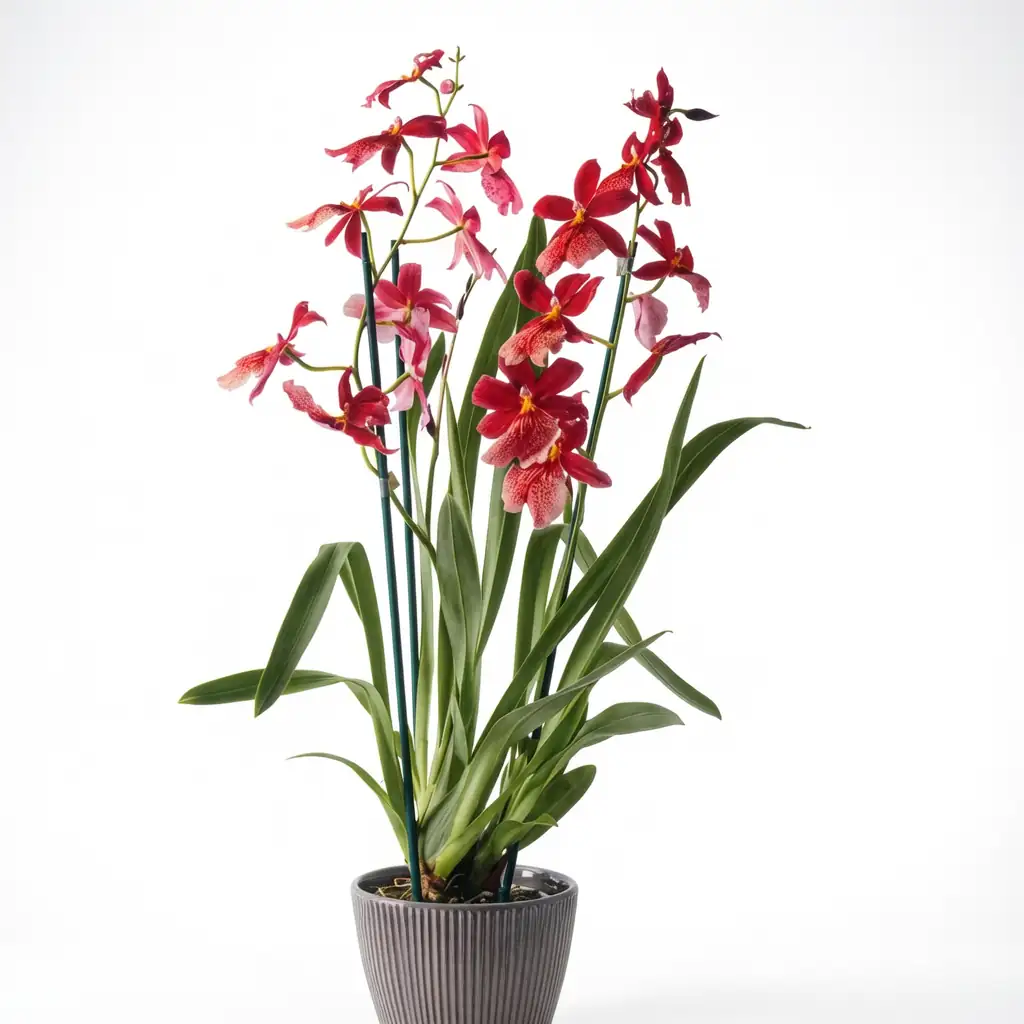
- Foliage: Like many Oncidium-alliance hybrids, it grows in a clump with plump pseudobulbs and narrow to strap-like green leaves. When watered consistently (moist but never soggy), the foliage stays attractive year-round.
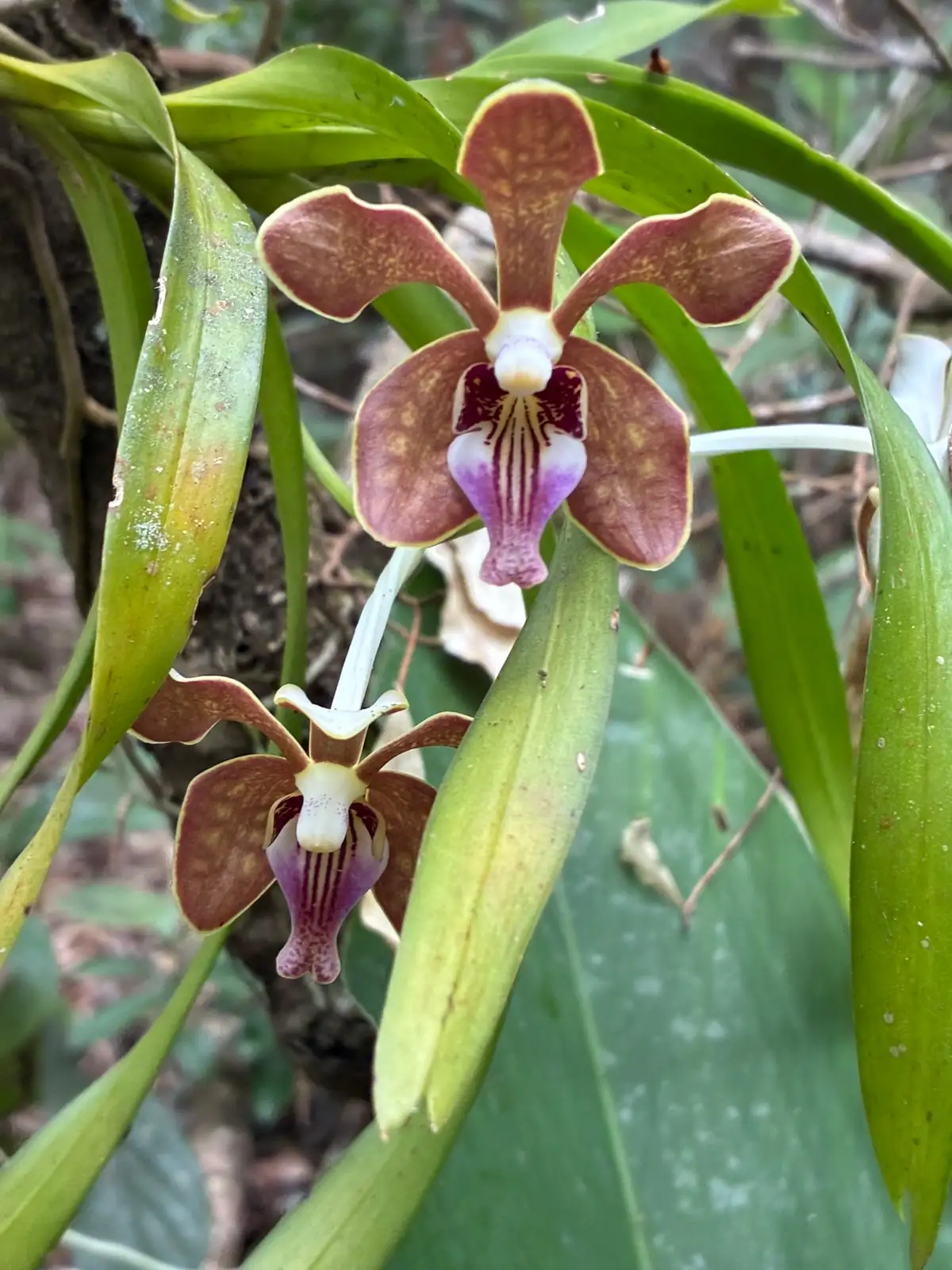
- Flower: Bright scarlet-red flowers on tall, upright spikes. The lip is marked with white spotting and the throat/center is yellow. Often fragrant with a lemon/citrus note, especially in warm, bright conditions.
- Flowering Season: Can flower year-round; most commonly and heavily in autumn.
- Growth Habit: Clump-forming epiphytic orchid hybrid; flowers arise on upright spikes from mature pseudobulbs.
Environment
Sunlight
Bright, indirect light (light shade). Avoid harsh midday sun; an east window or a lightly shaded south window is ideal.
Temperature
Best at 16–24°C (61–75°F). Keep above about 12°C (54°F) to prevent chilling stress.
Humidity
Prefers high humidity, ideally 60–80%, with steady airflow to reduce fungal and bacterial problems.
Soil
Use a free-draining orchid mix such as medium bark with perlite and/or charcoal. Choose a pot with excellent drainage; many growers use an opaque pot to reduce algae and keep roots more stable. A common pot size is about 15–20 cm (6–8 in) wide for established plants.
Placement
Indoors near bright filtered light and stable warmth. A pebble tray (with the pot kept above the waterline) can boost humidity; avoid hot, drying vents and strong direct sun.
Hardiness
Not frost-hardy; generally an indoor or warm-greenhouse orchid (approximately USDA Zone 11+ only if kept warm year-round).
Care Guide
Difficulty
Challenging: does best with consistently bright filtered light, high humidity, careful watering, and good air movement.
Buying Guide
Pick a plant with firm, plump pseudobulbs, unwrinkled leaves, and clean, active roots (silvery-green when dry and greener when wet). Avoid black spotting, mushy bulbs, or a sour smell from decomposing potting mix.
Watering
Water when the surface of the mix is just starting to dry. Keep it evenly moist but never waterlogged. Rainwater, distilled, or low-mineral filtered water is ideal. In winter, reduce watering slightly, but don’t leave it bone-dry for long. Increase humidity with a pebble tray and light misting (daily or every other day), but avoid letting water sit in the crown or between leaf bases.
Fertilization
Feed year-round about every 2 weeks using an orchid fertilizer at 1/2 strength. Flush the pot with plain water occasionally to prevent salt buildup.
Pruning
After flowering, cut the spent spike back to just above the lowest node (the swollen joint) to encourage a potential second flush when conditions are strong.
Propagation
Divide a mature clump during repotting. Each division should have several pseudobulbs and healthy roots for the best recovery and bloom potential.
Repotting
Repot every 1–2 years in spring, or earlier if the mix breaks down, smells sour, stays wet too long, or the plant outgrows the pot.
📅 Seasonal Care Calendar
Autumn is often peak bloom time, though flowering can happen any season. In winter, ease back on watering a little while keeping humidity up. Spring is the classic repotting and division window (every 1–2 years).
Pests, Diseases & Safety
Common Pests & Diseases
Common issues include spider mites (especially in dry air), mealybugs, scale, and thrips. Prevent root rot by using fresh, airy mix and never letting the pot sit in water. Good airflow helps reduce fungal/bacterial leaf spotting.
Toxicity
Generally considered non-toxic to people and pets, though nibbling may cause mild stomach upset. Keep away from pets that like to chew plants.
Culture & Symbolism
Symbolism: Orchids often symbolize refinement, admiration, and lasting beauty. Red-flowered orchids, in particular, are frequently associated with passion, respect, and heartfelt gifting.
History & Legends: This is a man-made, cultivated hybrid from the Oncidium alliance rather than a wild species with traditional folklore. It’s prized for its bold color, fragrance, and impressive flower spikes—and it also reflects how orchid names change over time as hybrid classification is updated.
Uses: Mostly grown as an ornamental houseplant or greenhouse orchid for fragrant, long-lasting blooms—excellent for display and gifting.
FAQ
Why won’t my Nelly Isler Orchid bloom?
Most often it’s not getting enough light, isn’t mature enough, or it’s been stressed by inconsistent watering and low humidity. Aim for brighter filtered light, steady moisture with fast drainage, regular weak feeding, and a slightly drier (but not dry) winter routine while keeping humidity high.
Can I use tap water?
You can, but if your tap water is hard or heavily chlorinated, salts can build up and weaken roots over time. Rainwater, distilled, or low-mineral filtered water is best. If using tap water, flush the pot occasionally with plain water to help rinse out mineral and fertilizer salts.
Do I need an opaque pot?
It’s optional. Many growers like opaque pots for Oncidium-alliance hybrids because they reduce algae and help keep root conditions steadier. What matters most is excellent drainage and an airy orchid mix.
Fun Facts
- The lemon-like scent is often strongest in warm, bright conditions and may be most noticeable during the daytime.
- You may still see this plant sold under older labels like Burrageara or Odontonia because orchid hybrid naming conventions have changed over time.