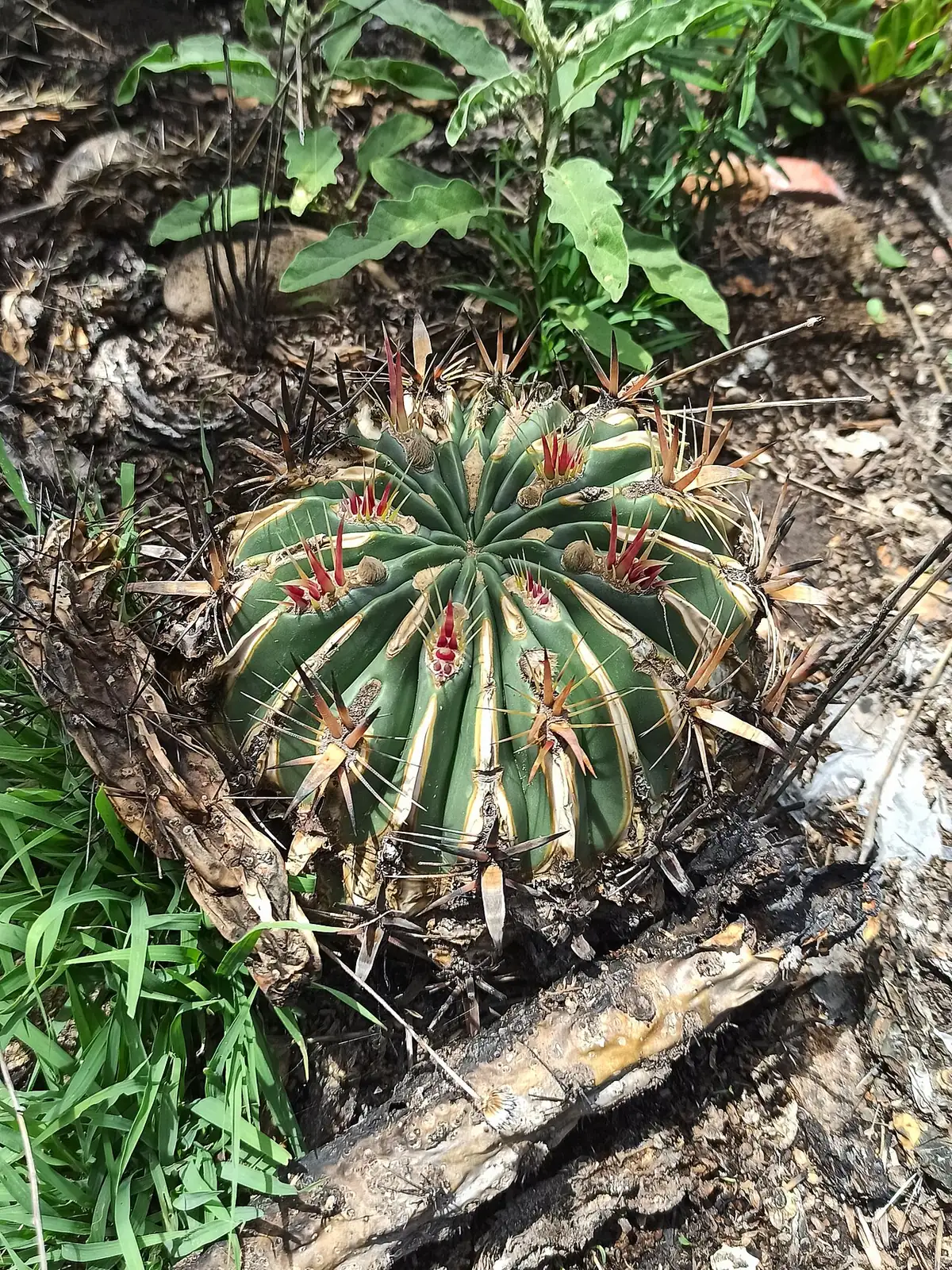
Plant Features
- Size: Up to 25 × 25 cm (10 × 10 in)
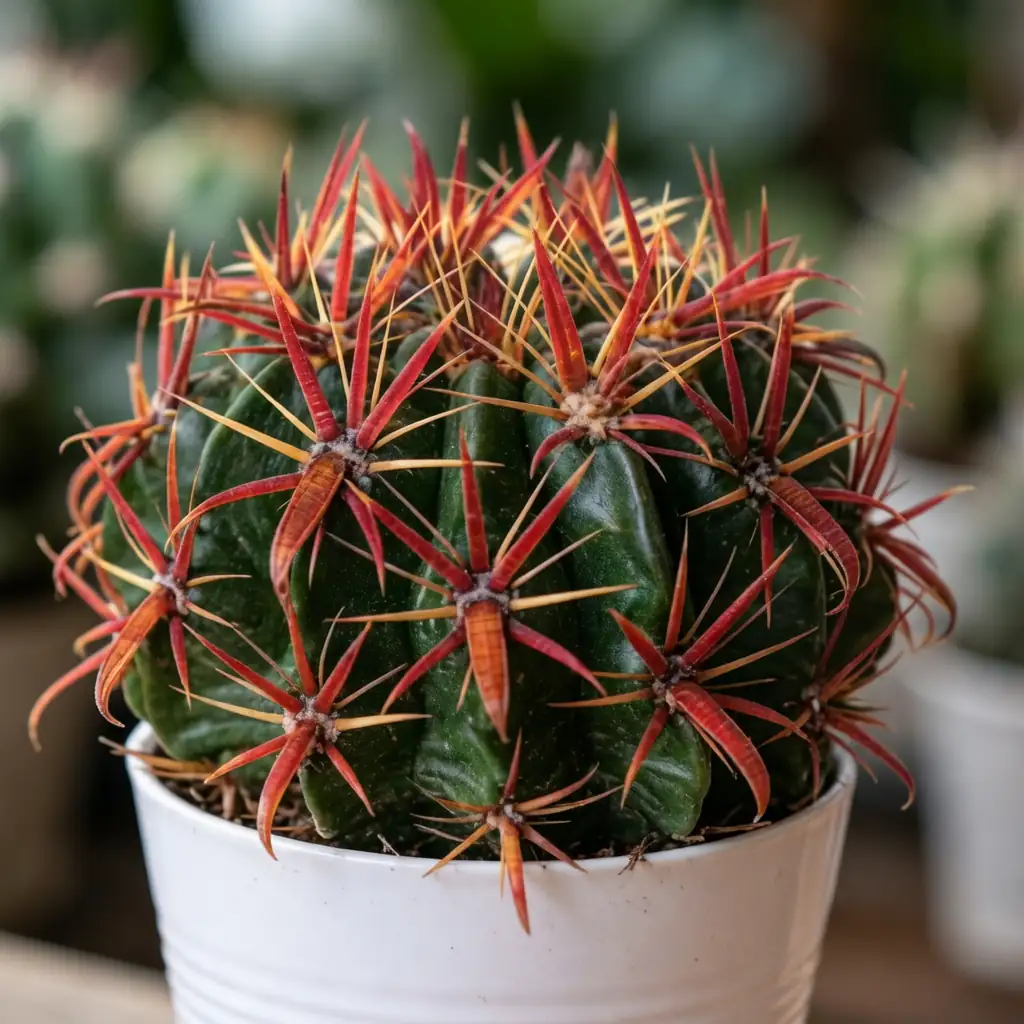
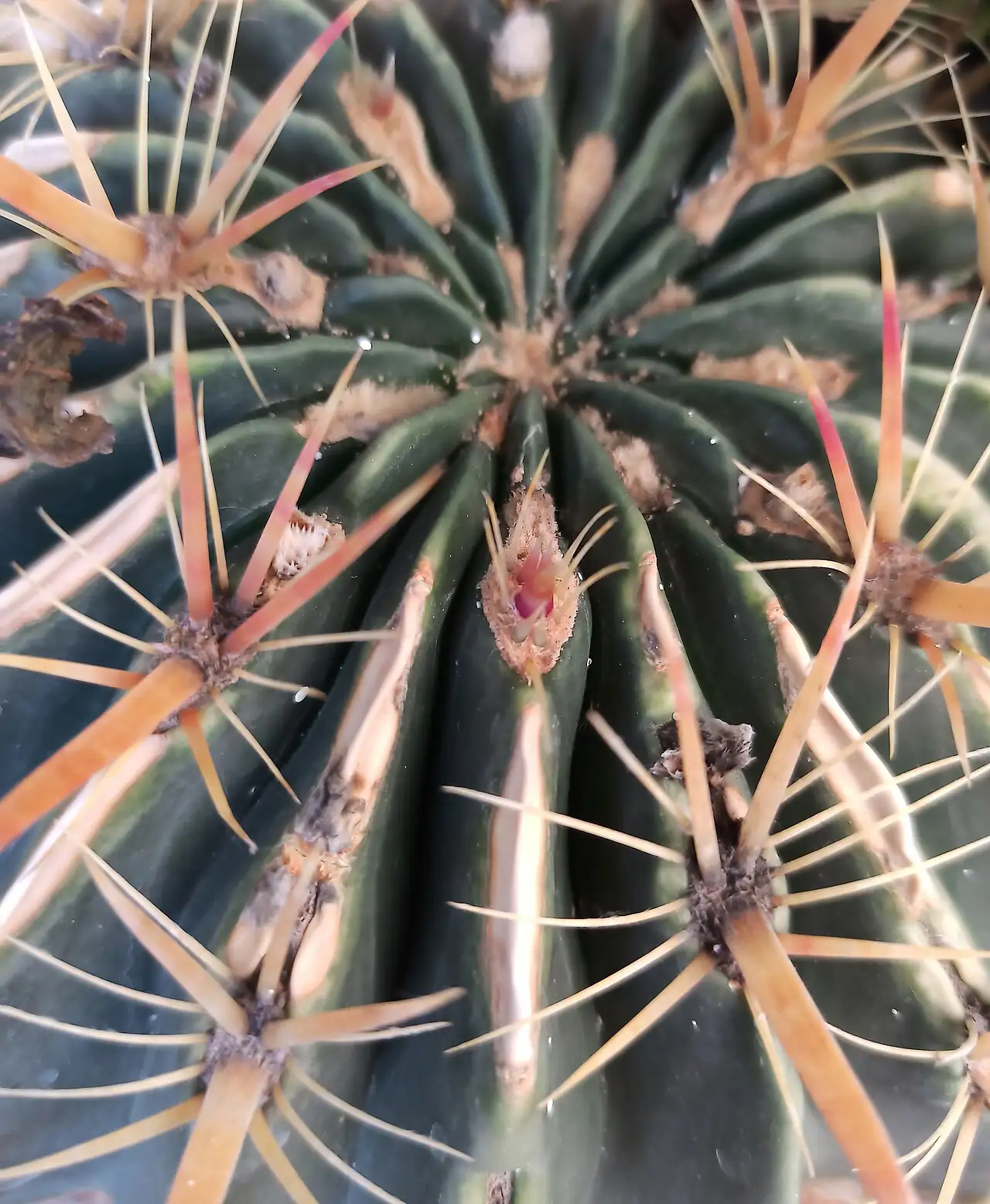
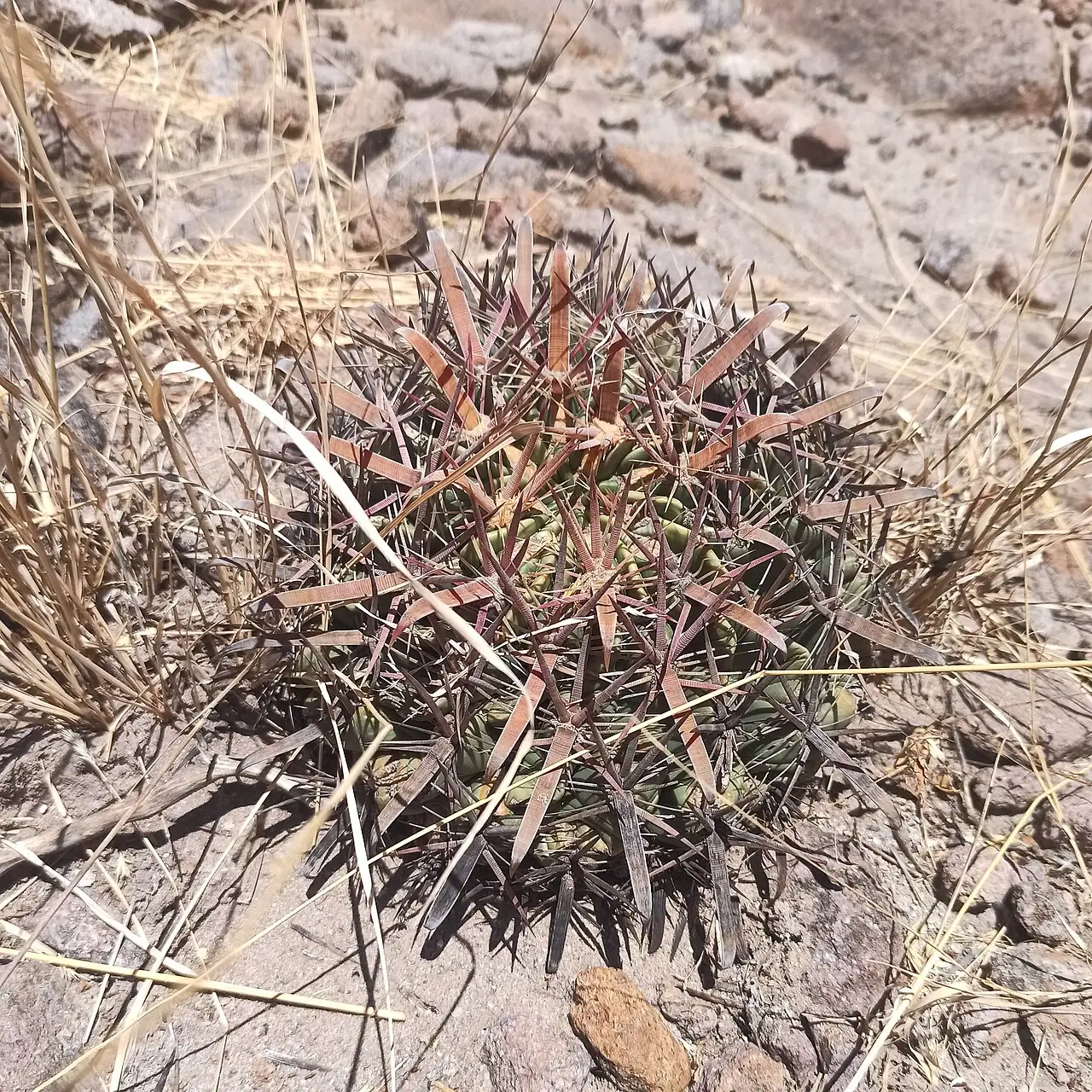
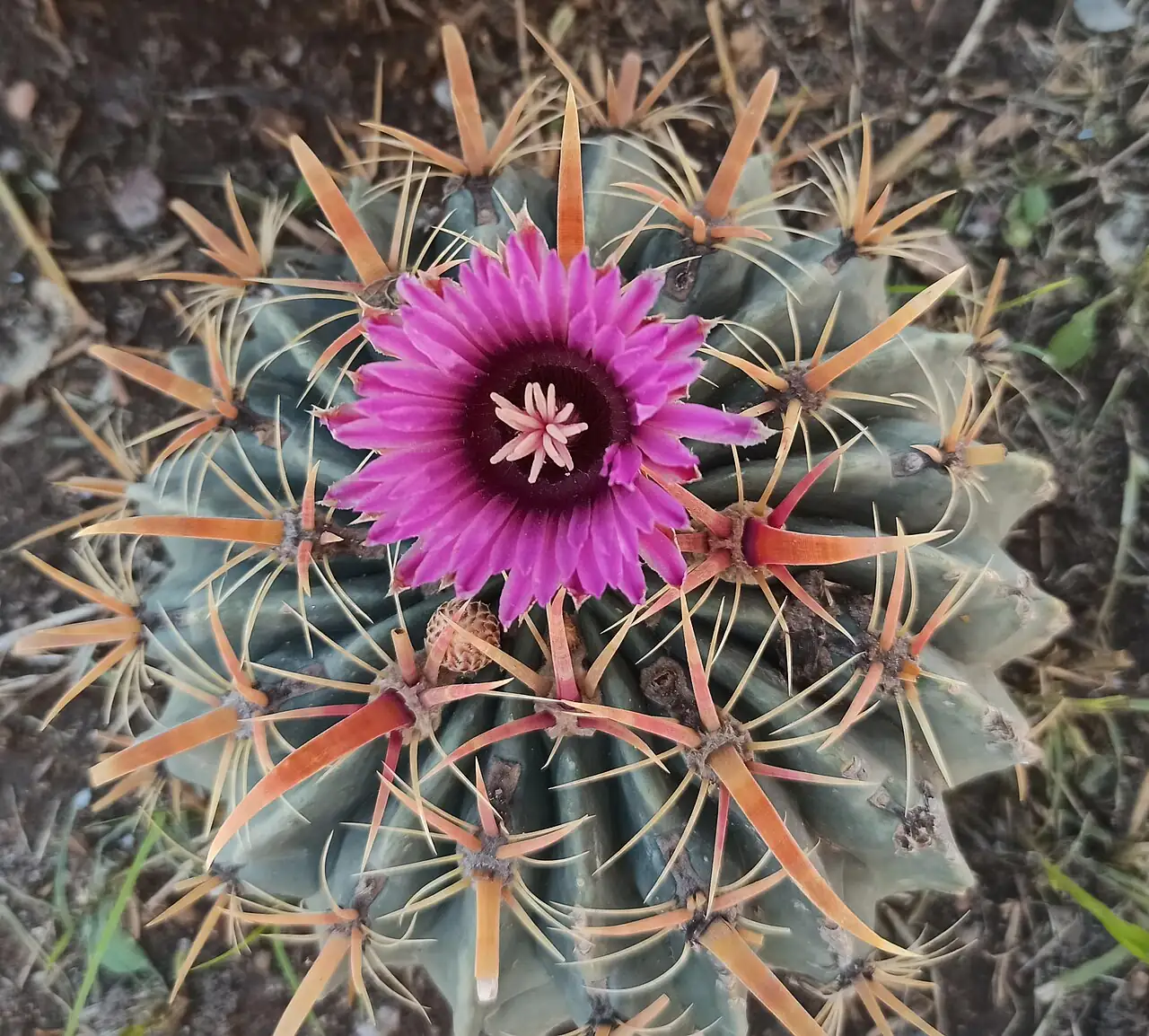
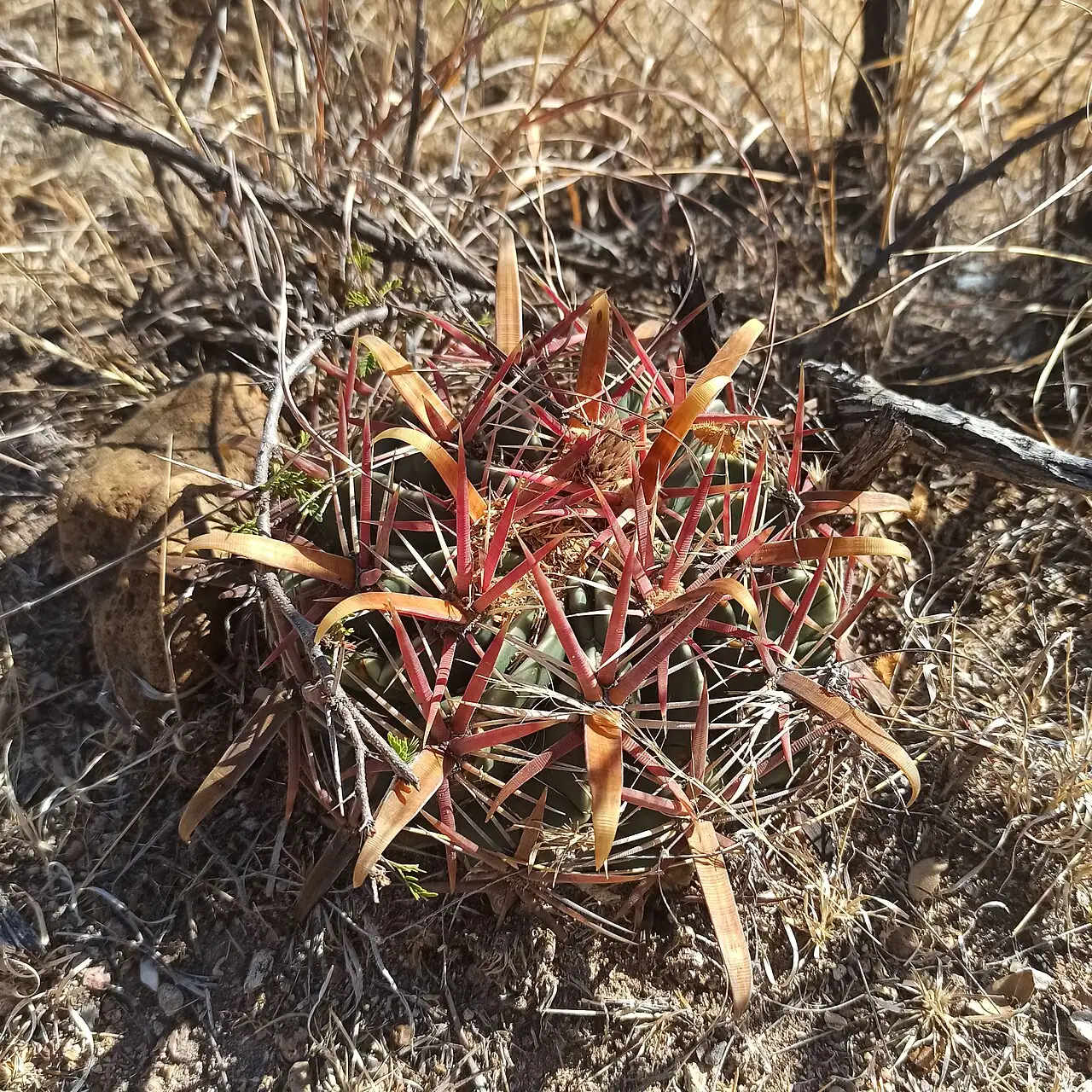
- Foliage: Leafless cactus with a globose to short-barrel stem and pronounced ribs. Spination is the main attraction: dense radial spines are paler and needle-like, while the central spines are thicker, flattened, often reddish, and frequently hooked—creating a striking multi-toned “spine ball” look.
- Flower: Funnel-shaped flowers appear on mature plants in late summer. Flower color can range from purple to yellow, varying by individual plant and growing conditions.
- Flowering Season: Late summer
- Growth Habit: Globose to barrel-form cactus, usually solitary. It typically stays as a single rounded plant (offsets are uncommon), forming a tidy, compact silhouette as it matures.
Environment
Sunlight
Full sun for best spine color and sturdy growth. In very hot summers, light afternoon shade can prevent sun scorch—especially behind intense, heat-amplifying glass indoors.
Temperature
10–30°C (50–86°F). Keep above about 10°C (50°F) and protect from frost.
Humidity
Prefers low humidity and dry, well-ventilated air.
Soil
Fast-draining cactus mix. A good DIY blend is potting soil : coarse sand : perlite at about 3:1:1 for a gritty, airy medium that dries quickly.
Placement
Brightest spot available: a sunny windowsill, greenhouse, or conservatory. In peak summer heat, move slightly back from hot glass; in winter, keep in a cool, bright spot and avoid overly warm, stagnant rooms.
Hardiness
Tender cactus; not frost-hardy (roughly USDA Zone 10–11). Safer as a container plant that can be kept dry and warm through winter.
Care Guide
Difficulty
Easy, as long as it gets strong light and a sharply draining mix (overwatering is the main way it fails).
Buying Guide
Pick a firm, evenly colored plant with no soft spots or suspicious discoloration. Because it’s top-heavy and very spiny, use thick gloves or tongs and choose a heavy, stable pot. Repot into a gritty cactus mix (or a 3:1:1 potting soil/sand/perlite blend) so it stays upright and dries reliably between waterings.
Watering
Spring to autumn: water thoroughly, then wait until the top ~2 cm (0.8 in) of mix is dry before watering again. Winter: keep much drier—water only 1–2 times total, just enough to prevent severe shriveling. Always let excess water drain fully.
Fertilization
Spring through late summer: feed with a cactus fertilizer about every 3–4 weeks, then stop as the plant slows down toward autumn.
Pruning
Generally not needed. You can remove spent flowers or any damaged/rotting tissue with clean tools—carefully, because the hooked spines snag easily.
Propagation
Mostly by seed. This species is usually solitary, so offsets are uncommon; if an offset does appear, let the cut surface callus before rooting it in a dry, gritty mix.
Repotting
Young plants: repot annually. Mature plants: repot about every 2 years, ideally in spring, moving up only slightly in pot size and refreshing the gritty mix.
📅 Seasonal Care Calendar
Year-round: keep in the brightest spot you have. Growing season (spring–late summer): water when the top ~2 cm (0.8 in) dries; fertilize every 3–4 weeks. Midsummer: if heat is extreme behind glass, give a touch of afternoon shade or pull the plant back from the window. Winter: keep cool, bright, and very dry (water only 1–2 times total). Repot young plants yearly and mature plants every ~2 years.
Pests, Diseases & Safety
Common Pests & Diseases
Common issues include mealybugs (including root mealybugs), scale, and spider mites—especially in dry indoor setups. The biggest health risk is root rot from excess water or dense soil; prevent it with a gritty mix, strong light, and full drainage.
Toxicity
Not known to be poisonous, but the thick, hooked spines can cause painful punctures and can “grab” skin or fabric. Place out of reach of children and pets and handle with thick gloves, folded newspaper, or tongs.
Culture & Symbolism
Symbolism: Often seen as a symbol of resilience and protection—tough, self-reliant, and beautifully armored.
History & Legends: A long-time favorite among cactus collectors. The nickname “devil’s tongue” comes from its dramatic, flattened, often hooked central spines that look like sharp, twisting blades.
Uses: Primarily ornamental—ideal for sunny windowsills, conservatories, and succulent displays. In frost-free climates it can be used outdoors in dry rock gardens and xeriscapes.
Fun Facts
- Its flattened central spines can shift in color from red to copper to paler tones, and stronger light often intensifies the overall look.
- A cool, dry winter rest helps reduce rot and can improve flowering performance the following late summer.