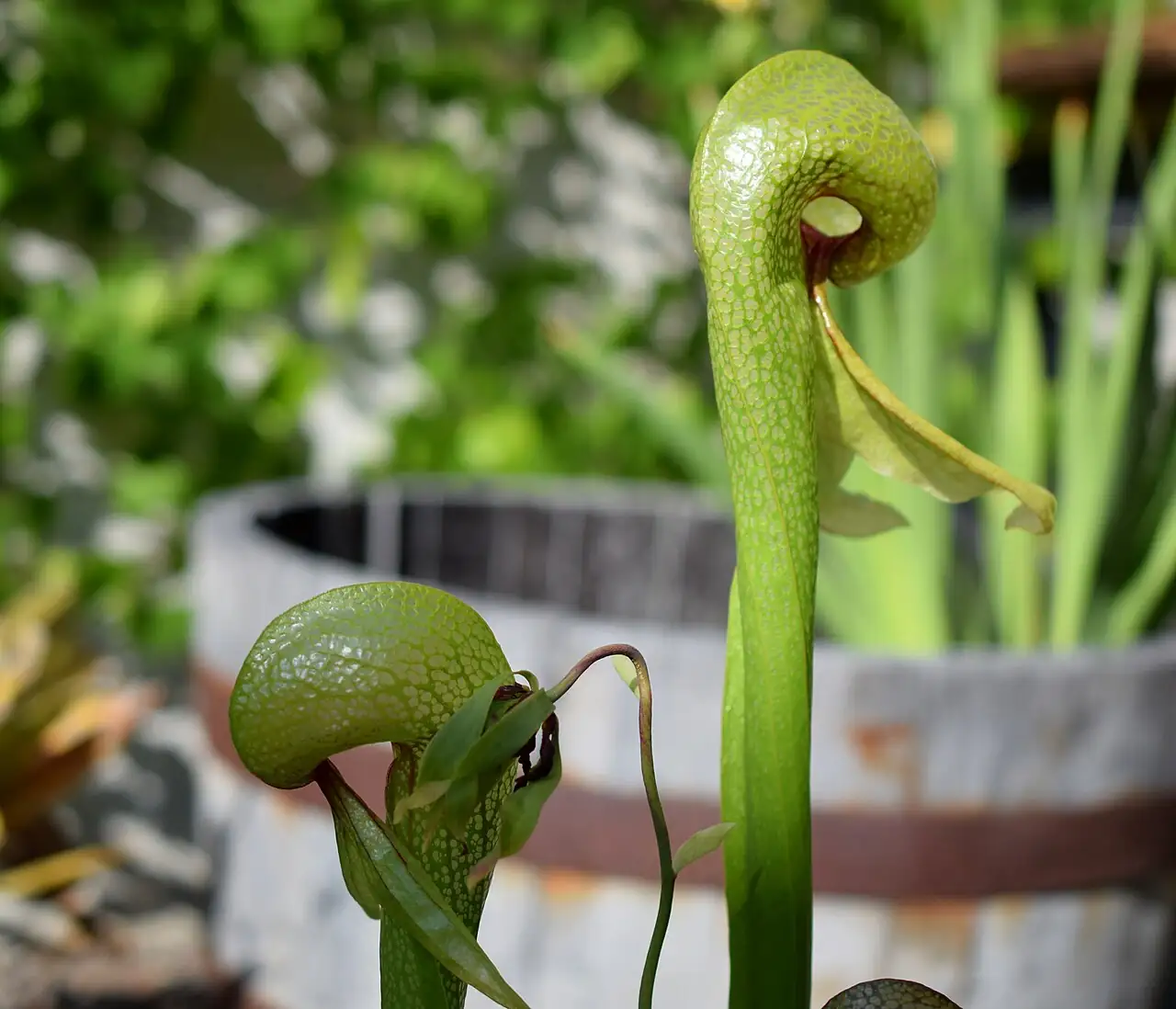
Plant Features
- Size: Typically about 40 cm tall × 20 cm wide (16 in × 8 in), depending on age and conditions.
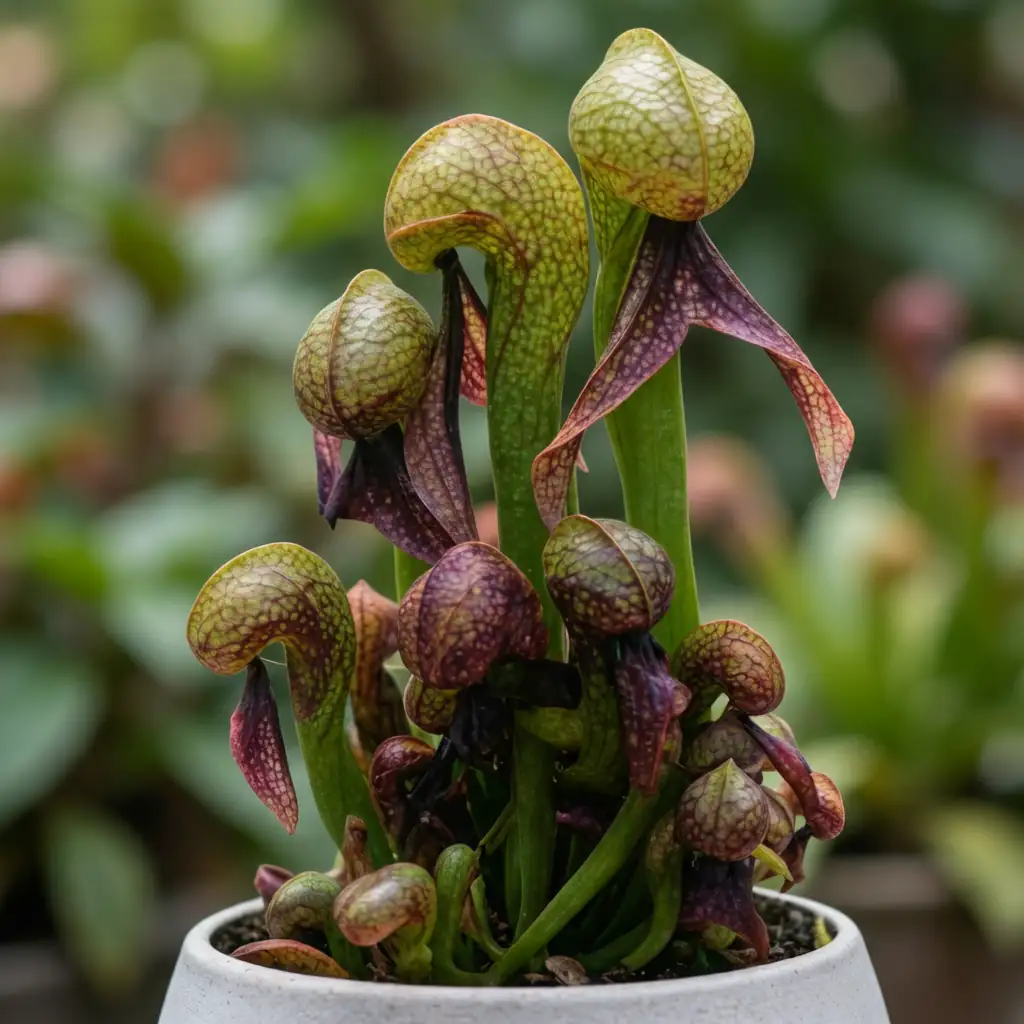
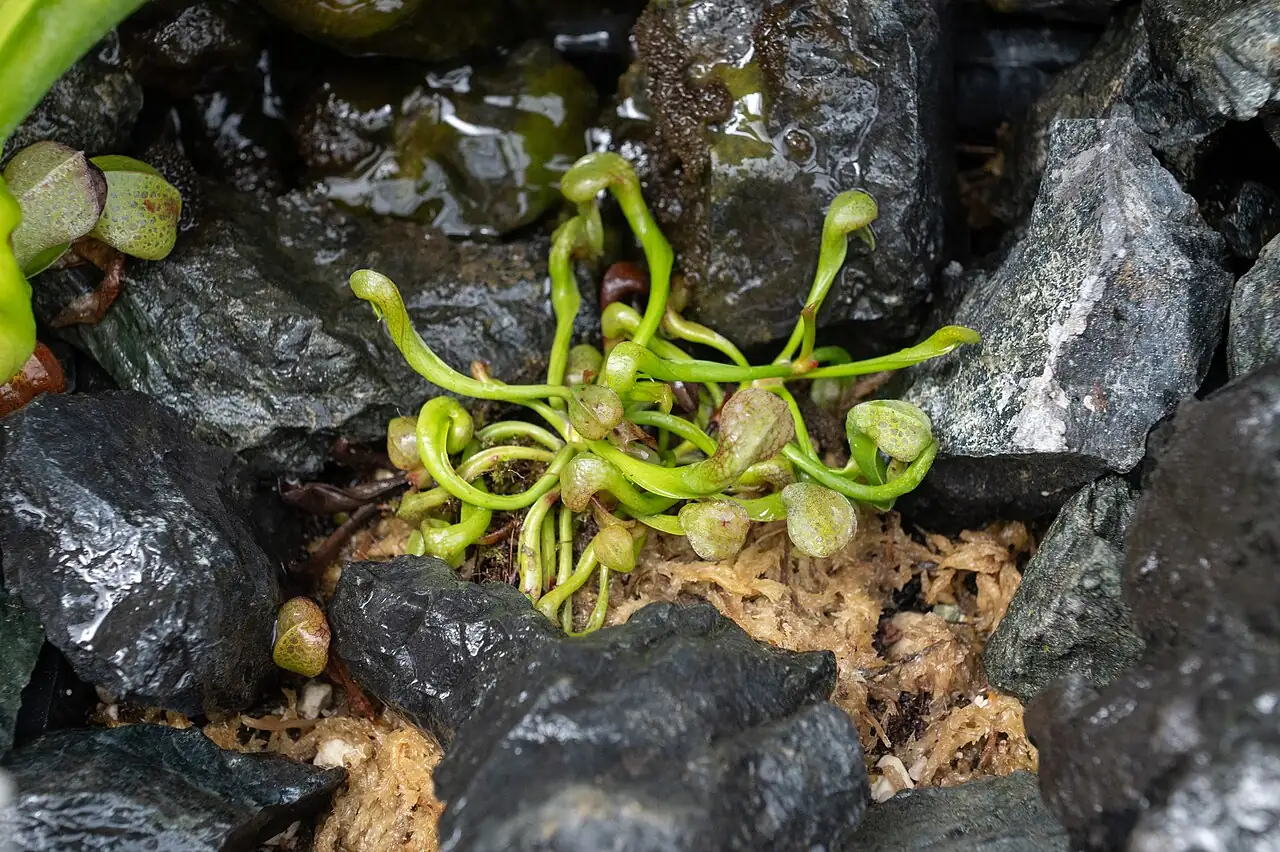
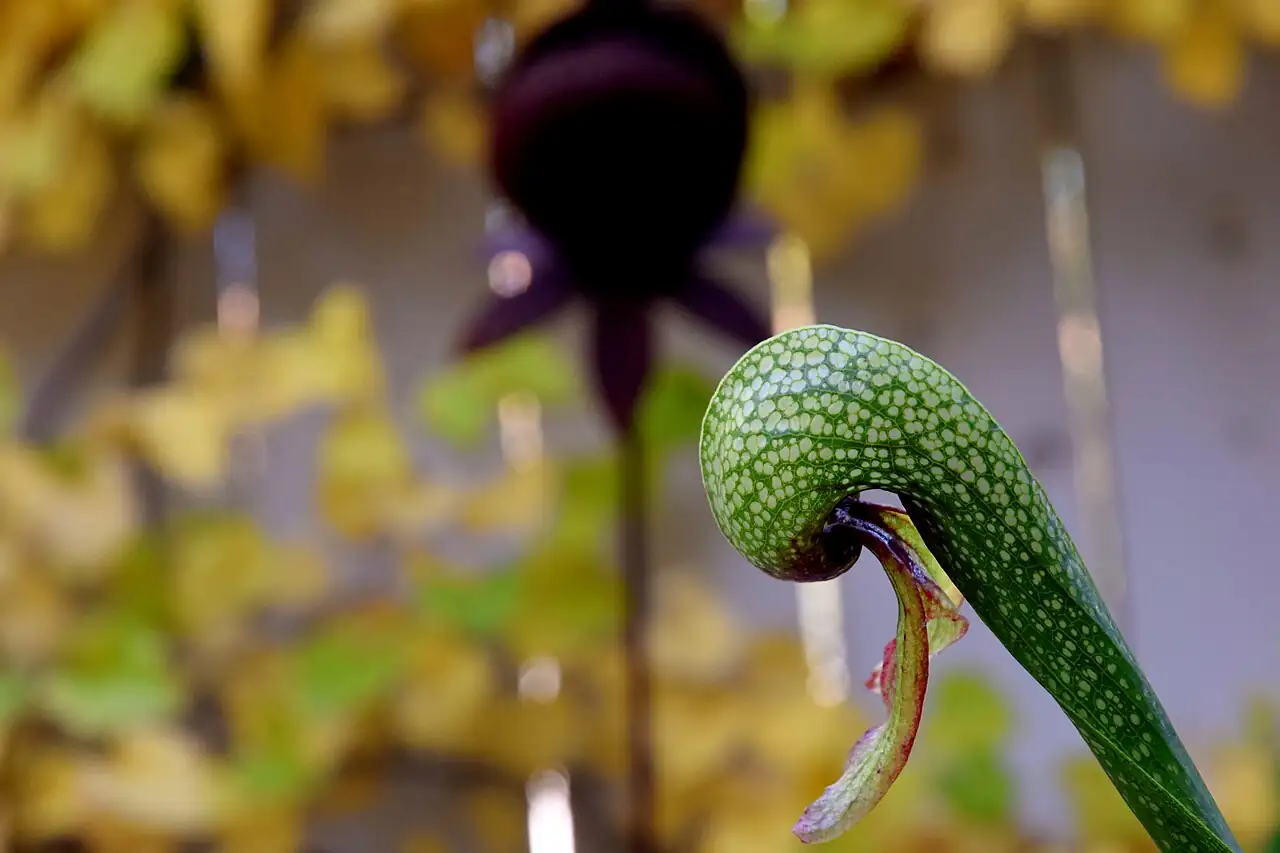
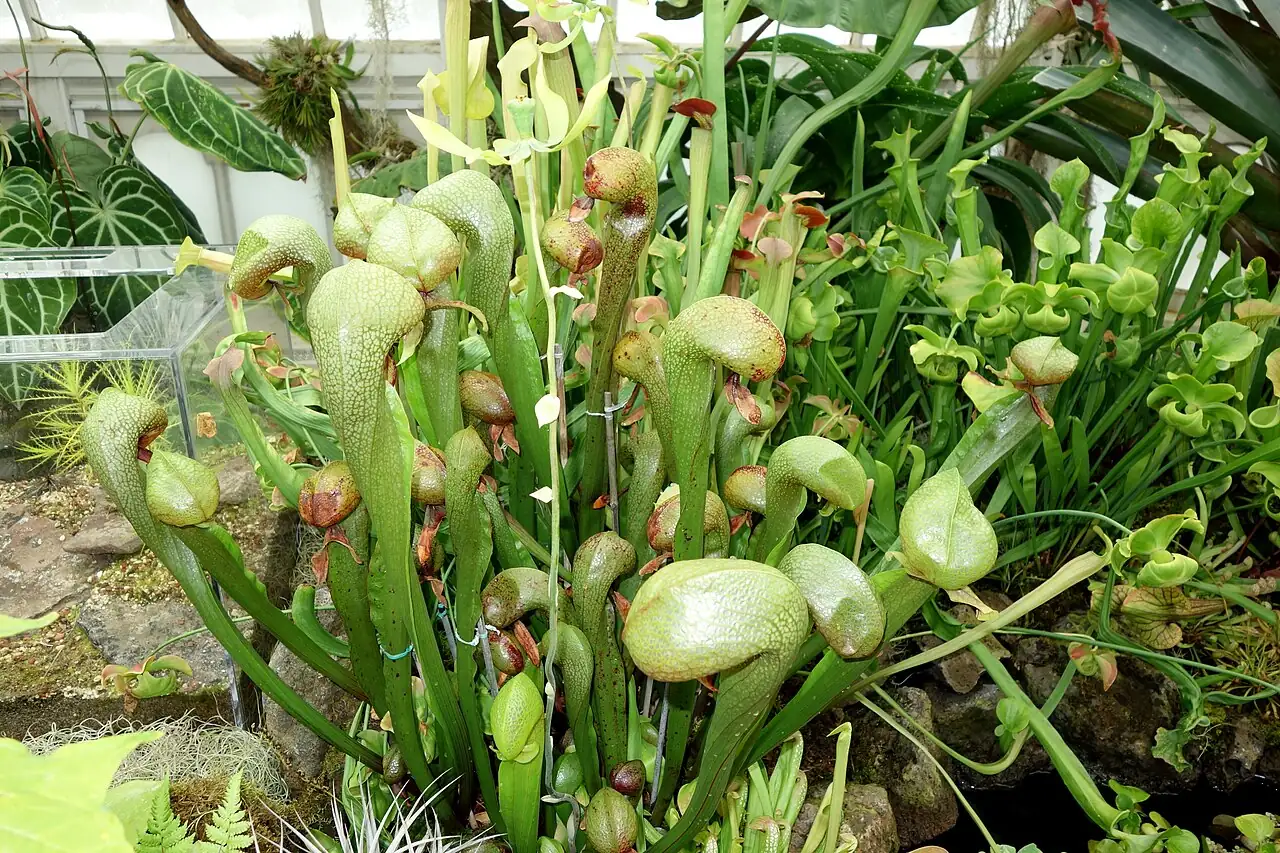
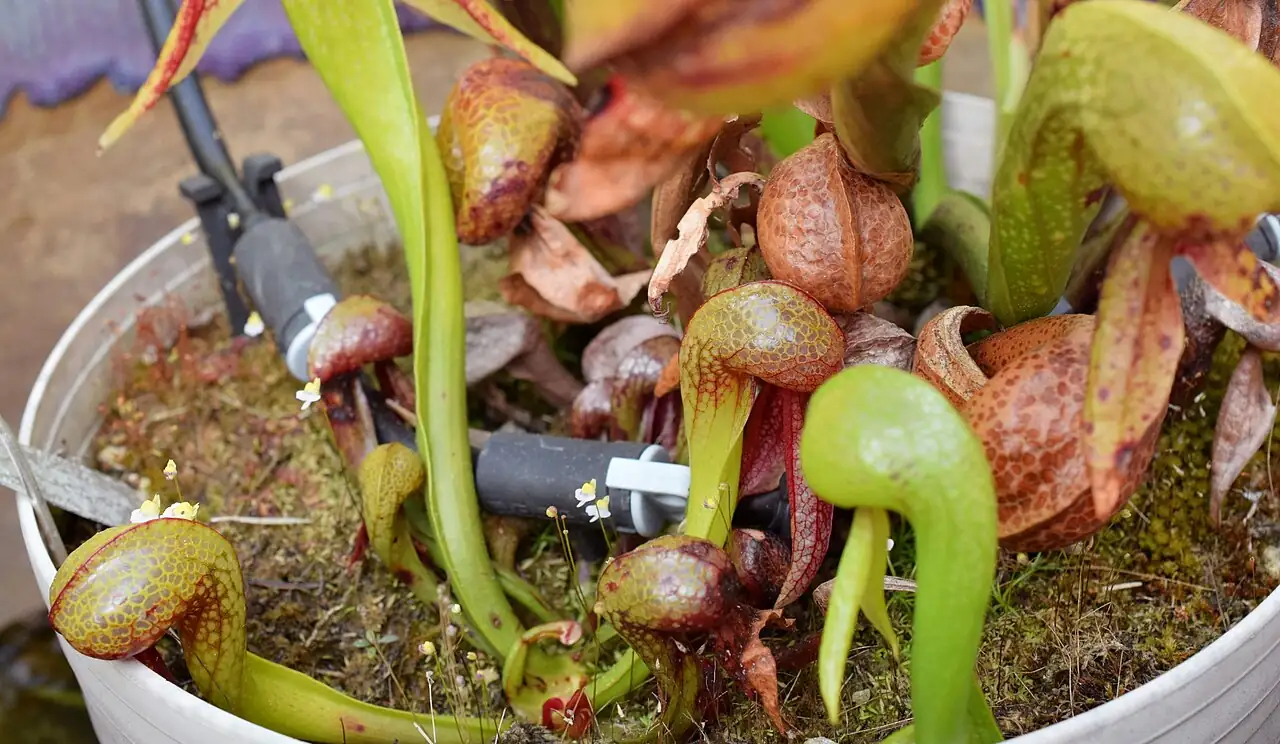
- Foliage: The “leaves” are actually specialized traps: upright, hooded pitchers with translucent window-like patches and a distinctive forked, fang-like appendage at the opening, creating a snake-head silhouette. Pitchers are commonly green with prominent red to maroon veining.
- Flower: In spring, cobra lily produces nodding, curious-looking flowers with noticeable purple veining. After flowering, new pitchers develop—often richly veined red and sometimes lightly sweet-scented to attract prey.
- Flowering Season: Spring
- Growth Habit: Clump-forming perennial carnivorous plant with upright tubular pitchers arising from a rhizome.
Environment
Sunlight
Full sun to very bright light. Outdoors in full sun gives the strongest growth, but provide some protection from extreme summer heat (especially to prevent the root zone from overheating).
Temperature
-5–26°C (23–79°F); prefers cool roots and a winter dormancy period.
Humidity
Moderate humidity is fine; steady moisture and healthy airflow matter more than very high air humidity.
Soil
Very low-nutrient carnivorous-plant medium. A classic mix is equal parts long-fiber sphagnum moss, perlite, and horticultural sand. Avoid standard potting soil, compost, or enriched mixes—these often lead to rapid decline.
Placement
Summer: outdoors in full sun/very bright light with consistently wet conditions. Winter: allow dormancy outdoors in a sheltered spot, or keep in a bright, cool, unheated space (avoid warm rooms with central heating).
Hardiness
Dormant, cold-tolerant carnivorous plant; roughly comparable to USDA Zone 7–10 when kept wet and protected from severe freezes.
Care Guide
Difficulty
Difficult. Long-term success hinges on three things: mineral-free water, constantly moist media, and keeping the roots cool (overheating is a common reason plants fail).
Buying Guide
Look for firm, upright pitchers and a healthy rhizome. Skip plants with blackened growth points, sour-smelling media, or signs they were grown in regular potting soil. It’s safest to buy plants sold specifically as carnivorous plants and already established in a sphagnum-based mix.
Watering
Use only rainwater, distilled water, or reverse-osmosis water. Keep the medium constantly wet—during active growth, stand the pot in a shallow tray holding about 1–3 cm (0.4–1.2 in) of water. Never let it dry out.
Fertilization
Do not fertilize. Fertilizer salts can burn the roots and quickly weaken or kill the plant.
Pruning
Remove fully brown, dead pitchers by trimming at the base to reduce mold and improve airflow. Leave green pitchers intact.
Propagation
Most reliable by dividing the rhizome in late winter to early spring while the plant is dormant. Seed propagation is possible but slow and best for patient growers with the right conditions.
Repotting
Repot into a fresh, nutrient-poor carnivorous-plant mix (for example, equal parts long-fiber sphagnum, perlite, and horticultural sand). Avoid standard houseplant mixes.
📅 Seasonal Care Calendar
Summer: full sun/very bright light, keep constantly wet, and prioritize cool roots. Winter: allow dormancy—keep cold and bright, sheltered from harsh winds or deep freezes, and avoid warm indoor conditions with heating.
Pests, Diseases & Safety
Common Pests & Diseases
Aphids and mealybugs can occur, especially on new growth. Rhizome rot is a major risk if the medium turns stagnant, overheats, or stays poorly aerated. Inside the pitchers you may notice insects or larvae—many are part of a natural in-pitcher community that helps break down prey and ultimately feeds the plant.
Toxicity
Not known to be toxic to people or pets. It isn’t an edible plant, so it should not be ingested.
Culture & Symbolism
Symbolism: Often linked with curiosity, adaptation, and the dramatic ingenuity of nature’s “predator” plants.
History & Legends: Native to the western United States, cobra lily is the only species in its genus. It’s famous among carnivorous-plant fans because its natural habitat keeps its roots bathed in cold, flowing water—one reason it can be tricky to grow in warm, stagnant conditions.
Uses: Grown mainly as an ornamental carnivorous plant for collectors and outdoor bog gardens. Its pitchers can host a tiny ecosystem of invertebrates that help process captured prey.
FAQ
Does it need fertilizer?
No—skip fertilizer entirely. Fertilizer salts can burn the roots and can kill the plant.
What water should I use?
Rainwater, distilled water, or reverse-osmosis water only. Keep it consistently wet; many growers keep the pot in a shallow tray of water during active growth.
What potting mix is best?
A nutrient-poor carnivorous-plant mix, such as equal parts long-fiber sphagnum moss, perlite, and horticultural sand. Avoid regular potting soil.
How should I handle it in winter?
Let it go dormant. Keep it cold and bright—outdoors in a sheltered spot or indoors in a cool, unheated room.
How much light does it need?
Full sun to very bright light. Outdoors in full sun is ideal in summer, but take steps to prevent the root zone from overheating.
Fun Facts
- The pitcher’s translucent “windows” can mislead insects, encouraging them to keep moving deeper into the trap.
- Unlike many carnivorous plants, cobra lily often relies on a community of small invertebrates living inside the pitcher to help break down prey.
- Keeping the roots cool is one of the biggest secrets to growing Darlingtonia well over the long term.