Plant Features
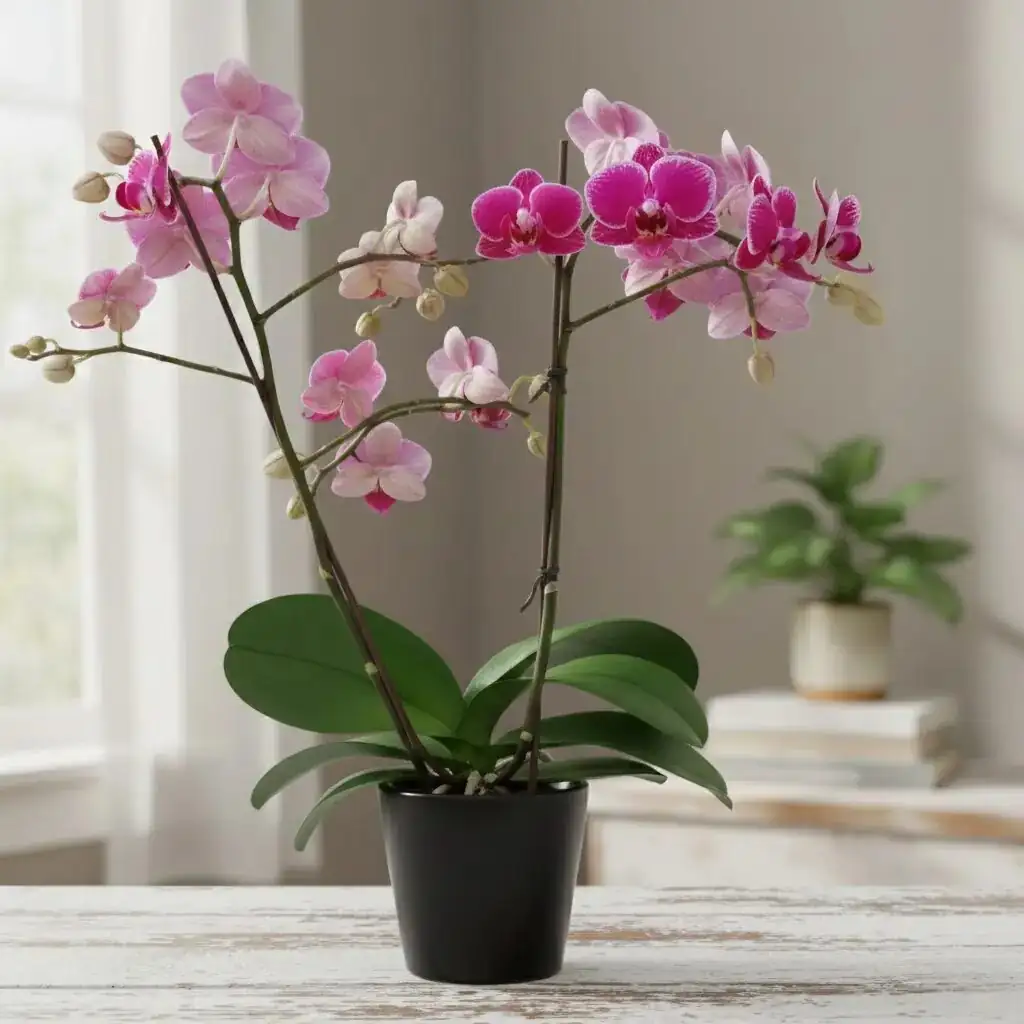
- Size: Compact/miniature; typically about 15–30 cm (6–12 in) tall in bloom, with a spread around 15–25 cm (6–10 in) depending on the cultivar and pot size.
- Foliage: Forms a small rosette of thick, leathery, oval leaves in medium to deep green. On mini types, leaves are commonly around 10–20 cm (4–8 in) long.
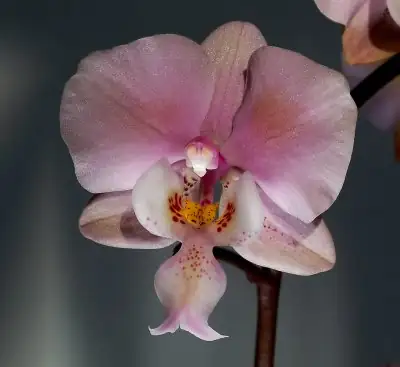
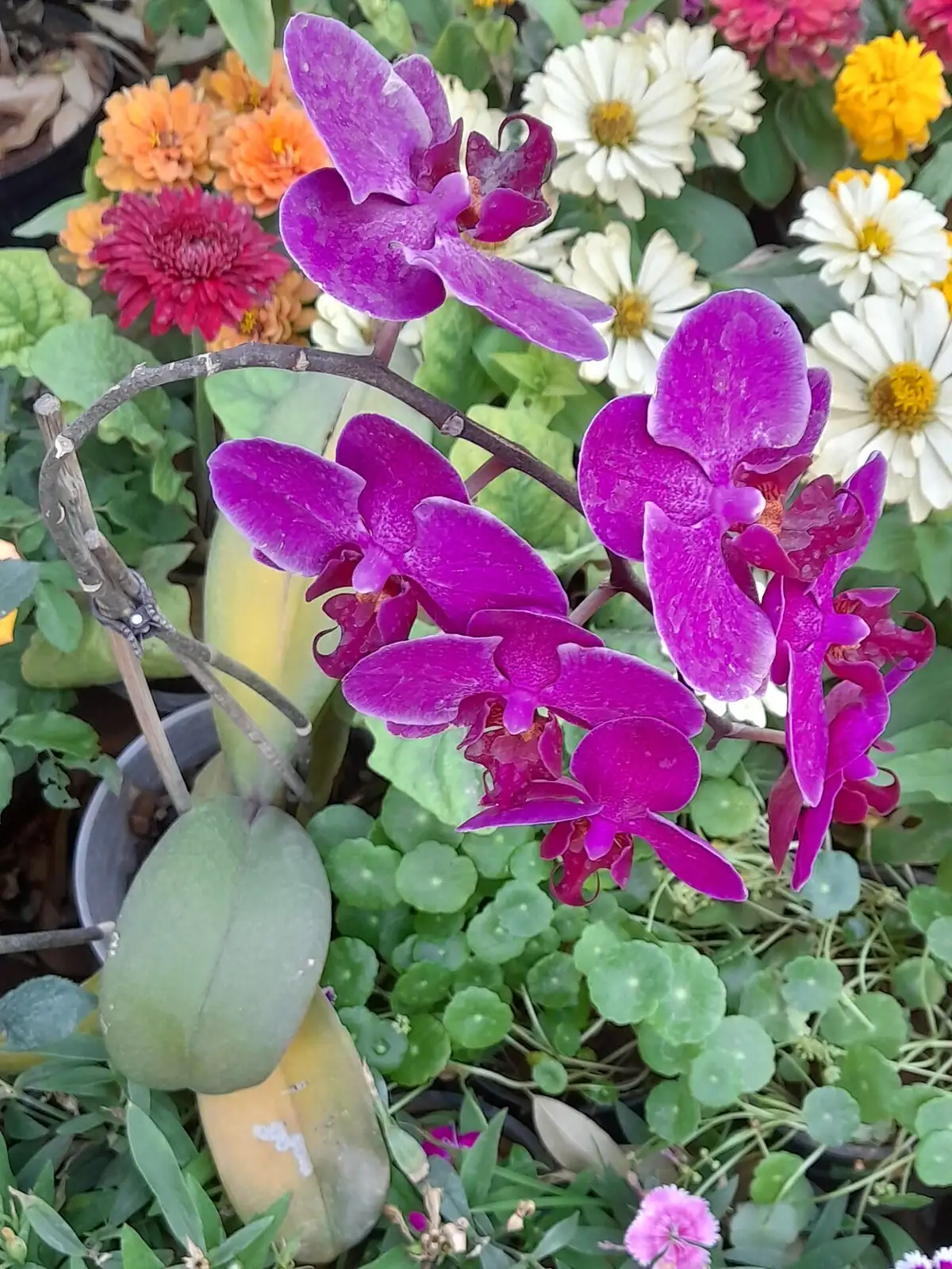
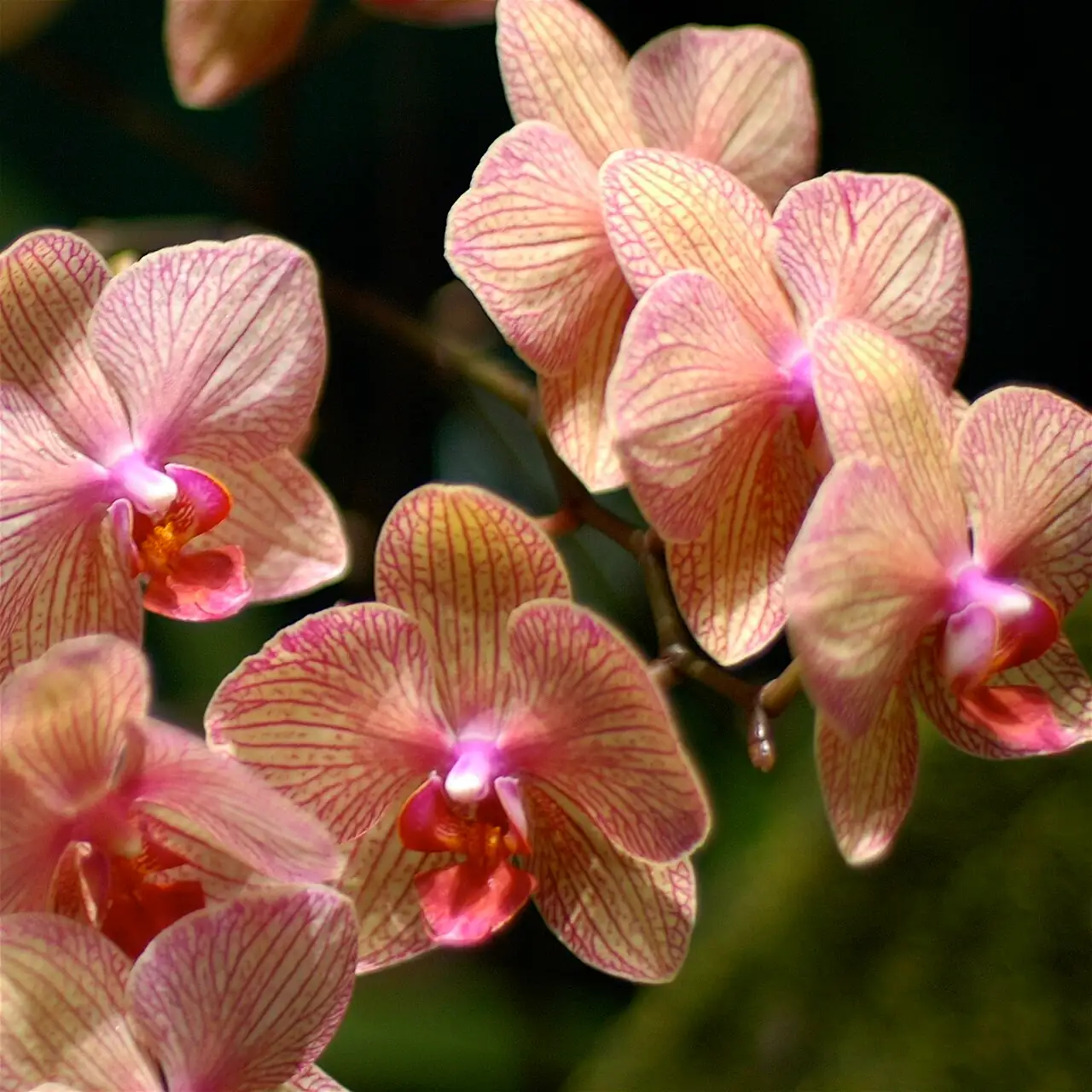
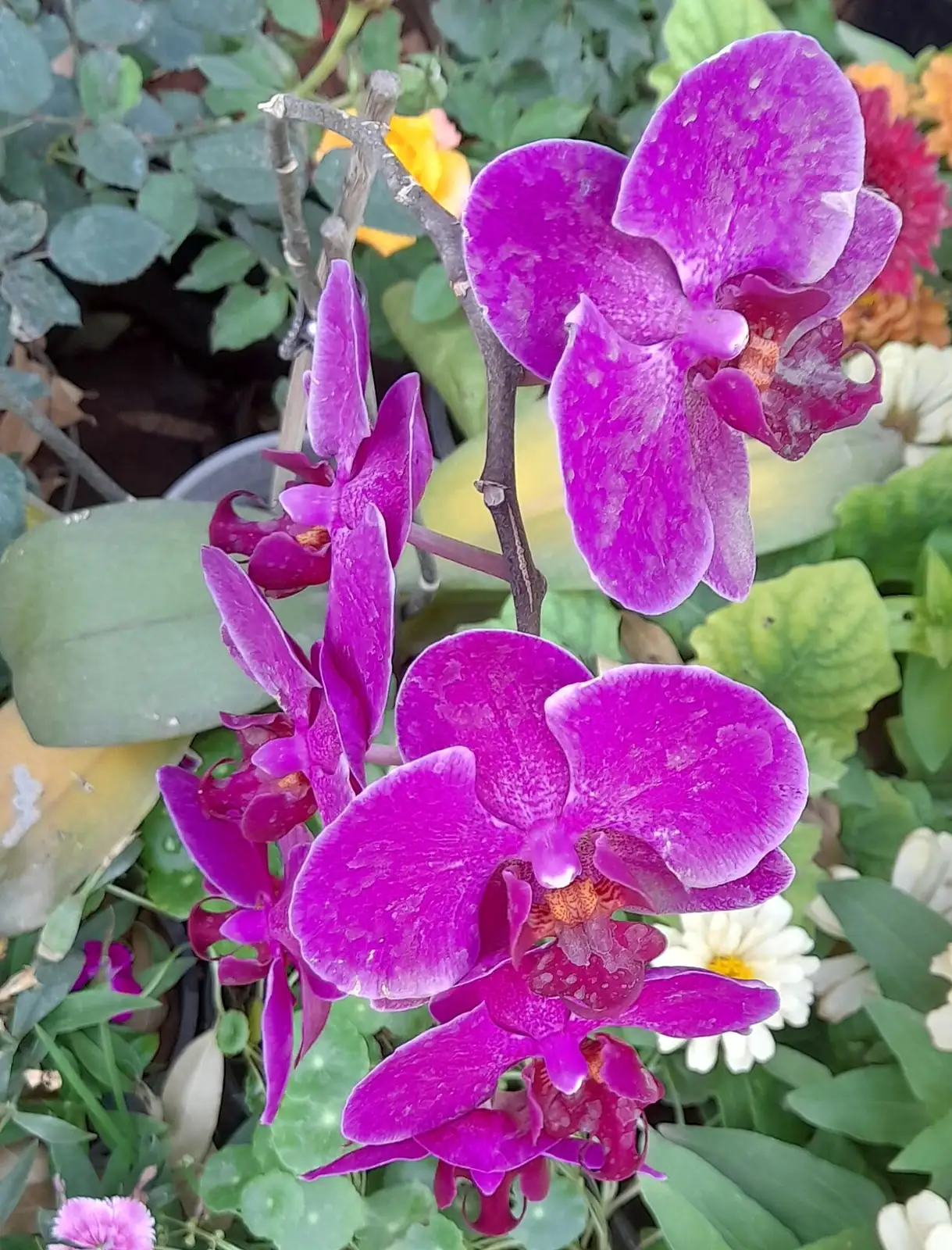
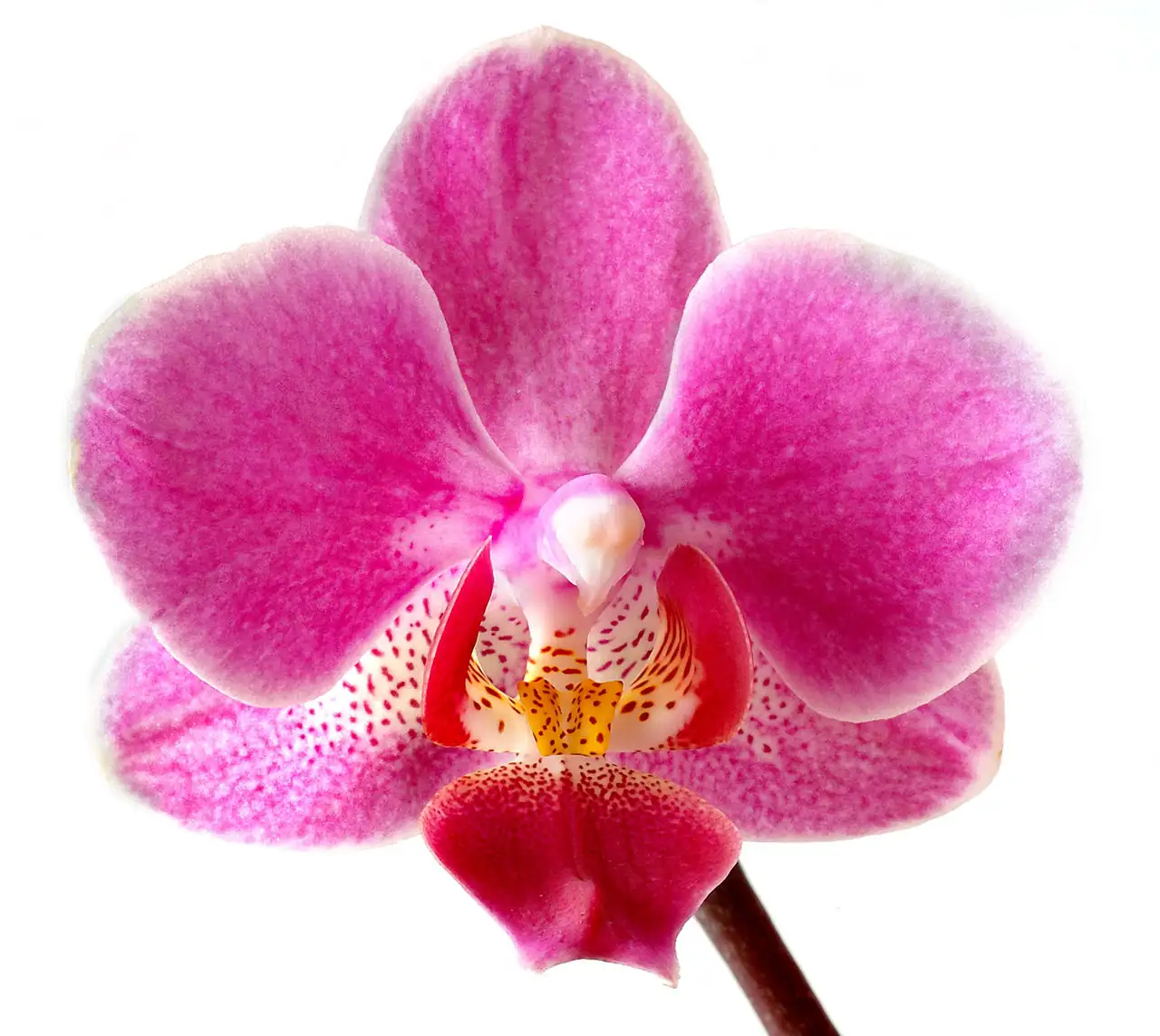
- Flower: Produces arching flower spikes carrying multiple classic “moth-shaped” blooms. Color range is wide, but pink, peach, and white are especially common; many hybrids show a contrasting lip and may have light patterning.
- Flowering Season: Most commonly winter to spring indoors, though many hybrids can flower at other times of year when conditions are stable.
- Growth Habit: Monopodial (single main growing point), upright to gently arching; epiphytic orchid habit with aerial roots.
Environment
Sunlight
Bright, indirect light. A lightly shaded east window or a bright north window is often ideal; avoid harsh midday sun that can scorch leaves.
Temperature
Ideal 18–27°C (64–81°F). Avoid prolonged drops below 15°C (59°F). A small night-time temperature drop can help encourage flower spike initiation.
Humidity
Moderate to high humidity, roughly 40–70%, paired with gentle air movement to reduce rot and leaf-spot problems.
Soil
Use a chunky, fast-draining orchid substrate (typically bark, often blended with perlite and/or charcoal). Avoid regular potting soil, which holds too much water and smothers roots.
Placement
Perfect for a bright windowsill with filtered light. Keep away from cold drafts (especially near winter windows) and from hot, dry blasts from heaters or vents.
Hardiness
Not frost hardy; best as an indoor plant. Outdoors only in very warm conditions (roughly USDA Zone 11–12).
Care Guide
Difficulty
Easy to moderate: one of the more forgiving orchids, as long as it gets bright, indirect light and an airy, fast-draining orchid mix.
Buying Guide
Pick a plant with firm, glossy leaves and plump roots that look green when freshly watered and silvery when dry. Avoid a blackened or mushy crown, soggy media, or persistent spotting. For the longest display, choose a plant with a few open flowers plus several unopened buds.
Watering
Water thoroughly, then let the mix approach dryness before watering again. A common rhythm is every 7–10 days in warm/bright conditions and every 10–14 days in cooler/dimmer periods, but adjust to your home and the chunkiness of the mix. Use room-temperature water and never leave water sitting in the crown (the leaf center).
Fertilization
Feed with a balanced orchid fertilizer at 1/4–1/2 strength every 2–4 weeks during active growth. Flush with plain water about once a month to help prevent salt buildup.
Pruning
After flowering, remove the spike once it turns brown. If the spike stays green, you can cut just above a node to try for a side branch—though results depend on the hybrid, and repeat blooms on old spikes can be smaller than a fresh spike.
Propagation
Most mini Phalaenopsis are produced commercially by tissue culture. At home, propagation is limited; some plants may form keikis (baby plants) on spikes. Pot a keiki once it has roots around 5–7 cm (2–3 in) long.
Repotting
Repot every 1–2 years, or sooner if the bark breaks down or roots become crowded. The best timing is after flowering or when new root growth begins. Choose a small pot with excellent drainage.
📅 Seasonal Care Calendar
Spring–summer: provide brighter (still indirect) light, water a bit more often, and fertilize regularly. Fall–winter: reduce watering slightly and keep nights a touch cooler (but above 15°C/59°F) to encourage spikes; maintain humidity and airflow.
Pests, Diseases & Safety
Common Pests & Diseases
Pests can include mealybugs, scale, and spider mites; fungus gnats may appear if the medium stays too wet. Common problems include root rot from soggy media, bacterial soft rot, and fungal leaf spots. Prevention is key: airy mix, correct watering, and gentle airflow. Treat pests with insecticidal soap or appropriate controls, and remove severely damaged tissue promptly.
Toxicity
Generally considered non-toxic to people, cats, and dogs, though chewing may still cause mild stomach upset. Keep out of reach of persistent nibblers.
Culture & Symbolism
Symbolism: Orchids are linked with elegance, admiration, and refined beauty—Mini Phalaenopsis in particular is cherished as a long-lasting, graceful gift plant.
History & Legends: Mini Phalaenopsis are modern horticultural hybrids developed from Asian Phalaenopsis species, bred specifically for compact size and dependable, long-lived indoor flowering.
Uses: Ornamental houseplant—especially popular for bright windowsills, desks, and small spaces where you want a tidy plant with a big bloom presence.
FAQ
Why are the buds dropping before opening?
This is usually “bud blast,” triggered by sudden temperature swings, cold drafts, very dry air, or moving the plant. Keep conditions steady around 18–27°C (64–81°F), aim for 40–70% humidity, and avoid cold night air near windows.
Can I grow it in regular potting soil?
No—Phalaenopsis roots need lots of air. Use a chunky orchid bark mix so roots can breathe and excess water can drain quickly.
How long do the flowers last?
Indoors, flowers commonly last about 6–12 weeks, sometimes longer, depending on the hybrid and how steady your conditions are.
Fun Facts
- Phalaenopsis is nicknamed the “moth orchid” because the blooms resemble moths in flight.
- Mini varieties are bred to stay compact while still producing impressively full flower sprays for their size.
- With consistent care, a plant can rebloom year after year.