

Plant Features
- Size: Up to about 75 × 30 cm (30 × 12 in) indoors
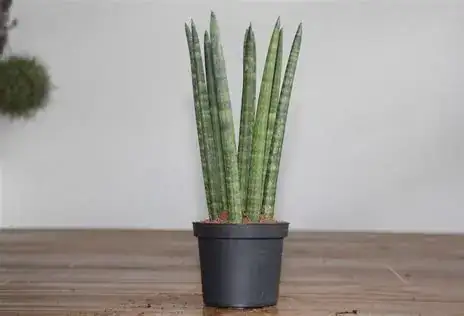
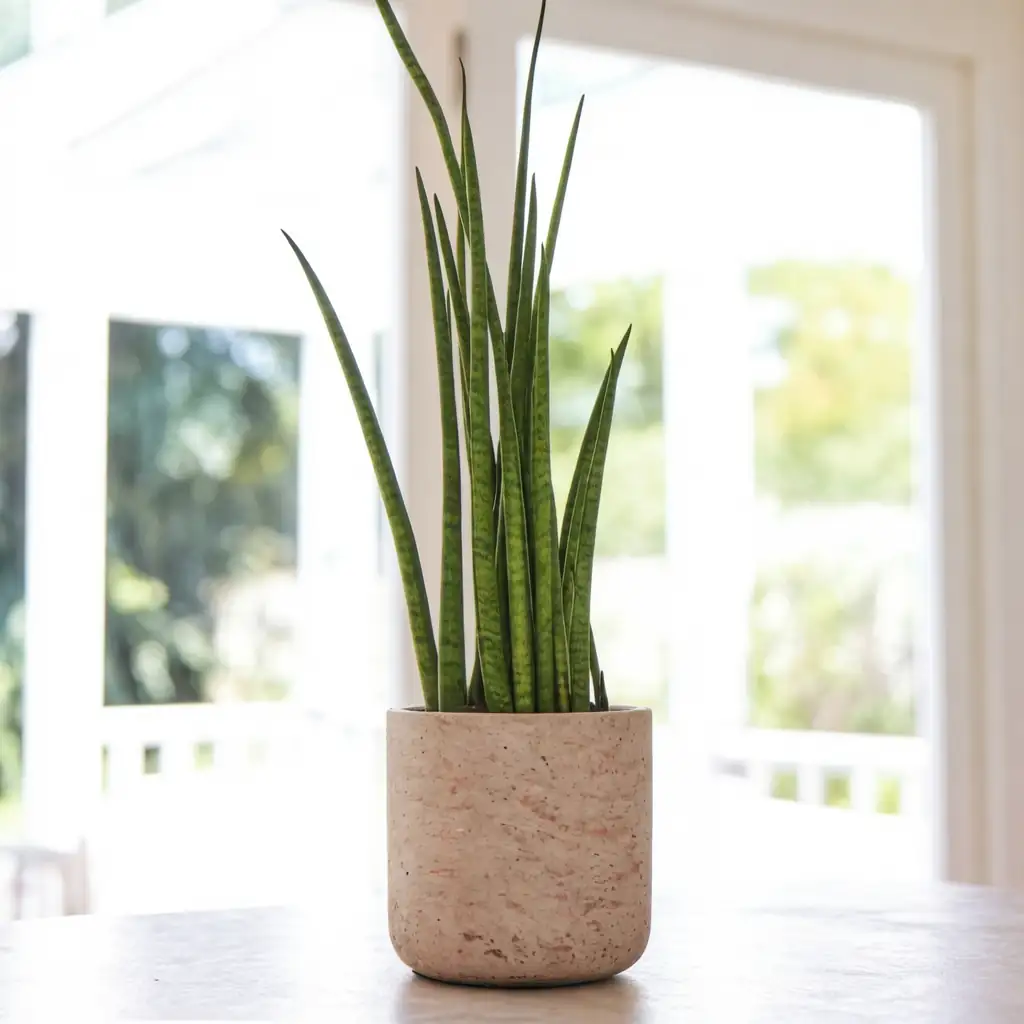
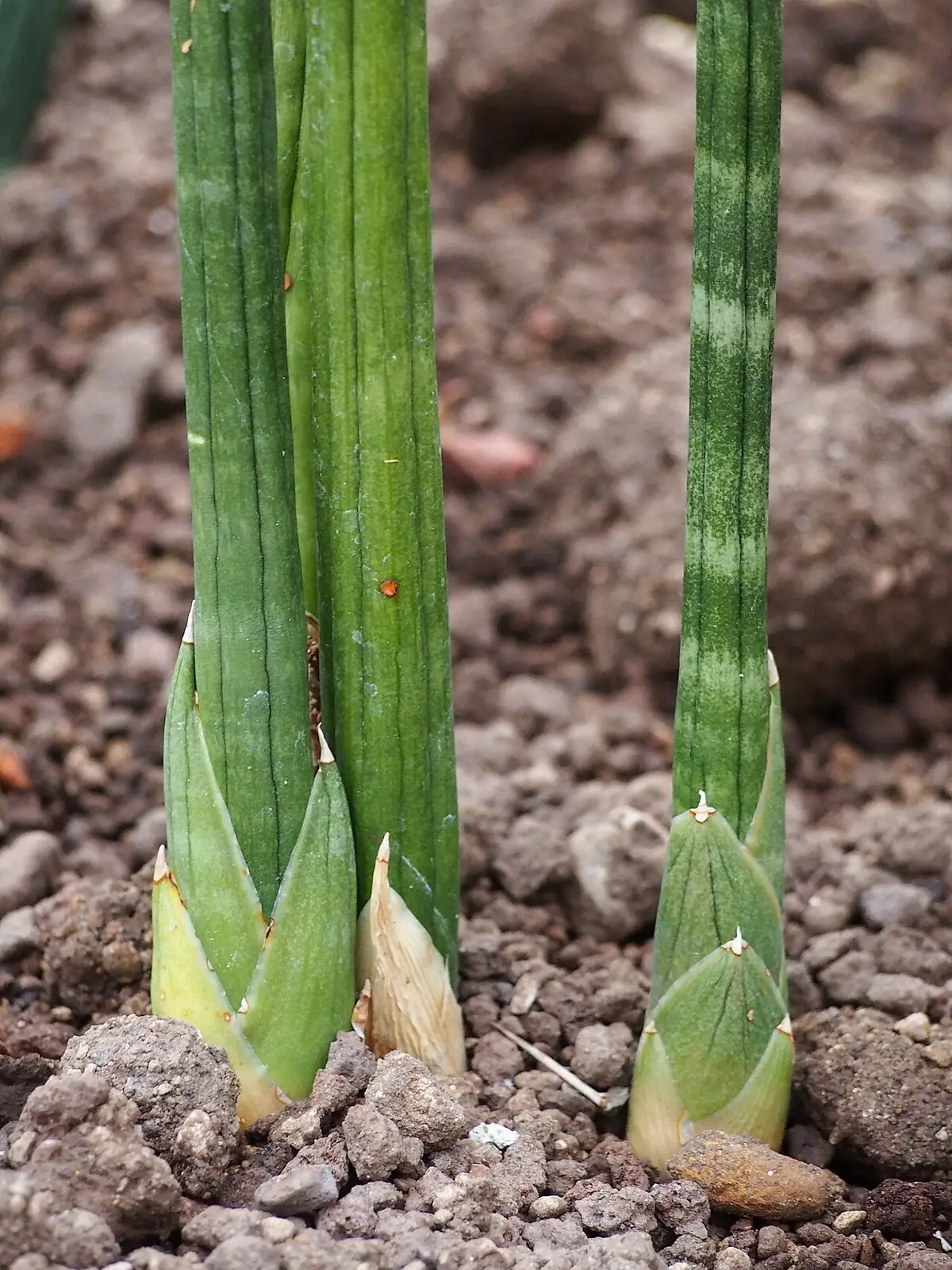
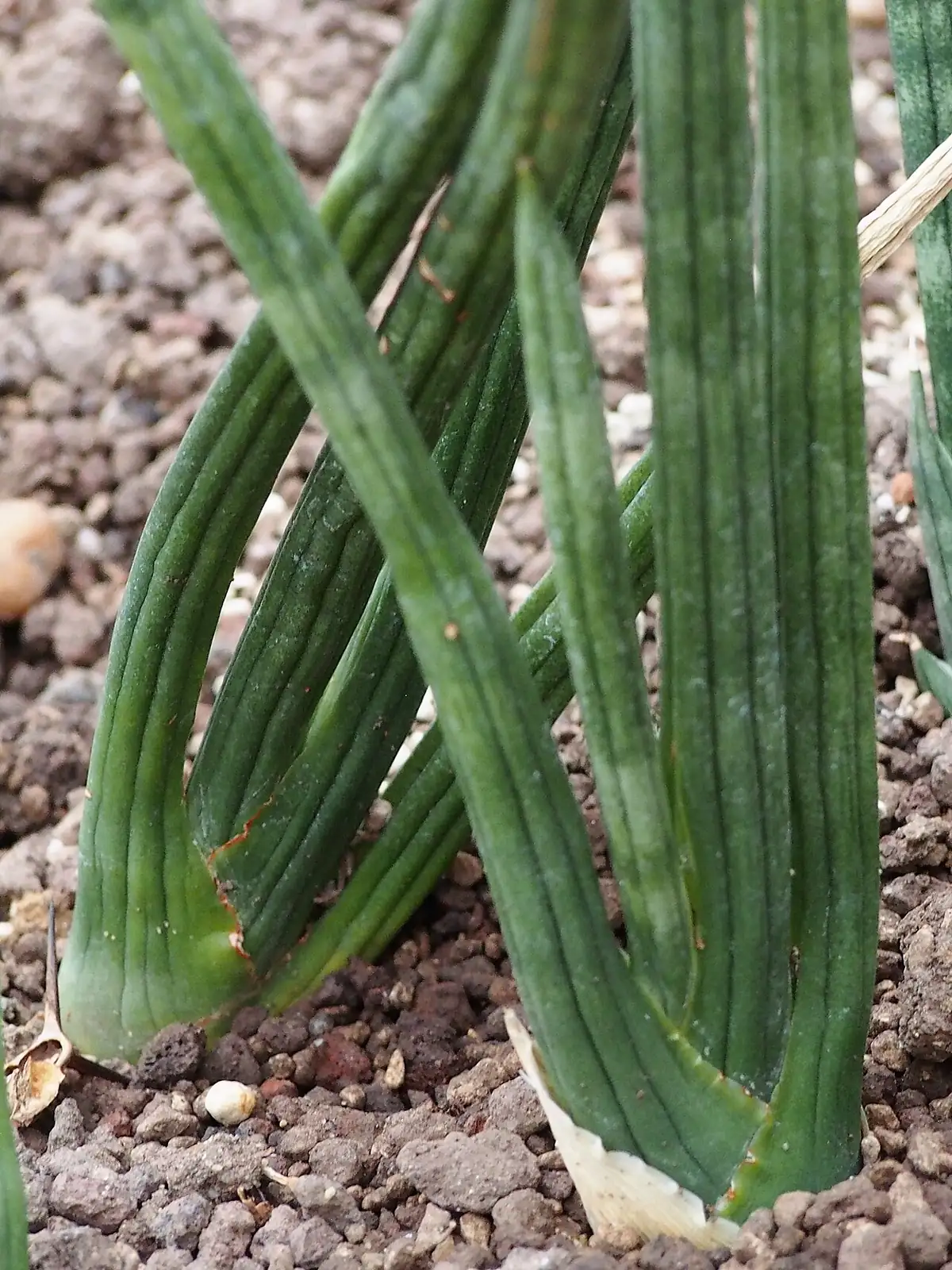
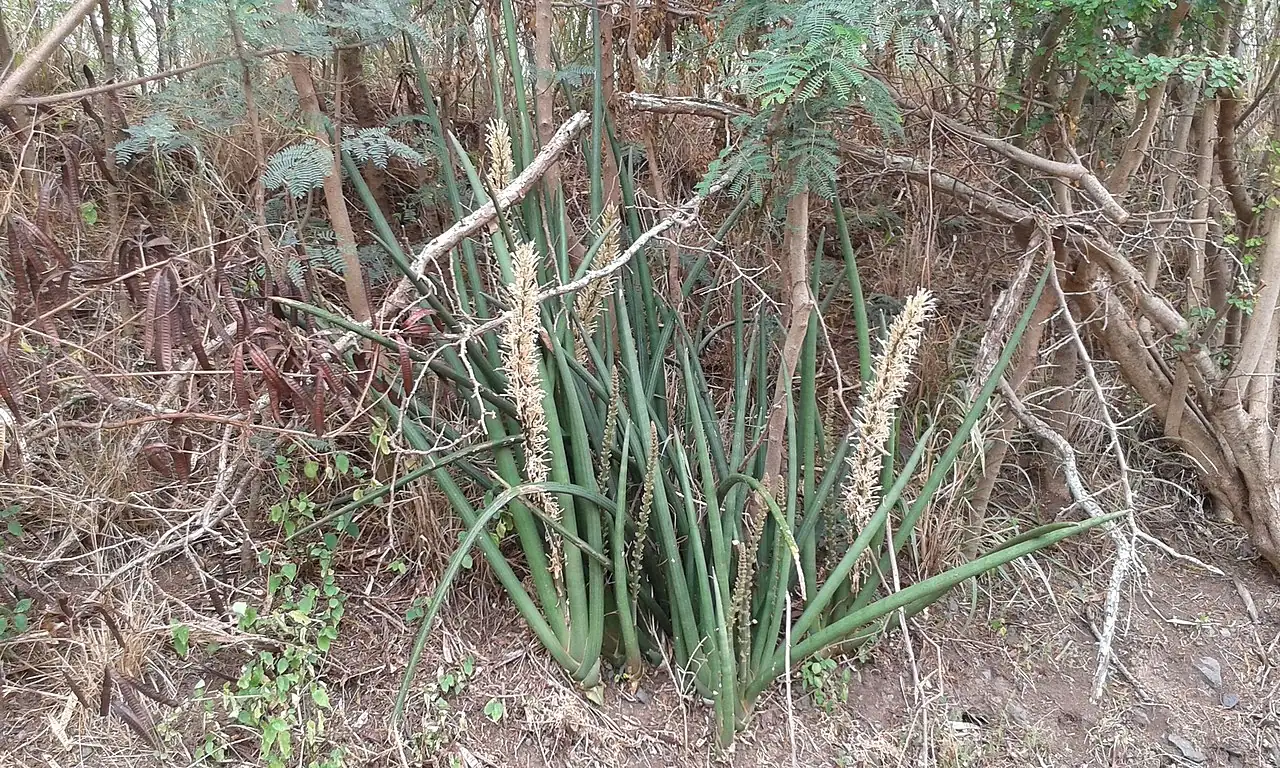
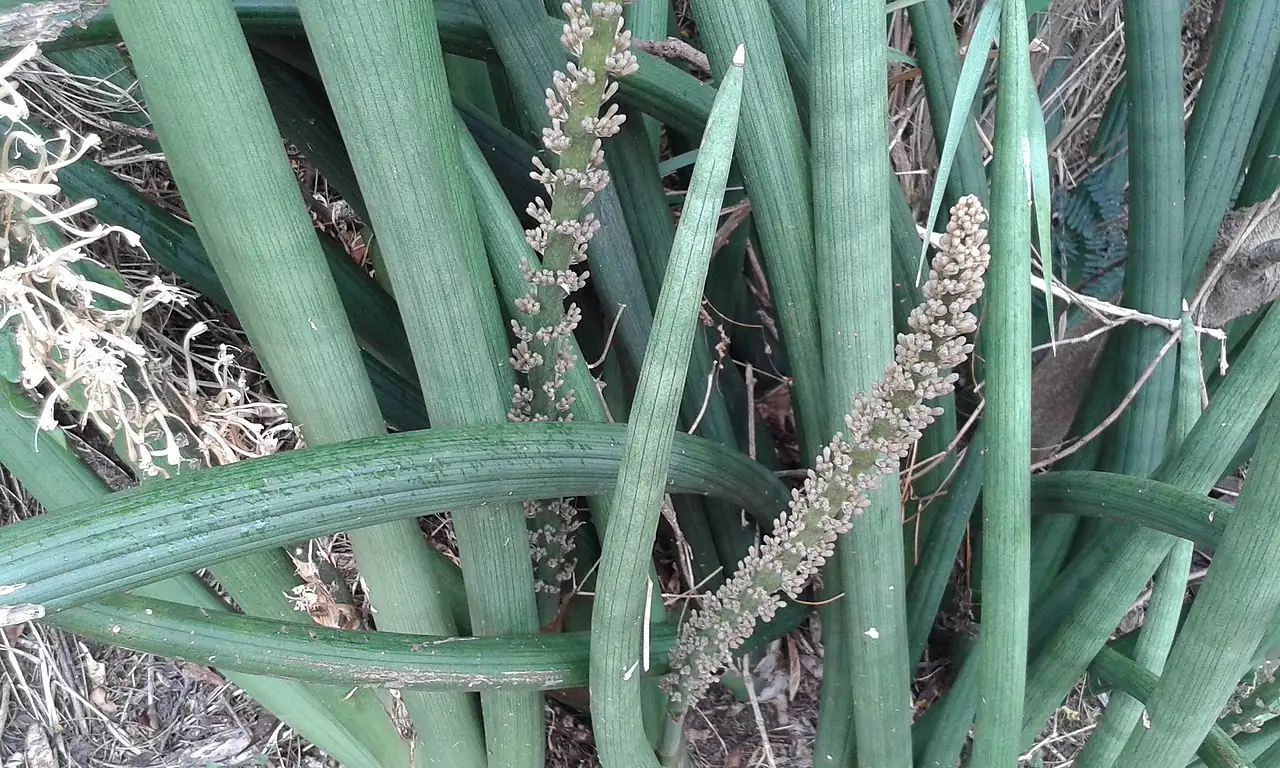
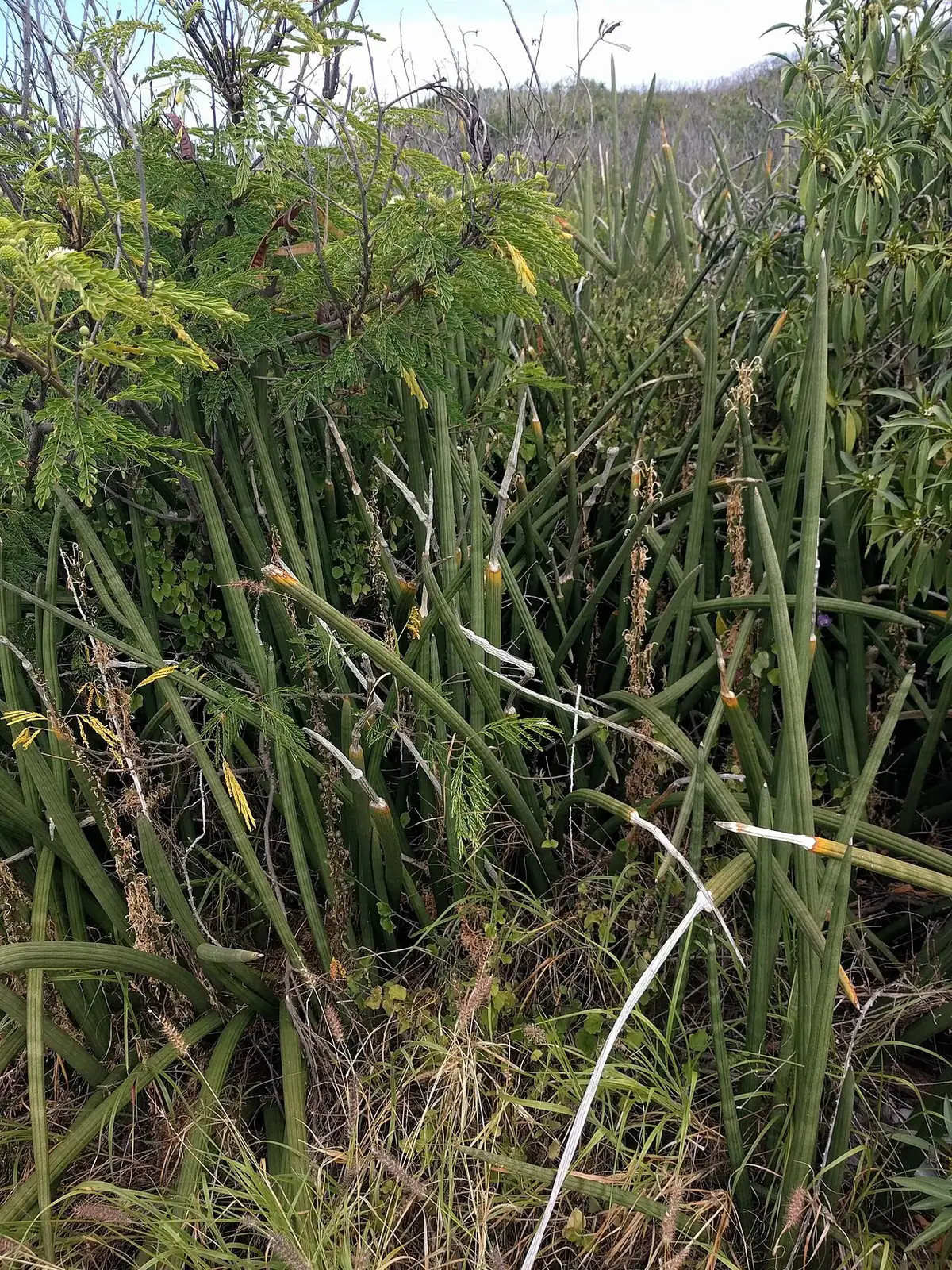
- Foliage: Tall, narrow, cylindrical leaves held upright like spears, with subtle gray-green horizontal banding. Leaves are firm and sculptural, but can be brittle and may snap if bent or knocked.
- Flower: On mature plants in bright conditions, it may produce slender flower spikes bearing small pale greenish-white blooms with a light fragrance. Flowering indoors is possible but uncommon.
- Flowering Season: Irregular; most likely in spring to summer indoors
- Growth Habit: Upright, clumping
Environment
Sunlight
Bright indirect light to partial shade; tolerates low light. Avoid strong direct sun, which can scorch leaves.
Temperature
15–24°C (59–75°F); keep above about 10°C (50°F) and protect from cold drafts and chilly windowsills.
Humidity
Low to average indoor humidity; no special humidity needs.
Soil
Fast-draining cactus/succulent potting mix. A snug pot is ideal because it prefers being slightly root-bound; avoid heavy, water-holding soils.
Placement
A stable spot with bright filtered light (near an east or north window, or set back from a sunny window). Keep out of walkways so the brittle leaves don’t snap; rotate occasionally to prevent leaning toward the light.
Hardiness
USDA Zone 10–12; not frost tolerant. Minimum temperatures around 10–16°C (50–60°F) depending on conditions.
Care Guide
Difficulty
Easy; very forgiving as long as it is not overwatered.
Buying Guide
Pick plants with firm, upright spears and no soft or mushy bases. Avoid pots that smell sour or have mix that stays wet (possible root rot). Check leaf bases for mealybugs.
Watering
Spring through fall: water only after the top of the mix dries out. Winter: reduce to about once a month, letting the mix dry more thoroughly between waterings. Empty any saucer—overwatering is the #1 cause of decline.
Fertilization
Spring through fall: feed monthly with a balanced liquid fertilizer at 1/2 strength. Skip feeding in winter.
Pruning
Very little needed. Remove broken or damaged leaves by cutting cleanly at the base with a sterile blade.
Propagation
Division of offsets (pups) is the most reliable. Leaf cuttings can work, but variegated forms may not come true from cuttings.
Repotting
Repot only when truly crowded or the pot starts to deform/crack—typically every 2–4 years. Move up just one pot size and keep the mix very free-draining.
📅 Seasonal Care Calendar
Spring–fall: provide bright indirect light, water when the surface dries, and fertilize monthly at half strength; rotate the pot now and then for even growth. Winter: stop feeding, keep warm, and water sparingly (about monthly). Year-round: use a cactus/succulent mix in a snug pot, avoid harsh direct sun, and place where the stiff leaves won’t be bumped.
Pests, Diseases & Safety
Common Pests & Diseases
Usually trouble-free. Watch for mealybugs and scale, especially tucked into leaf bases. Root rot is the main risk—caused by wet soil and frequent watering—so use a fast-draining mix and let it dry between waterings.
Toxicity
Toxic if chewed or ingested (people and pets). Keep away from children, cats, and dogs; sap may irritate sensitive skin.
Culture & Symbolism
Symbolism: Often linked with resilience and protection in modern houseplant culture—an easygoing plant that “stands its ground.”
History & Legends: This species was long sold under the genus Sansevieria (commonly as Sansevieria cylindrica). Many modern botanical references now place it in Dracaena, so both names still appear in shops and plant labels.
Uses: Grown mainly as an ornamental indoor foliage plant for homes and offices, prized for drought tolerance and its bold, architectural shape.
FAQ
Why are the leaves stretching or leaning?
It’s reaching for stronger light. Move it to brighter indirect light and rotate the pot every 1–2 weeks to keep growth even.
Can I keep it in low light?
Yes. It tolerates low light well, but it will grow more slowly and may lean toward the nearest light source.
What is the most common mistake with this plant?
Overwatering. Use a fast-draining cactus/succulent mix and let the pot dry well between waterings.
Fun Facts
- It’s still widely sold as Sansevieria cylindrica even though many modern plant lists place it in Dracaena.
- Those stiff, spear-like leaves look indestructible, but they can snap if bent—choose a low-traffic spot.


