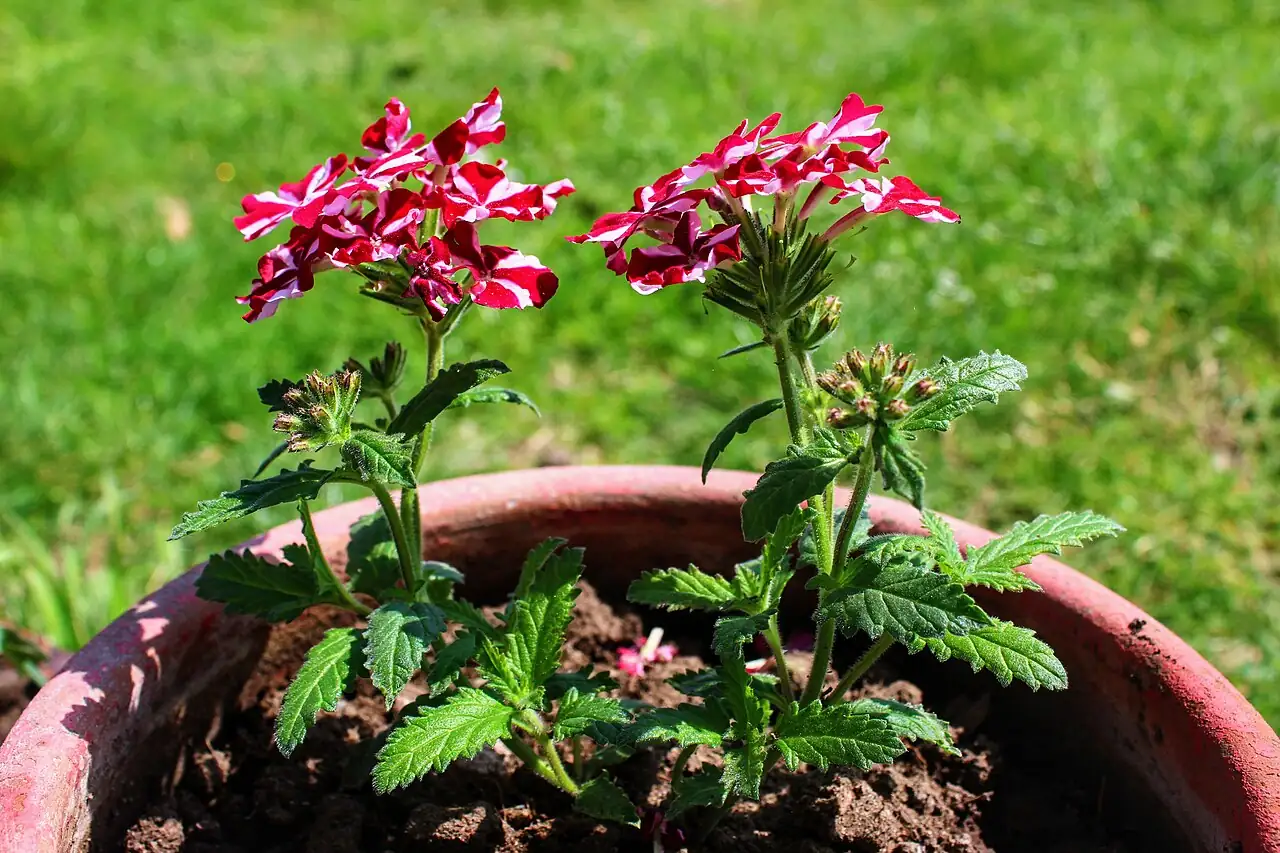
Plant Features
- Size: Typically 15–30 cm (6–12 in) tall with a spread of about 30–60 cm (12–24 in), depending on cultivar and pruning; compact pot plants are often kept under 20 cm (8 in).
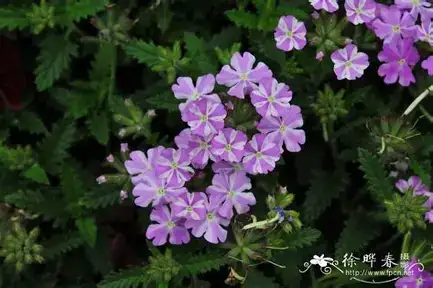
- Foliage: Dense, oval leaves with slight toothy edges, usually a rich deep green. The plant forms a leafy mound on many branching stems, which can stretch and look sparse if light is too weak.
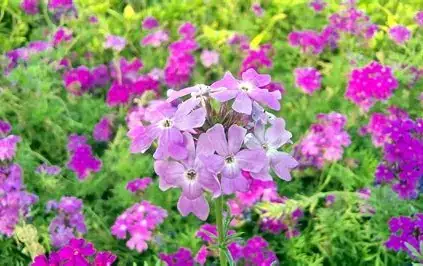
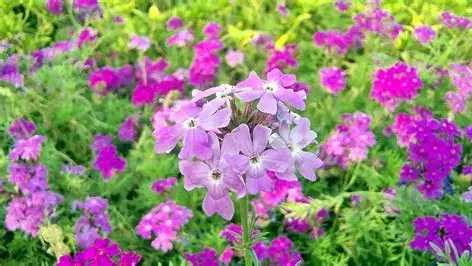
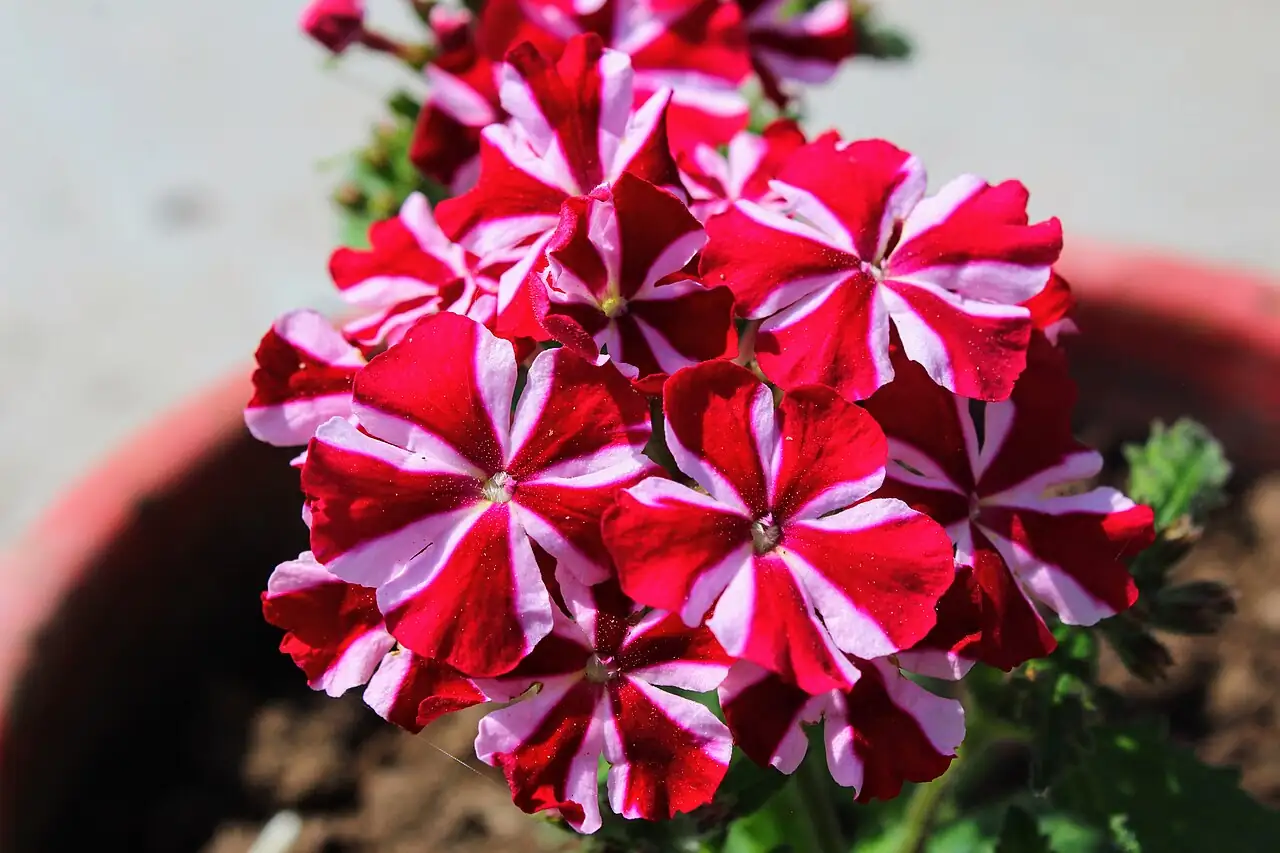
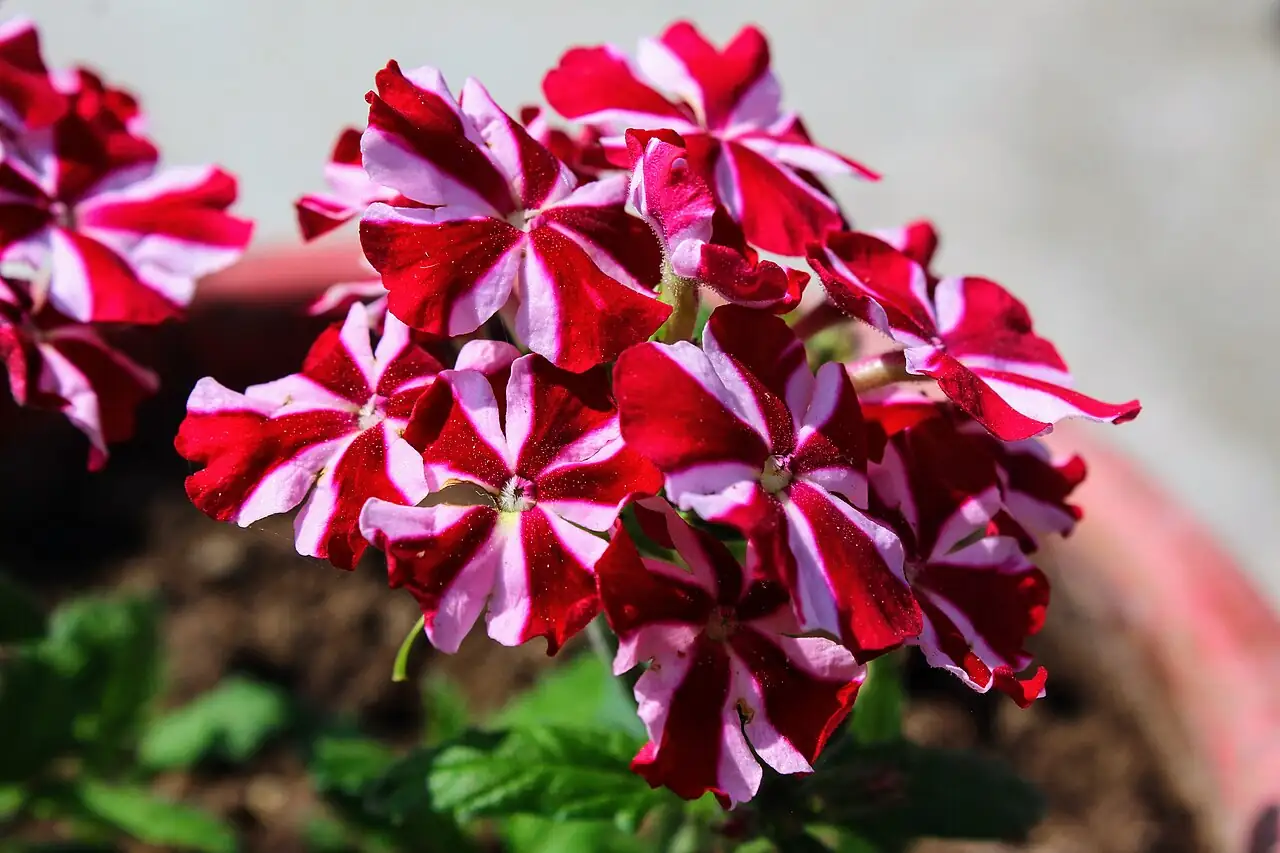
- Flower: Rounded, pom‑pom-like clusters made up of many small flowers held above the foliage. Cultivars come in a wide palette—commonly white, pink, red, purple, and bicolors (often with a contrasting ‘eye’). Removing spent clusters (deadheading) helps trigger fresh shoots and new waves of blooms.
- Flowering Season: Summer through fall
- Growth Habit: Clump-forming, branching, and often gently spreading. Can become leggy in low light; pinching and trimming encourage a fuller, more flower-heavy shape.
Environment
Sunlight
Full sun for best flowering (at least 6+ hours/day). Strong light helps prevent legginess and keeps flower color vivid; ideal spots include a sunny balcony, patio, or bright windowsill.
Temperature
Grows best around 5–25°C (41–77°F), with an ideal near 16°C (61°F). Many cultivars may tolerate brief dips to about -5°C (23°F), but it isn’t reliably frost-hardy—move or protect plants before hard frost. For earlier indoor flowering, aim for about 16°C (61°F) days and 12°C (54°F) nights.
Humidity
Likes evenly moist root conditions during active growth, but doesn’t love constantly wet leaves. Good airflow helps prevent mildew; avoid stagnant, humid corners and frequent overhead watering.
Soil
Loose, fertile, well-drained mix. A quality potting soil amended with perlite/sand works well; excellent drainage is key to preventing root problems.
Placement
Sunny, airy locations such as balconies, patios, or bright windowsills. Provide space for airflow to reduce mildew pressure; avoid leaving pots sitting in water.
Hardiness
Generally treated as an annual or tender perennial. Approximate outdoor hardiness: USDA Zone 9–11 (varies by cultivar). Protect from hard frost; in very hot weather, flowering can slow.
Care Guide
Difficulty
Easy to moderate. Success comes down to three habits: give it strong sun, water thoroughly but never let it stay waterlogged, and deadhead/pinch regularly to keep it blooming and bushy.
Buying Guide
Pick plants with a naturally full, well-branched shape and dense, deep green foliage. It’s best if a few flowers are just starting to open (rather than a plant already past peak bloom). Compact plants around or under 20 cm (8 in) tall typically establish faster and stay tidier; bicolors or ‘eye’ types tend to look especially showy.
Watering
Spring: water about twice a week, keeping the mix evenly moist but not soggy. Summer (peak bloom): water deeply when the surface dries, then let excess drain—never leave the pot standing in water. In heat above 30°C (86°F), many cultivars slow down; keep moisture steady rather than swinging between drought and flooding. Fall: keep slightly moist to extend flowering. Winter indoors: provide the brightest light possible and keep soil lightly moist (not wet).
Fertilization
Feed about every 2 weeks during seedling growth and the main flowering period. A balanced fertilizer such as 20-20-20 at label strength works well; avoid heavy nitrogen, which can push leafy, weak growth at the expense of flowers.
Pruning
Pinch growing tips on weaker-branching cultivars when plants reach about 10–12 cm (4–5 in) to encourage side shoots. Deadhead regularly to trigger new flower stems. If plants get crowded or leggy, cut back by about 1/3 to 1/2 to reshape and spark fresh growth; healthy trimmings can be used as cuttings.
Propagation
Cuttings: take soft, non-woody shoots (often from overlong stems) and root in vermiculite, or start in water and pot up after roots form. Seed: sow in spring or fall; best germination at 20–22°C (68–72°F). Don’t bury deeply—cover with only a thin layer of vermiculite. Germination typically takes about 14–20 days; transplant after roughly 30 days. For fall sowing, pot on when seedlings reach about 7–8 cm (2.8–3.1 in).
Repotting
For pots, use about 12–15 cm (4.7–5.9 in) diameter containers, planting ~3 seedlings per pot for a full look. For hanging baskets, use about 20–25 cm (7.9–9.8 in) diameter, planting ~5 seedlings per basket. Pot up fall-sown seedlings at about 7–8 cm (2.8–3.1 in).
📅 Seasonal Care Calendar
Spring: increase light; water ~2× weekly; keep seedlings evenly moist. Summer: full sun; water when the surface dries; ensure drainage; deadhead often. Fall: keep slightly moist to prolong flowering; bring indoors before hard frost; overwinter best around 12–16°C (54–61°F). Winter: brightest light; keep mix lightly moist; for earlier flowering, target ~16°C (61°F) days and ~12°C (54°F) nights.
Pests, Diseases & Safety
Common Pests & Diseases
Common problems include powdery mildew and downy mildew—usually worsened by poor airflow and wet foliage. Improve ventilation, avoid late-day overhead watering, and remove infected parts promptly. Aphids and whiteflies may also appear; manage with insecticidal soap or a labeled pyrethrin/pyrethroid product, following directions carefully.
Toxicity
No confirmed toxicity details were provided in the source. As a sensible precaution, discourage pets and children from chewing any ornamental plant; if ingestion or irritation occurs, contact local poison control or a veterinarian.
Culture & Symbolism
Symbolism: Often linked with togetherness and unity in Western flower symbolism, and commonly used as a bright, upbeat plant for ‘harmony at home’ seasonal displays.
Uses: Mainly ornamental—popular for bedding schemes, patio containers, hanging baskets, and sunny balcony/windowsill decoration.
FAQ
What should I do if the flowers look dull and the stems become long and leggy?
Give it more sun and avoid keeping the soil constantly wet. Low light plus soggy conditions lead to stretched stems, fewer blooms, smaller flowers, and washed-out color. Move to full sun, water only when the surface starts to dry, and pinch/trim leggy shoots to encourage branching.
Fun Facts
- Garden verbena is a horticultural hybrid (often written as Verbena × hybrida), bred for long flowering and a wide color range.
- Deadheading isn’t just cosmetic—removing spent clusters can noticeably extend blooming from summer well into fall.