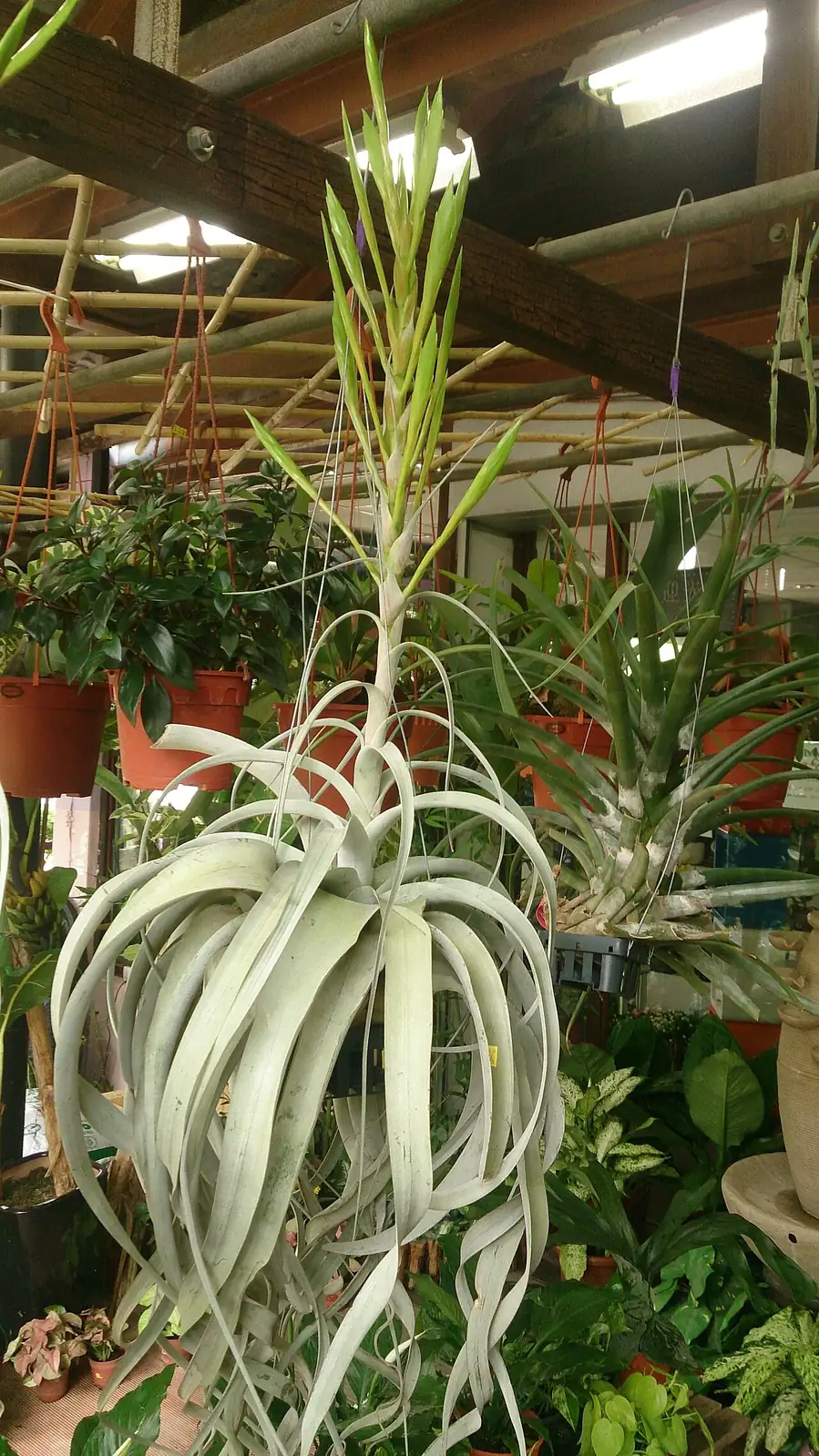
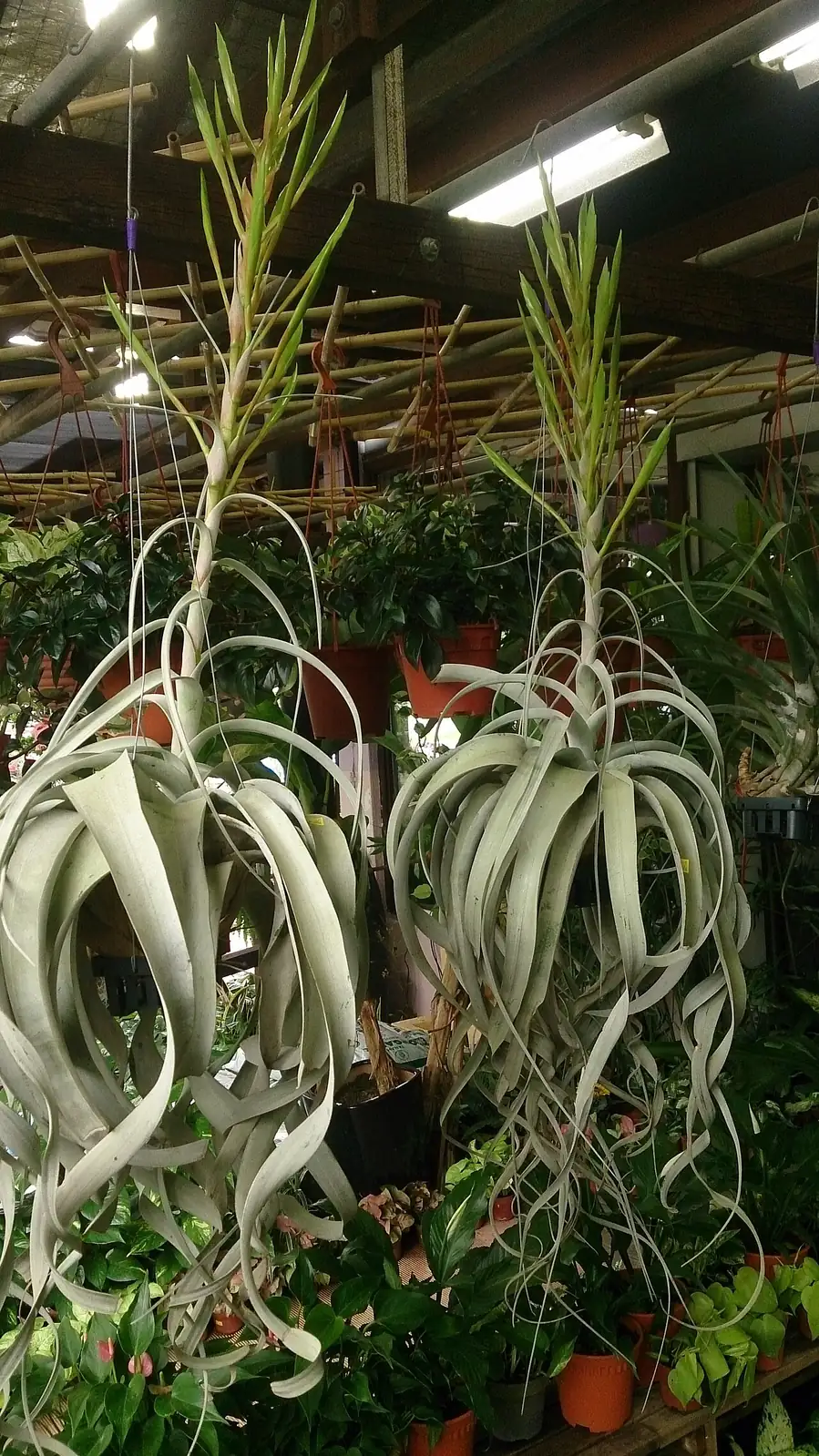
Plant Features
- Size: Typically 15–60 cm (6–24 in) across; flowering spike may reach 30–90 cm (12–35 in) tall on mature plants.
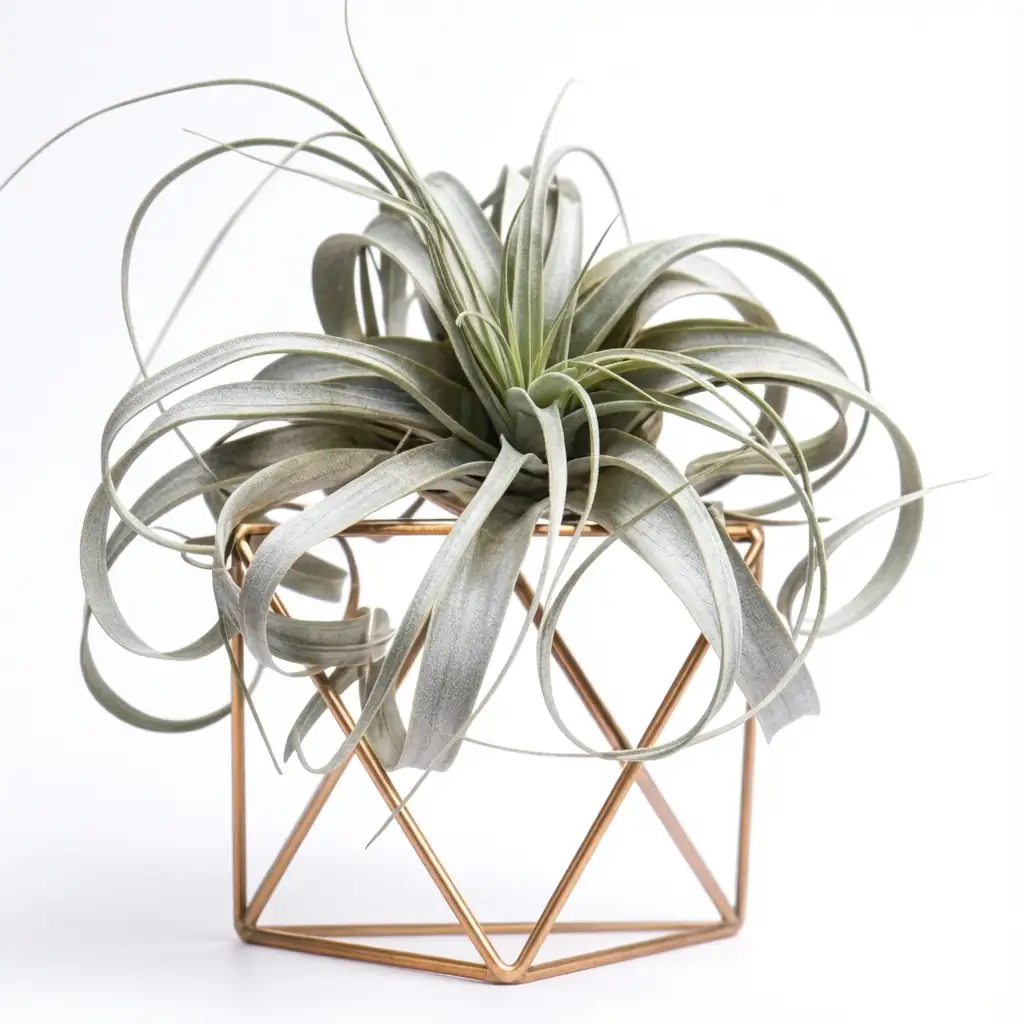
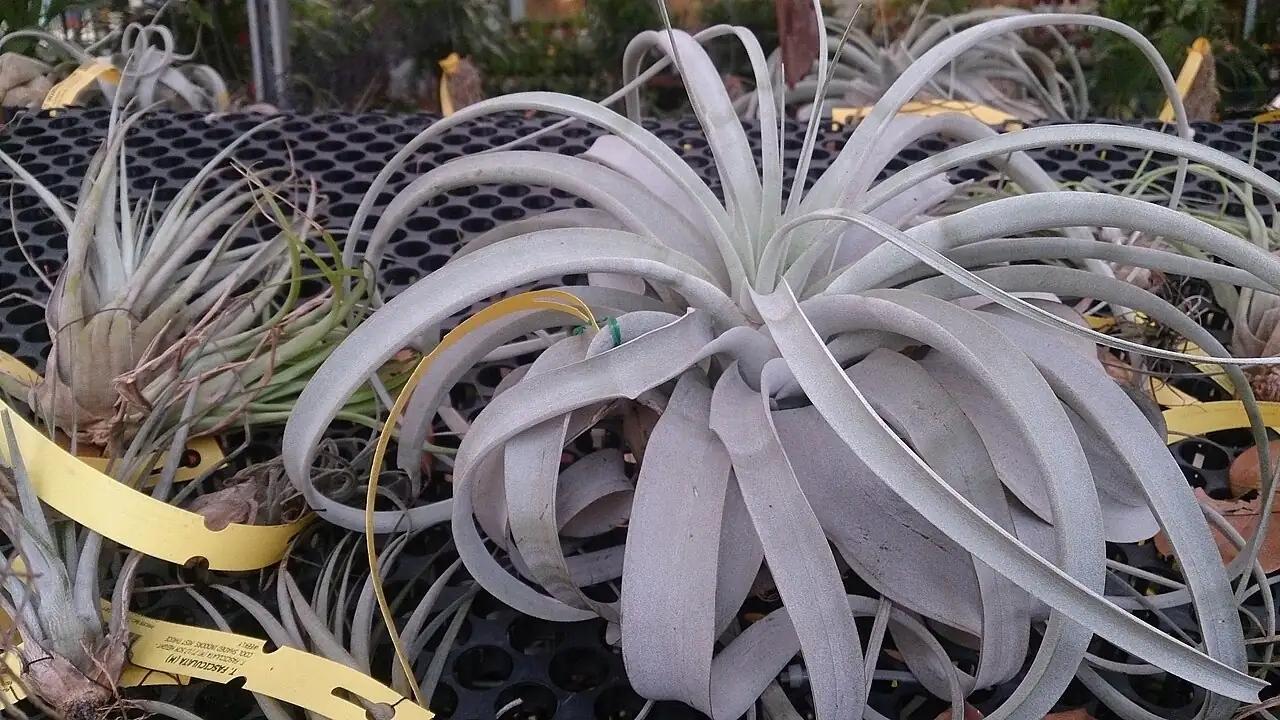
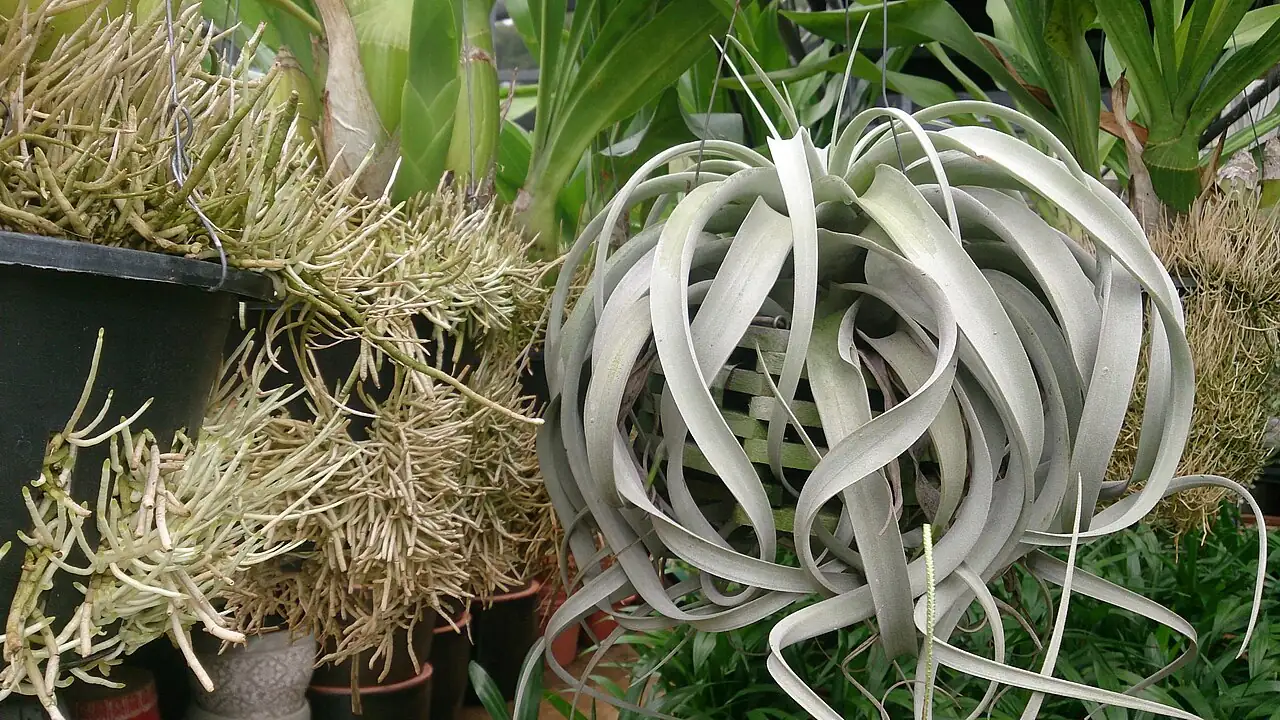
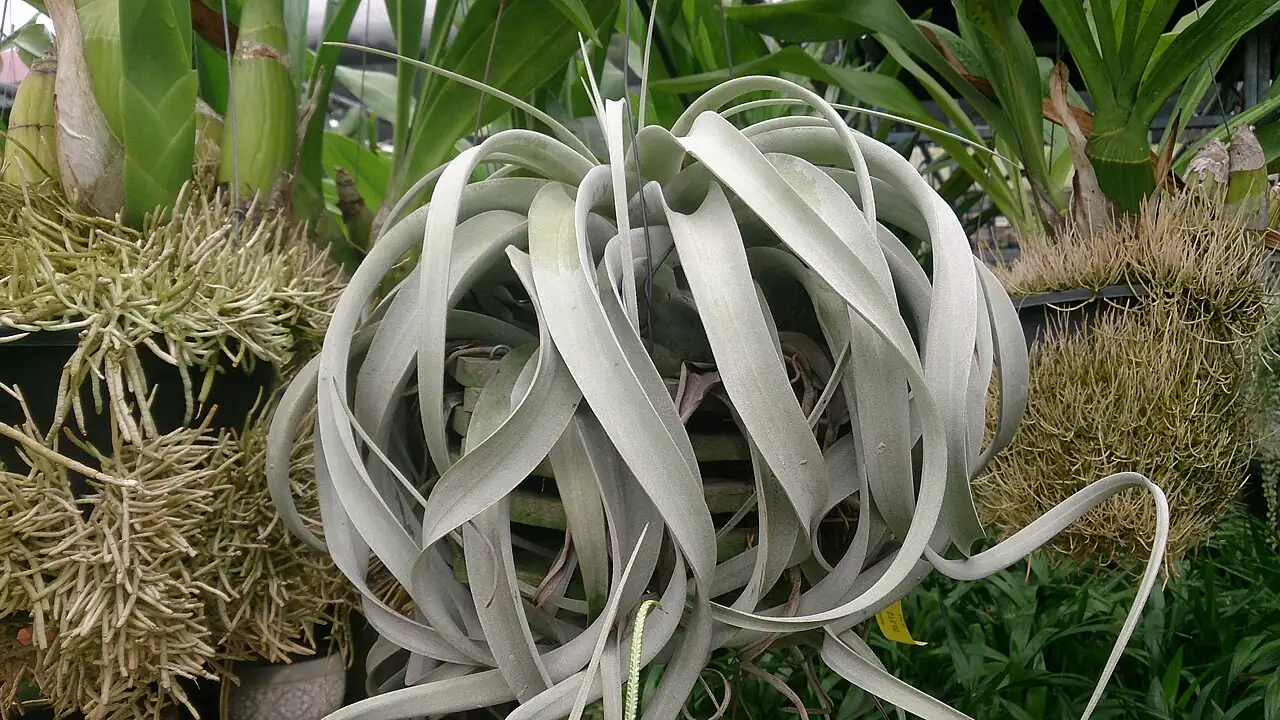
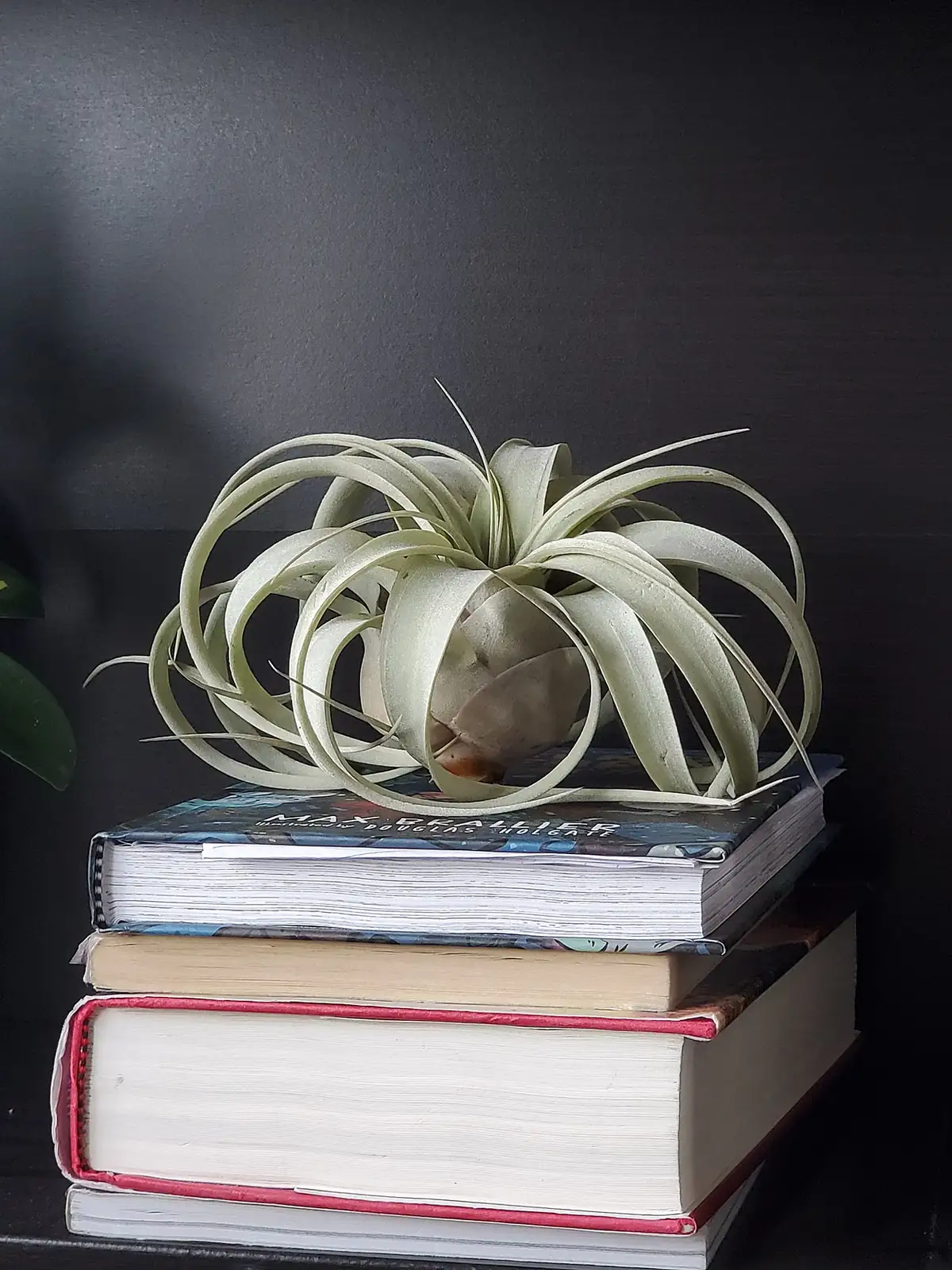
- Foliage: Silvery-gray, broad, strap-like leaves with a matte glow, arching and curling into a tight, layered rosette. The silvery cast comes from dense trichomes (leaf scales) that help the plant capture moisture and cope with bright, dry conditions.
- Flower: A long-lasting, often branched flower spike (inflorescence) with small tubular purple flowers; most plants bloom only when they’ve reached maturity.
- Flowering Season: Variable indoors; most often spring to summer (timing depends on maturity and growing conditions).
- Growth Habit: Rosette-forming epiphyte; gradually produces offsets (“pups”) and can become a clumping specimen over time.
Environment
Sunlight
Bright light with some direct sun is ideal. Indoors, place near an east or south window with filtered midday sun; avoid deep shade. Too little light can make leaves greener and softer, while harsh sun can bleach or scorch.
Temperature
Ideal 15–30°C (59–86°F). Protect from cold below 10°C (50°F) and keep completely frost-free.
Humidity
Moderate humidity with excellent airflow; about 40–60% works well (higher is fine if ventilation is strong). The key is fast drying after watering.
Soil
No soil needed. Display mounted on wood/rock, in a mesh holder, or set on a dry, airy surface. Avoid constantly wet media or closed containers that trap moisture.
Placement
Indoors: bright windowsill or well-lit shelf with good airflow. Terrarium-style displays only if very well ventilated. Outdoors: bright, airy patio in warm, frost-free climates.
Hardiness
USDA Zone 10–11 (tender; not frost-hardy).
Care Guide
Difficulty
Easy to moderate: forgiving when kept bright and airy, but sensitive to staying wet (rot risk).
Buying Guide
Pick plants with firm, silvery leaves and a tight rosette. Avoid blackened bases, mushy spots, or sour smells (classic rot signs). Minor brown leaf tips are common and usually just cosmetic.
Watering
This species generally wants less water than many Tillandsia. Prefer thorough misting over soaking: mist well, then ensure it dries completely within about 4 hours. In very dry homes, an occasional quick rinse (about 5–10 seconds) can help, but avoid long soaks unless the plant is severely dehydrated. Water earlier in the day and prioritize strong airflow every time.
Fertilization
Feed lightly during active growth using a bromeliad/air-plant fertilizer at 1/4 strength every 2–4 weeks (or monthly). Rinse with plain water occasionally to prevent fertilizer/mineral buildup on the leaves.
Pruning
No routine pruning. Gently remove only fully dead, dry outer leaves. After flowering, don’t “trim it down”—the mother rosette naturally declines while producing pups.
Propagation
By offsets (“pups”). Separate pups when they’re about 1/3–1/2 the size of the mother, or leave attached for a fuller clump display.
Repotting
Not applicable like potted plants. Remount or move to a larger holder as it grows, and avoid tight containers that restrict airflow.
📅 Seasonal Care Calendar
Spring–summer: brighter light, more frequent misting, light feeding. Fall–winter: reduce watering, keep warm, maximize light, and make sure it always dries quickly after any moisture.
Pests, Diseases & Safety
Common Pests & Diseases
Most problems come from rot due to staying wet without airflow. Watch for mealybugs and scale; dab pests with a cotton swab dipped in 70% isopropyl alcohol and improve airflow. Avoid oil-heavy sprays on air plants.
Toxicity
Generally considered non-toxic to people and pets, though not edible. Chewing may cause mild stomach upset.
Culture & Symbolism
Symbolism: Often linked with independence and resilience—plus a sleek, modern minimalist beauty—because it thrives without soil.
History & Legends: A highly collected bromeliad in modern houseplant culture, celebrated for its dramatic form and unusually large, sculptural rosette among Tillandsia.
Uses: Ornamental plant for mounting, tabletop displays, and contemporary interior decor—grown mainly for its silver foliage and the occasional purple-blooming flower spike.
FAQ
Why are the leaf tips turning brown?
Most often it’s very dry air, inconsistent watering, or mineral-heavy water. Try slightly more frequent misting, use rain/filtered water, and keep the plant in bright light with strong airflow.
Should I soak Tillandsia xerographica?
Usually no—this species prefers misting and a quick dry-down. If you do soak, keep it brief and make sure it dries fully within a few hours to prevent rot.
How do I know it’s getting enough light?
A happy plant stays silvery, firm, and grows slowly but steadily. Too little light often makes it greener and softer with weaker growth; too much harsh sun can cause bleaching or scorched patches.
Fun Facts
- The silvery sheen comes from dense trichomes (tiny leaf scales) that help it grab moisture from the air and reflect intense sun in its native dry habitats.
- After blooming, the mother rosette gradually declines—but it usually produces pups, so the plant ‘lives on’ as a growing clump.