Plant Features
- Size: Indoors in pots, typically 30–60 cm (12–24 in) tall and about 30–60 cm (12–24 in) wide; many common houseplant specimens are around 45 cm × 30 cm (18 in × 12 in), depending on cultivar, pot size, and care.
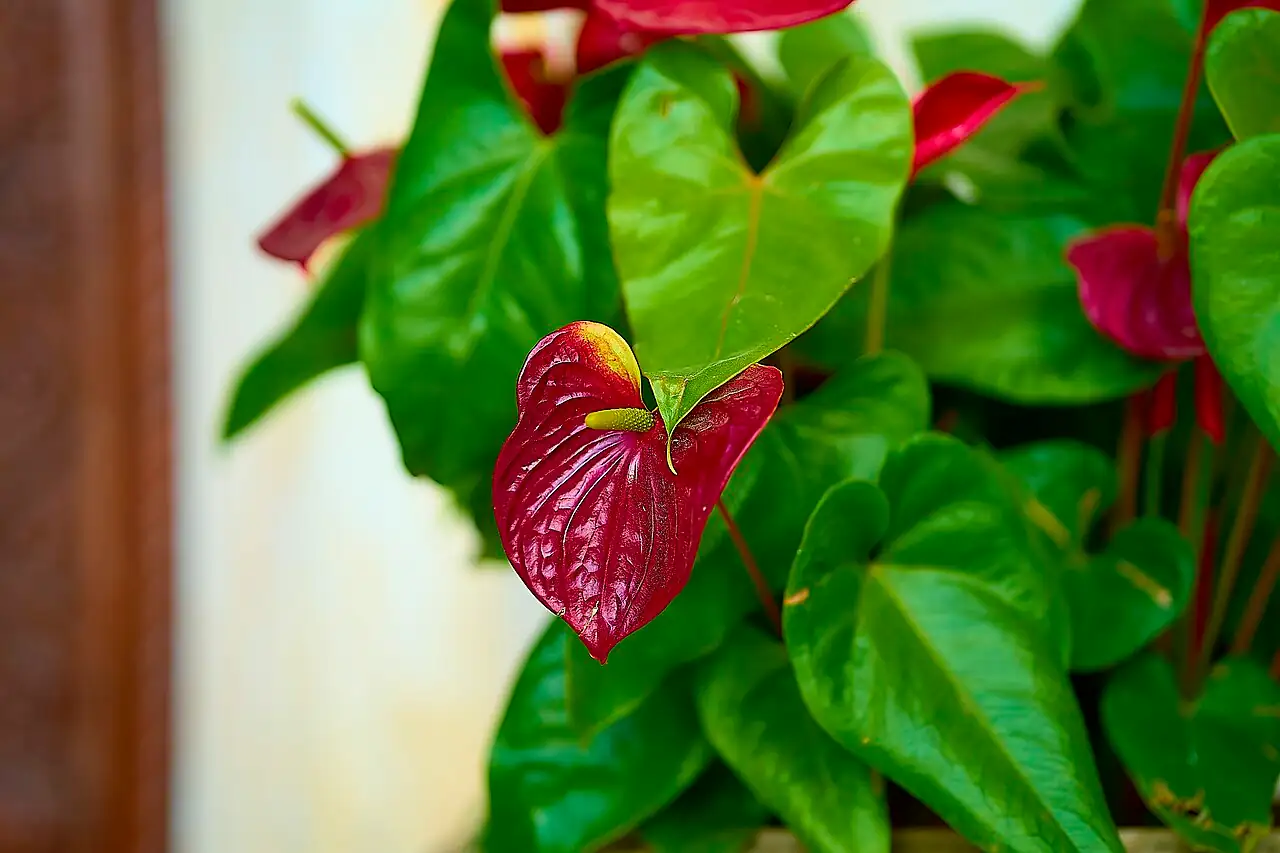
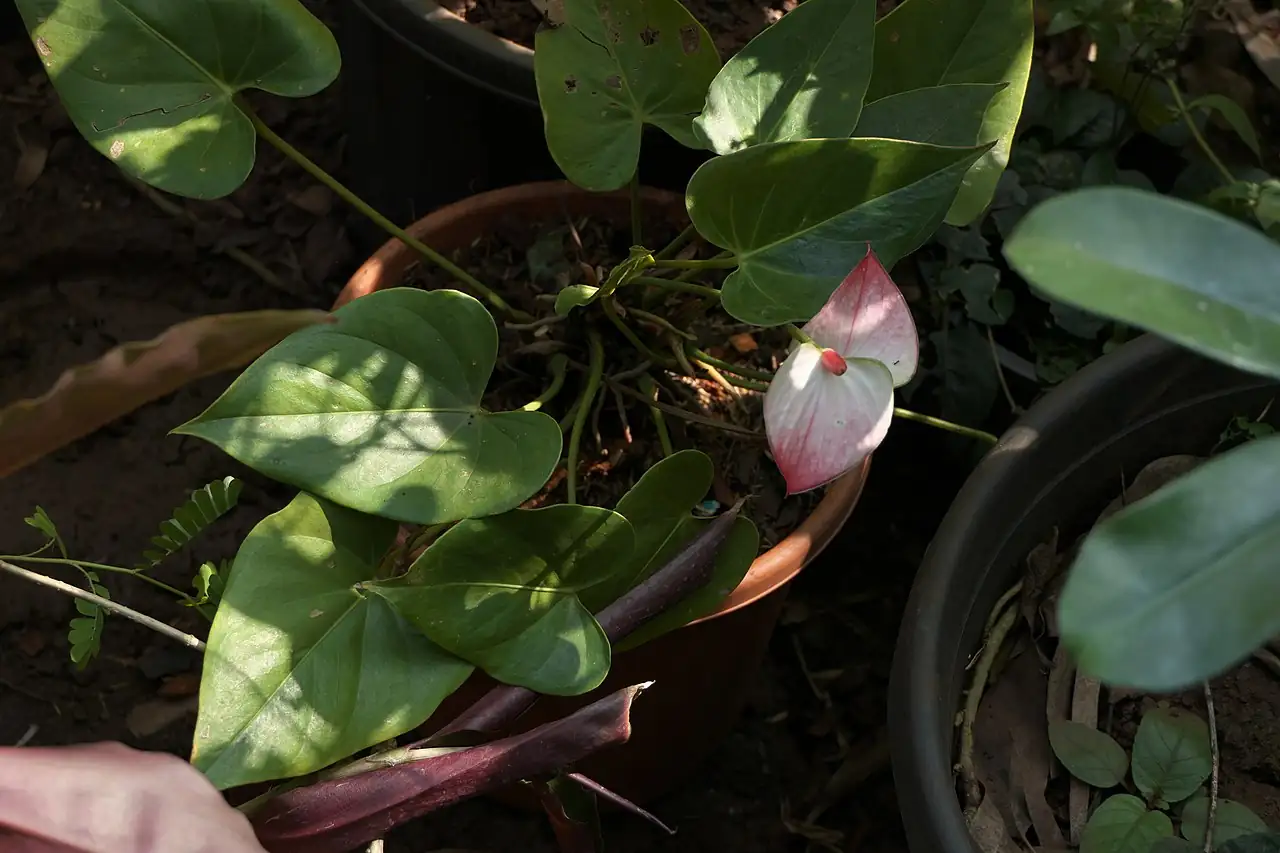
- Foliage: Evergreen, glossy, deep green leaves that range from arrow-shaped to heart-shaped or broadly oval, held on upright stems. Older or stressed leaves may yellow—removing yellowing, damaged, or overcrowded leaves helps keep the plant neat and improves airflow.
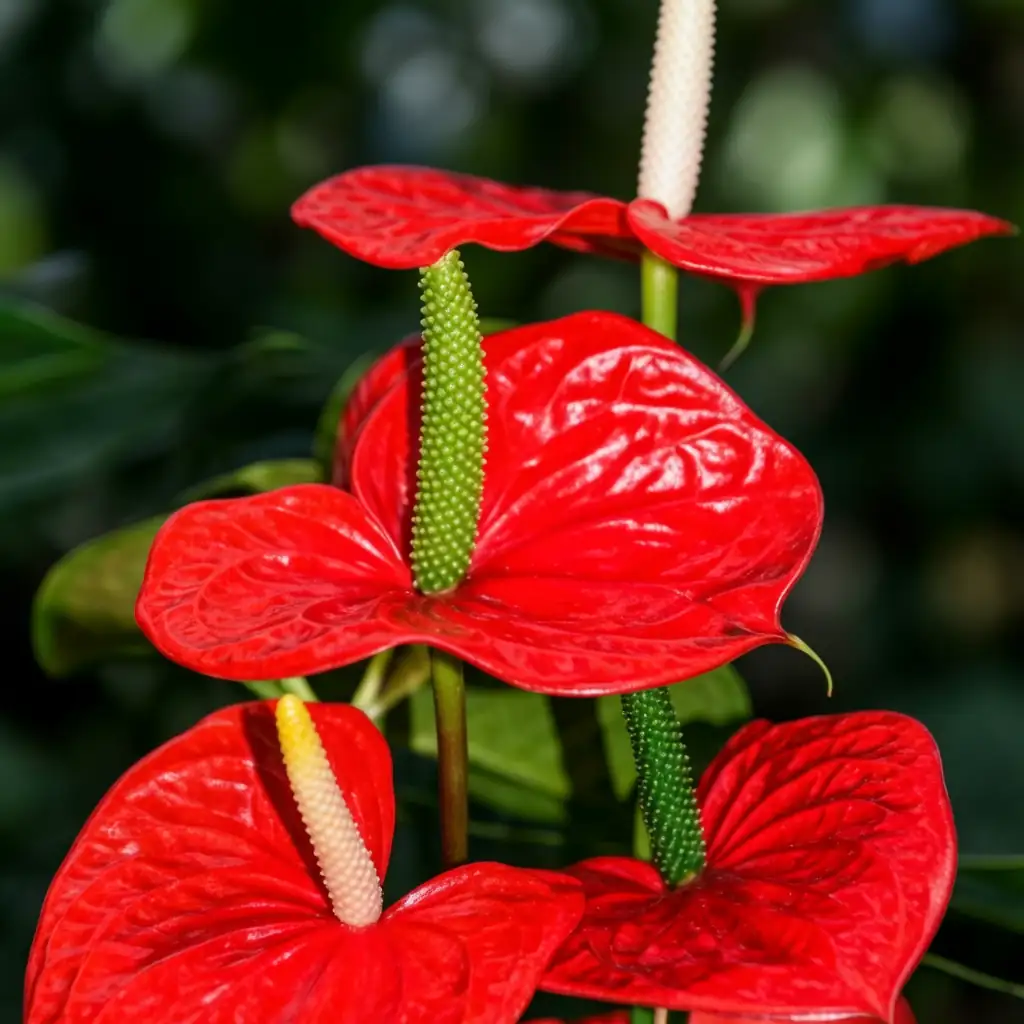
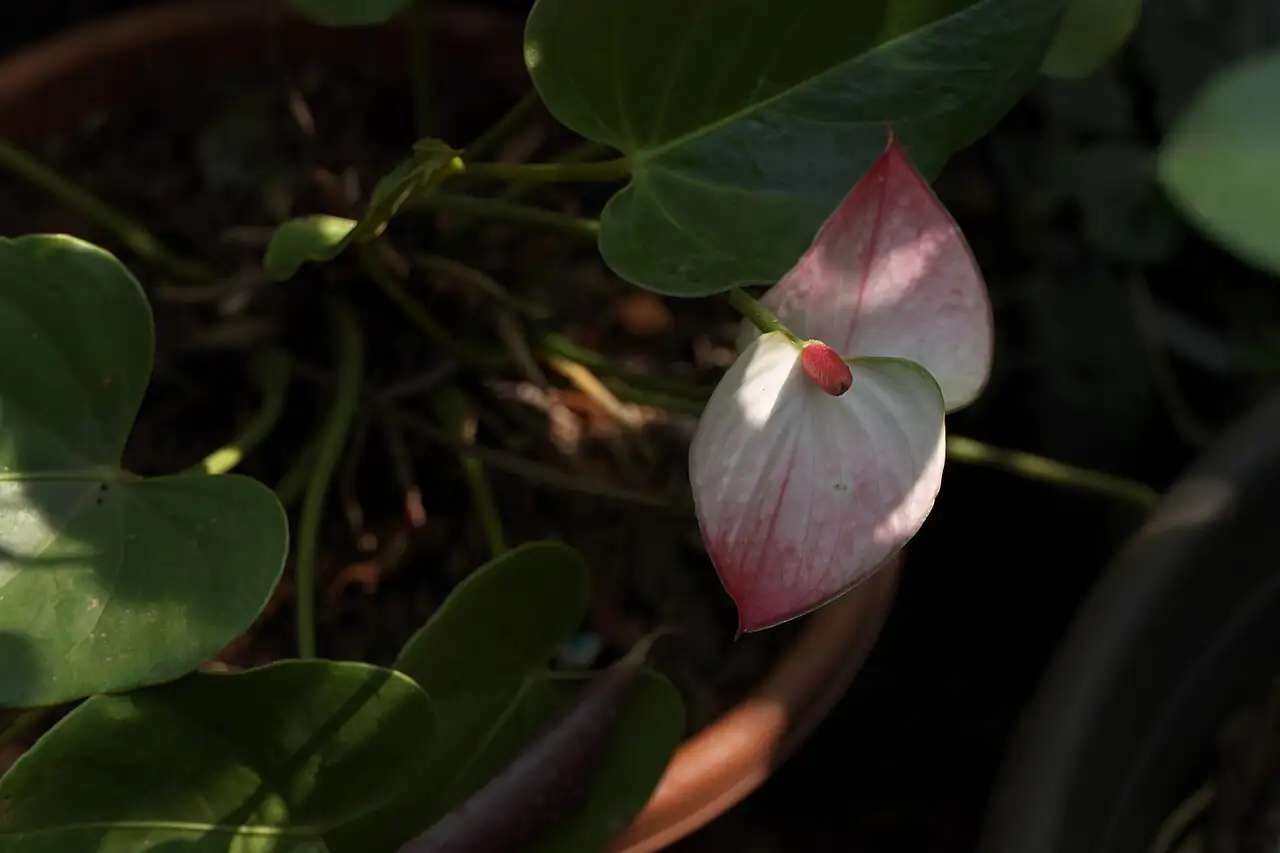
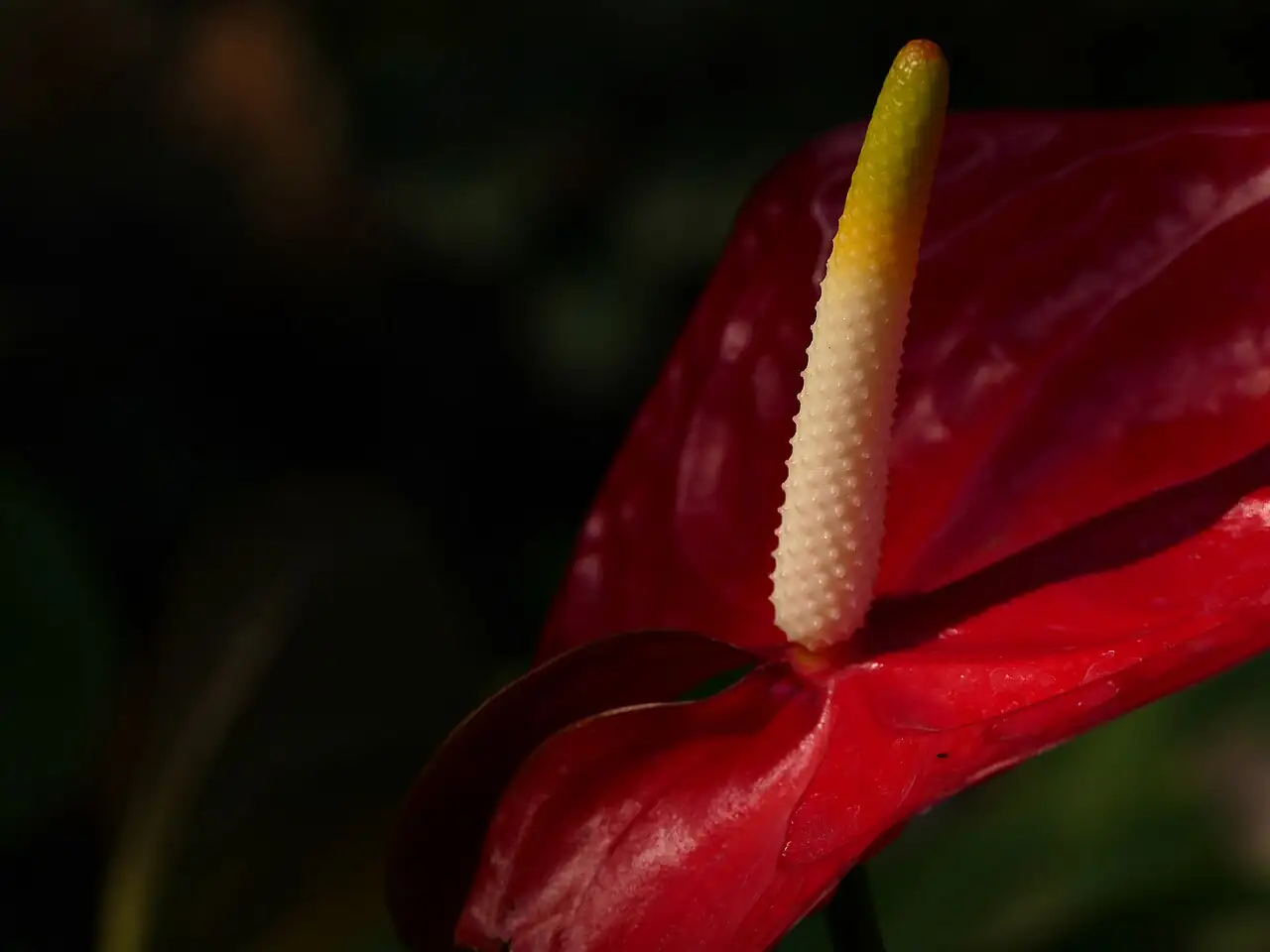
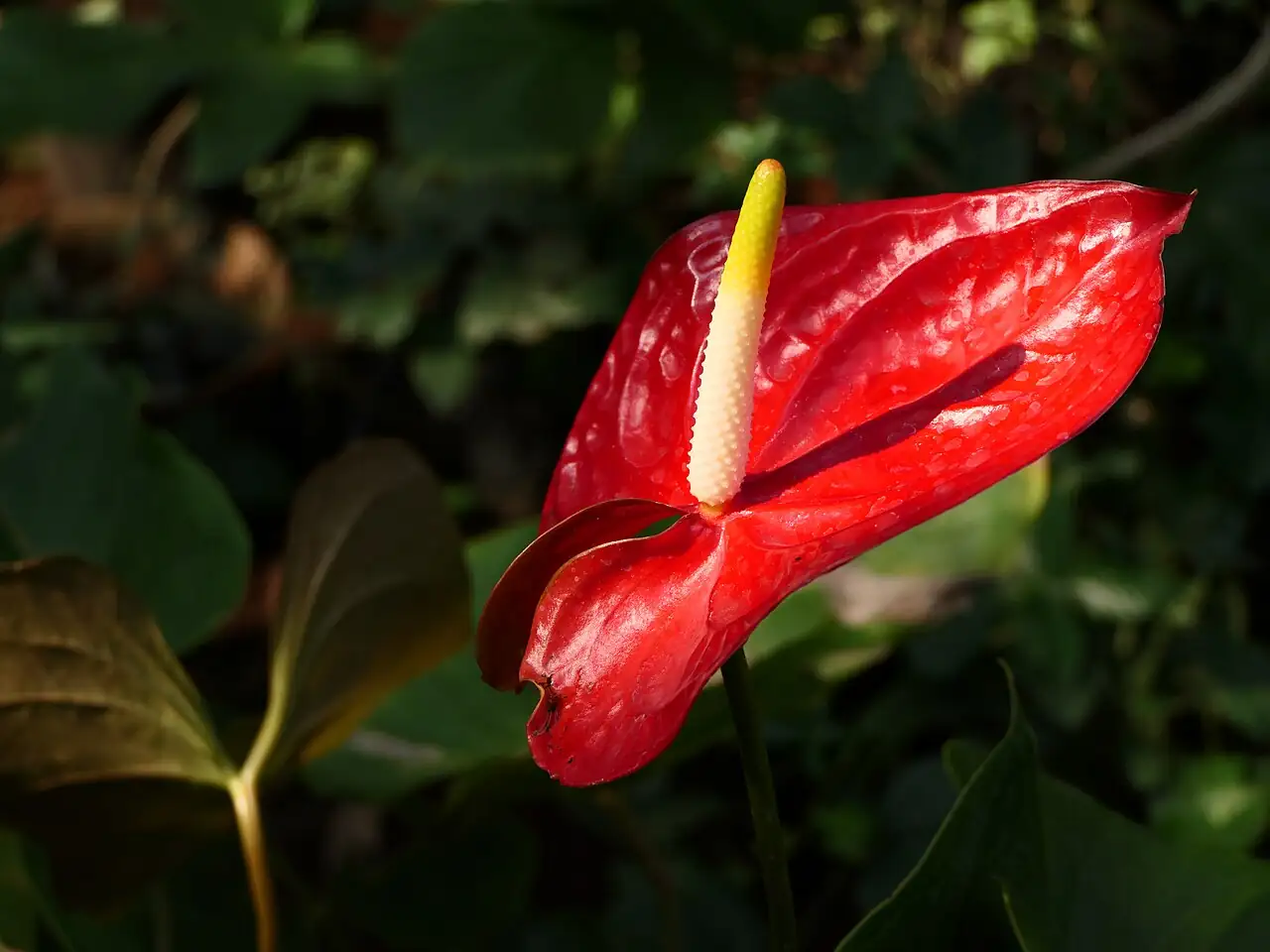
- Flower: The showy display is a waxy spathe (a modified leaf) in colors such as red, pink, white, deep burgundy, and sometimes green or bicolors, paired with an upright, finger-like spadix that can be white, green, pink, red-brown, pale purple, or bicolored. Each spathe can stay attractive for many weeks, and plants often rebloom repeatedly indoors.
- Flowering Season: Year-round indoors with good light and warmth (often strongest from spring to summer).
- Growth Habit: Clump-forming, upright evergreen perennial that develops a short stem over time and may produce aerial roots as it matures; very well suited to container growing.
Environment
Sunlight
Bright, indirect light to light shade. Avoid harsh direct sun—especially midday. More filtered light generally encourages better flowering.
Temperature
Prefers warm conditions. Best range is about 20–30°C (68–86°F), though it also grows well around 16–24°C (61–75°F). Keep above 15°C (59°F) in winter; below about 13°C (55°F) it can suffer chilling damage and flowering may stall.
Humidity
Likes moderate to high humidity, ideally around 50–60%+ (higher is better if airflow is good). Use a humidifier or pebble tray, and mist lightly as needed—avoid wet foliage late in the day/night to reduce disease risk.
Soil
A rich, loose, very well-drained aroid mix. Good options include bark + coco coir/peat + perlite, or a practical 1:1 blend of multipurpose potting mix and a chunky orchid/bark-based mix. The key is air around the roots—never let it sit waterlogged.
Placement
Indoors near an east-facing or bright north-facing window, or a few feet back from a south/west window with a sheer curtain. A bright bathroom with a window can be ideal thanks to higher humidity.
Hardiness
Frost tender; suitable outdoors year-round only in very warm climates (roughly USDA Zone 11–12).
Care Guide
Difficulty
Easy to moderate: generally forgiving once settled, but it performs best with steady warmth, good humidity, and careful watering. Sensitive to cold drafts, harsh sun, drought, and soggy soil (root rot).
Buying Guide
Pick a plant with a full, balanced shape and glossy deep-green leaves free of spots. Look for multiple buds and at least 2–3 well-developed blooms. Avoid limp stems, lots of yellowing foliage, or any sour smell from the pot (often a sign of root issues). Young plants should have several leaves (about 4–5) and plenty of healthy, pale roots.
Watering
Aim for evenly moist, not soggy. Water when the top 2–3 cm (about 1 in) feels just dry, then water thoroughly and drain excess. In warm, fast-drying conditions this may be every few days (often around every 2–3 days in hot weather), while in winter it’s typically less frequent—water during the warmer part of the day (about 9:00 a.m.–4:00 p.m.) to reduce cold stress. Boost humidity with a pebble tray or humidifier; if misting, use non-chlorinated water where possible and avoid misting at night.
Fertilization
During active growth (spring through summer), feed about every 2 weeks with a diluted liquid fertilizer—balanced to bloom-leaning, often higher potassium (for example, a formula like 20-8-20) at half strength. Reduce feeding in autumn and winter. After division, light liquid feeding can help new sections establish.
Pruning
Remove spent spathes promptly and cut yellowing, damaged, or overcrowded leaves at the base with clean scissors. This keeps the plant tidy, improves airflow, and helps redirect energy into new growth and flowering.
Propagation
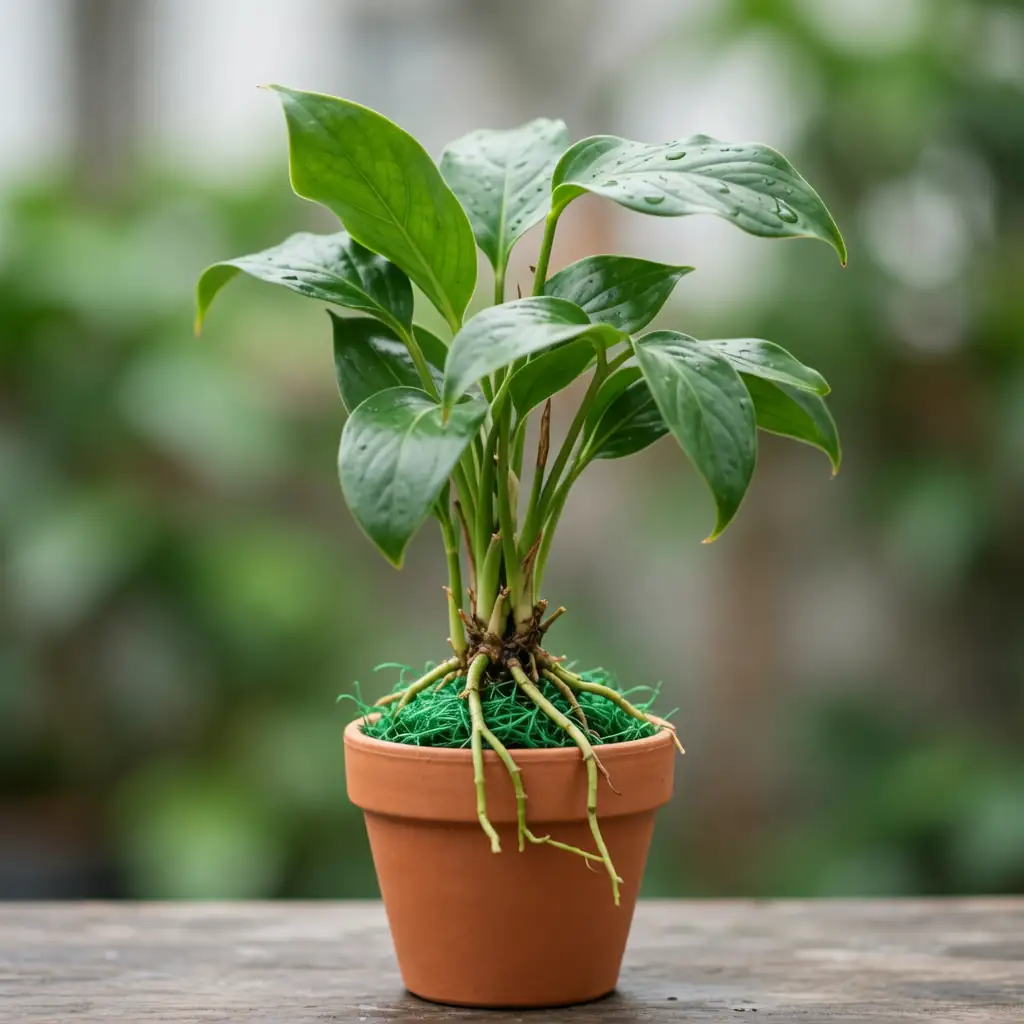
Best by division when repotting: separate a clump/offset with its own roots and shoots (ideally at least 3 leaves), then pot up separately. More advanced methods include rooting stem sections with nodes and aerial roots in moist sphagnum or an airy aroid mix; new roots commonly form in about 20–30 days before potting on. (Division is usually the most reliable method for home growers.)
Repotting
Repot only when root-bound, typically every 2–3 years. Common pot sizes are 12.5–20 cm (5–8 in), though larger mature plants may use about 15–25 cm (6–10 in) depending on the specimen. Keep the crown at or slightly above the soil surface; aerial roots can sit near the surface and can be top-dressed with moss. After division, once new roots form (often ~20–30 days), move to a 15–20 cm (6–8 in) pot.
📅 Seasonal Care Calendar
Year-round: give bright filtered light, steady warmth, and humidity; protect from cold drafts, strong direct sun, and drought. Spring–summer: water more consistently and feed every 2 weeks (dilute, higher-potassium works well). Autumn–winter: reduce feeding, keep above 15°C (59°F), and water less often but don’t let it fully dry out; brighter light helps prevent winter flowering drop.
Pests, Diseases & Safety
Common Pests & Diseases
Pests can include spider mites, mealybugs, scale, thrips, and sometimes scale insects. Diseases/issues include root rot (from soggy soil) and fungal problems such as leaf spot, anthracnose, inflorescence rot—often worsened by poor airflow and wet foliage at night. Prevent by using a chunky mix, draining well, and keeping air moving; treat early with insecticidal soap or horticultural oil, and use fungicides only when necessary and according to the label.
Toxicity
Toxic if chewed due to insoluble calcium oxalate crystals. Can cause mouth/throat irritation, drooling, and discomfort in people and pets (especially cats and dogs). Sap may irritate skin—keep out of reach of children and animals.
Culture & Symbolism
Symbolism: Often gifted as a sign of hospitality, warmth, confidence, and lasting love—fitting for a plant whose spathes stay beautiful for weeks.
History & Legends: Native to tropical South America and later popularized worldwide as both a houseplant and a major cut-flower crop. Modern cultivars have been bred for richer colors, longer-lasting spathes, and better indoor performance.
Uses: Mainly grown as an ornamental houseplant for long-lasting indoor color (windowsills, bright bathrooms, reception areas, living rooms) and widely used as a long-lasting cut flower in arrangements.
FAQ
Why are the leaves turning yellow?
Most often it’s overwatering or poor drainage. Let the top 2–3 cm (1 in) dry slightly before watering again, and use an airy, chunky mix so the roots can breathe.
Why does it flower less in winter?
Lower light and cooler temperatures slow it down. Move it to brighter indirect light and keep it warm—ideally above 15°C (59°F), with best growth around 16–24°C (61–75°F).
Can Flamingo Flower be grown in water (hydroponically)?
Yes. Rinse potting mix from the roots and place the plant so only the lower portion of the roots sits in water (don’t submerge everything). Change water about once a week, add a light hydroponic nutrient, keep it warm (around 20–30°C / 68–86°F), and trim any rotting roots promptly.
Fun Facts
- The colorful “flower” is actually a spathe (a modified leaf); the true flowers are tiny and packed along the spadix.
- With stable warmth, humidity, and bright indirect light, anthuriums can bloom repeatedly for much of the year indoors.
- Because the spathes last so long, Anthurium andraeanum is one of the world’s most important tropical cut flowers.