

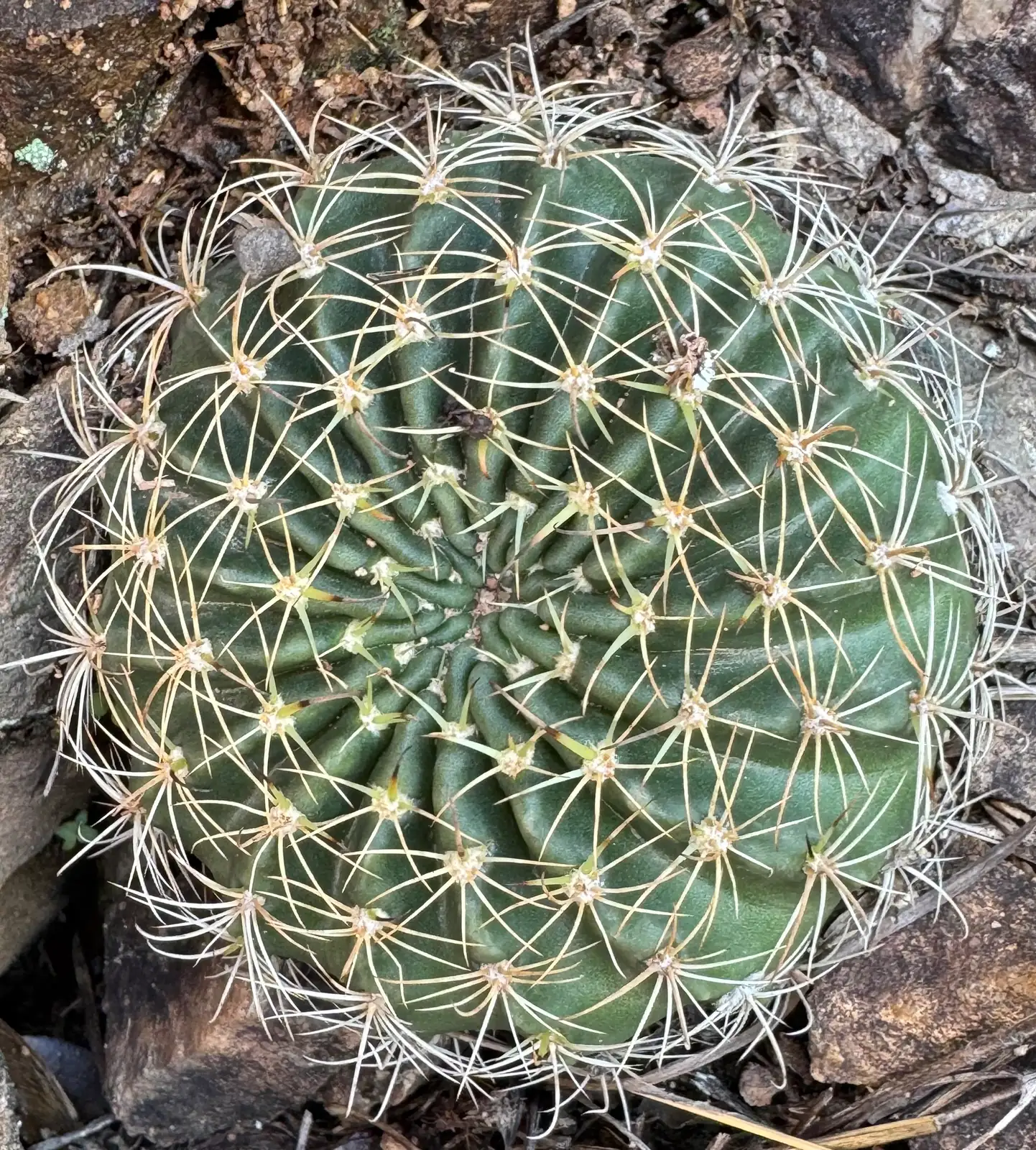
Plant Features
- Size: Size varies with age and growing conditions; commonly sold as a small potted cactus about 10–25 cm (4–10 in) tall, often becoming wider over time as offsets develop.
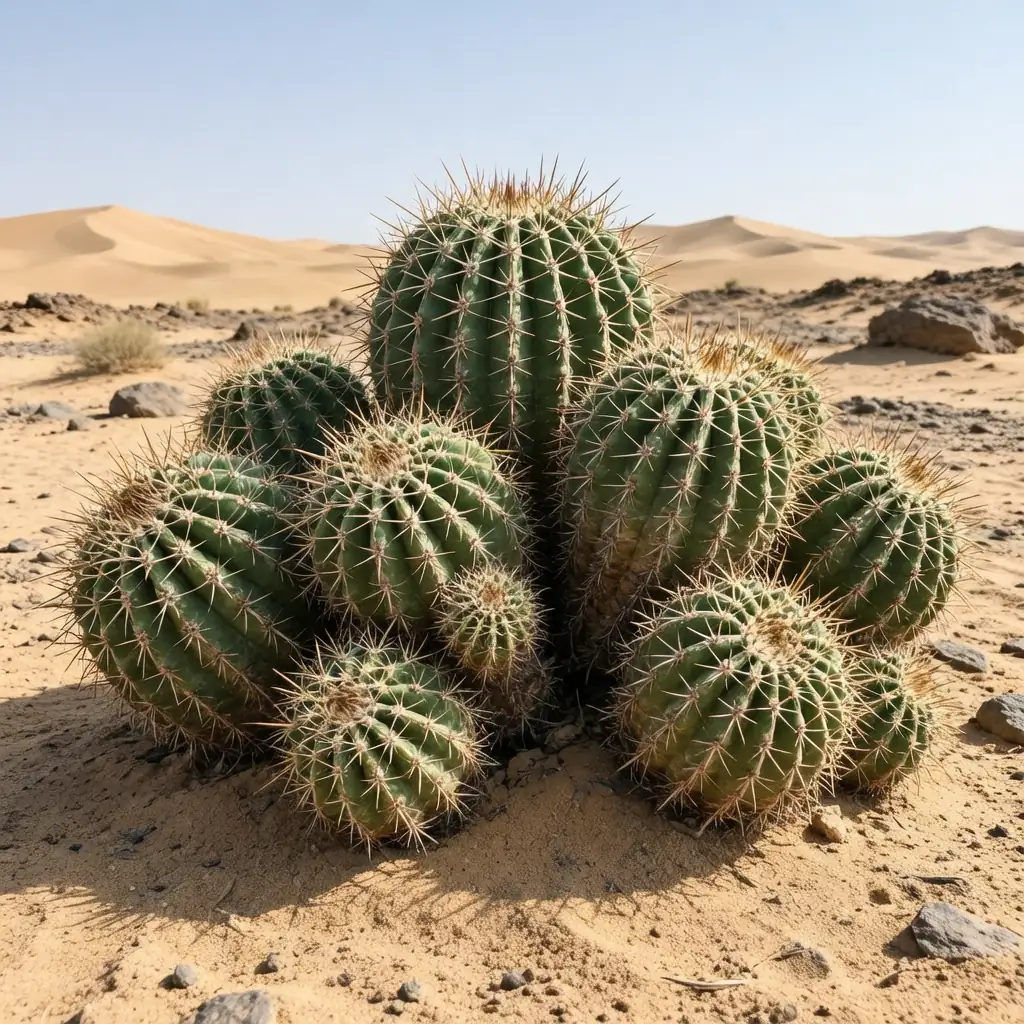
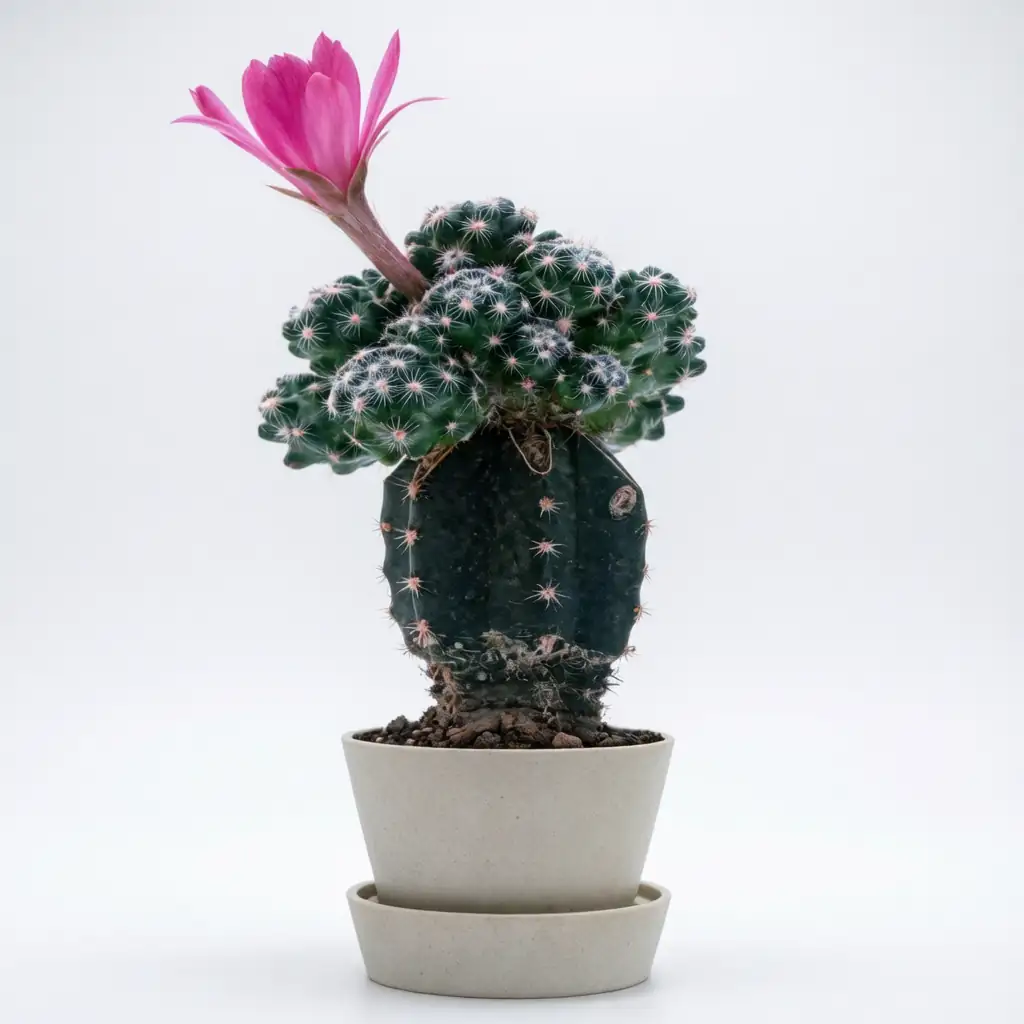
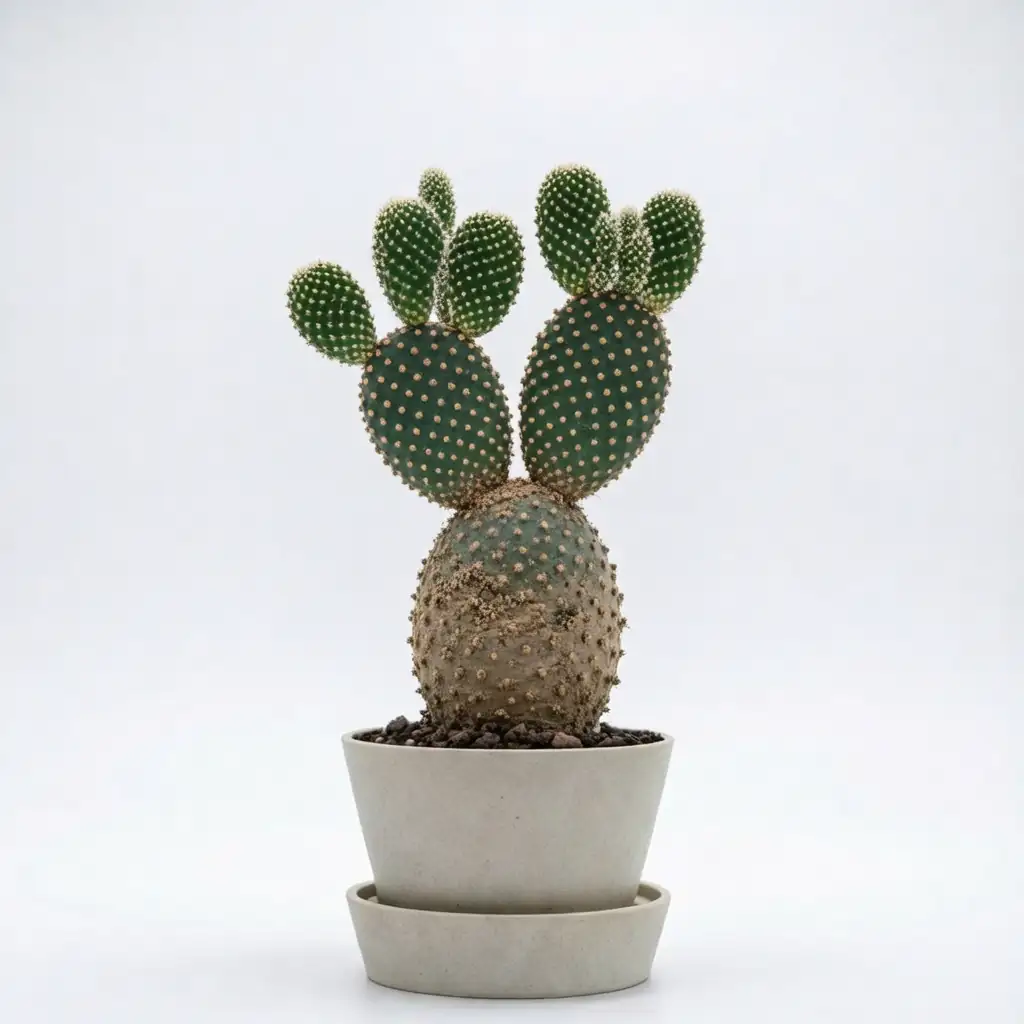
- Foliage: No true leaves. A ribbed main stem produces multiple small, rounded offsets, creating a textured, clustered silhouette typical of cultivated “odd-form” cacti.
- Flower: Produces pink flowers in summer; blooms are typically short-lived and may open only briefly before fading.
- Flowering Season: Summer
- Growth Habit: Clustering/offsetting habit: small rounded stems emerge from a larger ribbed central stem, gradually forming a knobbly mound.
Environment
Sunlight
Bright light to full sun. Aim for 4–6+ hours of direct sun daily; acclimate gradually to prevent sun scorch.
Temperature
Best growth at 18–30°C (64–86°F). Keep above about 5–10°C (41–50°F), especially if the soil is not bone-dry.
Humidity
Low to average indoor humidity. Avoid consistently humid, stagnant air that encourages rot and pests.
Soil
Very free-draining cactus/succulent mix; improve drainage further with mineral grit, pumice, or similar amendments.
Placement
Sunniest windowsill (south- or west-facing), greenhouse, or a bright balcony/patio during warm seasons. Shelter from prolonged rain to reduce rot risk.
Hardiness
Not frost-hardy; suitable outdoors year-round only in frost-free climates (approximately USDA Zone 10–12).
Care Guide
Difficulty
Easy to moderate. It’s happiest with strong light and a “dry between soakings” approach; most failures come from overwatering or too little sun.
Buying Guide
Pick a plant that feels firm and solid with no soft spots, blackening, or sour/rotting smell. Check the base carefully for rot and inspect crevices between stems for mealybugs.
Watering
Water deeply, then let the potting mix dry out completely before watering again. In bright, warm conditions this is often every 10–21 days; in winter, water very sparingly (or not at all if kept cool). Never leave the pot standing in water.
Fertilization
Feed lightly in spring and summer with a cactus fertilizer diluted to about 1/4–1/2 strength every 4–6 weeks. Skip feeding in winter.
Pruning
Usually unnecessary. Remove only dead or damaged offsets with a clean blade; let wounds callus before re-rooting or returning the plant to dry mix.
Propagation
Most commonly by offsets: twist or cut off a small rounded stem, allow it to callus for 3–7 days, then place on dry, gritty mix to root. Begin very light watering only after roots start forming.
Repotting
Repot every 2–3 years or when root-bound, ideally in spring. Use a pot with drainage holes and a gritty mix. Keep dry for about 5–7 days after repotting to lower rot risk.
📅 Seasonal Care Calendar
Spring–Summer: give maximum light, water only after full dry-down, and feed lightly. Autumn: reduce watering as daylight drops. Winter: keep bright and cooler if possible, and keep much drier to prevent rot.
Pests, Diseases & Safety
Common Pests & Diseases
Watch for mealybugs (especially tucked in stem joints), scale, and spider mites (often in very dry indoor air). The biggest health issue is root or base rot from excess moisture. Improve airflow, increase light, and treat pests with insecticidal soap or alcohol swabs; consider a systemic insecticide where appropriate and legal.
Toxicity
Not known to be highly toxic, but spines and plant sap can irritate skin. Keep away from children and pets; chewing may cause mild gastrointestinal upset.
Culture & Symbolism
Symbolism: Like many cacti, it’s often linked with resilience, patience, and quiet endurance.
History & Legends:“Sandcastle cactus” is a houseplant trade name used for an unusual cultivated form. Because it’s a commercial nickname rather than a formal botanical label, exact lineage and documentation can vary between sellers.
Uses: Ornamental—grown as a collector’s cactus for its whimsical, architectural shape and occasional pink summer flowers.
FAQ
Why aren’t the flowers lasting?
Many cactus blooms are naturally short-lived and may only open for a day. Strong light, seasonal cues (warm bright summers and a drier, cooler winter rest), and careful watering improve the chances of repeat flowering.
Why is it getting soft at the base?
Softness at the base is commonly rot from excess moisture or poor drainage. Stop watering immediately, increase light and airflow, and consider unpotting to remove rotted tissue—healthy pieces can sometimes be saved by re-rooting after callusing.
Fun Facts
- Many cactus flowers open and fade quickly, often timed to peak pollinator activity—so they can feel like little “shooting stars.”
- The knobbly, clustered look is often the result of cultivated selection, which can make it look very different from typical wild cactus forms.


