

Plant Features
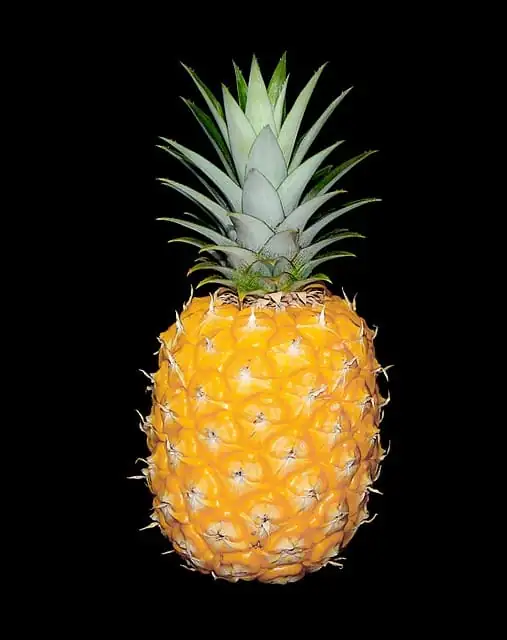
- Size: Typically about 1.0–1.5 m (3–5 ft) tall and roughly as wide; leaves can reach about 0.9 m (3 ft) or more. Fruits are often up to 30 cm (12 in) long or more and can weigh up to about 6.4 kg (14 lb) in large cultivars.
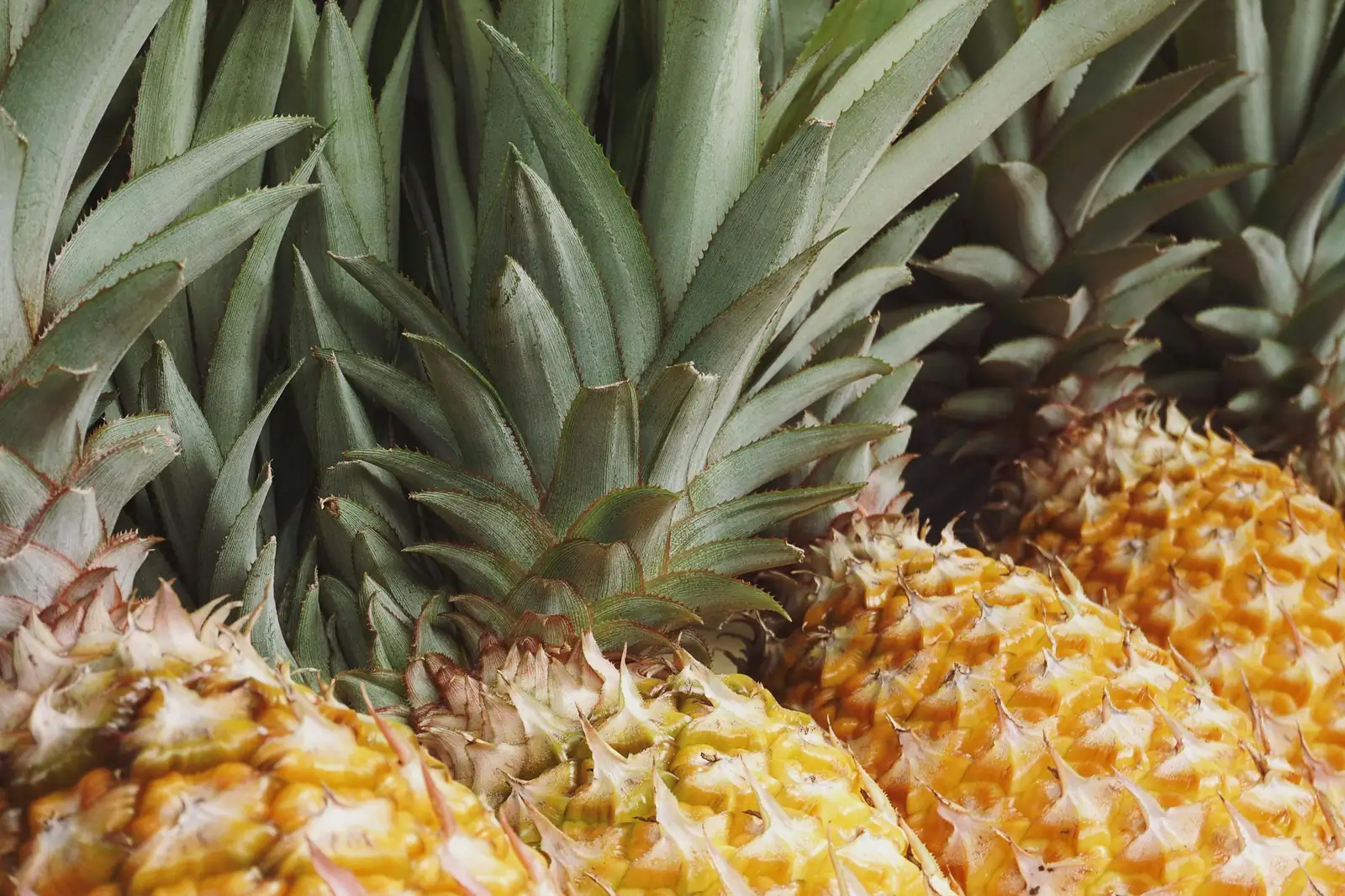
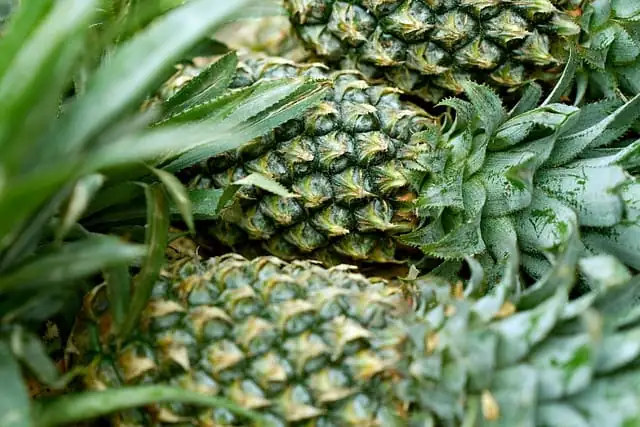
- Foliage: Stiff, narrow, evergreen gray-green leaves arranged in a basal rosette; leaves are usually sword-shaped with a waxy surface. Many varieties have saw-toothed margins and sharp spines along the edges. Individual leaves are commonly about 30–100 cm (12–39 in) long and wrap around a thick central stem.
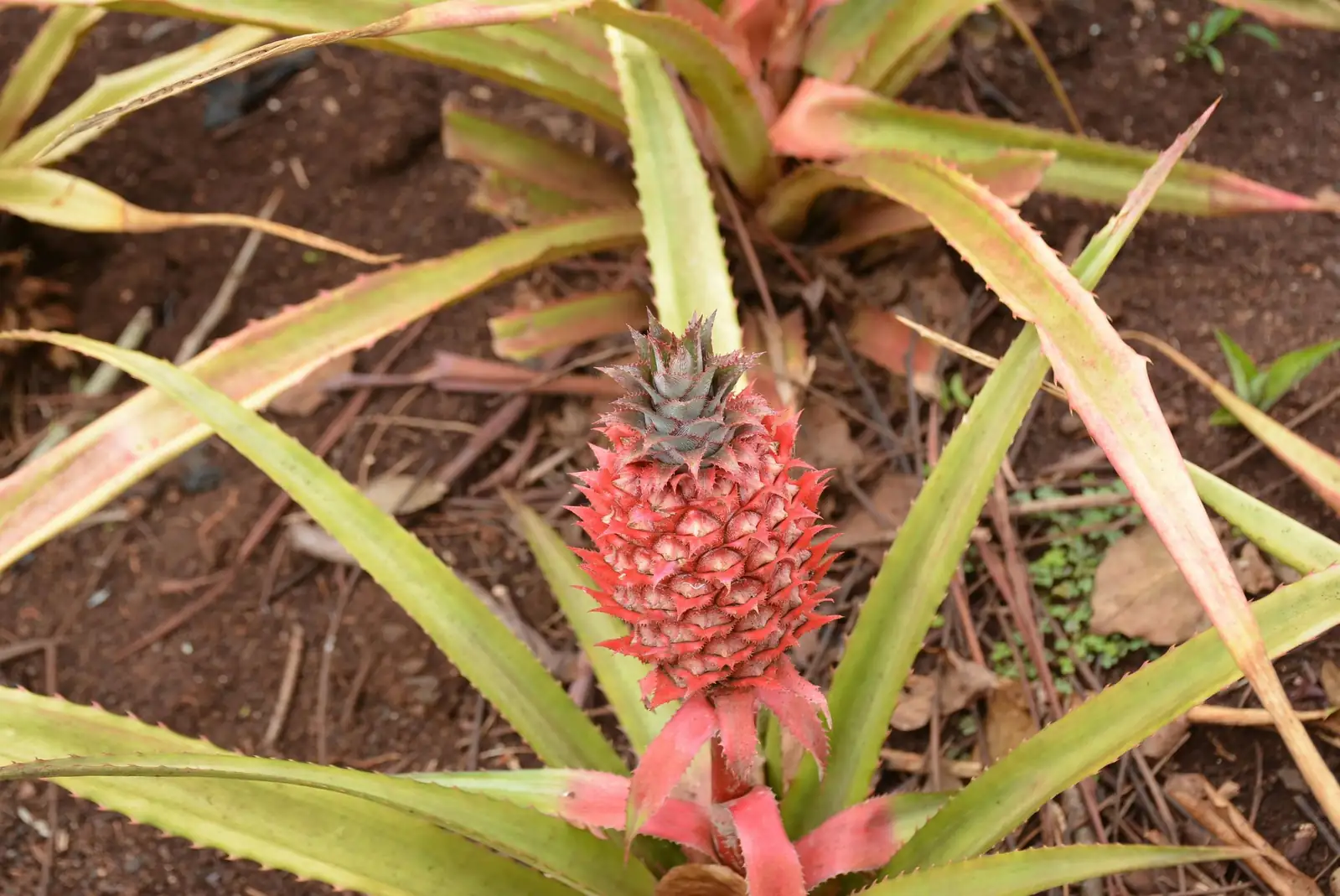
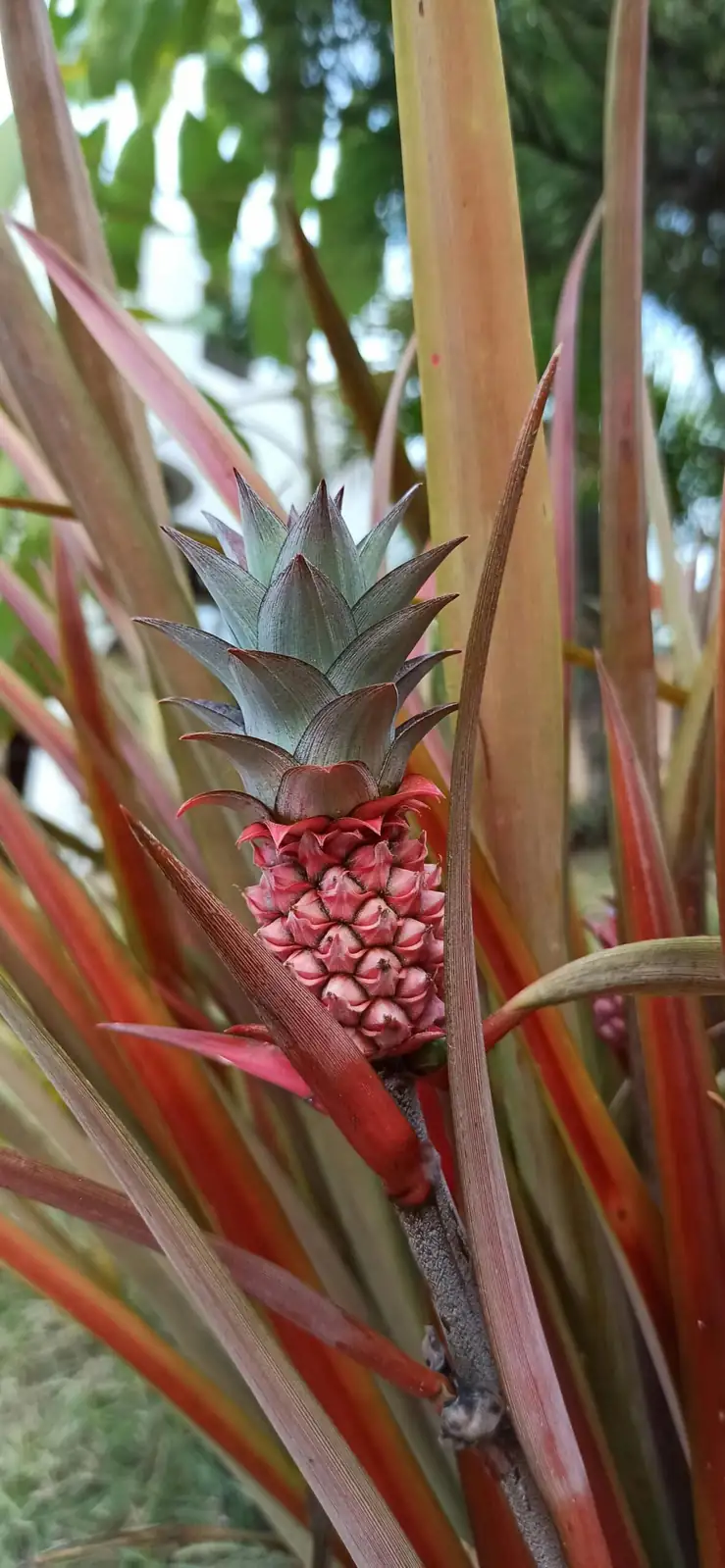
- Flower: Dozens to hundreds of small purple to red flowers (often 50–200) are borne in a dense, spike-like inflorescence up to about 15 cm (6 in) long. Each flower sits with a bract and the whole flowering structure is topped by a compact tuft (the future “crown”) of leaves. As the flowers develop, they fuse into the familiar pineapple fruit.
- Flowering Season: Primarily summer (often seasonal; timing varies with climate and growing conditions).
- Growth Habit: Herbaceous perennial forming a tight rosette; after roughly 12–20 months of vegetative growth, the plant produces a central flower spike that later swells into the fruit. After fruiting, the mother plant declines while producing offsets (suckers/slips) for continuation.
Environment
Sunlight
Full sun for best growth and fruiting; provide bright, direct light (especially for container or indoor plants).
Temperature
Prefers warm conditions around 18–35°C (65–95°F), with especially strong growth near 24–27°C (75–80°F). Sensitive to cold: can take brief light frost down to about -2°C (28°F), but damage is likely without protection; keep above 10–16°C (50–60°F) for steady growth.
Humidity
Enjoys higher humidity typical of tropical climates, but needs good air movement to reduce fungal issues—especially in containers or greenhouses.
Soil
Loose, well-drained, sandy to sandy-loam soil with organic matter; prefers acidity, about pH 4.5–6.5. Avoid heavy, waterlogged mixes to prevent root rot.
Placement
Outdoors in warm, frost-free climates in full sun; elsewhere, grow in a warm greenhouse or a bright indoor spot (south-facing window ideal). Containers can be moved outdoors in summer and brought in when nights cool.
Hardiness
USDA Zones 10–12; not reliably frost-hardy and performs best where winters are frost-free.
Care Guide
Difficulty
Medium overall. Quite straightforward in tropical, outdoor conditions; more demanding indoors where strong light and warmth must be maintained for good fruiting.
Buying Guide
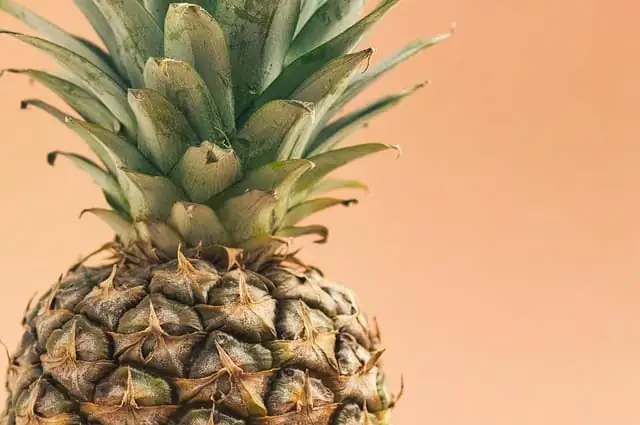
Choose a fresh pineapple with a healthy, green crown (avoid dried, brown, or mushy centers). For crown-starting: twist or cut off the crown, remove any leftover fruit flesh, and let it dry/callus for 1–2 days before rooting.
Watering
Water deeply, then let the mix partially dry—typically water again when the top 2.5–5 cm (1–2 in) of soil feels dry. Pineapple tolerates short dry spells but dislikes soggy soil; constant wetness invites root rot. If keeping water in the central leaf “cup,” refresh it every 2–3 weeks and don’t allow stagnant water to sit for long periods in cool conditions.
Fertilization
Feed during active growth with a balanced, water-soluble fertilizer; many growers fertilize monthly, and more frequently (up to weekly at lower strength) in spring and summer. A commonly used ratio is around 20-10-20; container plants may benefit from controlled-release fertilizer. Fertilizer can be applied to the soil and (lightly) into the leaf cup when conditions are warm and bright.
Pruning
Minimal. Remove dead or damaged leaves as needed. After harvest, decide whether to remove offsets for propagation or leave a strong sucker to develop a second (ratoon) crop.
Propagation
Most commonly by vegetative parts: crowns (the leafy top), slips (small plantlets on the stalk below the fruit), and suckers (offsets along the stem). A simple crown method: remove crown, clean off fruit flesh, dry 1–2 days, root in water or moist mix until roots form (often 2–8 weeks), then pot up into a fast-draining bromeliad-style mix.
Repotting
Repot when rootbound and keep the mix airy and free-draining (bromeliad/cactus-style blends work well). Move containers outdoors for stronger summer sun if possible, then bring inside when nights drop below about 16°C (60°F).
📅 Seasonal Care Calendar
Spring–summer: brightest light, warmer temperatures, regular feeding, and thorough watering with drying between. Fall–winter: reduce watering and pause or greatly reduce fertilizer; keep the plant warm (generally above 10–16°C / 50–60°F). Expect roughly 18–24 months from crown planting to harvest; a second fruit may follow from a retained sucker, usually after another 12–18 months.
Pests, Diseases & Safety
Common Pests & Diseases
Common pests include mealybugs, scale insects, thrips, and (in ground plantings) nematodes. Overwatering can lead to root rot and wilt; in humid, still air, fungal problems are more likely—improve drainage and ventilation. Cold stress and chilling injury can occur when temperatures drop below about 10°C (50°F).
Toxicity
Generally considered non-toxic to humans and pets, and the fruit is edible. Fresh pineapple contains bromelain, which can cause mouth tingling/irritation and may trigger allergies in sensitive people; moderation is wise, and the effect is reduced by cooking.
Culture & Symbolism
Symbolism: Pineapple is a classic symbol of hospitality, welcome, warmth, and good fortune. Historically it also carried a sense of luxury and abundance—so much so that pineapple motifs became a popular decorative emblem in art and architecture.
History & Legends: Originating in South America, pineapple was cultivated long before European contact. Columbus encountered it in the Caribbean in 1493, and from there it traveled quickly through colonial trade routes—introduced to India by the Portuguese by the mid-1500s and to parts of Southeast Asia by Spanish influence. In Europe it became a status symbol, famously so rare that it could be rented as a party centerpiece. Large-scale commercial production later expanded dramatically, including Hawaii in the late 19th century and, in modern times, major tropical producers worldwide.
Uses: Eaten fresh, juiced, cooked, and preserved (canned fruit, jams, desserts), and widely used as a flavoring ingredient. The enzyme bromelain is valued as a meat tenderizer and has applications in supplements and research for anti-inflammatory and digestive uses. The tough leaf fibers can be processed into textiles—especially traditional piña cloth in the Philippines. Pineapple plants are also grown ornamentally for their bold rosettes and showy fruit.
FAQ
How long does it take to grow a pineapple from a crown?
Usually about 18–24 months from planting a crown to harvesting a ripe fruit. The crown often roots in roughly 2–8 weeks, then the plant grows leaves for many months before flowering and fruiting.
Can I grow pineapple indoors?
Yes—if you can give it strong, direct sun (a bright south-facing window is best), warm temperatures (generally above 16°C / 60°F), and a fast-draining potting mix. Indoor-grown fruits are often smaller than field-grown ones.
How many times does a pineapple plant fruit?
Most plants produce one main fruit. If you keep a strong sucker after harvest, it can produce a second (ratoon) crop, though it typically takes another 12–18 months.
Why does fresh pineapple make my mouth tingle?
Fresh pineapple contains bromelain, an enzyme that can irritate tender mouth tissues and create a tingling or burning sensation. Cooking or canning reduces this because heat deactivates the enzyme.
Do I need to pollinate my pineapple plant to get fruit?
No. Pineapples can form fruit without pollination, and commercial growers often prevent pollination because it can lead to seeds and lower eating quality. In the wild, hummingbirds and bats can act as pollinators.
Fun Facts
- A pineapple is a “multiple fruit,” formed when many individual flowers fuse into one.
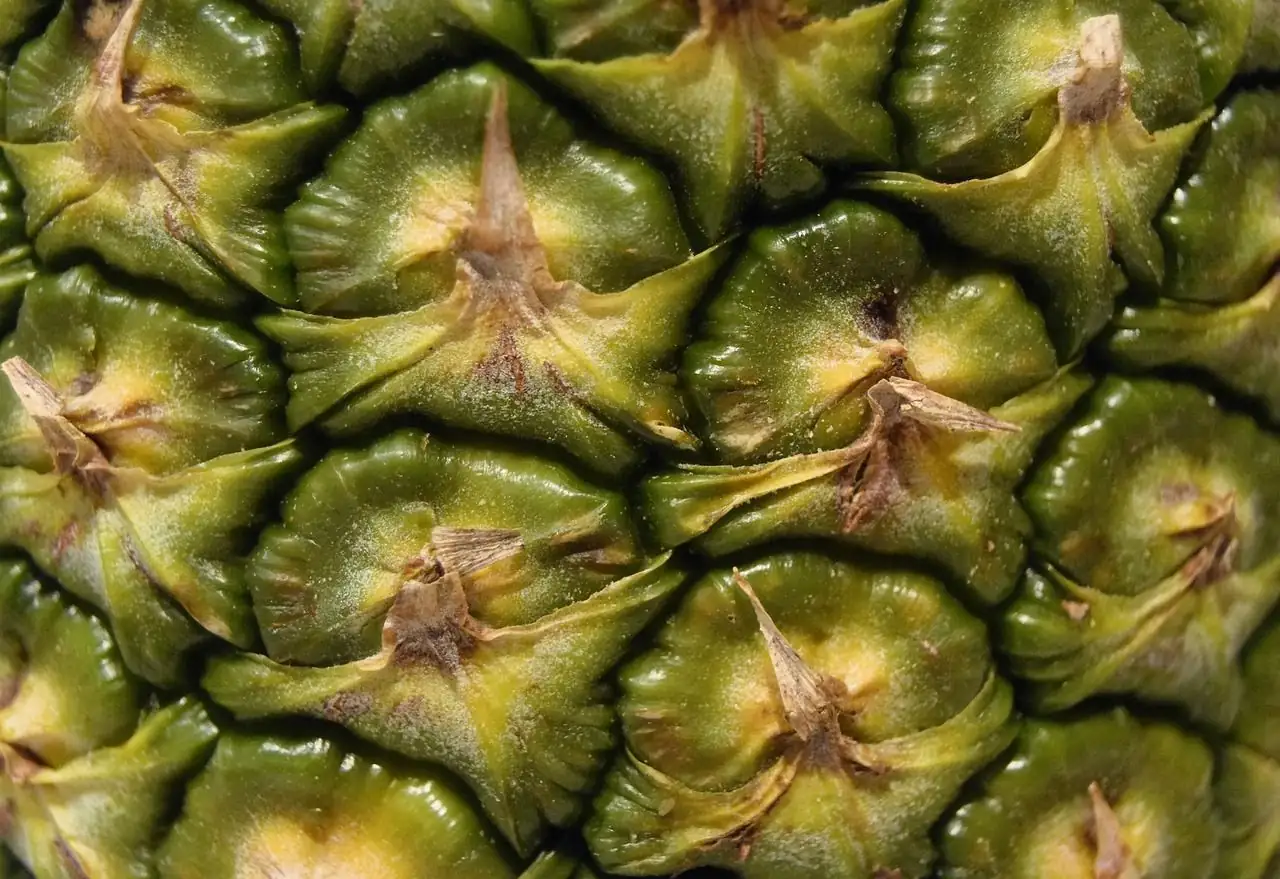
- The pattern of the fruit’s scales often follows Fibonacci spirals—commonly 8 in one direction and 13 in the other.
- Pineapple uses CAM photosynthesis, taking in CO₂ mostly at night to conserve water.
- In 18th-century Europe, fresh pineapples were so expensive they were sometimes rented as party décor.
- Leaf fibers can be turned into piña fabric, a prized, silk-like textile in the Philippines.
- It can take around 200 flowers to form a single pineapple fruit.


