

Plant Features
- Size: Typically 30–45 cm (12–18 in) tall and about 30–45 cm (12–18 in) wide in a pot.
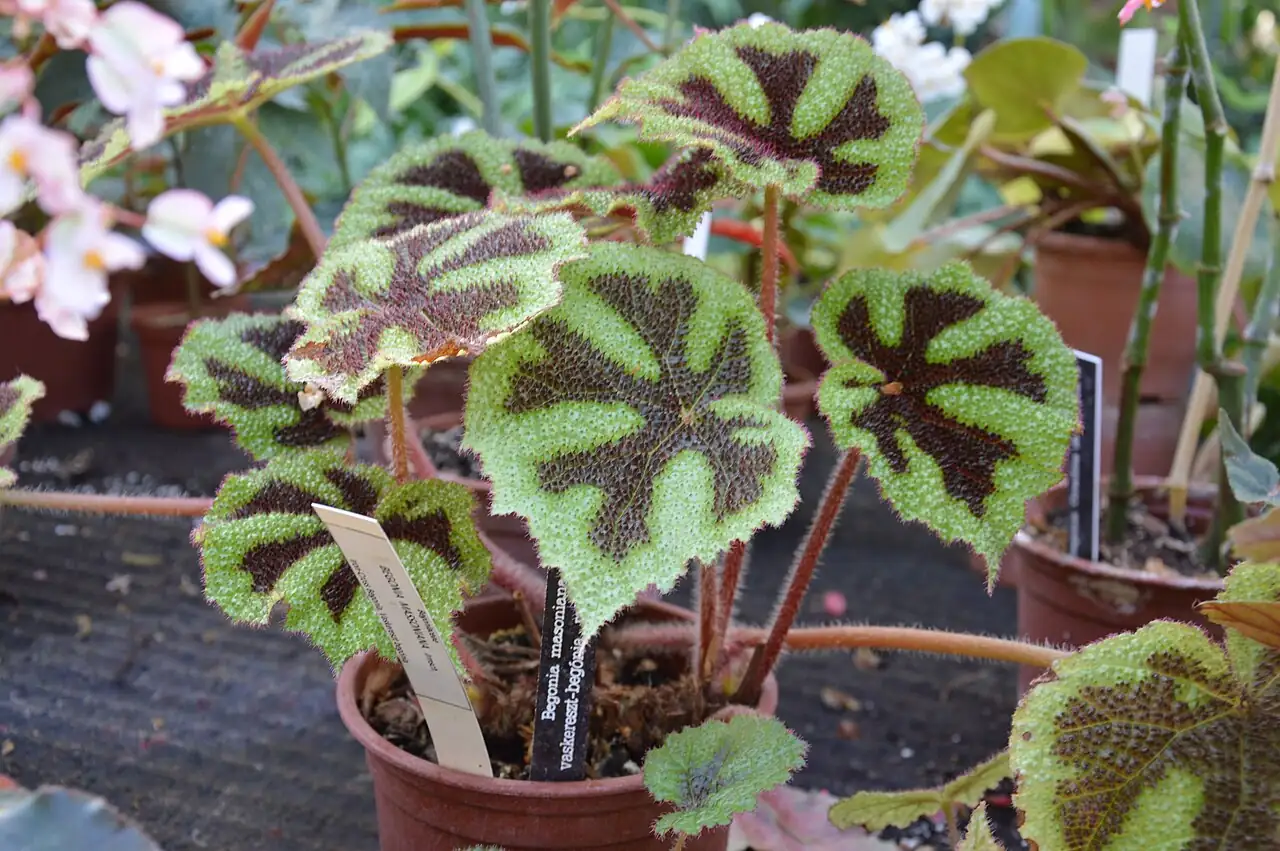
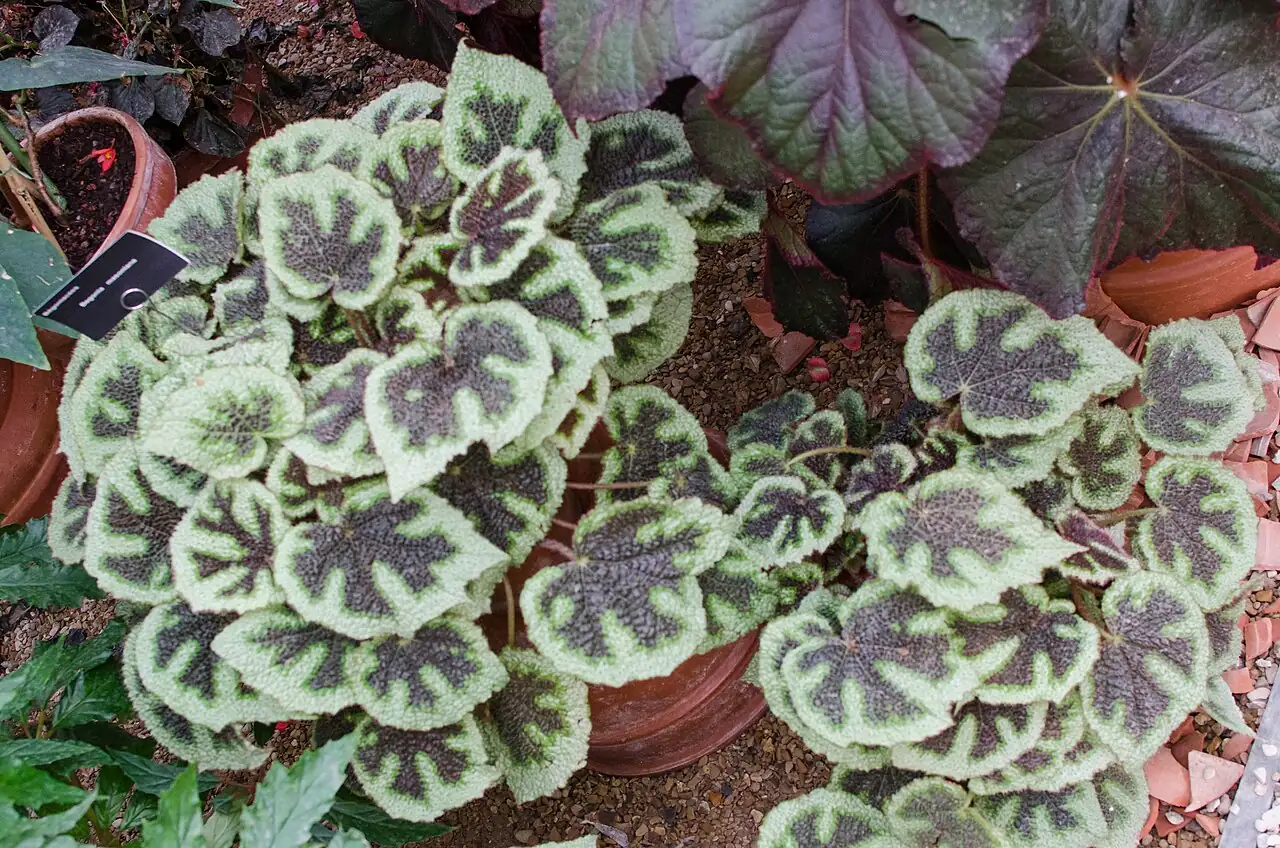
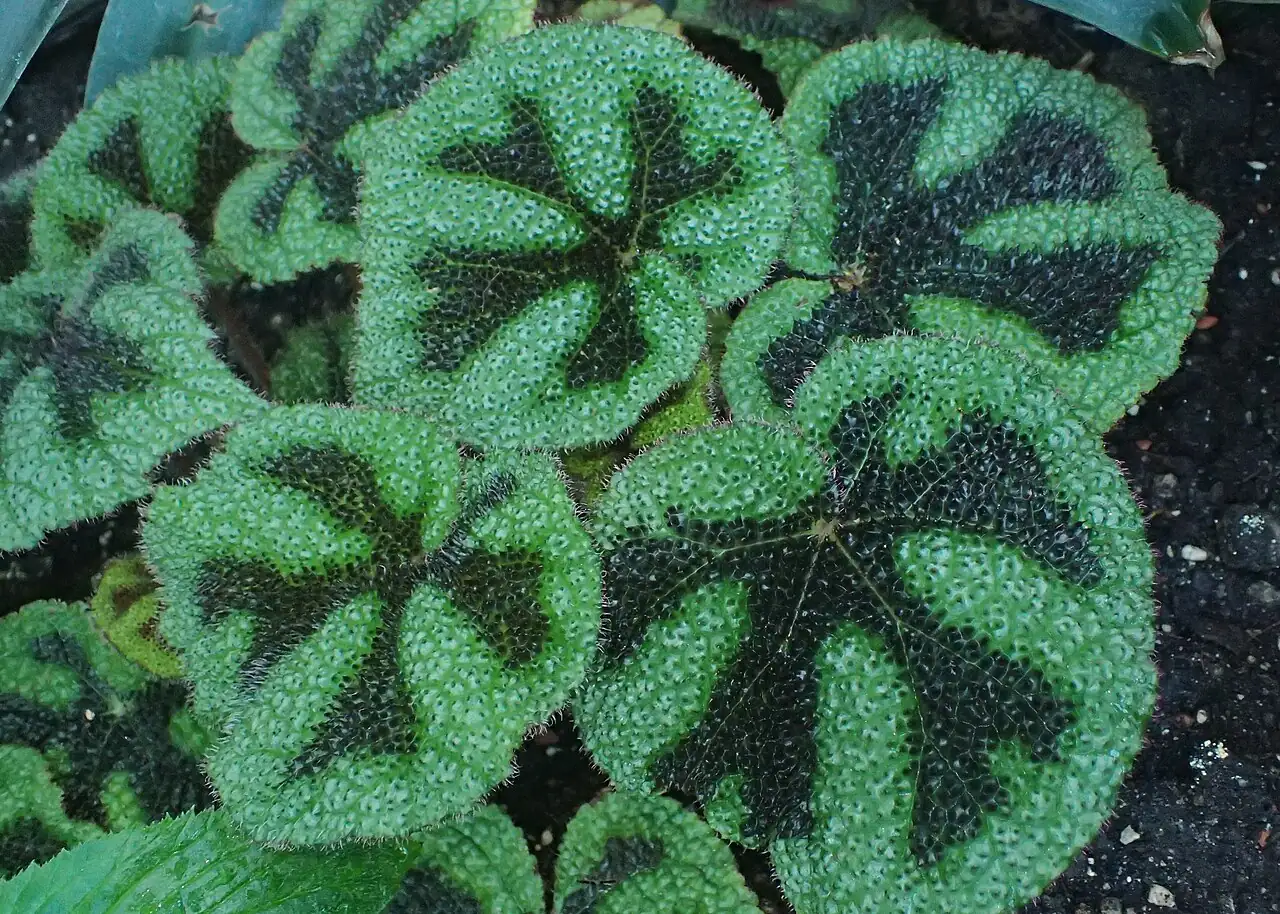
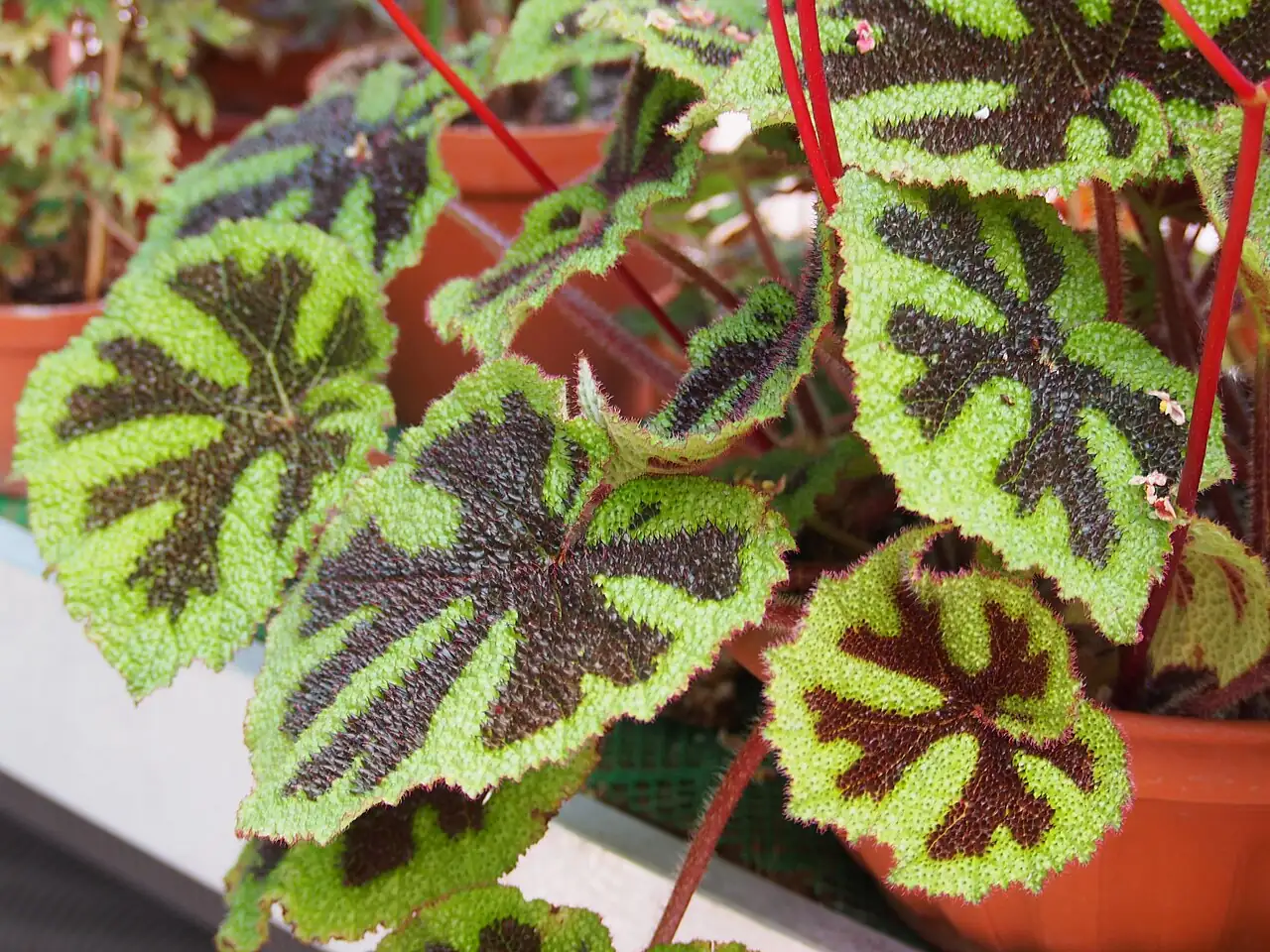
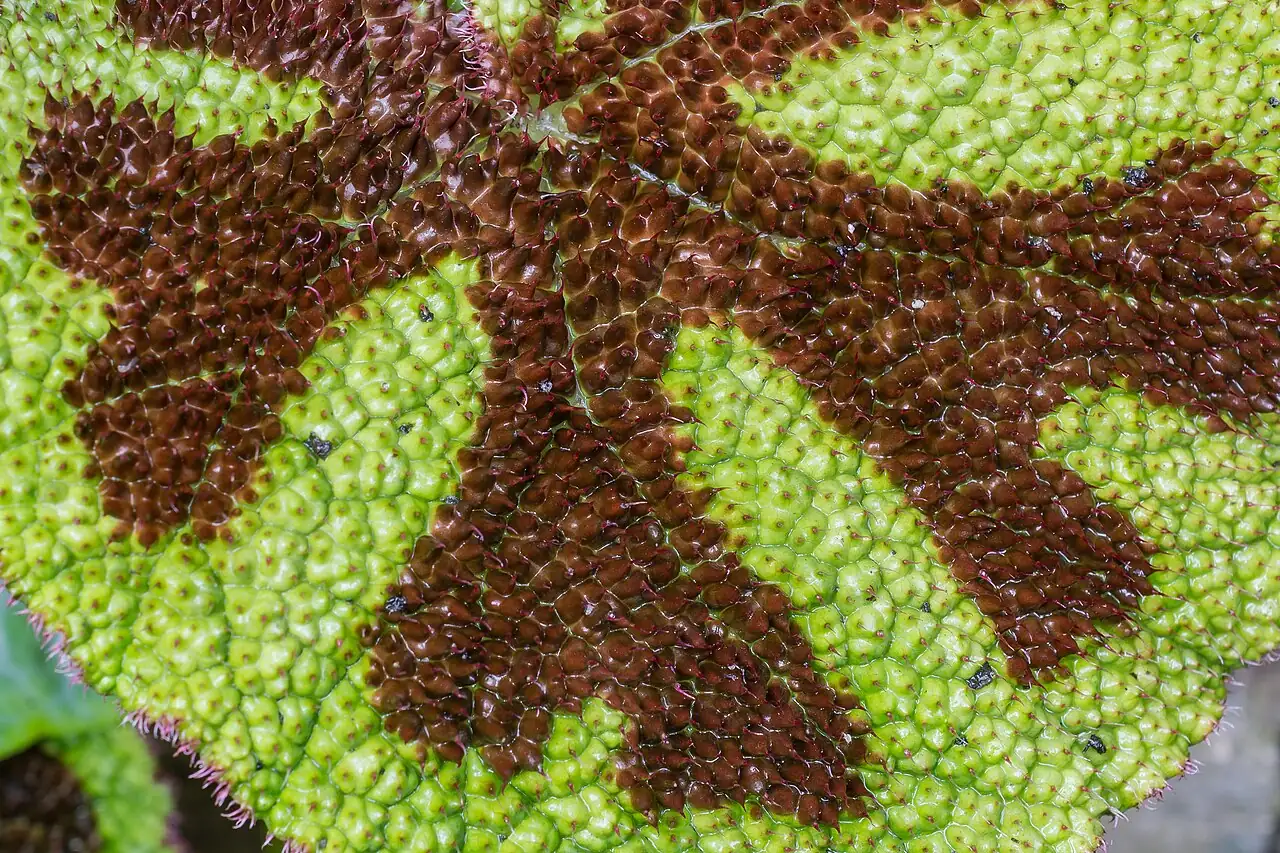
- Foliage: Heart-shaped leaves with dramatic dark wine-red to brownish, cross-like markings on a bright green background; the leaf surface is notably rough and textured, often compared to sandpaper.
- Flower: Small, pale pink to whitish flowers held on slender stems; attractive but usually secondary to the foliage show.
- Flowering Season: Late winter to spring indoors (timing varies with growing conditions).
- Growth Habit: Compact, clump-forming rhizomatous perennial; typically grown as a houseplant and spreads more horizontally than tall.
Environment
Sunlight
Bright, indirect light is ideal; tolerates medium light. Avoid harsh direct sun, which can scorch and fade the leaves.
Temperature
Prefers 18–27°C (64–81°F). Avoid temperatures below 13°C (55°F) and protect from cold drafts.
Humidity
Moderate to high humidity, ideally 50–70%. Keep away from drying heat vents; provide humidity with good airflow to reduce leaf problems.
Soil
Loose, airy, fast-draining mix (for example, a peat/coco-based houseplant mix amended with perlite and some bark) to prevent rhizome/root rot.
Placement
Indoors near an east or north window, or set back from a bright south/west window. A warm bathroom can work well if it has good light and airflow.
Hardiness
Not frost-hardy; outdoors year-round only in USDA Zone 11–12 (approx.).
Care Guide
Difficulty
Moderate. The key is a steady balance: evenly moist soil (not soggy), warmth, and decent humidity—plus enough airflow to keep foliage healthy.
Buying Guide
Choose plants with firm rhizomes and crisp, well-colored leaves. Avoid mushy stems, blackened leaf bases, or widespread spotting that may signal rot or disease.
Watering
Water when the top 2–3 cm (1 in) of mix feels dry. Water thoroughly, then let excess drain completely—never leave the pot standing in water. Reduce watering in winter while keeping the plant warm.
Fertilization
Feed from spring through early autumn with a balanced fertilizer at 1/4–1/2 strength every 2–4 weeks. Pause or greatly reduce feeding in winter.
Pruning
Remove yellowing or damaged leaves at the base. Trim or pinch back leggy growth to keep a compact, bushy shape.
Propagation
Propagate by rhizome division or leaf cuttings. Leaf cuttings root well in a moist medium with warmth (around 21–24°C / 70–75°F) and high humidity.
Repotting
Repot every 1–2 years in spring, or when the rhizome crowds the pot. A shallow, wider pot often suits its spreading rhizomes better than a deep one.
📅 Seasonal Care Calendar
Spring–summer: brighter indirect light, regular watering, and light feeding. Autumn: taper fertilizer and allow slightly more drying between waterings. Winter: keep warm, reduce watering, and avoid cold drafts and soggy soil.
Pests, Diseases & Safety
Common Pests & Diseases
Common pests include spider mites, mealybugs, thrips, and fungus gnats. Overwatering can cause root/rhizome rot. Poor airflow and consistently wet leaves can encourage powdery mildew or leaf spot—aim for good ventilation, avoid wetting foliage late in the day, and treat pests with insecticidal soap or horticultural oil as needed.
Toxicity
Toxic to pets (cats/dogs) if chewed due to insoluble calcium oxalates; may cause mouth irritation, drooling, and discomfort. Keep out of reach of pets and small children.
Culture & Symbolism
Symbolism: Often linked with individuality and the appreciation of unique beauty—perfectly matching its one-of-a-kind, patterned, textured leaves.
History & Legends: A longtime favorite in houseplant circles thanks to its bold cross-like leaf marking and rugged texture. It’s widely sold and shared under the names “Iron Cross begonia” and “Mason’s begonia.”
Uses: Primarily grown as an ornamental foliage plant for indoor pots and displays; also suitable for shaded conservatories and some terrarium-style setups when airflow is adequate.
FAQ
Why are the leaf edges turning brown and crispy?
This usually comes from low humidity, letting the plant dry out too much, or exposure to hot direct sun. Move it to bright indirect light, water when the top 2–3 cm (1 in) dries, and aim for 50–70% humidity.
Can I mist this begonia to raise humidity?
Occasional light misting can help, but regularly wet leaves may lead to spotting or mildew. A humidifier or a pebble tray (with the pot not sitting in water) is typically safer.
Why is my plant dropping leaves or getting mushy at the base?
Most often it’s overwatering and/or cold stress leading to rot. Let the mix dry a bit more between waterings, ensure excellent drainage, and keep temperatures above 13°C (55°F).
Fun Facts
- The leaves are famously rough—many growers say they feel like sandpaper.
- The name “Iron Cross begonia” comes from the bold cross-like marking on each leaf.


