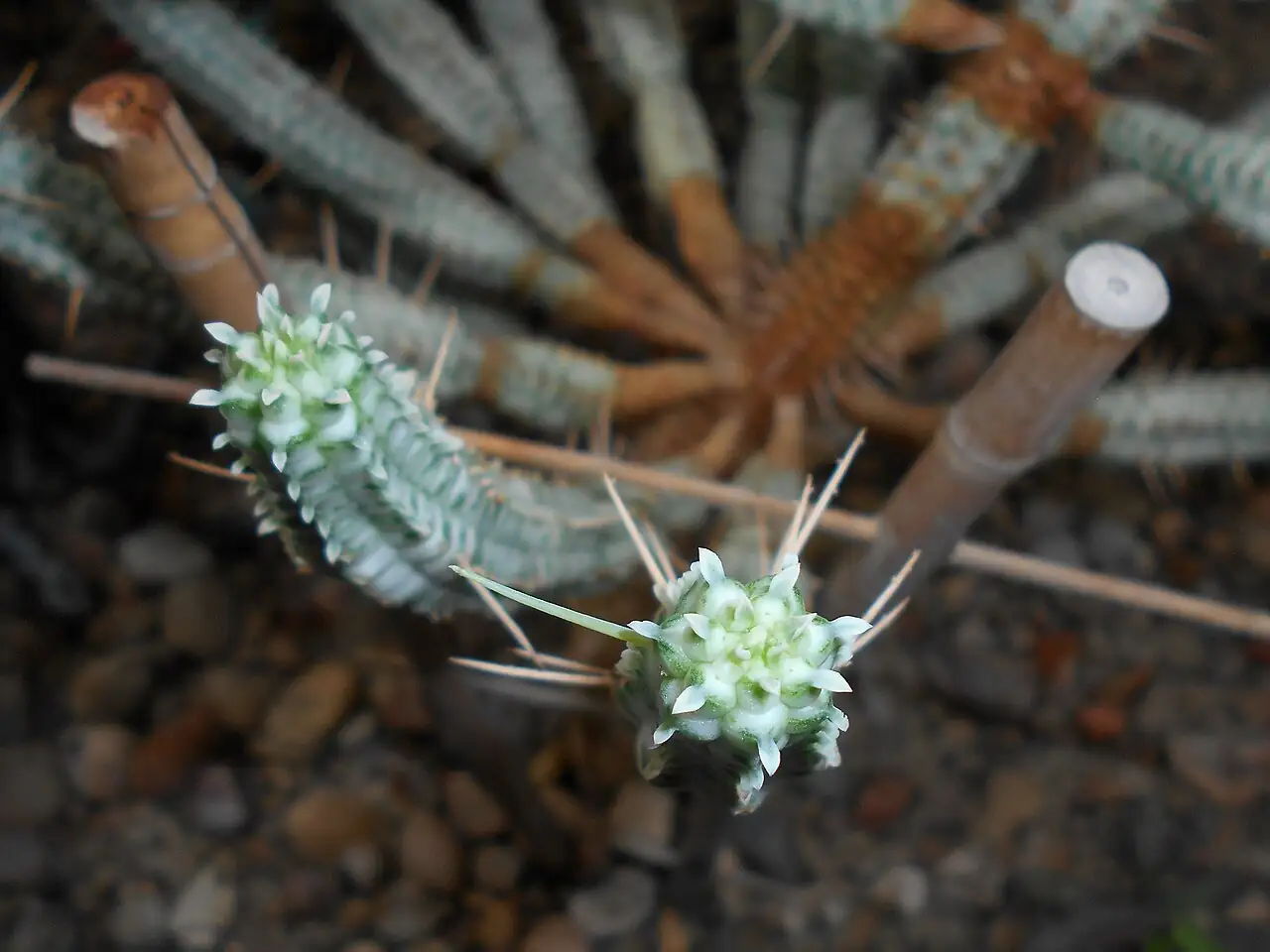
Plant Features
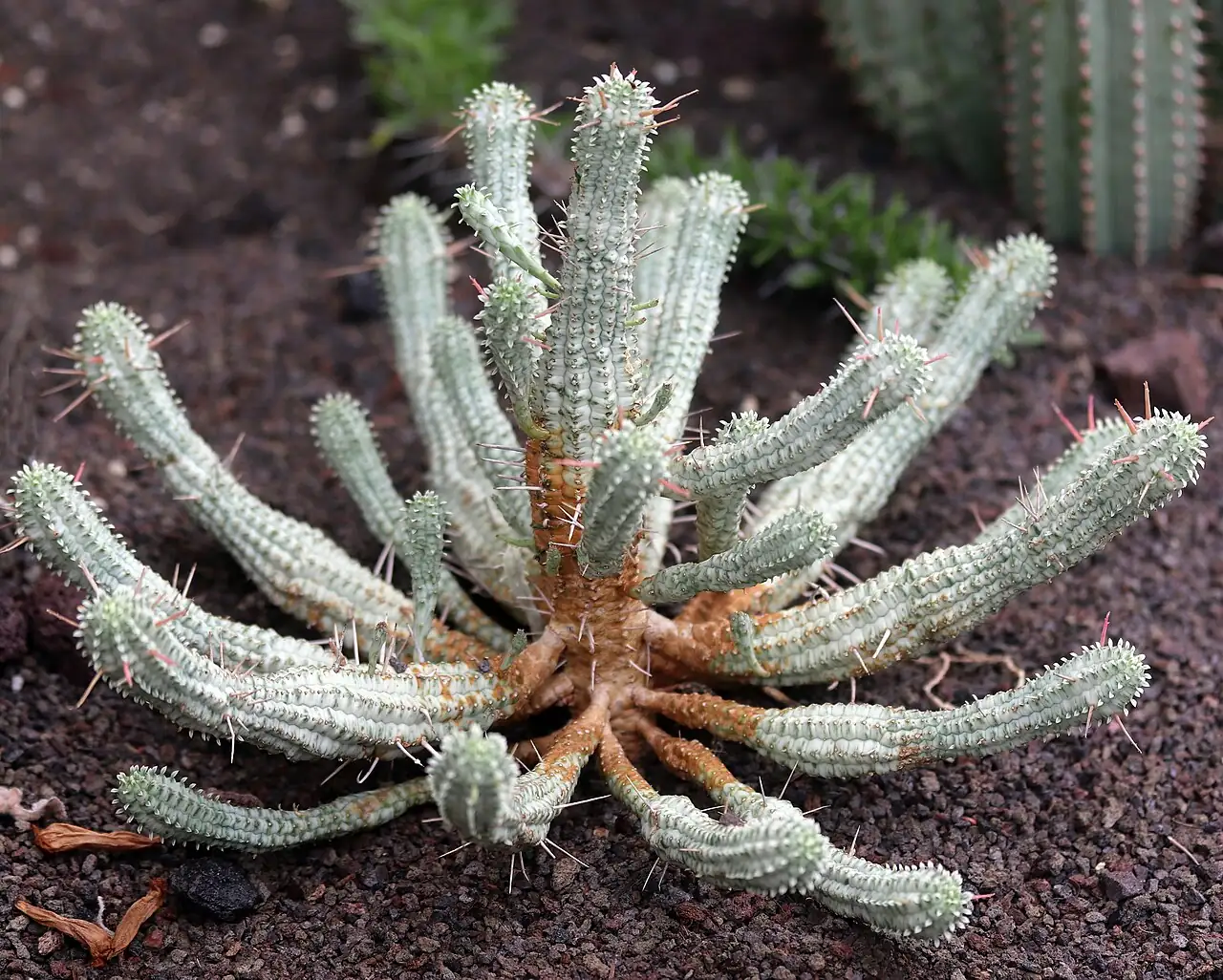
- Size: Typically up to about 30 cm (12 in) tall; clumps may spread roughly 20–40 cm (8–16 in) wide over time.
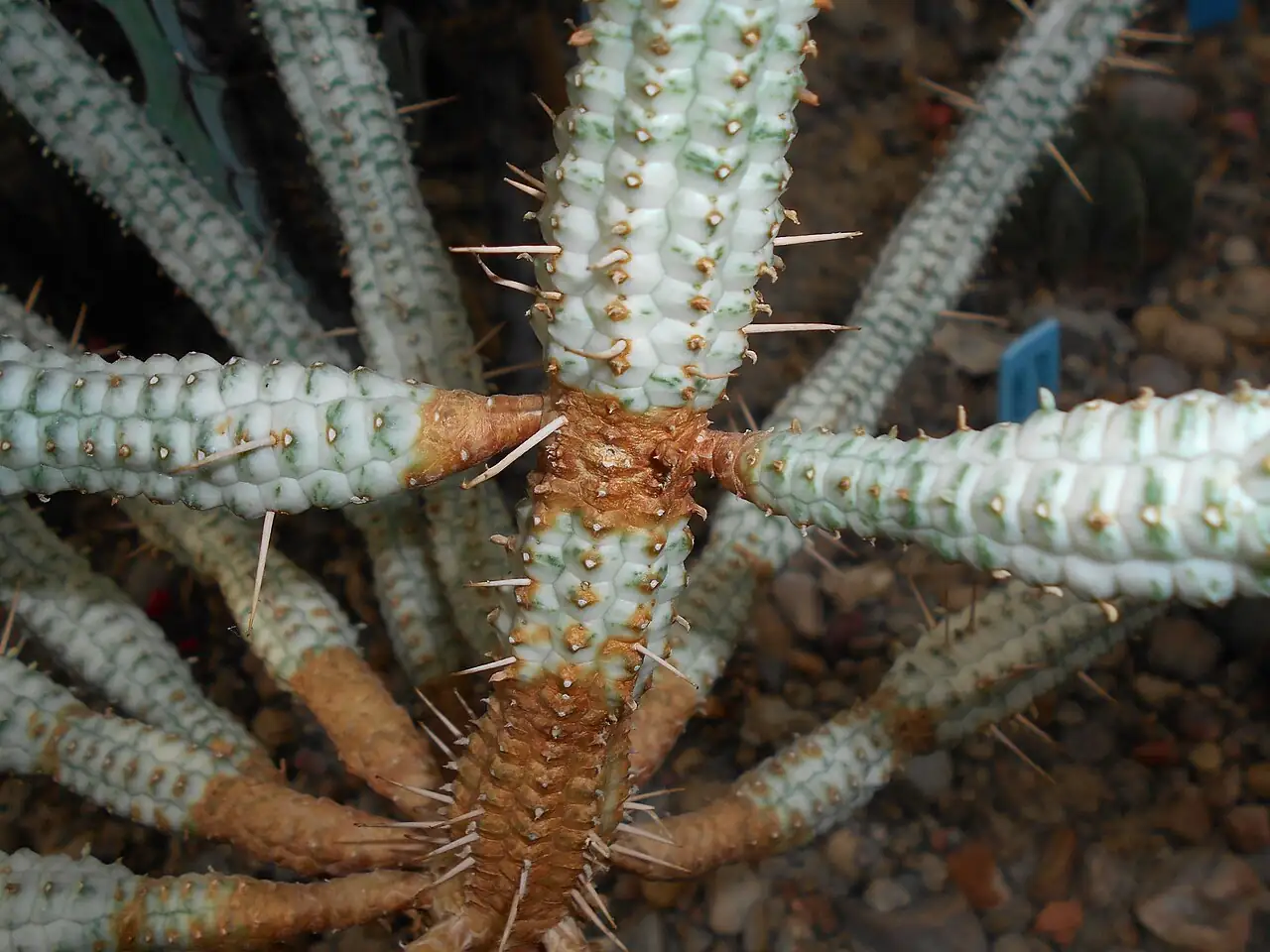
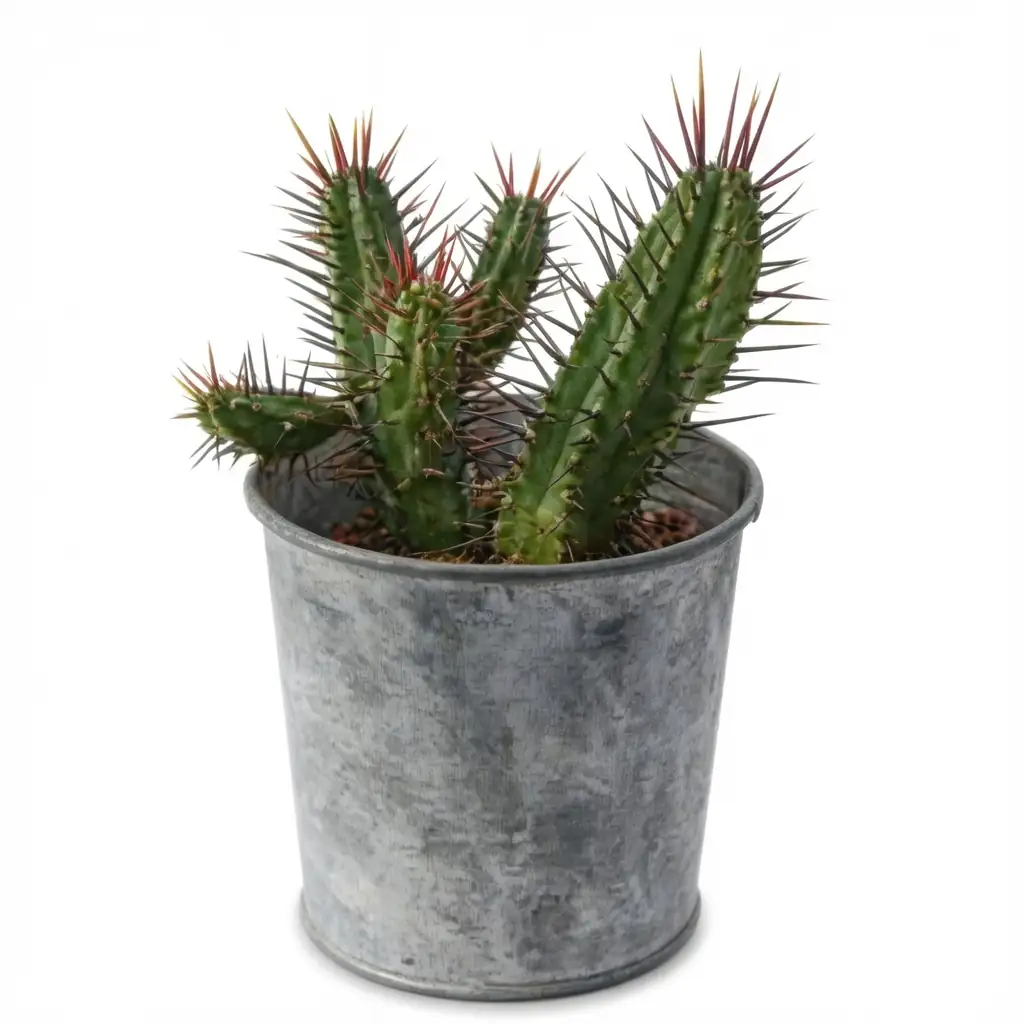
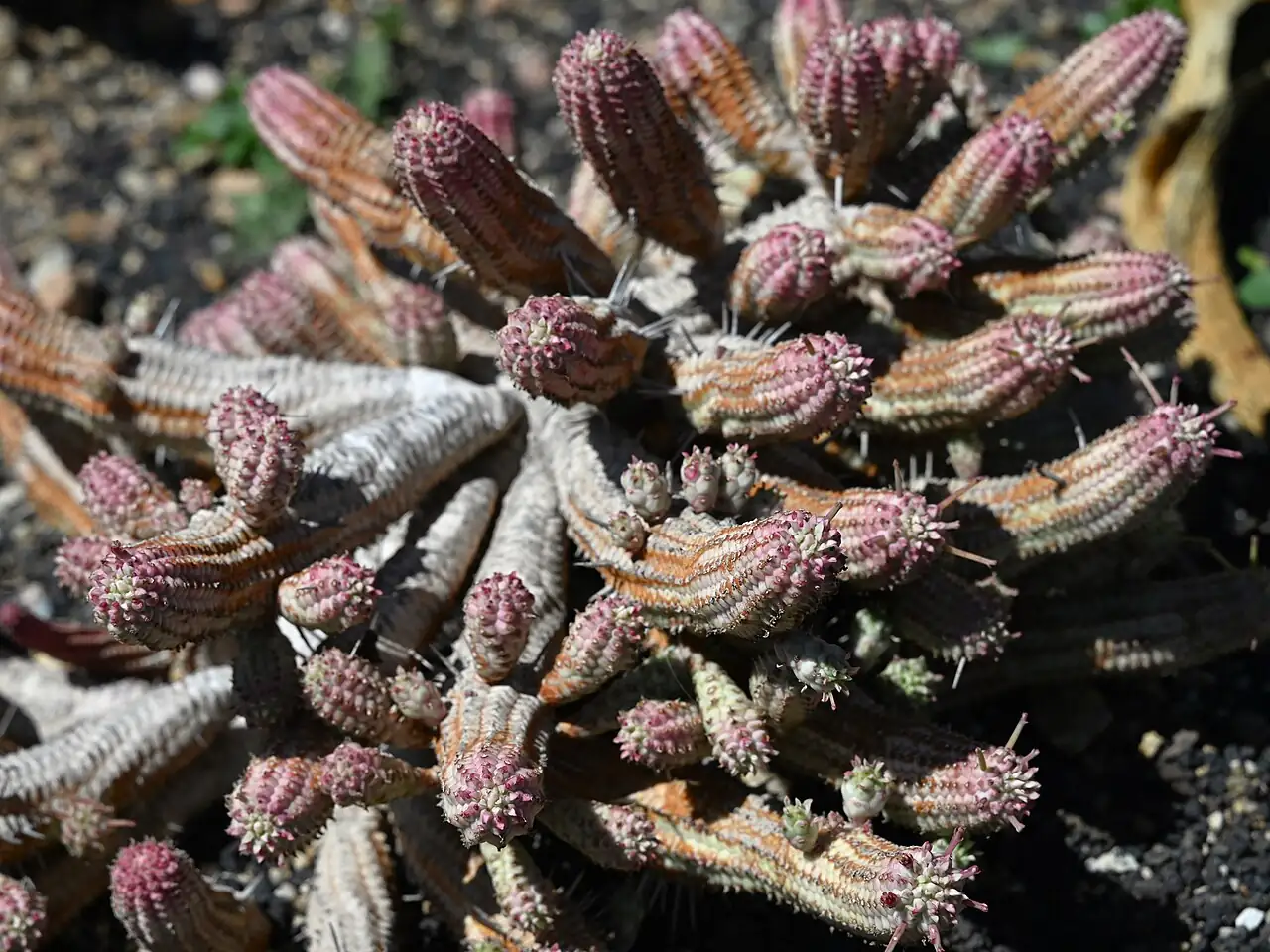
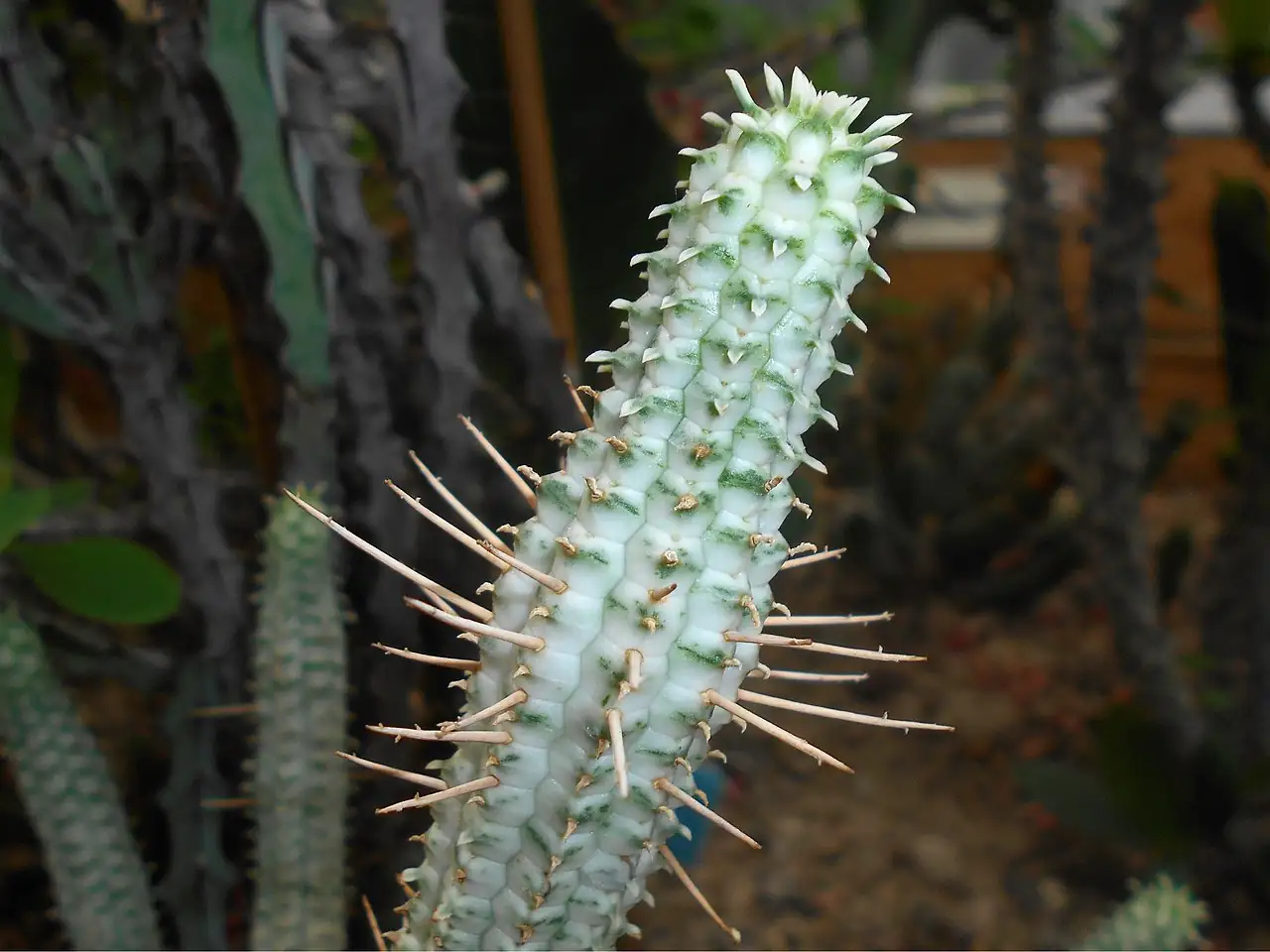
- Foliage: Leafless or nearly leafless. The plant is made up of segmented, gray‑green, ribbed stems with short red to reddish-brown spines along the ribs.
- Flower: Produces small, easily overlooked cyathia (the specialized Euphorbia “flowers”), usually yellowish to greenish rather than showy.
- Flowering Season: Spring to summer (often variable indoors).
- Growth Habit: Upright, cactus-like succulent that branches and forms clumps; strongly architectural silhouette.
Environment
Sunlight
Bright light to full sun. Best with about 4–6+ hours of direct sun daily; acclimate gradually to stronger sun to prevent scorch.
Temperature
Warm-growing: prefers about 18–30°C (64–86°F). Keep above 10°C (50°F) and protect from frost and cold drafts.
Humidity
Low to average indoor humidity; prefers drier air and can suffer if conditions stay damp and stagnant.
Soil
Very fast-draining cactus/succulent mix; improve drainage further with mineral grit or pumice.
Placement
Sunniest windowsill or bright conservatory; can summer outdoors on a warm, sheltered patio, but bring inside before nights drop below 10°C (50°F).
Hardiness
USDA Zone 10–11; not frost hardy.
Care Guide
Difficulty
Easy to moderate: very straightforward with strong light and careful watering. Most failures come from overwatering or cold, wet soil.
Buying Guide
Pick plants with firm, unwrinkled stems and clean, even color. Avoid soft spots, blackened bases (possible rot), or obvious mealybug residue tucked into ribs and crevices.
Watering
Water thoroughly, then let the potting mix dry out completely before watering again. In spring–summer, this is often every 10–21 days; in winter, reduce to very sparing water (about every 3–6 weeks), depending on light and warmth. Never leave the pot sitting in water.
Fertilization
Feed lightly in spring and summer with diluted cactus fertilizer (about 1/4–1/2 strength) every 4–6 weeks. Skip feeding in winter.
Pruning
Prune to shape or remove damaged stems. Wear gloves and eye protection—Euphorbia sap is milky and irritating to skin and eyes. Let cuts dry and callus before attempting to root or replant.
Propagation
Best by stem cuttings. Allow cut surfaces to dry and callus for several days, then place in a dry, gritty mix. Start very light watering only after roots form.
Repotting
Repot every 2–3 years or when rootbound, ideally in spring. Use a pot with drainage and move up only one size to reduce rot risk.
📅 Seasonal Care Calendar
Spring: increase light and watering; repot if needed; begin light feeding. Summer: give maximum light; water only when fully dry; monitor pests. Autumn: taper off feeding and reduce watering. Winter: keep bright but much drier; protect from cold.
Pests, Diseases & Safety
Common Pests & Diseases
Mealybugs and scale are common—inspect ribs, joints, and crevices. Treat early with cotton swabs dipped in isopropyl alcohol or use horticultural soap. Root rot is the big threat, usually from cold, wet soil; prevent with fast-draining mix, warmth, and infrequent watering.
Toxicity
Toxic/irritant latex sap. Can cause skin irritation and serious eye injury; harmful if ingested. Keep away from children and pets; handle with gloves and avoid touching your face after contact.
Culture & Symbolism
Symbolism: Often linked with resilience and protection—its spiny, drought-tough form feels like a little living fortress.
History & Legends: Many Euphorbia species evolved cactus-like shapes in dry habitats despite being unrelated to true cacti—a classic example of convergent evolution that has also made them longtime favorites in succulent collections.
Uses: Grown mainly as an ornamental potted succulent for bright indoor spots; also suited to xeriscape-style collections in frost-free climates.
FAQ
Is it a cactus?
No—this is a Euphorbia (spurge). It looks cactus-like, but it has milky sap and different flower structures than true cacti.
Why is my plant turning soft at the base?
This is most often rot from overwatering or cold, wet soil. Stop watering, increase light and warmth, and if needed, cut healthy stems and re-root them in dry, gritty mix.
Can I touch the red spines safely?
It’s best not to. The spines can prick, and broken stems can release irritating sap. Use gloves and tools when moving or pruning.
Fun Facts
- Euphorbias can look shockingly cactus-like even though they’re not close relatives—convergent evolution at work.
- What look like tiny flowers are actually cyathia: specialized Euphorbia structures rather than typical blossoms.