Plant Features
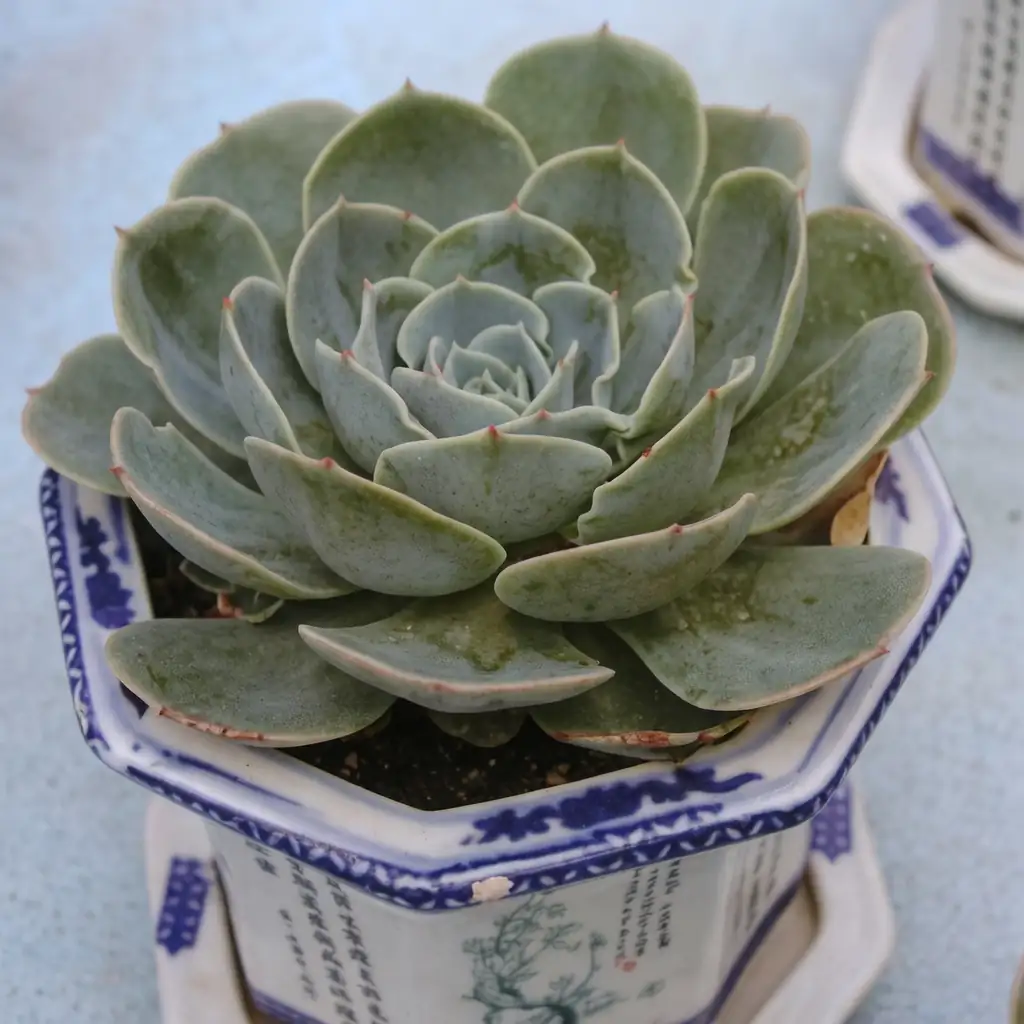
- Size: Rosettes are commonly about 8–15 cm (3–6 in) wide; plants are often kept compact in pots and may be around 10 cm (4 in) tall when not in bloom. In bloom, flower stalks can bring overall height to roughly 10–20 cm (4–8 in). Often sold in ~8 cm (3.1 in) nursery pots and commonly grown on in 12–15 cm (4.7–5.9 in) pots.
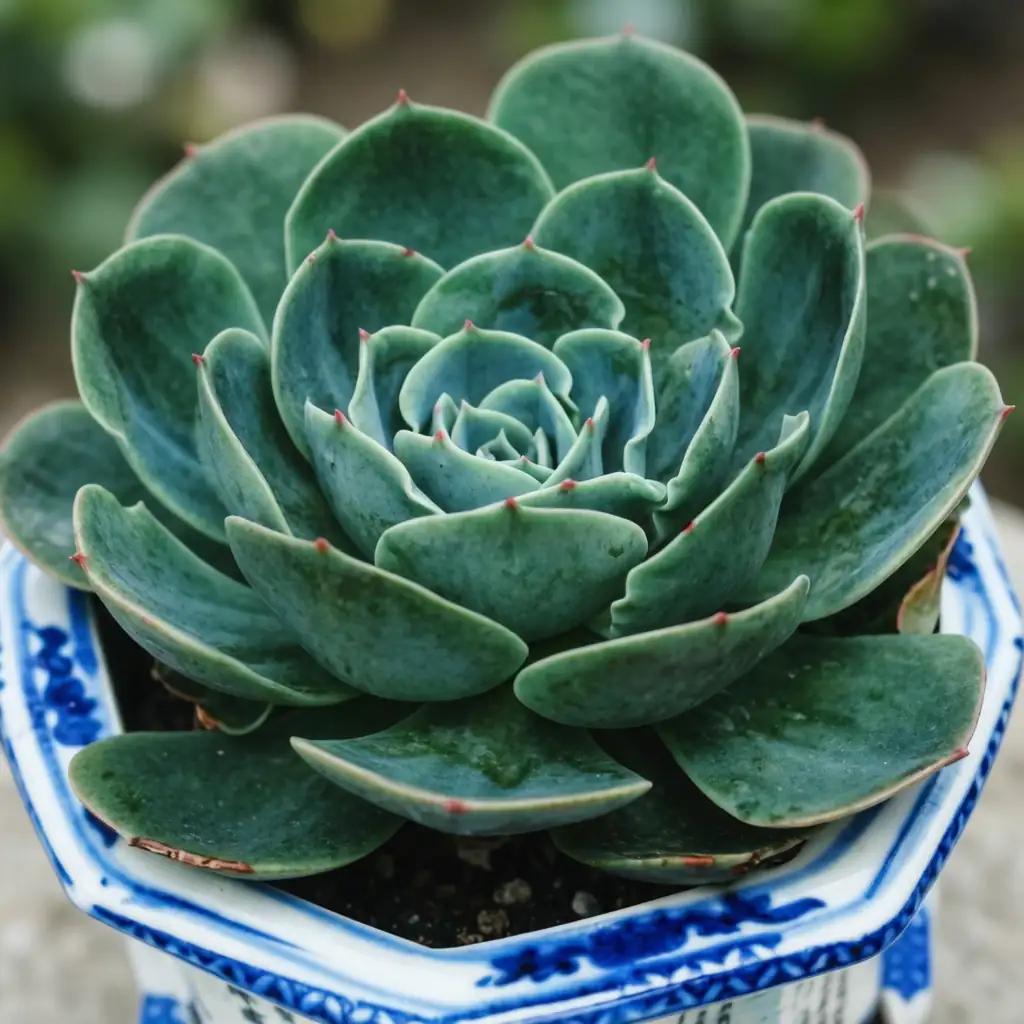
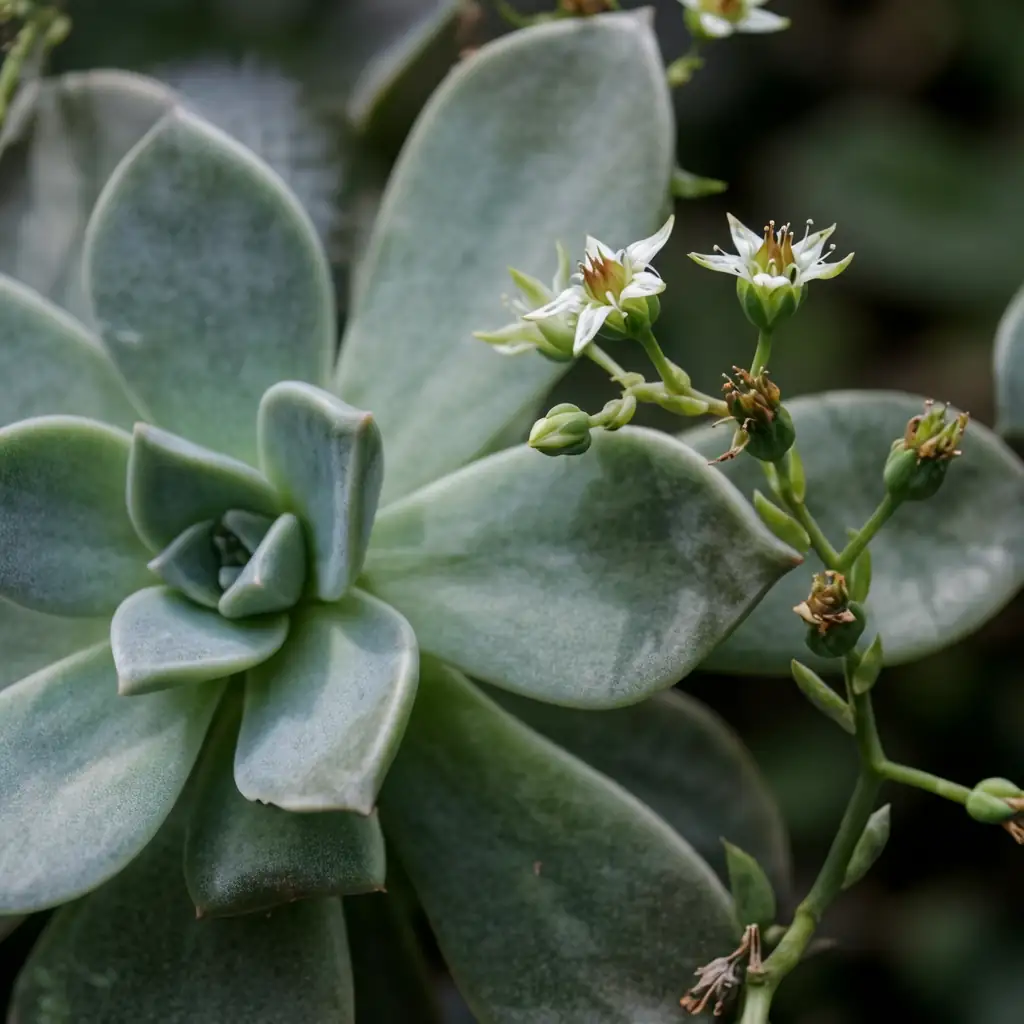
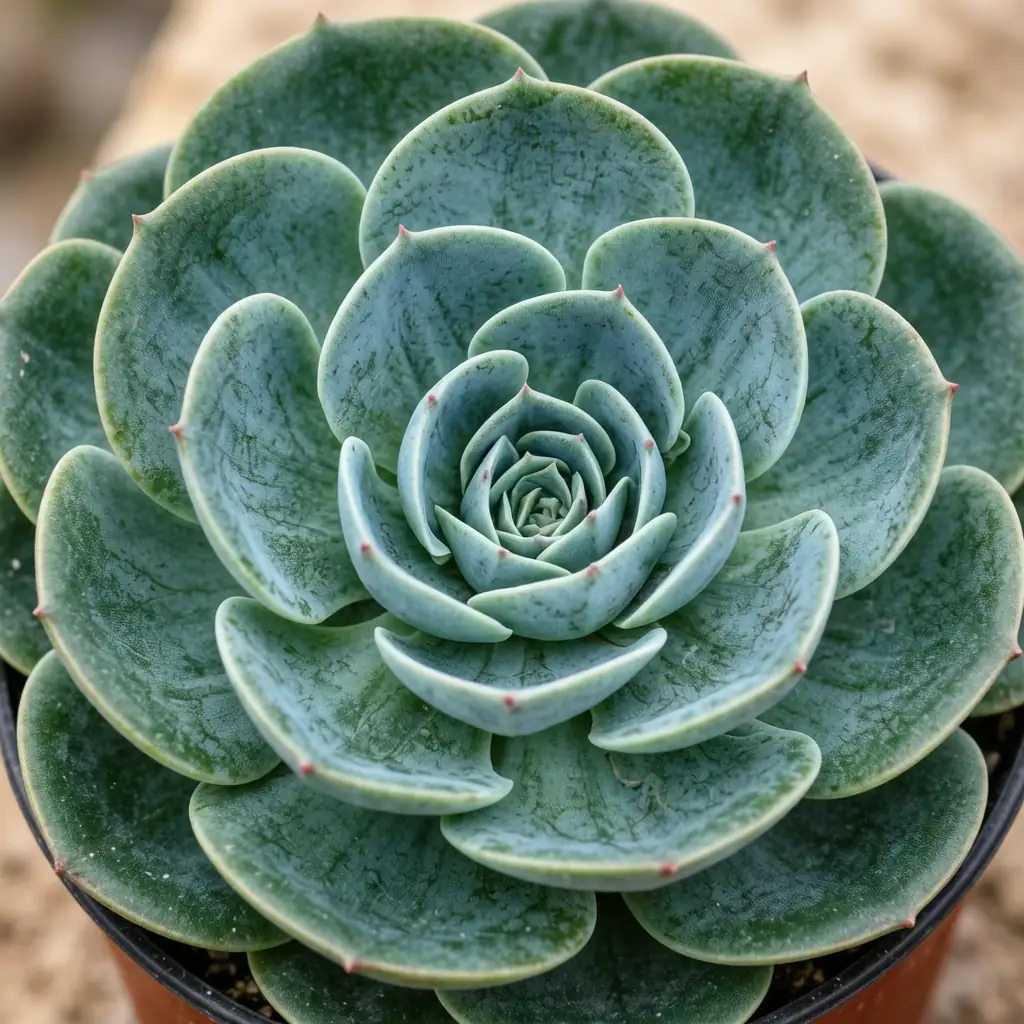
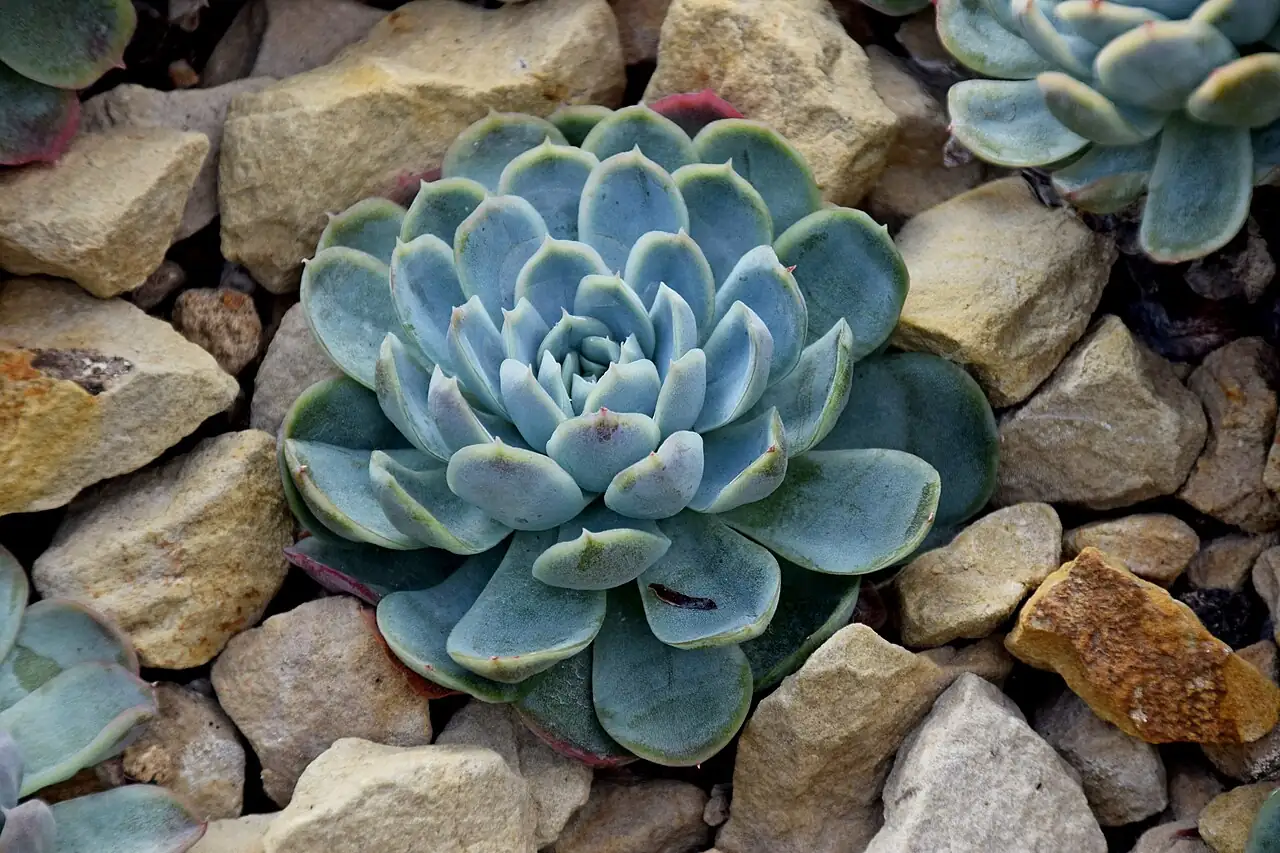
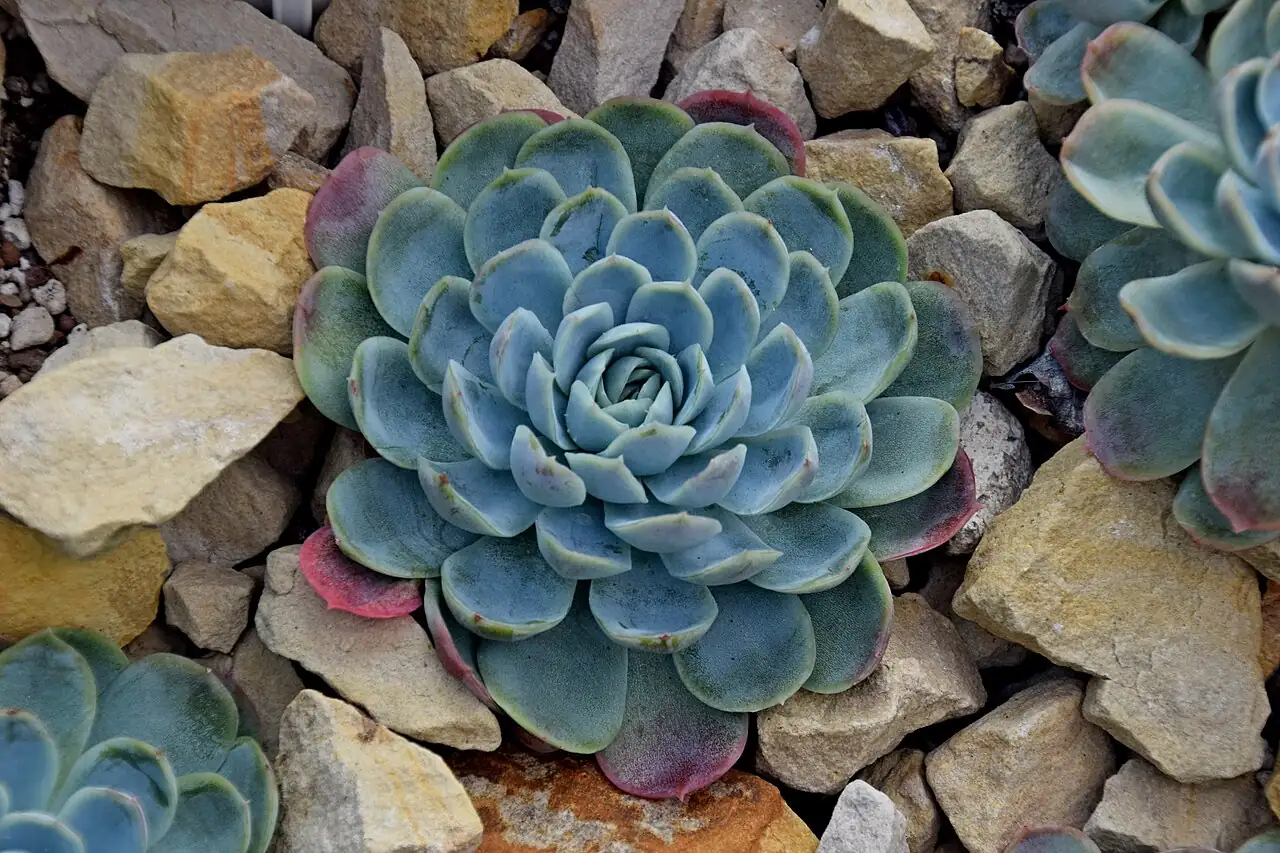
- Foliage: A dense, symmetrical rosette of thick, fleshy leaves. Leaves are pale blue‑green to powdery blue‑gray, sometimes lightly pink-tinged, with a matte, whitish “powder” (farina) that reduces water loss and sun stress. A healthy plant looks broad, even, and well-spread without soft spots or scars.
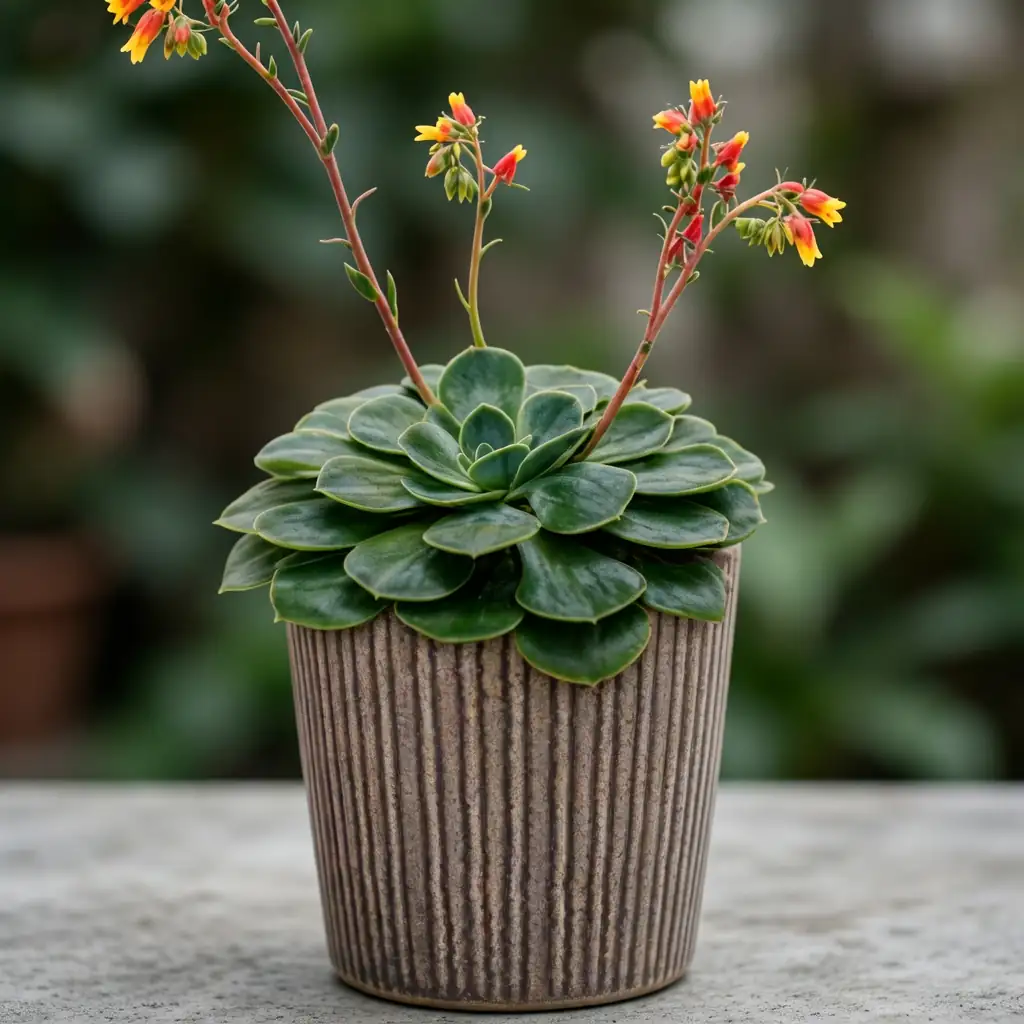
- Flower: Produces slender, elongated stalks with small, nodding, bell-shaped flowers. Blooms are commonly bicolored—pink/red to coral on the outside with yellowish tones inside—though exact intensity can vary with light, temperature, and strain.
- Flowering Season: Spring to Summer (often late spring–early summer; some cultivated plants may bloom into summer).
- Growth Habit: Compact, rosette-forming succulent that offsets readily; forms clusters/low mounds over time.
Environment
Sunlight
Bright light to full sun for best color and a tight rosette (about 4–6+ hours of sun if possible). In very hot climates, give light afternoon shade and avoid prolonged, scorching midday sun. Too little light causes stretching and a flatter, opened rosette.
Temperature
Grows best around 15–27°C (59–81°F), with a commonly cited sweet spot near 18–25°C (64–77°F). Protect from frost; keep above about 5–10°C (41–50°F) for safer overwintering, especially if the soil is not bone-dry.
Humidity
Prefers dry air and strong airflow. Avoid stagnant, humid conditions—especially when cool. If you must raise local humidity in extreme heat, mist the air around the plant rather than wetting the rosette.
Soil
Very fast-draining cactus/succulent mix—gritty and mineral-rich. A common approach is an organic base (leaf mold/peat in moderation) heavily cut with coarse sand, pumice, or grit. Always use a pot with drainage holes; avoid water-retentive mixes.
Placement
Sunny windowsill (east/south), bright balcony/patio, or under strong grow lights indoors. Outdoors, shelter from prolonged rain; newly purchased plants can be eased in behind a sheer curtain before moving into stronger sun.
Hardiness
Generally suited to USDA Zone 9–11 depending on dryness and exposure; not reliably frost-hardy. Cold + wet is the most dangerous combination.
Care Guide
Difficulty
Easy to moderate and very beginner-friendly once the “two big rules” are followed: lots of light and fast drainage. The most common failures come from overwatering, low light (stretching), poor airflow, and cold/wet conditions.
Buying Guide
Pick a tight, centered, symmetrical rosette with firm, plump leaves and an even powdery coating (farina). Avoid plants with translucent/mushy leaves, blackened bases, heavy leaf drop, scars/soft spots, or visible pests. A compact plant around 10 cm (4 in) tall or less is a great starter size. After purchase, acclimate to stronger sun gradually (e.g., a few days behind a sheer curtain) to prevent scorch—but don’t leave it in deep shade.
Watering
Use a “soak and dry” approach: water the soil thoroughly, then let the mix dry out completely before watering again. Always avoid pouring water into the rosette.
– Spring–Summer (active growth/bright conditions): commonly every 7–14 days, depending on heat, pot size, and airflow.
– Autumn: reduce frequency; many growers water about every 2–3 weeks if still actively growing.
– Winter: keep much drier—often every 3–5+ weeks indoors, or as little as 1–2 times total over winter if kept cool.
Extra note (from sources): Some people grow Echeveria in water culture. If you try it, do not submerge all roots—keep part of the roots above the waterline to reduce rot. Use nutrient solution in spring/autumn; plain water in summer/winter.
Fertilization
Light feeding only. During active growth (spring–summer), fertilize at low strength (about 1/4 strength) every 4–8 weeks, or roughly monthly. A cactus/succulent fertilizer works well; some growers use a balanced-to-bloom formula (e.g., 15-15-30) diluted. Avoid fertilizing in winter and avoid splashing fertilizer solution onto leaves.
Pruning
Remove dried, shriveled lower leaves as needed. Cut off spent flower stalks after blooming. If the plant becomes leggy, you can behead and reroot the rosette. During spring repotting, trim overly long or damaged fine roots if necessary.
Propagation
Very easy.
– Offsets (pups): the simplest method—separate once offsets have their own roots.
– Leaf propagation: remove a healthy leaf cleanly, let it callus for several days, then lay on dry gritty mix; mist very sparingly until roots/pups form.
– Rosette/stem cuttings: let cuts callus, then root in a gritty medium.
Timing: can be done year-round in warm, bright conditions; many growers find late summer to early autumn (about August–October) especially reliable. Roots may appear in ~20 days in warm, bright conditions; pot up when roots are about 2–3 cm (0.8–1.2 in).
Repotting
Repot about every 1–2 years (or annually if you like), ideally in early spring. Use fresh gritty mix and a pot with drainage; a common step-up size is 12–15 cm (4.7–5.9 in) as it grows. After repotting, let any damaged roots dry/callus for 1–2 days before watering.
📅 Seasonal Care Calendar
Spring: increase light, resume watering as growth starts; repot, clean dead leaves, propagate; begin light feeding.
Summer: protect from extreme heat and heavy rain; water only when fully dry; enjoy blooms.
Autumn: reduce watering as temperatures drop; good time for propagation.
Winter: keep very bright and on the dry side; protect from frost and avoid cold, wet soil.
Pests, Diseases & Safety
Common Pests & Diseases
Common pests include mealybugs (in leaf axils), aphids on flower stalks, scale, thrips, and occasionally weevils; problems in the root zone can include root-knot nematodes. Diseases noted include leaf spot and rust, with root rot being the classic issue in soggy soil. Prevention is mostly cultural: bright light, airflow, gritty soil, and watering only after full dry-down. For treatment, isolate affected plants; remove badly damaged tissue; use isopropyl alcohol swabs or insecticidal soap for mealybugs/scale; and use labeled fungicides where appropriate for fungal leaf diseases.
Toxicity
Generally considered low-toxicity/non-toxic to people and pets, but chewing may still cause mild stomach upset. Keep out of reach of curious pets or small children who like to nibble.
Culture & Symbolism
Symbolism: Often linked with resilience, enduring love, and quiet, lasting beauty—fitting for a plant that keeps its shape through dry spells.
History & Legends: The genus Echeveria honors Mexican botanical illustrator Atanasio Echeverría y Godoy. Echeveria elegans became a worldwide staple because it’s compact, photogenic, and easy to share through offsets and leaf propagation.
Uses: Ornamental: pots, dish gardens, succulent arrangements, bright-window houseplant displays, and rock gardens in frost-free climates.
FAQ
Why is my rosette stretching and opening up?
It’s almost always low light (sometimes paired with too much water). Move it to a brighter spot with several hours of sun or a stronger grow light, and water only after the soil dries completely. Rotate the pot so it grows evenly.
Why are the lower leaves turning translucent or mushy?
That’s a classic sign of overwatering and/or poor drainage leading toward rot. Let the mix dry fully, switch to a gritty succulent mix, ensure drainage holes, and keep water out of the rosette.
Can I touch the powdery coating on the leaves?
Try not to. The farina is protective, and fingerprints can permanently mark it. Handle the plant by the pot or by the very base when you need to move it.
Can I really grow it in water (water culture)?
Some growers do, but rot risk is higher than in gritty soil. If you try it, keep only part of the roots in water (don’t submerge everything), refresh water regularly, and use nutrients lightly in spring/autumn only.
Fun Facts
- That frosty “powder” (farina) works like a natural sunscreen and helps the plant shed water—one reason water sitting in the rosette can be risky.
- A single healthy rosette can produce many offsets, slowly turning one plant into a shareable little colony.
- Leaf propagation is real: one cleanly removed leaf can eventually grow a whole new plant if kept warm, bright, and on the dry side.