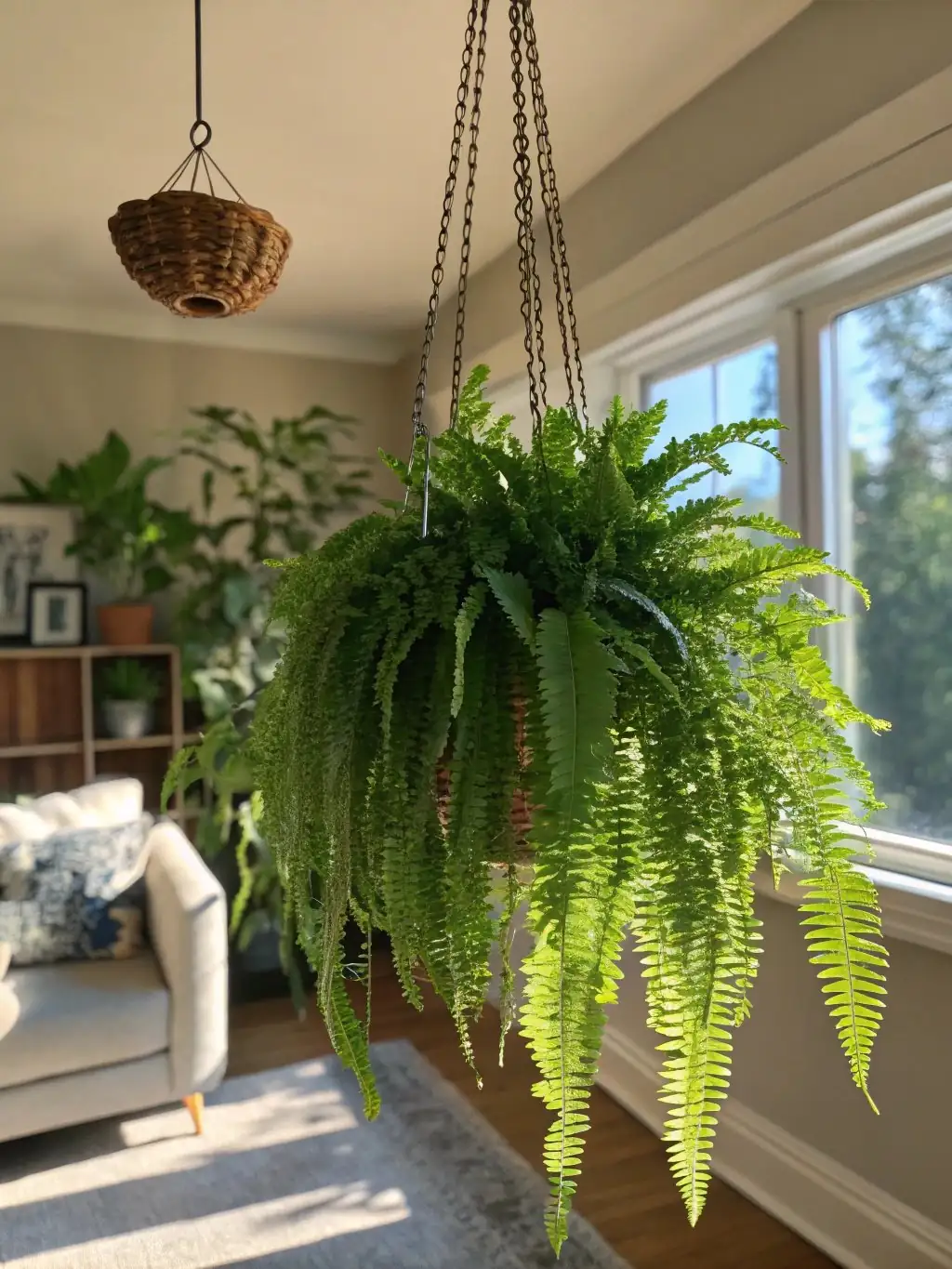
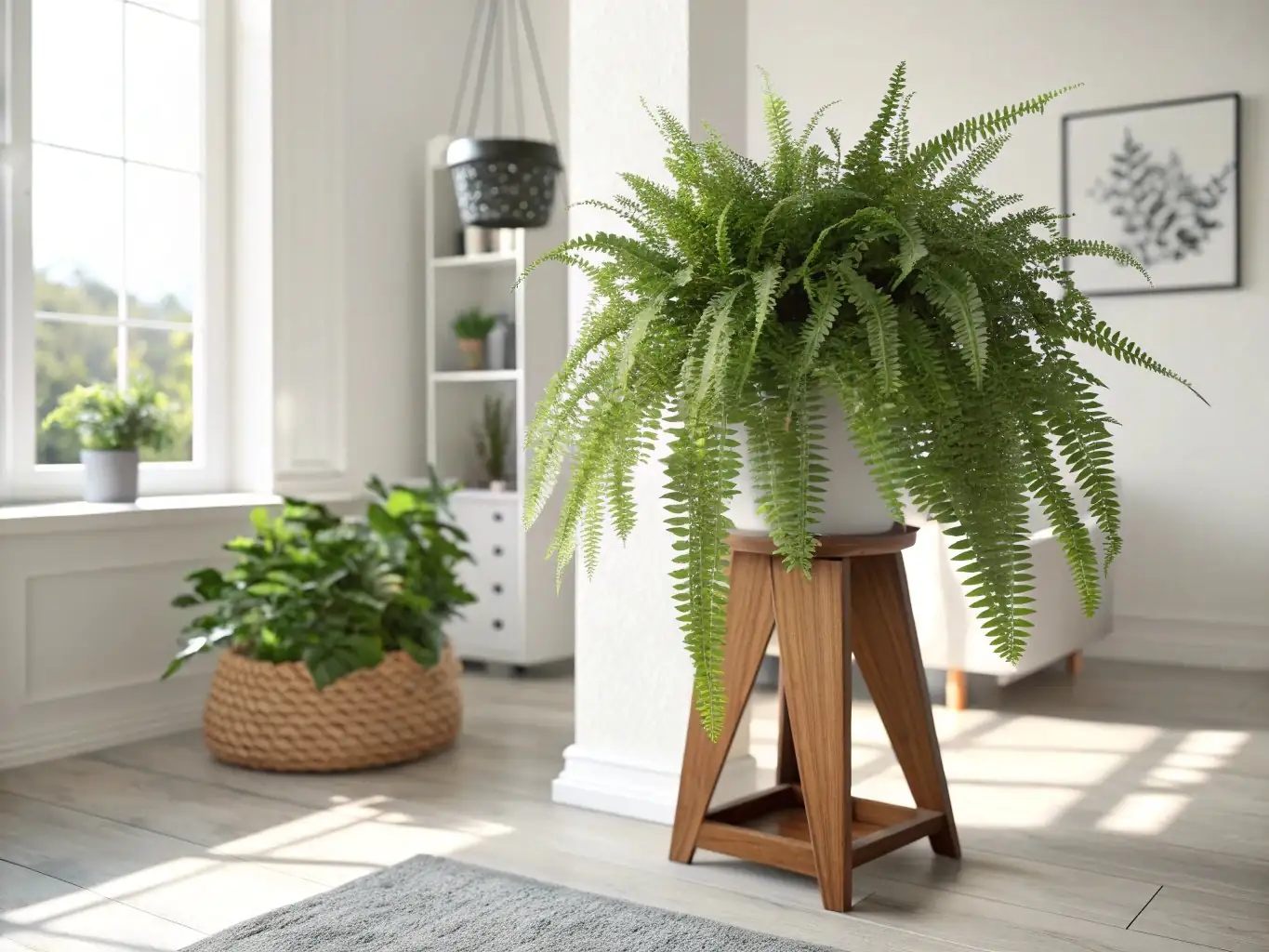
Plant Features
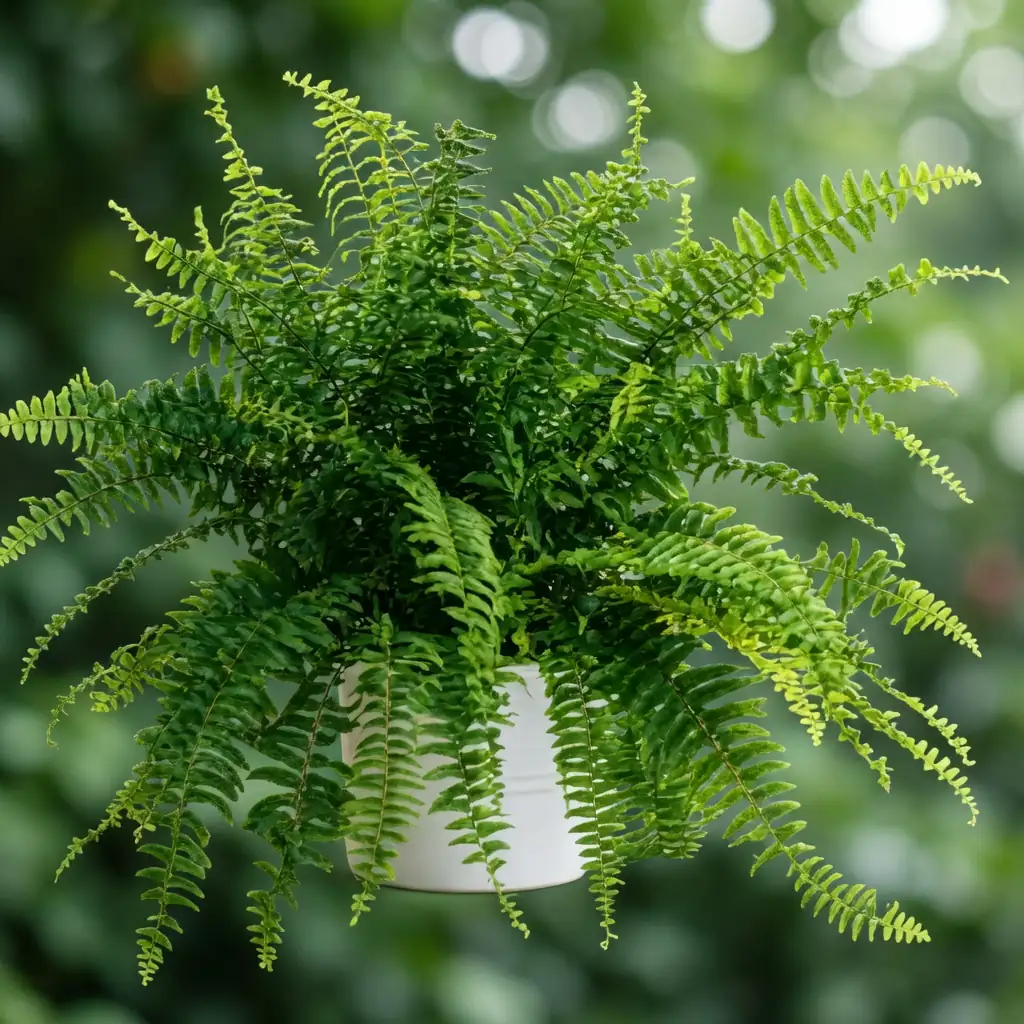
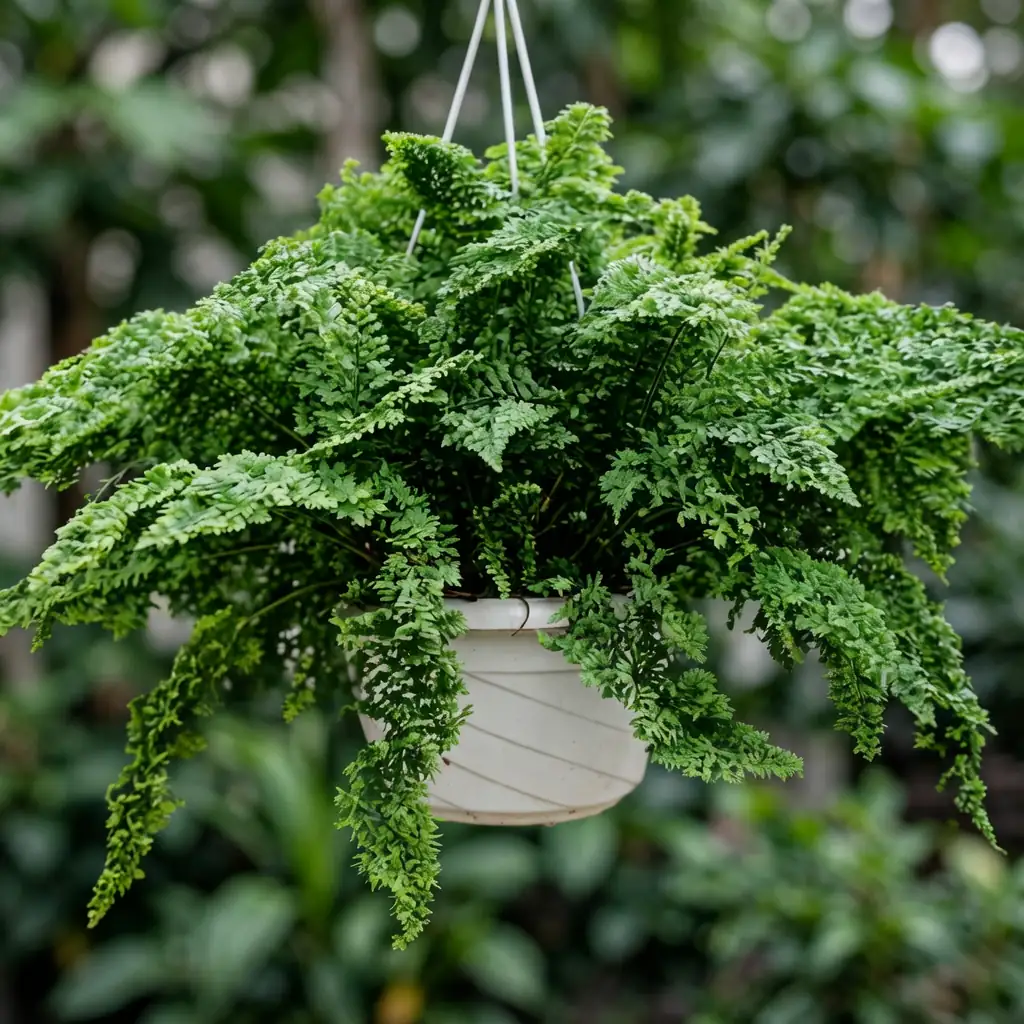
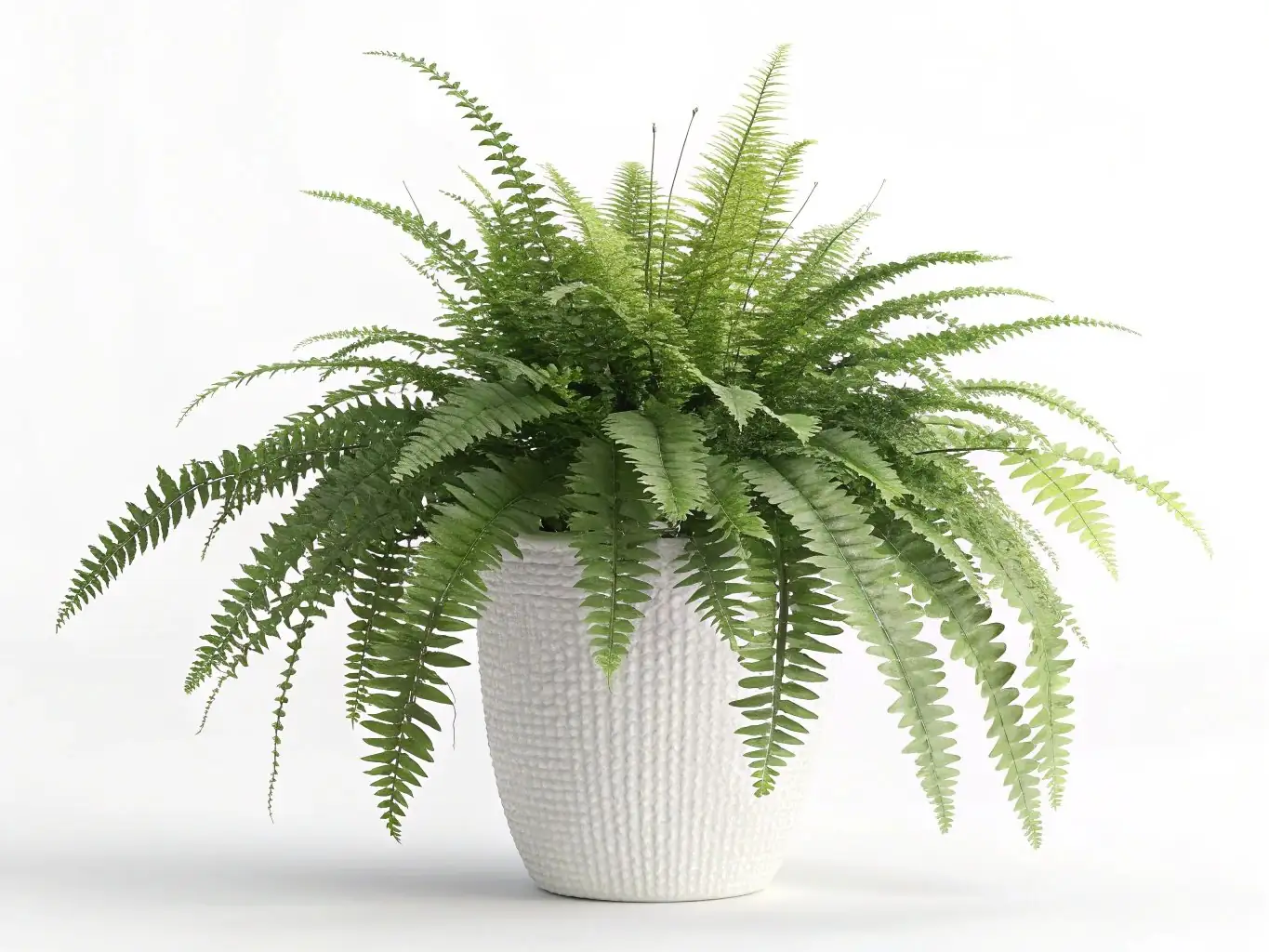
- Size: Typically 30–90 cm (12–35 in) tall and about 60–90 cm (24–35 in) wide indoors; many plants settle around ~60 × 60 cm (24 × 24 in). Individual fronds can reach up to about 120 cm (48 in) long in good conditions, especially in hanging baskets.
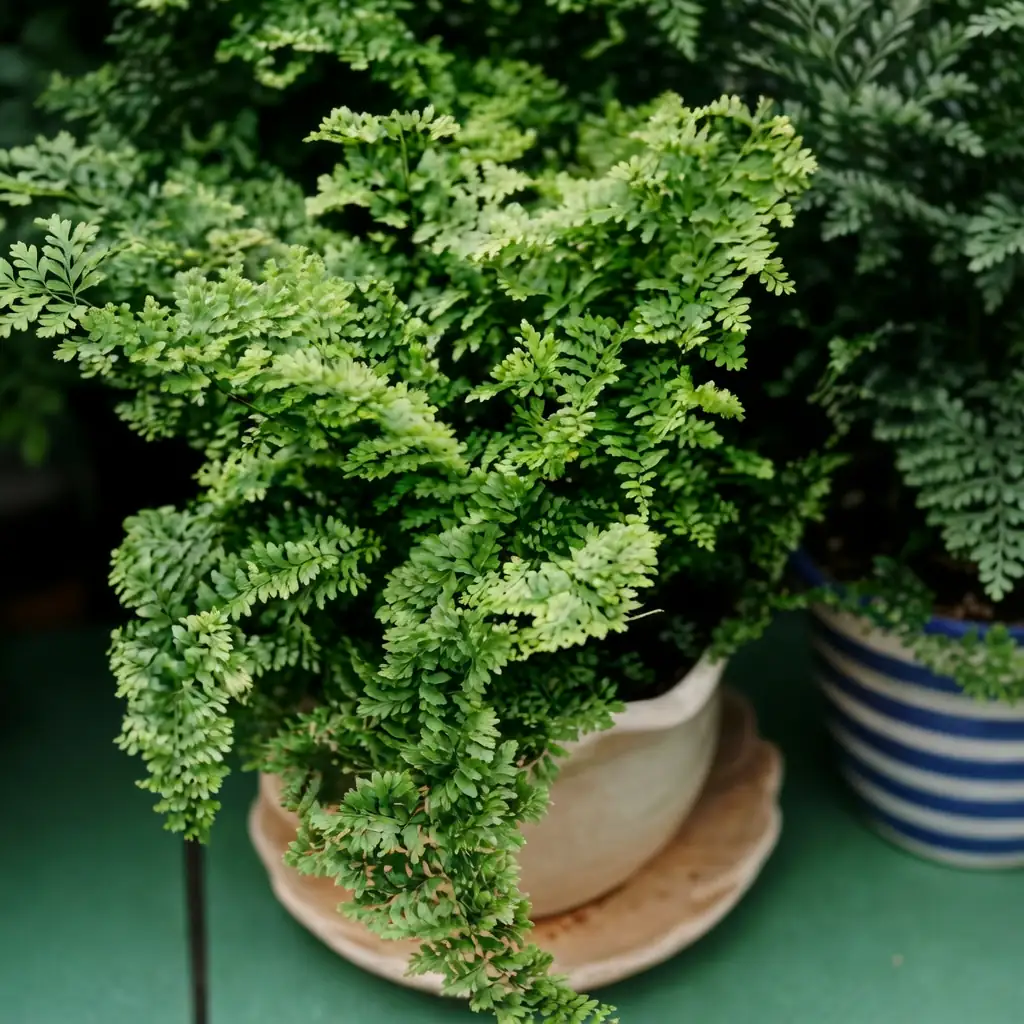
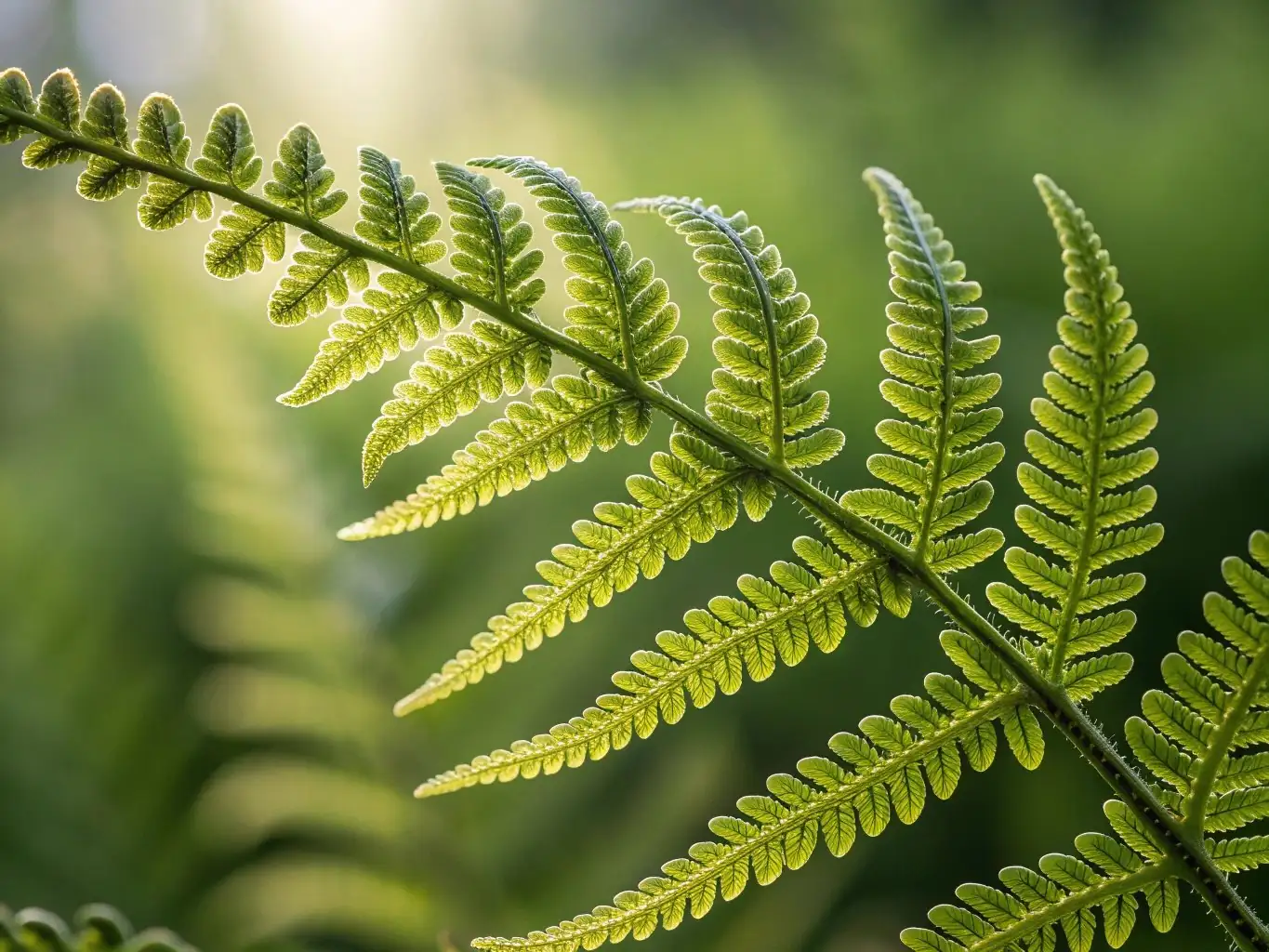
- Foliage: Evergreen, soft, feathery, pinnate fronds made up of many narrow leaflets (pinnae). New fronds tend to rise more upright, then arch and cascade as they mature, creating a dense fountain-like shape. Foliage is usually fresh to bright green; dry air, missed watering, salt buildup, or harsh sun can cause leaflet curl and brown tips.
- Flower: Non-flowering plant (fern). It reproduces via spores, typically found on the undersides of mature fronds, and also spreads vegetatively by runners (stolons).
- Flowering Season: Not applicable (fern). Spores may appear at various times of year when plants are mature and growing well.
- Growth Habit: Clump-forming fern with a short rhizome and many arching fronds emerging from the crown. Produces slender stolons (runners) that can form new plantlets—one reason it fills baskets so quickly and is easy to propagate.
Environment
Sunlight
Bright, indirect light to partial shade. Gentle morning sun can be fine, but avoid strong direct midday/afternoon sun (scorches fronds). Too little light can lead to sparse growth.
Temperature
Best at about 16–24°C (61–75°F). Tolerates cooler conditions to around 10–12°C (50–54°F) briefly, but aim to keep it above about 7°C (45°F). Prolonged heat above ~35°C (95°F) can cause stress.
Humidity
Prefers moderate to high humidity—ideally 50–70%+; higher humidity gives the lushest fronds. In dry homes, use a humidifier, pebble tray (pot base kept above waterline), grouping, or regular misting; keep some airflow to reduce fungal issues.
Soil
Moisture-retentive yet free-draining mix. A fern-friendly option is peat/leaf-mold–based potting mix with added perlite/coarse sand for aeration; many growers also use a blend such as all-purpose potting mix + loam-based mix (about 1:1) with extra drainage material if needed. Slightly acidic is preferred. Avoid heavy, waterlogged media.
Placement
Indoors: near an east- or north-facing window, or set back from a brighter window with filtered light. Bathrooms and kitchens often suit it well if there’s decent light and ventilation. Great in hanging baskets, on plant stands, or tabletops—keep away from heaters, AC vents, and hot sun through glass.
Hardiness
Frost-tender; outdoors year-round mainly in USDA Zones 10–11 (some references place it as 9–11 depending on local microclimate). Protect from any frost.
Care Guide
Difficulty
Easy to moderate. It’s “easy for a fern,” but it still expects two things: evenly moist roots and consistently humid air. If either swings too dry (or too wet), you’ll usually see it in the tips first.
Buying Guide
Choose a plant with dense, springy, evenly green fronds and minimal browning at the tips. Check undersides of fronds for spider mites/scale/mealybugs, and avoid pots that feel constantly soggy or smell sour (possible root rot). A 12.5–15 cm (5–6 in) pot is a good starter size; fuller baskets are often more established clumps.
Watering
During active growth (spring to early autumn), keep the mix evenly moist—water thoroughly when the surface/top 2–3 cm (about 1 in) begins to dry, then let excess drain fully. Don’t allow the root ball to dry out completely, but also avoid leaving it waterlogged (root rot risk). In winter, reduce watering: let the surface dry slightly before watering again.
Helpful technique: every couple of weeks, you can soak the pot for about 10 minutes, then drain well, to rehydrate the root ball evenly.
Water-culture/hydro option (possible with the right setup): rinse soil from the roots, trim dead fronds, anchor the plant in inert media (expanded clay pebbles, stones, vermiculite) in a watertight container, keep roots in clean water, refresh regularly, and feed lightly in the growing season.
Fertilization
Feed during the growing season. Options that work well: (1) monthly, balanced liquid fertilizer at 1/2 strength (common for indoor ferns), or (2) every 2 weeks from April to September at a more diluted rate. Pause in late autumn/winter. If salts build up (brown tips despite good humidity), flush the pot with plain water occasionally.
Pruning
Tidy regularly by removing yellow, brown, or broken fronds at the base. You can trim crispy tips for appearance, but also fix the cause (humidity, watering, sun). Light thinning improves airflow. If a plant is badly stressed, it often rebounds after a harder cutback when kept warm and humid.
Propagation
Easiest: division (best in spring to early summer, but can be done whenever the plant is actively growing). Separate a clump with healthy roots and pot into fresh mix; keep evenly moist until established (often 2–3 weeks).
Also possible: detach plantlets formed along runners (stolons) and pot up.
Advanced: spores—sow ripe spores on a fine peat/leaf-mold medium with grit for aeration; keep consistently moist and humid. Prothalli may appear in about 8–10 weeks; seedlings are slow at first and need patience.
Repotting
Repot in spring or when crowded/root-bound (often every 2–3 years). Move up one pot size and refresh the mix; trim any rotten roots and ensure strong drainage. Common basket sizes are around 15–20 cm (6–8 in) diameter for a full look; keeping several clumps together helps create that classic “fountain.”
📅 Seasonal Care Calendar
Spring: Best time to repot and divide; resume feeding; increase watering as growth picks up.
Summer: Keep evenly moist, protect from harsh sun, and prioritize humidity.
Autumn: Gradually reduce feeding and slightly ease watering while keeping the root ball from drying out.
Winter: Brighter spot indoors, away from drafts/vents; water only when the surface dries slightly; no fertilizer; keep above 7°C (45°F).
Pests, Diseases & Safety
Common Pests & Diseases
Common pests: spider mites (especially in dry air), mealybugs, scale, and whiteflies; outdoors can also attract slugs/snails/caterpillars. Improve humidity, rinse foliage, isolate affected plants, and treat with insecticidal soap or neem as needed.
Common problems: root rot (often from constantly soggy mix; sometimes linked to Pythium) and occasional fungal blights (e.g., Rhizoctonia) in stagnant, overly wet conditions. Prevention is mostly cultural: airy, free-draining mix; thorough watering with good drainage; empty saucers; and steady humidity with airflow.
Toxicity
Generally regarded as non-toxic to humans, cats, and dogs (commonly listed as pet-safe). As with any plant, chewing may still cause mild stomach upset in sensitive pets.
Culture & Symbolism
Symbolism: Often associated with freshness, sincerity, renewal, and calm—like bringing a little patch of soft green forest indoors. Ferns also show up in folklore as plants tied to hidden places and woodland magic.
History & Legends: The “Boston fern” became famous in the Victorian era, when lush indoor greenery was a style statement. A well-known story credits its popularity to a distinctive form of Nephrolepis exaltata noticed and propagated in the late 1800s, after which it became a staple of porches and hanging baskets.
Uses: Mostly grown for ornamental foliage—especially in hanging baskets, porch containers, and bright indoor corners where its fronds can spill like a fountain. It’s also valued as a humidity-boosting houseplant, and its fronds are sometimes used as cut greenery in floral arrangements. It’s frequently cited in popular “air-improving plant” lists for its ability to trap dust and contribute to a fresher-feeling room.
FAQ
Why are my Boston fern frond tips turning brown?
Most often it’s low humidity or the root ball drying out even briefly. Increase humidity (humidifier/pebble tray/grouping), keep the mix evenly moist (not soggy), and move it out of harsh sun or away from heating/AC vents. If you fertilize, occasional flushing can help prevent salt burn.
How often should I water a Boston fern?
Water when the top 2–3 cm (about 1 in) of mix feels slightly dry—often about once a week in warm, bright conditions, and less in winter. The goal is “evenly moist,” never bone-dry and never waterlogged.
Can Boston ferns be grown outdoors?
Yes, in warm, frost-free climates (generally USDA Zones 10–11; sometimes 9–11 in sheltered spots). Outdoors they like bright shade/filtered light and consistent moisture. In cooler regions, treat them as seasonal plants and bring indoors before temperatures drop.
Can I keep a Boston fern in a bathroom?
Yes—bathrooms are often ideal because of the humidity. Just make sure it still gets decent light and some ventilation so the fronds don’t stay damp and stagnant.
Can Boston fern be grown in water?
It can, as a form of water culture/hydroponics: rinse soil from the roots, anchor in inert media in a watertight container, keep water clean, and add a diluted foliage nutrient during the growing season (about every 2 weeks). Watch for root health and remove aging fronds promptly.
Fun Facts
- It’s a fern—so no flowers or seeds; it makes spores on the undersides of fronds.
- Its classic “green fountain” shape is why it became one of the most iconic hanging-basket plants.
- It spreads by runners (stolons), which can produce baby plants and help a basket fill out fast.
- With warmth and humidity, a stressed Boston fern can often bounce back and resprout after a hard cutback.