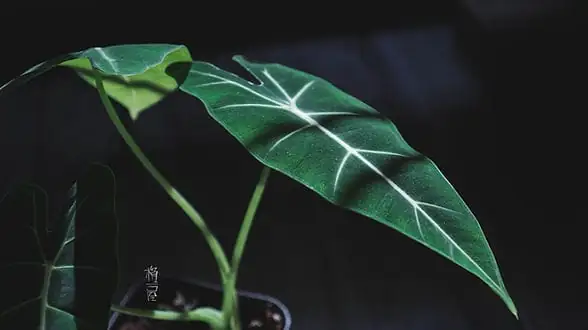
Plant Features
- Size: Indoors, many Alocasia types grow about 60–90 cm (2–3 ft) tall; in ideal warm, humid conditions some can reach around 3 m (10 ft).
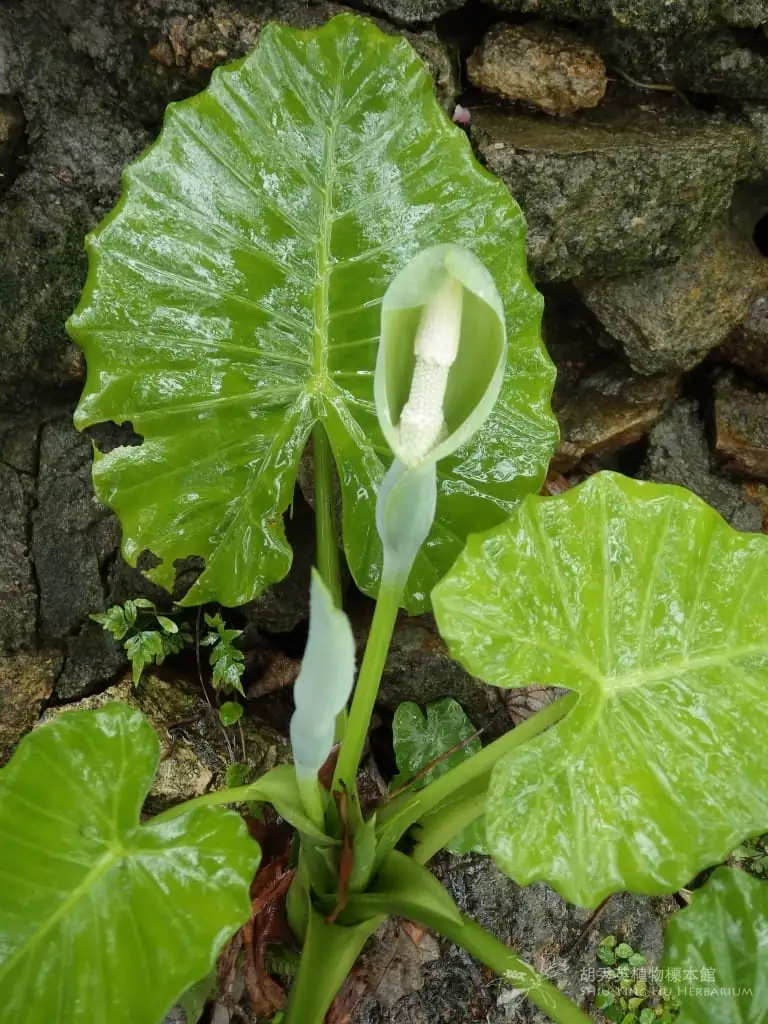
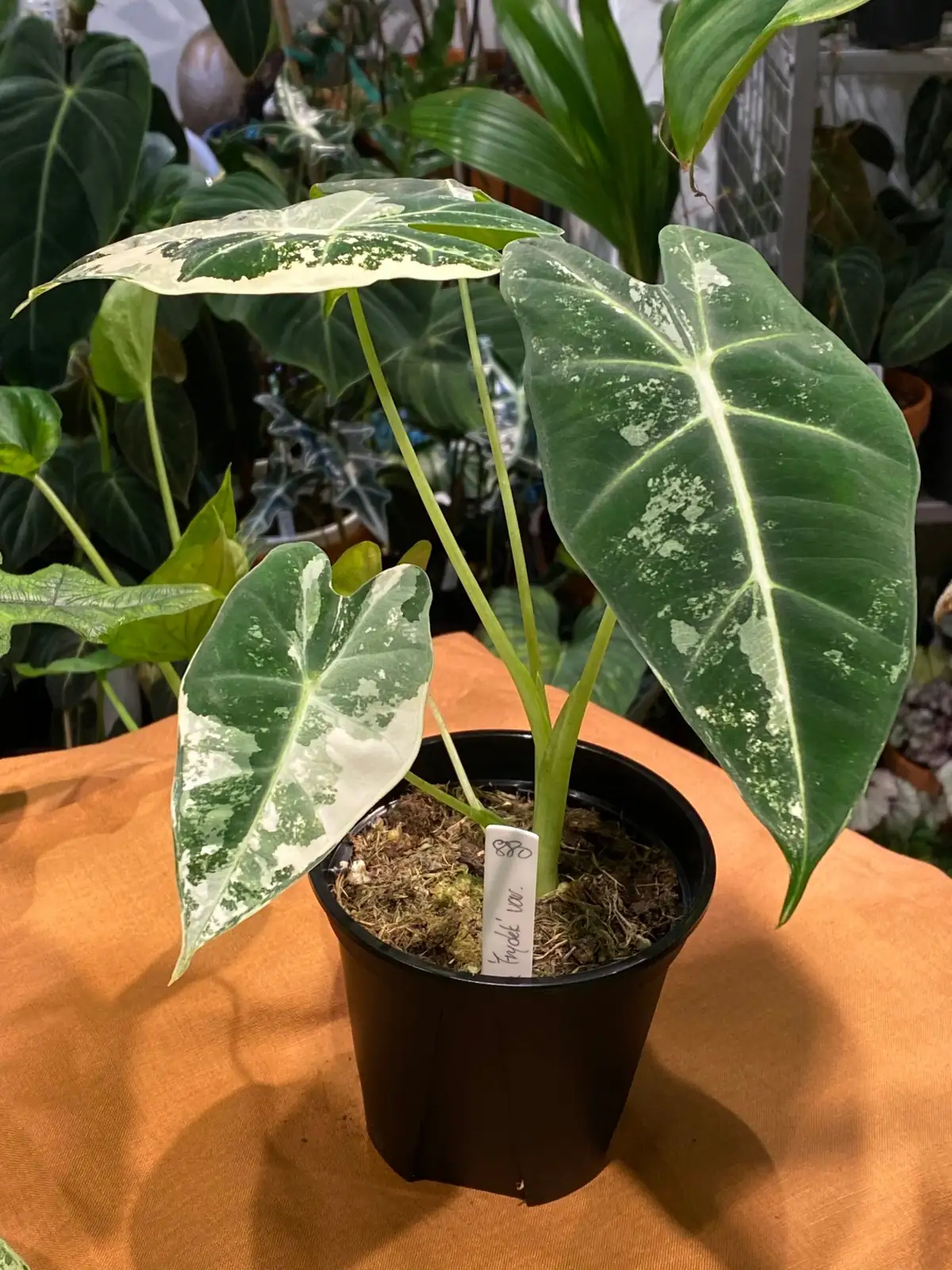
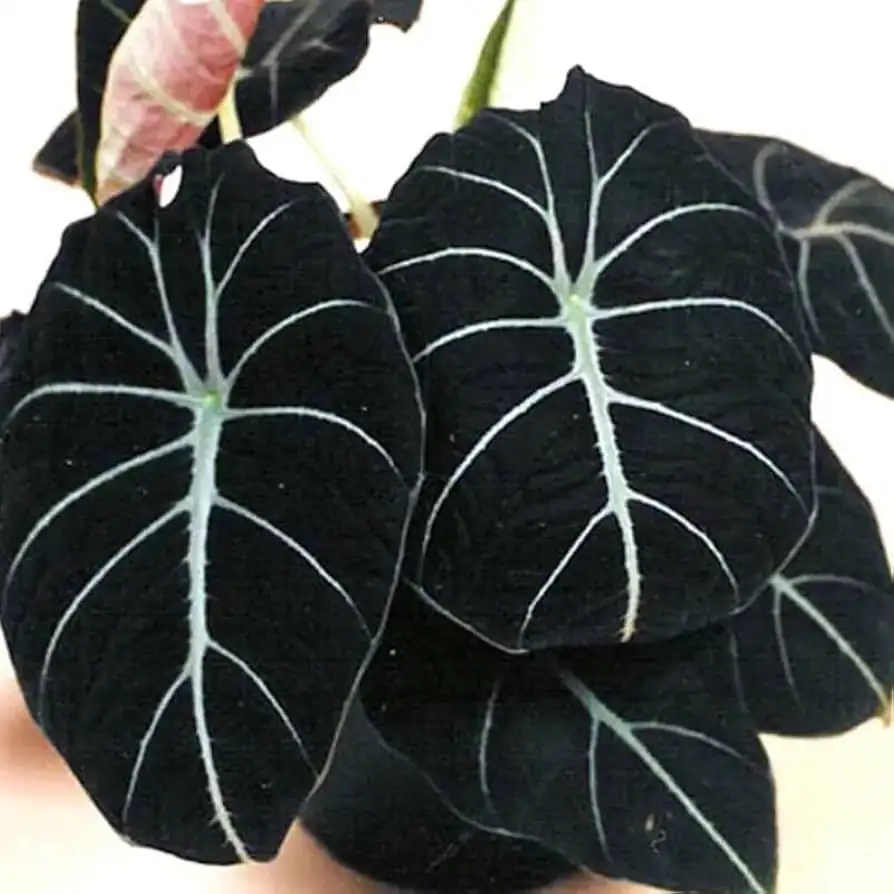
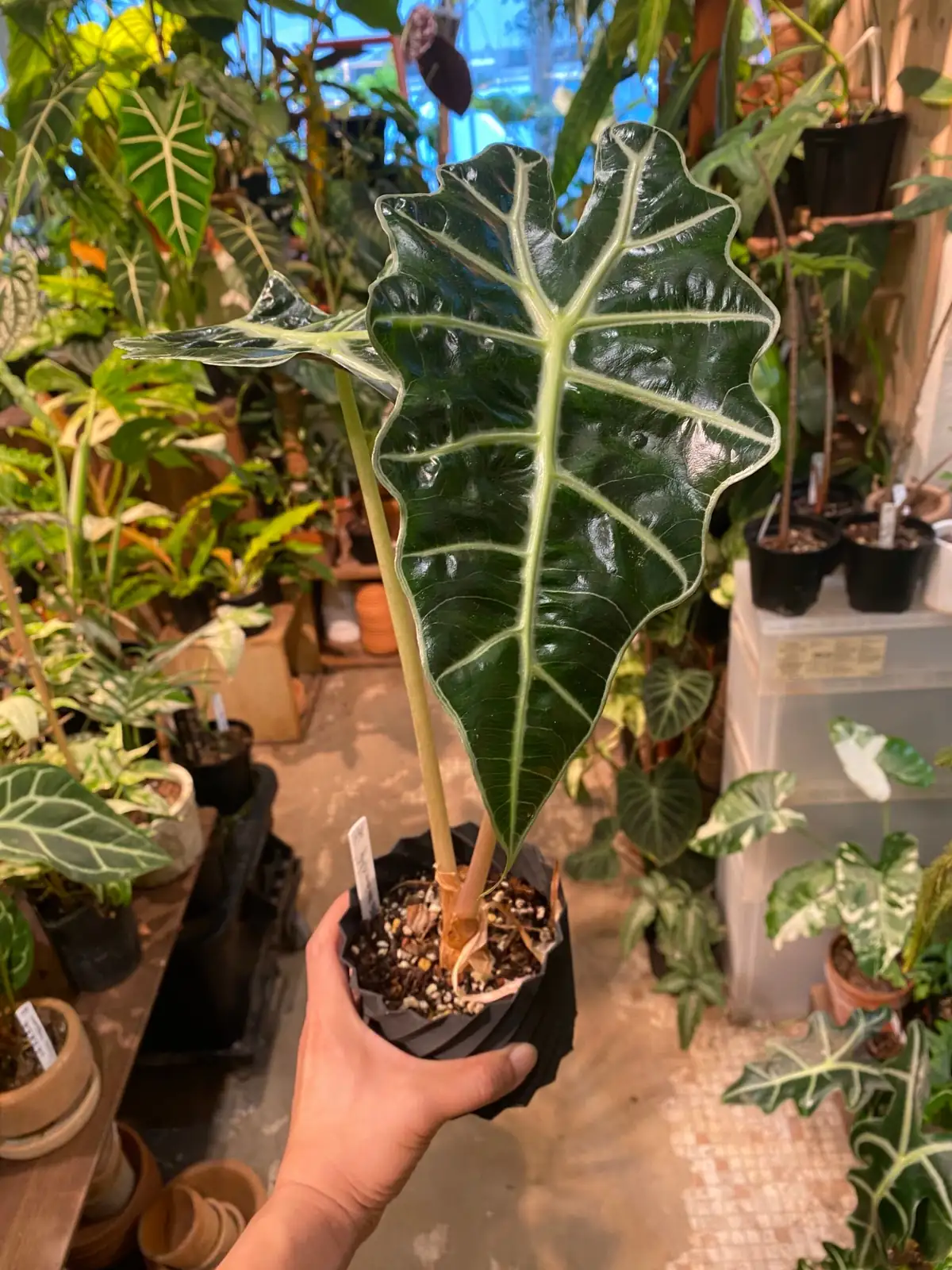
- Foliage: Leaves are shield-, heart-, or arrow-shaped and held upright on sturdy stalks, creating a sculptural look. Foliage is typically deep green (sometimes velvety), with prominent raised veins in white or silvery tones; some varieties show a subtle metallic shine. Individual leaves commonly reach about 30–50 cm (12–20 in) long, and new leaves often unfurl in a spiral-like sequence as the plant grows.
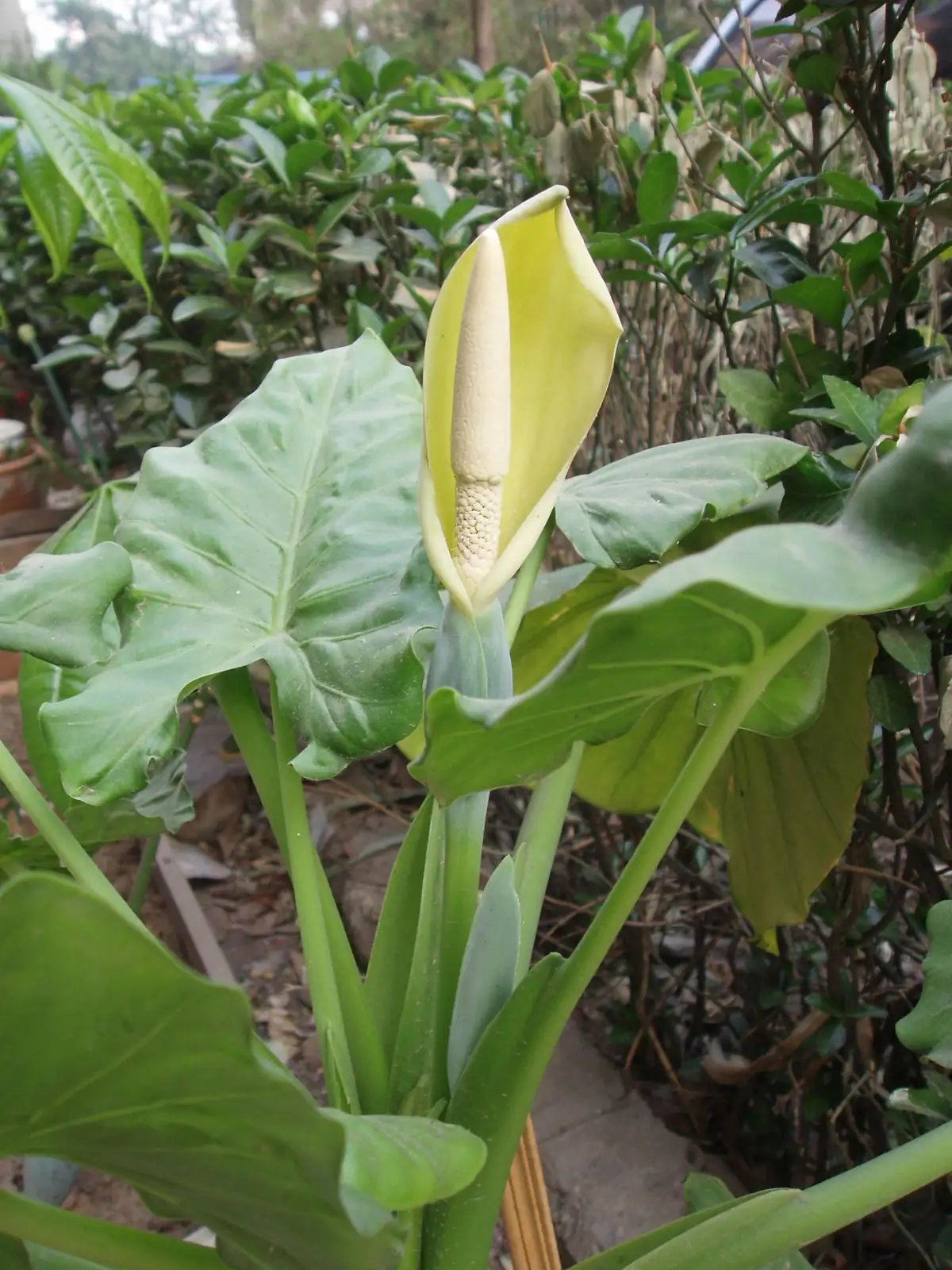
- Flower: Like many aroids, Alocasia can produce a spathe-and-spadix bloom (a hooded spathe surrounding a central spadix), usually yellow to yellow-green. As a houseplant it flowers only occasionally, and many growers never see blooms at all.
- Flowering Season: Spring through summer (rare indoors)
- Growth Habit: Upright, clumping perennial with fleshy underground tubers or rhizomes. In warm, bright, humid summers it can grow quickly—sometimes producing roughly one new leaf per week.
Environment
Sunlight
Bright, indirect light or partial shade—think “rainforest understory.” Aim for about 3–5 hours of bright, filtered light daily; avoid harsh direct sun that can scorch leaves.
Temperature
Prefers warm conditions around 15–29°C (60–85°F). Avoid dropping below about 15°C (60°F); protect from cold drafts and sudden temperature swings.
Humidity
Loves high humidity—ideally 65%+ (minimum roughly 50%+). Humidifiers and pebble trays can help, especially in heated or air-conditioned rooms.
Soil
A loose, airy, well-draining mix that still holds some moisture. Slightly acidic is best (about pH 5.5–6.5). An aroid-style mix works well—often peat/coco-based with chunky additions like orchid bark and perlite to prevent soggy roots.
Placement
Bright indoor spots out of direct sun—near east- or west-facing windows is ideal. Bathrooms or kitchens can be great if they’re bright and naturally humid; also works well in living rooms and offices with stable warmth.
Hardiness
USDA Zones 10–12; not frost tolerant.
Care Guide
Difficulty
Moderate. Alocasia isn’t “set-and-forget”—it likes steady warmth, higher humidity, and careful watering—but becomes quite manageable once you dial in the routine.
Buying Guide
Choose plants with firm stems and crisp, richly colored leaves. Check undersides and stems carefully for pests. Skip plants with widespread yellowing, brown spotting, or obvious stress, and avoid severely root-bound specimens when possible.
Watering
Keep evenly moist but never waterlogged. Water when the top 5–8 cm (2–3 in) of soil feels dry, then water thoroughly until excess drains out. Empty any saucer water within about 30 minutes to reduce root-rot risk. In fall and winter, reduce watering as growth slows or dormancy begins—keep the mix only lightly moist. If your plant is fussy with tap water, use distilled water or let tap water sit out for 24 hours before watering.
Fertilization
Feed during active growth (spring and summer) about 1–2 times per month using a balanced liquid fertilizer (e.g., 20-20-20) diluted to half strength. Alternatively, use a slow-release fertilizer roughly every 6–8 weeks. Pause feeding during winter dormancy.
Pruning
Prune only as needed—remove yellowing, damaged, or diseased leaves by cutting the leaf stalk near the base with clean, sharp tools. Spring and summer are best. Wear gloves: the sap can irritate skin.
Propagation
Most commonly propagated by division in spring. Unpot the plant, gently clear soil from the rhizomes, and separate offsets/divisions so each piece has roots and at least one growth point. Pot into a well-draining mix, keep warm, humid, and evenly moist in bright indirect light. (Commercial growers may also use tissue culture.)
Repotting
Repot in spring or summer when actively growing. Smaller types may need it every 12–18 months; larger floor types about every 18–24 months. Move up one size (about 2.5–5 cm / 1–2 in wider for small plants; 5–10 cm / 2–4 in for big plants). Choose pots with excellent drainage; clay increases airflow, while plastic or glazed pots hold moisture longer.
📅 Seasonal Care Calendar
Spring (Mar–May): Growth restarts—resume watering and feeding; best time to repot and divide. Summer (Jun–Aug): Peak growth—keep humidity high, protect from direct sun, water consistently; rapid leaf production is common. Fall (Sep–Nov): Gradually reduce fertilizer and slightly cut back watering. Winter (Dec–Feb): Many types slow down or go dormant—stop fertilizer, water sparingly, and keep above 15°C (60°F); some leaf drop can be normal.
Pests, Diseases & Safety
Common Pests & Diseases
Common pests include spider mites (often the biggest issue indoors), mealybugs, scale, and aphids. Wipe leaves and treat with insecticidal soap or neem oil, repeating as needed. Main disease risks are root rot from soggy soil, plus fungal leaf spots and bacterial soft rot. Prevent problems with a well-draining mix, good airflow, and avoiding frequent overhead watering; isolate affected plants and remove damaged tissue promptly.
Toxicity
Toxic to people and pets. Alocasia contains calcium oxalate crystals (and other irritants), which can cause intense mouth/throat irritation, drooling, swelling, vomiting, and diarrhea if chewed or swallowed. Sap may irritate skin and eyes. Keep away from children and pets, and wear gloves when pruning or handling.
Culture & Symbolism
Symbolism: Often associated with resilience and growth—those bold leaves feel like a living reminder to “stand tall.” In Feng Shui traditions it’s frequently linked with prosperity and career luck, and more broadly it’s sometimes seen as a plant of transformation and fresh momentum.
History & Legends: Alocasia has a long relationship with people in tropical regions, where some related plants have been cultivated historically for starchy underground parts (only with careful processing). In modern houseplant culture, Alocasia surged in popularity as a dramatic indoor foliage plant, with many cultivars prized for their graphic veins and architectural form. Folklore and modern storytelling sometimes play up its “sky-reaching” look, which helps explain why it’s occasionally tied to larger-than-life tales.
Uses: Primarily an ornamental foliage plant for homes, conservatories, and warm-climate landscapes; sometimes used as a statement plant in containers or as a cut foliage accent. Despite historical food uses in some related plants, most ornamental Alocasia grown for houseplants should be treated as strictly inedible due to toxicity.
FAQ
Why are my Alocasia leaves turning yellow?
Most often it’s watering trouble (too wet or too dry). Yellowing can also come from low light, low humidity, cool temperatures, tired soil, or a nutrient gap. If it’s only the oldest leaf yellowing as a new one emerges, that can be normal aging.
Why is my Alocasia drooping or wilting?
Check soil moisture first—both drought and soggy roots can cause droop. Also consider light (too dim), recent temperature swings, or root issues like rot. If the roots smell foul or look mushy and dark, improve drainage and remove damaged roots.
Should I mist my Alocasia?
Light misting can help a little, but a humidifier is more reliable. If you mist, do it in the morning and avoid soaking the leaves repeatedly, since constantly wet foliage can encourage spots and fungal issues.
Can Alocasia be kept indoors?
Yes—Alocasia can be an excellent houseplant with bright indirect light, steady warmth, and higher humidity. Because it’s toxic, place it where pets and small children can’t nibble it.
Does Alocasia go dormant in winter?
Many do. Growth may slow dramatically, and some varieties drop leaves. Keep it warm (above 15°C/60°F), stop fertilizing, and water less—just enough that the potting mix doesn’t stay bone dry for long periods.
What does an overwatered Alocasia look like?
Common signs include yellowing, drooping, brown or water-soaked spots, and a generally limp, unhappy look. Fungus gnats, moldy soil, and a sour smell can also point to overly wet conditions and possible root rot.
Fun Facts
- In warm, humid summer conditions, some Alocasias can push out about one new leaf per week.
- The classic nickname “Elephant’s Ear” comes straight from the oversized, flared leaf shape.
- There are many Alocasia species, and even more cultivars and hybrids—leaf color, texture, and veining can vary dramatically from one to the next.
- Alocasia flowers are aroid-style spathe-and-spadix blooms, but indoor plants often skip flowering and put their energy into leaves instead.