Plant Features
- Size: Indoors in pots, commonly kept around 30–200 cm (12–79 in) with pruning; many home specimens top out near 1.8 m × 1.2 m (6 ft × 4 ft), though some can reach about 3 m (10 ft) in roomy, bright interiors. In tropical ground planting, it becomes a large tree often 15–30 m (50–100 ft), and exceptionally taller in ideal conditions.
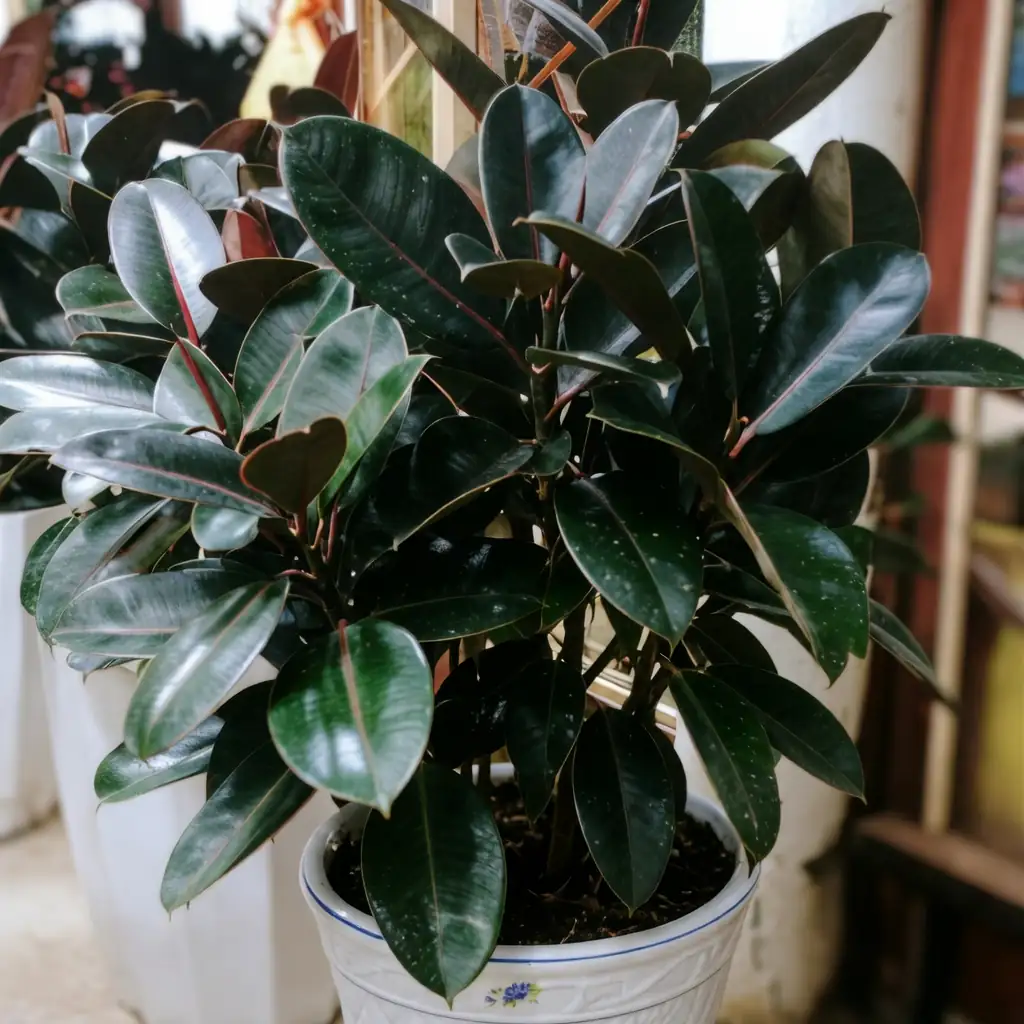
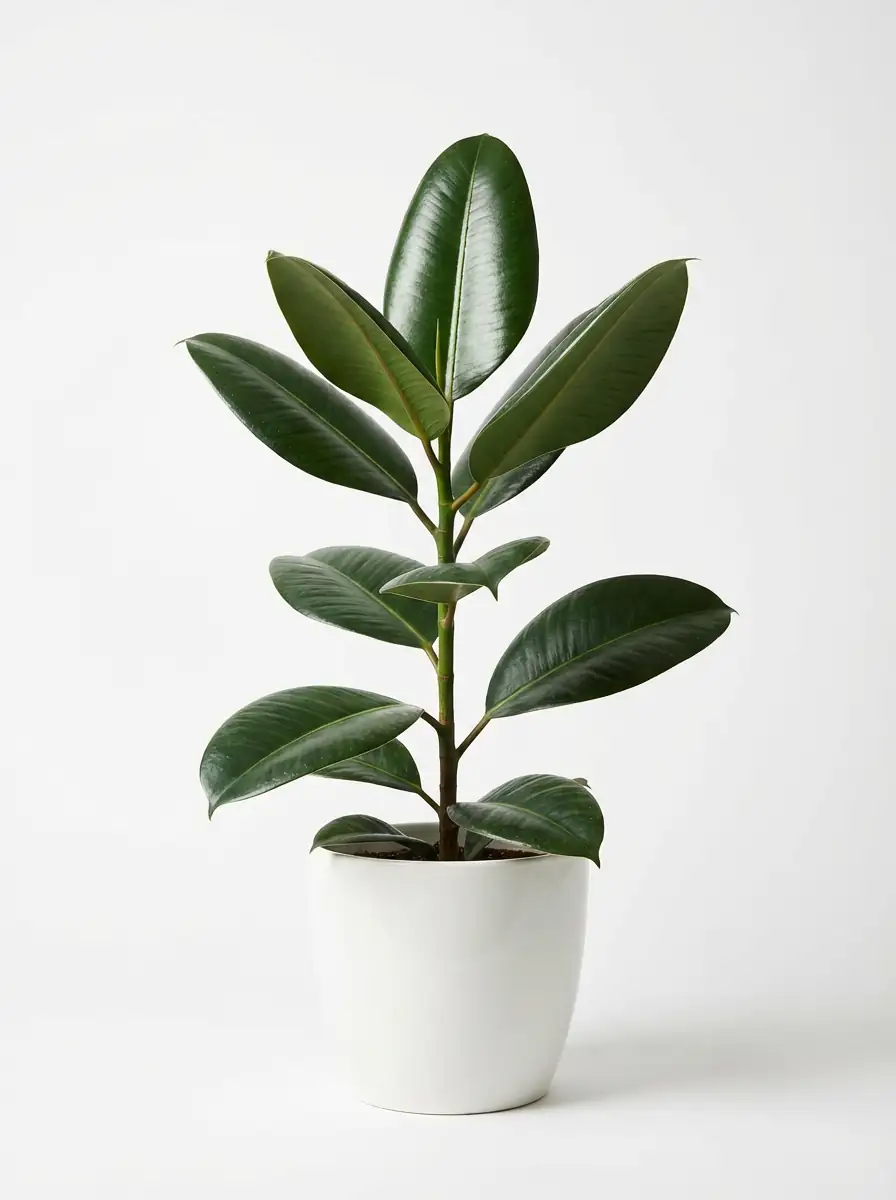
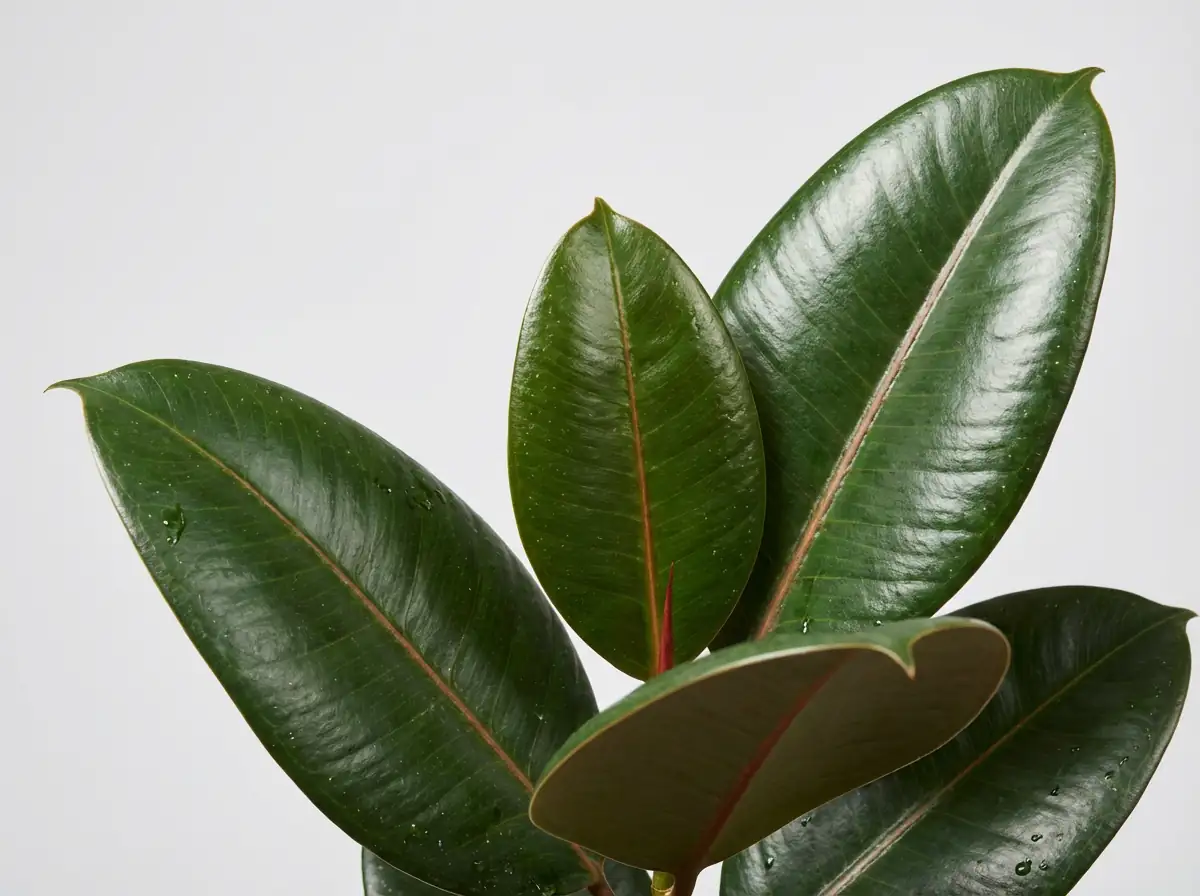
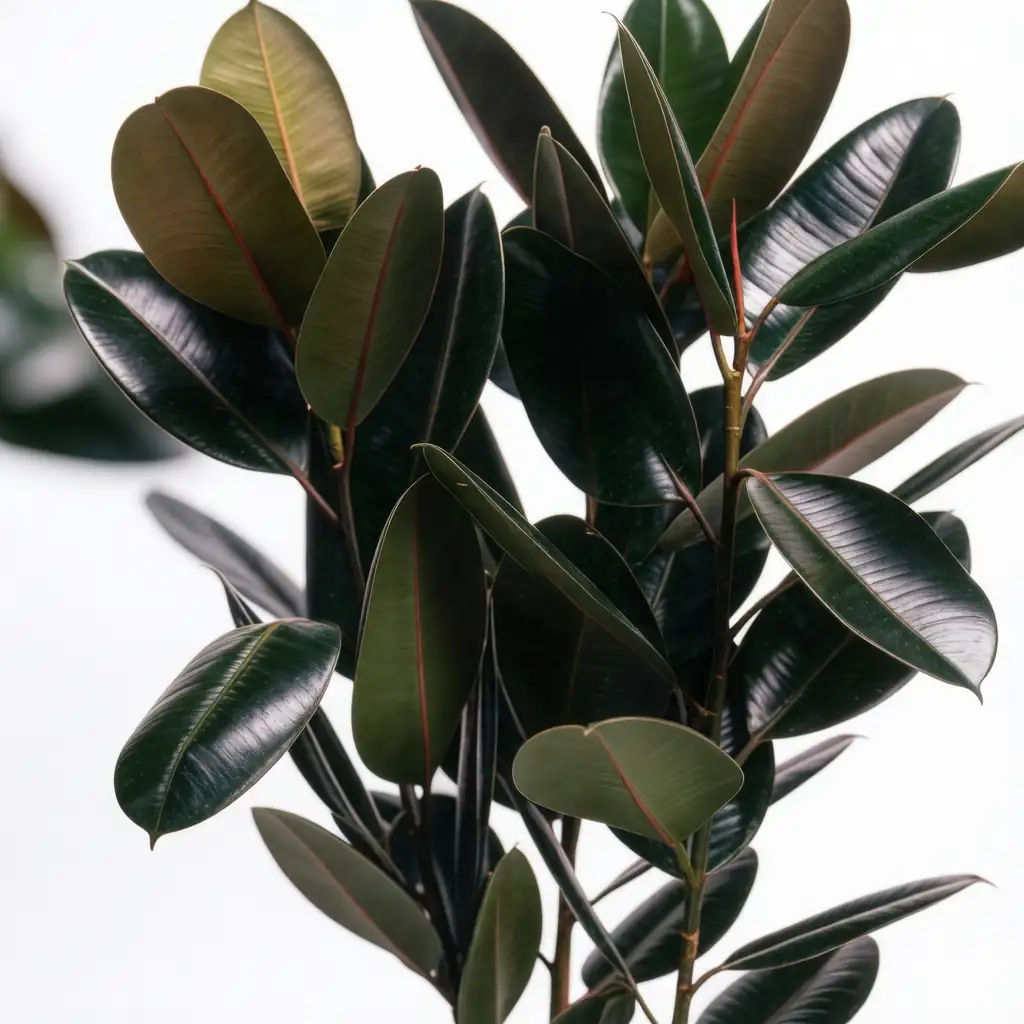
- Foliage: Leaves are large, oval, thick and leathery with a strong natural shine—typically deep green, but cultivars may be burgundy or variegated with cream/lime/pink tones. Individual leaves commonly measure about 10–35 cm (4–14 in) long and 5–15 cm (2–6 in) wide. New leaves push out wrapped in a red or pink pointed sheath (a stipule) that drops once the leaf unfurls.
- Flower: Not a showy bloomer. Like other figs, it forms tiny, inconspicuous flowers hidden inside a fig-like structure (syconium). In nature these can develop into small yellow-green figs around 1 cm (0.4 in) long, and successful fruiting depends on specific fig wasps—one reason it rarely fruits indoors.
- Flowering Season: Rare indoors; in warm tropical conditions it may flower/fruit intermittently (often reported around spring).
- Growth Habit: Evergreen, upright, tree-like habit with a strong central stem; can be kept single-trunk or encouraged to branch through pruning. In humid conditions it may produce aerial roots; mature outdoor trees can develop buttress roots for support.
Environment
Sunlight
Bright, indirect light is ideal. Tolerates medium (and some lower) light, but growth is slower and leggier in dim spots. Variegated cultivars need brighter light and can take a little gentle morning sun; avoid harsh midday sun that may scorch leaves.
Temperature
Best kept warm: roughly 15–30°C (59–86°F), with many growers finding the sweet spot around 15–24°C (59–75°F). Avoid cold drafts and prolonged chills; protect from temperatures below about 10°C (50°F), and especially below 5°C (41°F), which can trigger sudden leaf drop and stress.
Humidity
Enjoys moderate to higher humidity (around 40%+ is a comfortable target), but adapts to average home humidity. Occasional misting or a humidifier helps in very dry rooms—just pair humidity with decent airflow to reduce fungal issues.
Soil
Use a loose, rich but well-draining mix. A good approach is quality potting soil amended with perlite/coarse sand and/or orchid bark for extra air and drainage. Slightly acidic is fine (about pH 5.5–6.5). Always choose a pot with drainage holes.
Placement
A bright room near an east or west window is perfect, or a few feet back from a south-facing window with filtered light. Keep away from heating/AC vents and strong drafts. Once a big plant settles in, try not to move it often; rotate the pot occasionally for even growth.
Hardiness
Outdoors year-round only in frost-free climates, roughly USDA Zone 10–12. Not frost tolerant.
Care Guide
Difficulty
Easy and beginner-friendly overall. The main “gotchas” are cold exposure and watering mistakes: soggy soil can lead to root trouble, while very dry conditions can stress leaves. Once established, it’s fairly forgiving if you occasionally miss a watering.
Buying Guide
Look for a plant with a balanced shape, sturdy stems, and firm, glossy leaves free of spots or major blemishes. Check leaf undersides and stem joints for scale and mealybugs, and avoid plants with many yellowing leaves, mushy stems, sticky residue, or a sour-smelling potting mix (possible root issues). After bringing it home, wipe leaves clean and place larger plants near their long-term spot to reduce stress from frequent moving.
Watering
Water thoroughly, then let excess drain completely—never let the pot sit in standing water. A reliable rule is to water when the top 5–8 cm (2–3 in) of mix has dried. In bright, warm summer conditions that may be every 1–2 weeks, sometimes more often; in cooler/darker winter conditions it can stretch to around every 10 days or longer. Adjust to your home: more light/heat = faster drying. Consistent overwatering is the fastest route to yellow leaves and root rot.
Fertilization
Feed during active growth (spring through autumn). Many growers use a balanced liquid houseplant fertilizer diluted to half strength every 2 weeks; a gentler option is monthly feeding. Avoid overdoing nitrogen, which can cause soft, stretched growth. Pause (or greatly reduce) feeding in winter when growth slows. Optional: a top-dressing of worm castings can provide a mild nutrient boost.
Pruning
Prune to control height and encourage branching—cut just above a leaf node during the growing season. Remove dead, damaged, or crowded growth to improve airflow. Wear gloves (and consider long sleeves): the milky sap can irritate skin.
Propagation
Stem cuttings are the easiest: in warm months (often late spring through summer), take a mature tip cutting about 15–20 cm (6–8 in), remove lower leaves, and reduce large leaves to limit moisture loss. Rinse off the milky sap, let the cut end dry briefly, then root in a well-draining medium; warmth and steady moisture help, and rooting may take about 4 weeks.
Air layering is excellent for larger plants: make a ring cut about 15 cm (6 in) below the tip, wrap with moist medium (leaf mold/sphagnum), and seal; roots can form in roughly 15–30 days in warm, humid conditions, after which the new plant can be severed and potted.
Leaf-bud cuttings can work when material is limited: root a single leaf with a short stem piece around 2 cm (0.8 in) to produce a new shoot.
Repotting
Repot about every 2–3 years, or when roots crowd the pot and appear at drainage holes. Move up just one size (about 5 cm / 2 in wider) to avoid overpotting and staying too wet. Smaller plants may appreciate an annual spring repot, while bigger specimens can go longer—top-dressing (replacing the top 5–8 cm / 2–3 in of mix) is a great alternative when a full repot is impractical.
📅 Seasonal Care Calendar
Spring: restart regular feeding; repot if needed; prune to shape and encourage branching.
Summer: water more as the mix dries; propagate by cuttings (often May–August) and air-layering (often May–July); the plant tolerates heat well if not drought-stressed.
Autumn: gradually reduce fertilizing and watering as growth slows.
Winter: keep warmer than 10°C (50°F) and away from drafts; water sparingly after the top layer dries; pause fertilizing and consider boosting humidity if indoor air is very dry.
Pests, Diseases & Safety
Common Pests & Diseases
Watch for scale, mealybugs, spider mites, thrips, aphids, and occasional fungal problems like leaf spot (including anthracnose) or gray mold in overly wet, stagnant conditions. Prevention goes a long way: good drainage, letting the mix partially dry, wiping leaves regularly, and isolating new plants. Treat early infestations with insecticidal soap or horticultural oil (e.g., neem), repeating weekly as needed; remove badly affected leaves and improve airflow to reduce fungal recurrence.
Toxicity
Caution: all parts exude a milky latex sap that can irritate skin and eyes, and it’s toxic if chewed/ingested. For pets (cats/dogs), it commonly causes mouth irritation, drooling, and vomiting; keep out of reach of children and pets and wash hands after pruning or handling sap.
Culture & Symbolism
Symbolism: Often linked with prosperity, abundance, and steady growth. In Feng Shui, its rounded, generous leaves are commonly used to “soften” corners and invite positive energy and a sense of thriving.
History & Legends: Ficus elastica is famous for its latex-bearing sap—one reason it earned the “rubber” nickname, even though modern commercial rubber mainly comes from the Para rubber tree (Hevea brasiliensis). In Meghalaya, India, people have long guided the plant’s aerial roots to form living root bridges across streams and ravines—astonishing structures that can last for centuries and carry many people at once.
Uses: A statement ornamental foliage plant for homes and offices (from small desk pots to tall floor plants). In frost-free regions it can also be grown outdoors as a landscape tree. It has also been historically associated with latex/rubber exploration and is popularly regarded as an indoor air-freshening plant thanks to its broad leaf surface.
FAQ
Why are my rubber plant leaves dropping all of a sudden?
The most common triggers are a cold draft (or temperatures dipping near/below 10°C / 50°F), a big change in light/location, or overwatering. Keep it warm, give it steady bright indirect light, and only water after the top 5–8 cm (2–3 in) dries.
How do I make my rubber plant branch instead of growing as one tall stick?
Prune the main stem just above a leaf node during spring or summer. This usually encourages side shoots below the cut. Bright light and regular feeding in the growing season also help it fill out.
What are the tiny white raised dots on the leaves?
Often they’re natural structures called lithocysts (mineral deposits) and can be normal. If the spots wipe off or look cottony/sticky, check for pests like mealybugs or scale.
Why are the leaves curling?
Curling is commonly linked to inconsistent watering, very dry air, or heat/draft stress. Let the mix dry slightly between waterings, keep it away from vents, and raise humidity if your home is very dry.
Can I keep a rubber plant in a bedroom?
Yes—many people do. It won’t meaningfully reduce nighttime oxygen in a typical room. The bigger concern is safety: keep it away from pets and children because the sap is irritating and toxic if chewed.
Fun Facts
- New leaves emerge from a red or pink “sleeve” (stipule) and unfurl like a little performance.
- It’s in the fig family, and in nature it relies on specific fig wasps for pollination—one big reason indoor fruiting is so rare.
- Despite the name, today’s commercial natural rubber mostly comes from Hevea brasiliensis, not Ficus elastica.
- In warm, humid conditions it can produce aerial roots, even on relatively small indoor plants.
- Chilling (especially near/below 5°C / 41°F) can cause dramatic leaf drop almost overnight.