Plant Features
- Size: In nature it can climb to around 21 m+ (70+ ft). Indoors, size varies a lot with light and support: commonly kept about 60–180 cm (2–6 ft) tall, but can reach roughly 1–3 m (3–10 ft) and occasionally more (up to ~4.6 m / 15 ft) with a sturdy moss pole and time; typical mature indoor spread is about 60–240 cm (2–8 ft). Outdoors in ideal warm climates, it may reach about 8 m × 2.5 m (26 ft × 8 ft). Stems are thick and robust; some sources note mature stems around 5–8 cm (2–3 in) in diameter. Common pot sizes: 15–20 cm (6–8 in) diameter for smaller/standard plants; 20–25 cm (8–10 in) for hanging baskets; many home specimens thrive in ~20–30 cm (8–12 in) pots before upsizing.
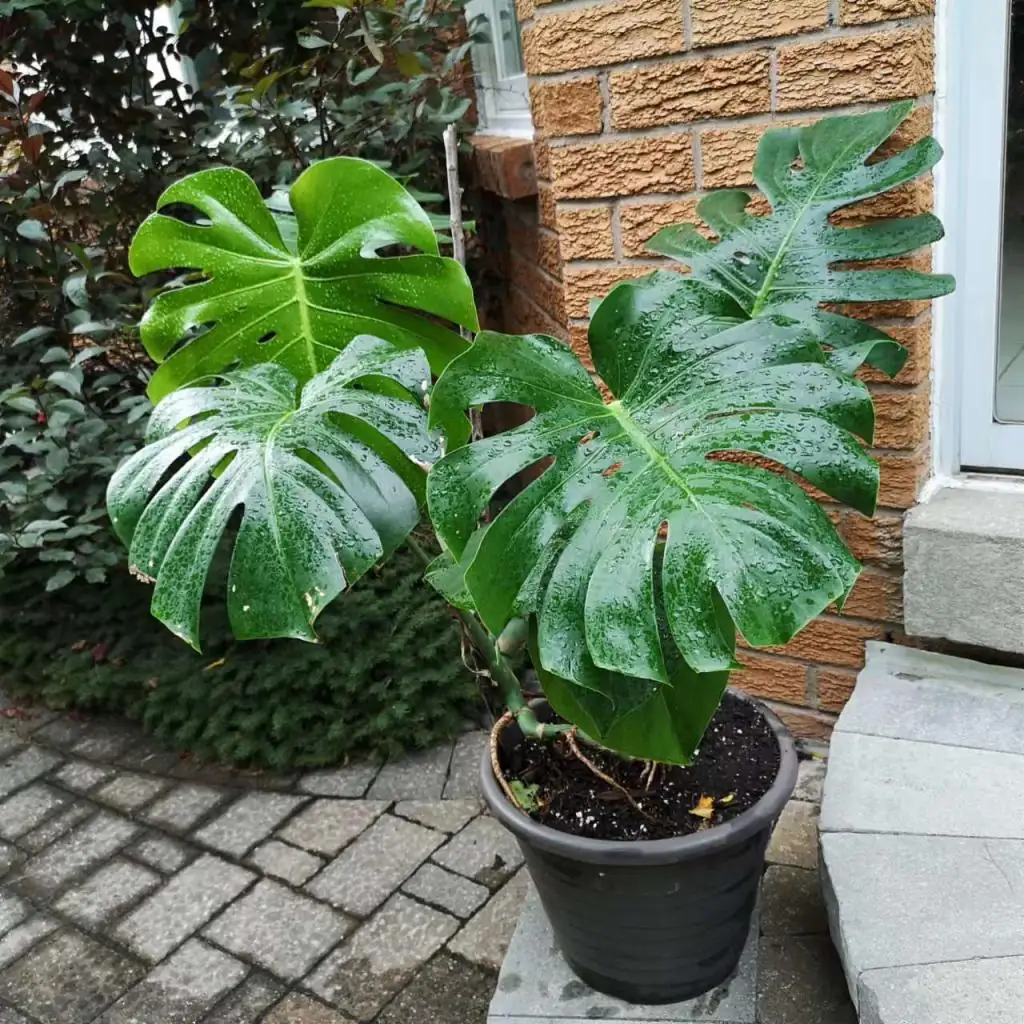
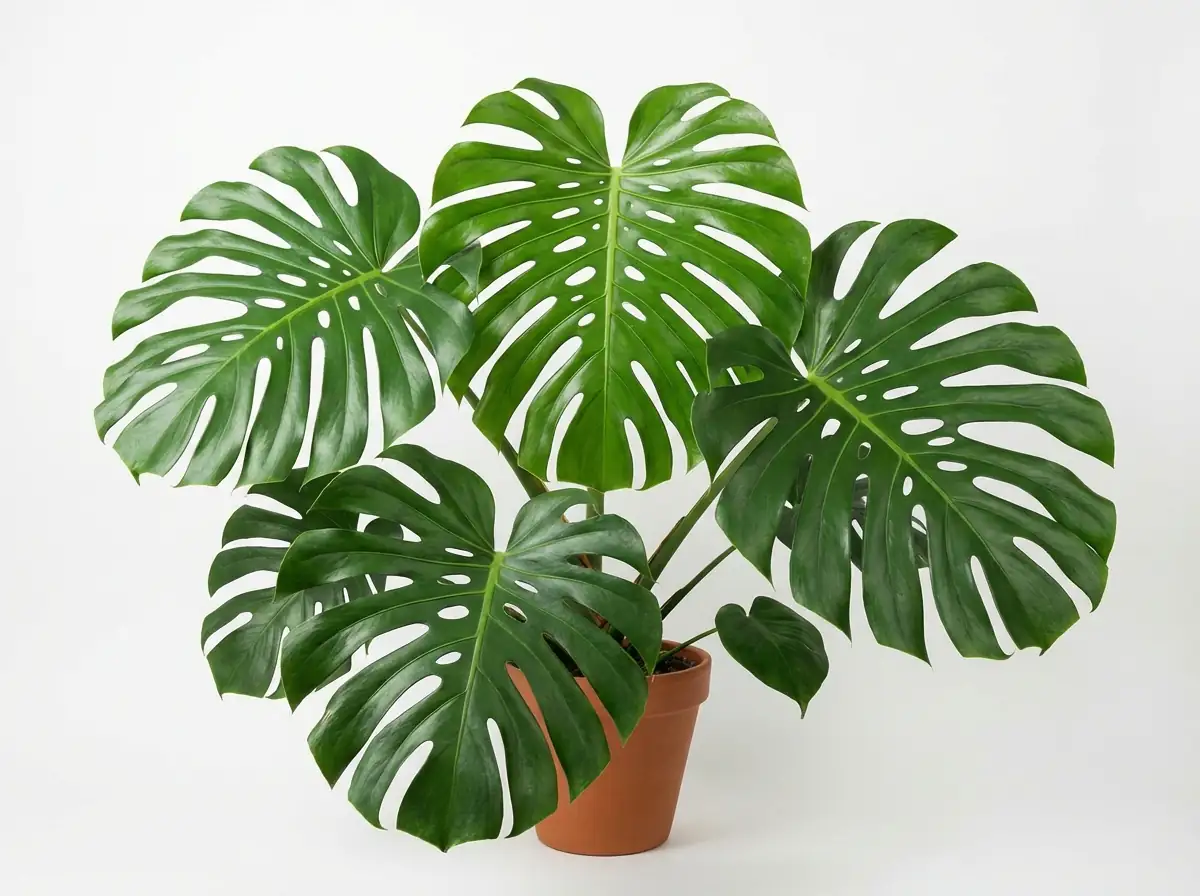
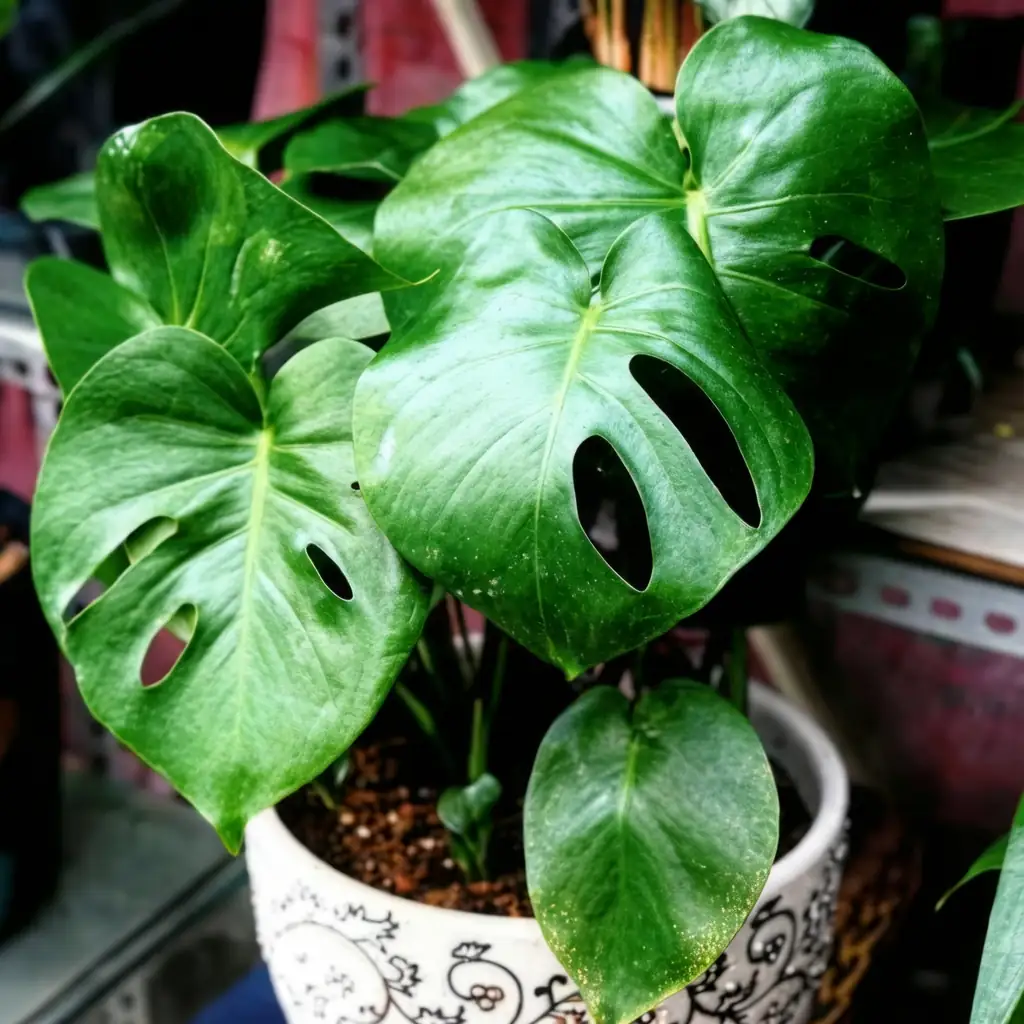
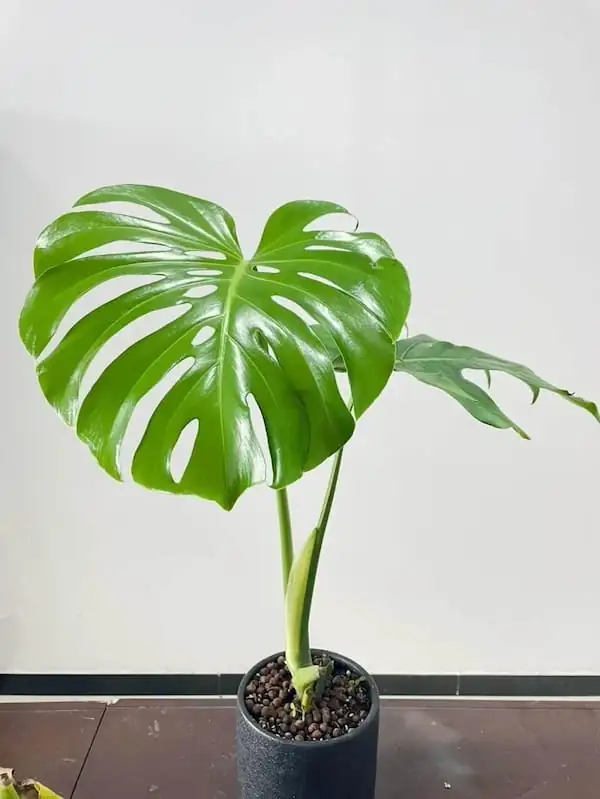
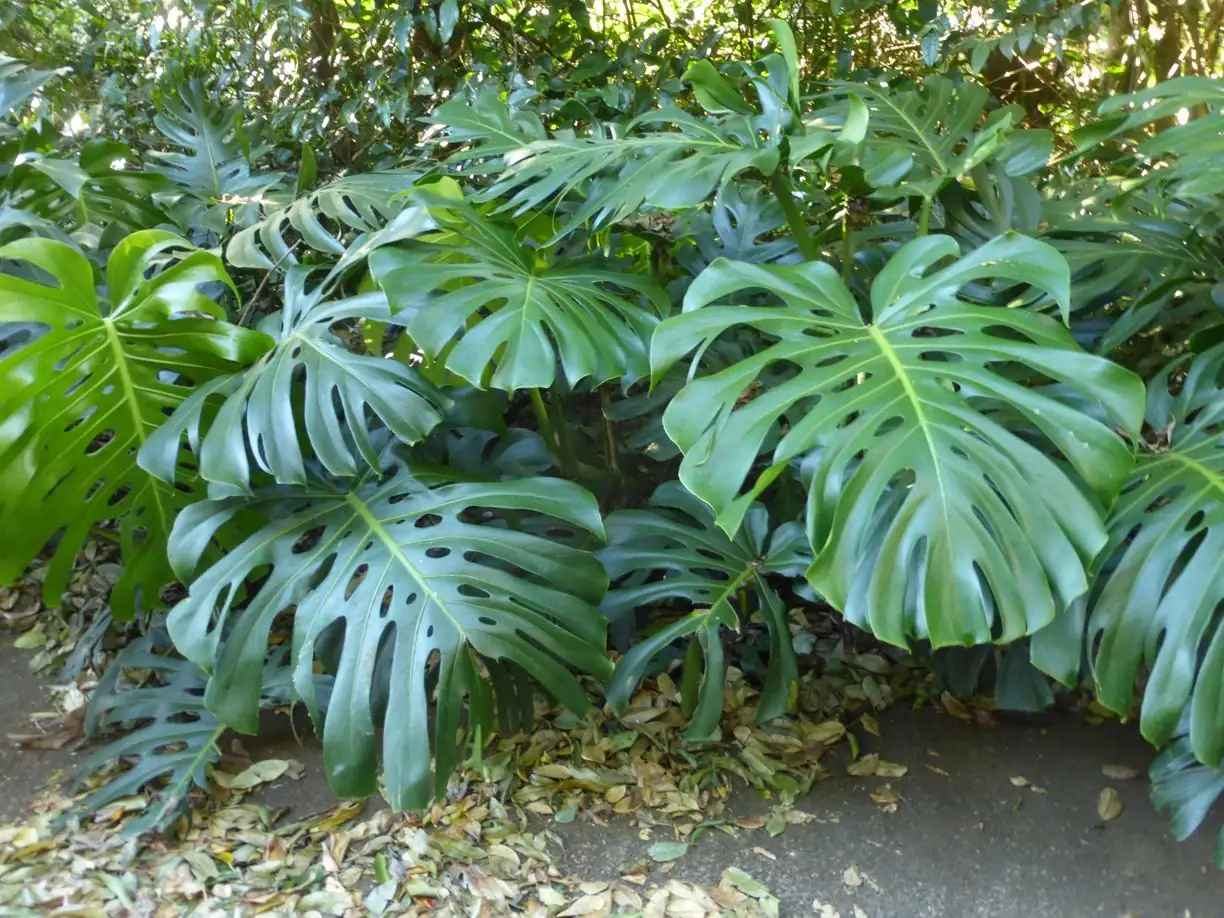
- Foliage: Leaves are thick, leathery, and glossy deep green. Juvenile leaves are usually solid and heart-shaped with no holes; as the plant matures (and especially when it climbs), leaves develop deep splits and oval perforations (“fenestrations”). Too much direct sun can yellow or scorch leaf edges; low humidity or inconsistent watering often shows up as brown, crispy tips and margins. Variegated forms should show clear, stable patterning and generally need brighter indirect light than all-green plants.
- Flower: When very mature (more likely outdoors in the tropics), it produces an arum-type bloom: a creamy to pale spathe surrounding a thick spadix. Flowering is rare indoors. In warm conditions after pollination, it may form a pineapple-like fruit; unripe fruit is irritating/toxic, while fully ripe fruit is considered edible and famously fragrant.
- Flowering Season: Typically spring to summer in warm conditions on mature plants; irregular and uncommon indoors. Fruit can take about a year or more to mature after flowering.
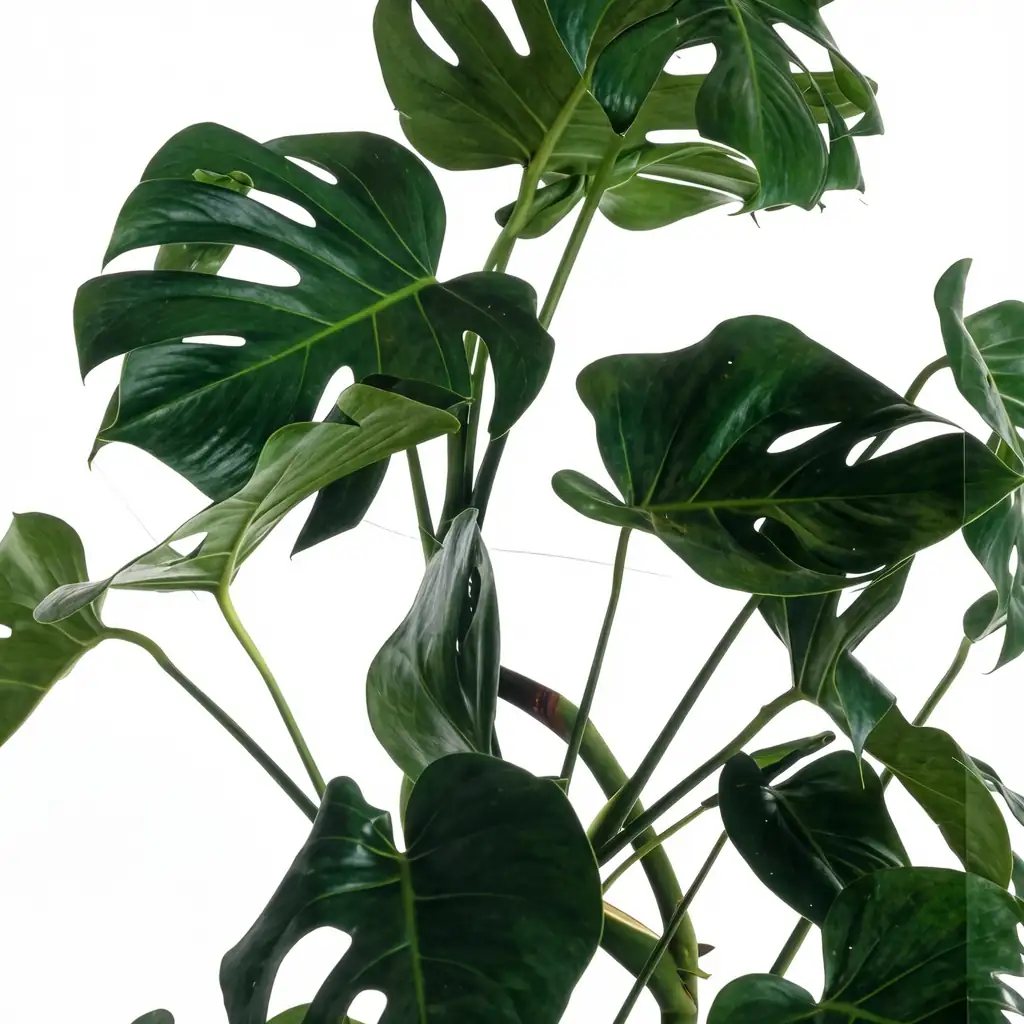
- Growth Habit: Evergreen tropical climber (a hemiepiphytic vine/liana). It produces long aerial roots that anchor to trees or supports and can also be guided into the potting mix for extra stability and moisture uptake.
Environment
Sunlight
Bright, indirect light is ideal. It tolerates medium light and can cope with lower light, but growth slows and leaves may stay more solid (fewer splits/holes). Avoid harsh direct sun—especially midday/summer sun—which can burn leaves. Outdoors in warm climates, give partial shade (around 50% shade is a good rule of thumb).
Temperature
Best growth is in warm indoor temperatures around 18–29°C (65–85°F), with many growers aiming for about 15–25°C (59–77°F) as a comfortable everyday range. Growth slows in cool conditions; avoid prolonged chilling below about 10–12°C (50–54°F). Not frost tolerant; keep above ~15°C (59°F) for consistently strong growth.
Humidity
Prefers moderate to high humidity—about 50–70% is a sweet spot, and 60%+ encourages larger, happier leaves. Average home humidity is usually tolerated, but very dry air often causes brown tips/edges. Use a humidifier, occasional misting, or a pebble tray (pot kept above the waterline) if needed.
Soil
Use a loose, chunky, well-draining aroid mix that holds some moisture without staying soggy—think potting mix (peat- or coco-based) blended with perlite/pumice, bark, and/or coarse sand; adding a bit of compost/leaf mold can boost richness. Slightly acidic to neutral is fine (about pH 5.5–7.0). Good drainage is key to preventing root rot.
Placement
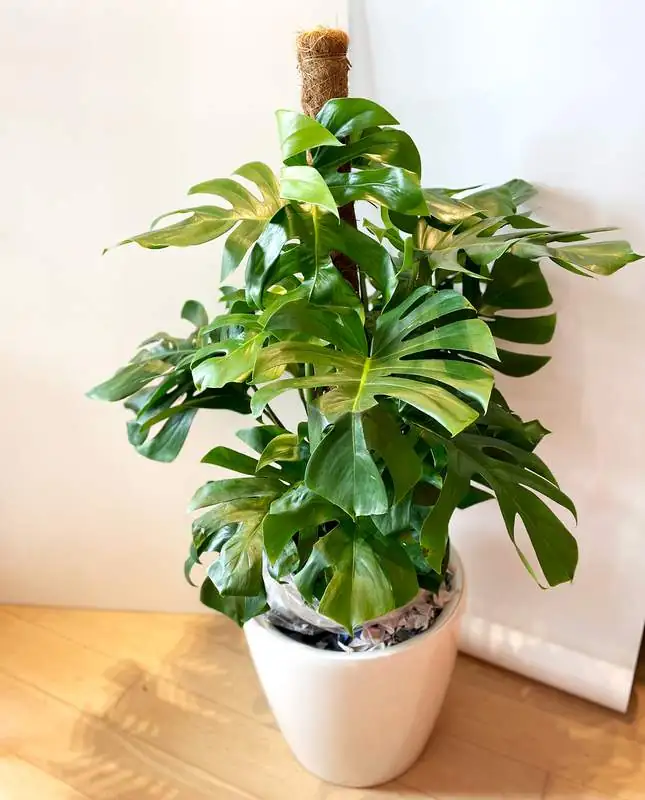
Indoors: a few feet back from a bright east, north, or filtered south/west window (sheer curtain works well). Great for living rooms, entryways, stair landings, bright offices, and even bright bathrooms. Provide a moss pole/plank for an upright, dramatic look; shaded patios/balconies work in warm seasons if brought in before cold.
Hardiness
Frost-tender; roughly USDA Zones 10–12 (sometimes cited as 11–12 for reliable outdoor growth). Protect from cold and bring indoors when nights approach ~10°C (50°F).
Care Guide
Difficulty
Easy to easy-moderate: it’s forgiving for beginners as long as you avoid two main mistakes—scorching sun and soggy soil. With a support and decent humidity, it quickly looks “designer” with surprisingly little fuss.
Buying Guide
Choose a plant with firm stems, healthy nodes, and glossy, intact leaves (no widespread yellowing, blackened/mushy stem bases, or heavy pest residue). Check undersides of leaves and leaf joints for spider mites, scale, or mealybugs. If possible, pick a plant already tied to a moss pole if you want faster leaf sizing and fenestrations. Variegated forms should show crisp, stable variegation but still look vigorous (very white leaves can be weaker). Avoid severely root-bound plants unless you’re ready to repot soon.
Watering
Water when the top 2.5–5 cm (1–2 in) of mix feels dry. Water thoroughly until excess drains, then empty the saucer. In active growth (spring/summer), this is often about weekly, but it depends on light, pot size, and airflow. In winter, reduce to roughly every 2–3 weeks (or about every 2 weeks in many homes), letting the top layer dry a bit more. Drooping/curling and crisp edges can point to underwatering or dry air; yellowing, soft stems, fungus gnats, and a persistently wet mix often signal overwatering and potential root rot.
Fertilization
Feed during the growing season. A practical routine is a balanced liquid fertilizer (e.g., 20-20-20) diluted to half strength every 2–4 weeks from spring through early autumn; some growers feed every 2 weeks in peak growth (roughly May–August). Avoid overdoing nitrogen, which can cause long, weak internodes. Pause or greatly reduce feeding in winter when growth slows.
Pruning
Prune or pinch to shape and manage size. Pinching the growing tip around 20–30 cm (8–12 in) tall can encourage branching if you want a bushier plant. Remove yellowing or damaged leaves and trim overly long/trailing stems as needed. Aerial roots are normal—leave them, guide them into the pot, or direct them onto a moss pole. Wiping dust off leaves helps photosynthesis.
Propagation
Most commonly by stem cuttings or air layering. Take a cutting that includes at least one node (ideally with an aerial root) and root it in water or a warm, airy medium in bright indirect light; rooting can take a few weeks to a couple of months depending on conditions (often ~3–4 weeks to see strong new roots in water). Air layering works well: wrap a node with moist sphagnum and plastic; once roots form (often about 1 month), separate later (around 2 months) and pot up. Seeds are possible but uncommon in home settings; fresh seed germinates best warm (about 25–28°C / 77–82°F). Division can be done when there are multiple shoots with their own roots.
Repotting
Repot about every 2–3 years, or sooner if strongly root-bound or the mix breaks down. Spring is ideal. Size up gradually (about 2.5–5 cm / 1–2 in wider in diameter), refresh into a well-draining aroid mix, and add/upgrade a moss pole or stake. If you don’t want to upsize, you can refresh the top layer of mix each spring.
📅 Seasonal Care Calendar
Spring: resume more regular watering as growth picks up; repot or refresh mix; prune for shape; start feeding. Summer: peak growth—bright indirect light, steady watering, higher humidity; fertilize every 2–4 weeks (or every 2 weeks in strong growth); take cuttings late spring to early summer. Autumn: gradually reduce feeding and watering as growth slows; keep humidity steady as indoor air dries. Winter: brighter spot indoors, protect from drafts; water less (often every 2–3 weeks); stop or greatly reduce fertilizing; keep above ~10–12°C (50–54°F), ideally warmer.
Pests, Diseases & Safety
Common Pests & Diseases
Common indoor pests include spider mites, mealybugs, scale, thrips, and aphids. Treat early with a shower/rinse, then insecticidal soap or horticultural oil; isolate infested plants. Fungus gnats usually mean the soil is staying too wet. Diseases/problems are most often cultural: root/stem rot from overwatering or cold + wet soil; leaf spot or powdery mildew can occur with high humidity and poor airflow. Improve drainage, let the mix partially dry, and increase air circulation; remove badly affected leaves.
Toxicity
Toxic if chewed by humans or pets (cats/dogs) because it contains insoluble calcium oxalate crystals. Ingestion can cause mouth/throat irritation, drooling, vomiting, and difficulty swallowing; the sap may irritate sensitive skin. The fruit is a special case: unripe fruit is irritating/toxic, while fully ripe fruit (when the outer scales loosen and fall away naturally) is considered edible.
Culture & Symbolism
Symbolism: Often linked with growth, abundance, and a bold “bring-the-jungle-inside” vibe. In some home display traditions it’s also associated with well-being and longevity.
History & Legends: Native to Central American rainforests, where it climbs toward the canopy using aerial roots. The name “Monstera” is commonly said to reference its ‘monstrous’ scale and dramatic leaves. It became a major houseplant icon during the 1970s indoor-jungle era and has stayed a modern interior-design staple ever since.
Uses: Primarily ornamental—an eye-catching foliage plant for homes and commercial interiors, often trained up a moss pole for larger leaves. Leaves are also popular in tropical-style floral arrangements and decor. In its native range and in suitable tropical climates, the fully ripe fruit (often called ceriman) is eaten fresh or used to flavor drinks and desserts.
FAQ
Why aren’t my leaves splitting or getting holes?
That’s usually a light-and-maturity issue. Young plants naturally make solid leaves. For fenestrations, give bright indirect light, let the plant climb a support (moss pole helps a lot), and be patient—many plants start showing dramatic splits as they mature and strengthen.
Why are my Monstera leaves turning yellow?
Most often it’s overwatering or a mix that stays wet too long. Let the top 2.5–5 cm (1–2 in) dry before watering again, make sure the pot drains well, and check roots if the base feels soft or smells sour. A single older bottom leaf yellowing can also be normal aging.
Why are the tips/edges turning brown?
Brown tips and crispy margins usually point to low humidity, inconsistent watering, or a rootbound pot. Raise humidity, water more evenly (without keeping it soggy), and consider repotting if roots are crowded. If brown areas are soft/dark with yellowing, suspect overwatering or rot instead.
What should I do with aerial roots?
Leave them—they’re part of how the plant climbs and “drinks” humidity. You can guide them into the soil, wrap them onto a moss pole, or let them hang. Cutting them off won’t usually kill the plant, but it removes useful support and moisture-gathering tools.
Can it live in low light?
It can survive in lower light, but it won’t look its best: growth slows, stems stretch, and new leaves may stay smaller and less split. If you want that classic, dramatic ‘Swiss cheese’ look, brighter filtered light is the upgrade that pays off fastest.
Fun Facts
- The holes and splits are called “fenestrations”—and they usually show up more as the plant climbs and matures.
- In the wild, Monstera seedlings can initially grow toward darker areas to help them find a tree trunk to climb, then switch to growing upward toward light.
- Fenestrations may help large leaves handle wind and heavy rain by letting air and water pass through more easily.
- The fruit can taste like a tropical fruit salad (often compared to pineapple, banana, and mango)—but only when fully ripe; unripe fruit is irritating because of oxalates.
- A moss pole isn’t just decoration: climbing support often leads to larger leaves, shorter internodes, and more dramatic fenestrations indoors.
- Rare variegated forms (like ‘Albo’ or ‘Thai Constellation’) can be extremely valuable in the houseplant trade.