Plant Features
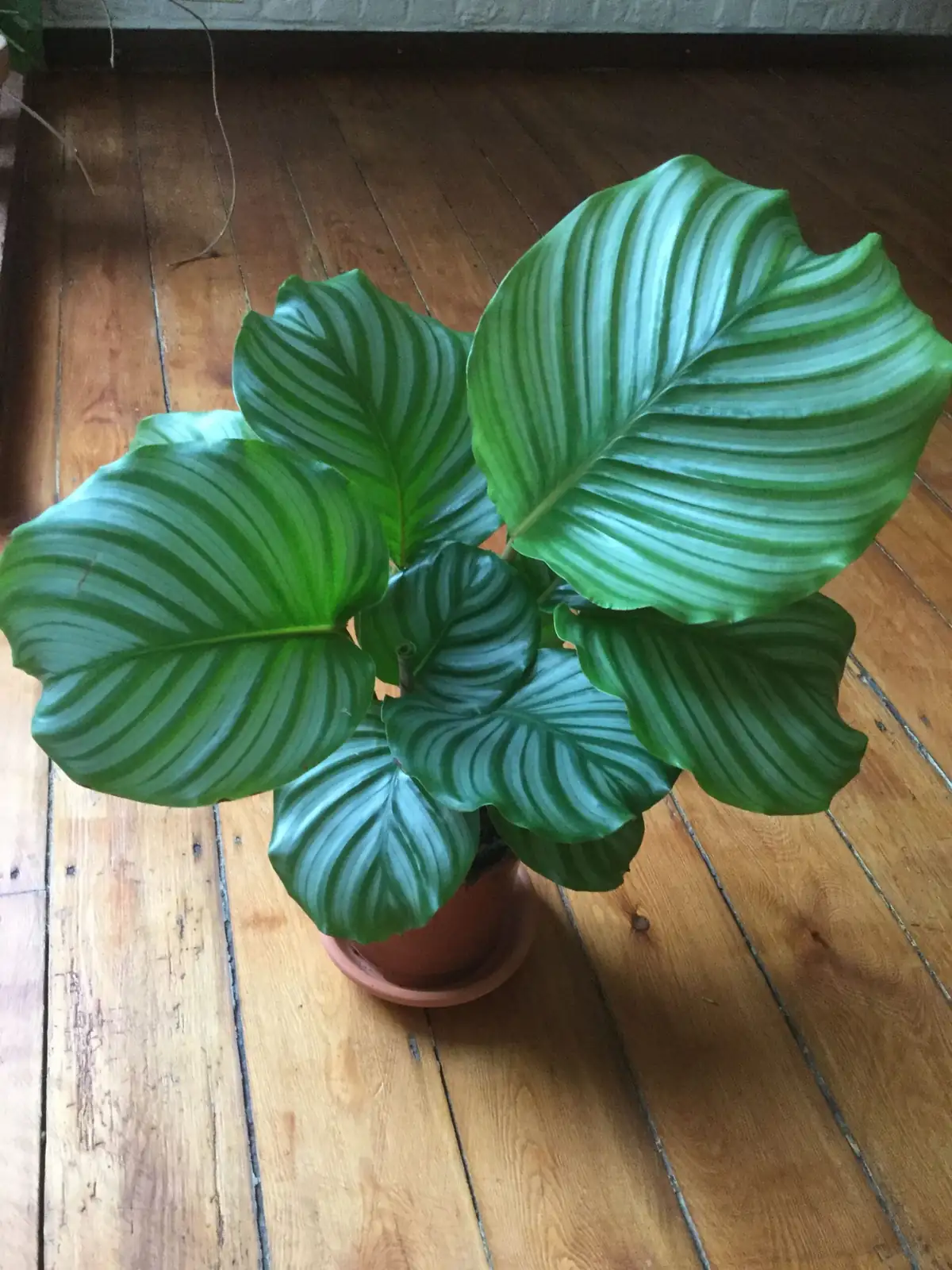
- Size: Indoors it commonly reaches about 45–60 cm (18–24 in) tall and 45–60 cm (18–24 in) wide; some closely related “calathea/prayer plant” types may range from 15–30 cm (6–12 in) for smaller Maranta to 60–80 cm (24–32 in) for larger Calathea/Goeppertia varieties.
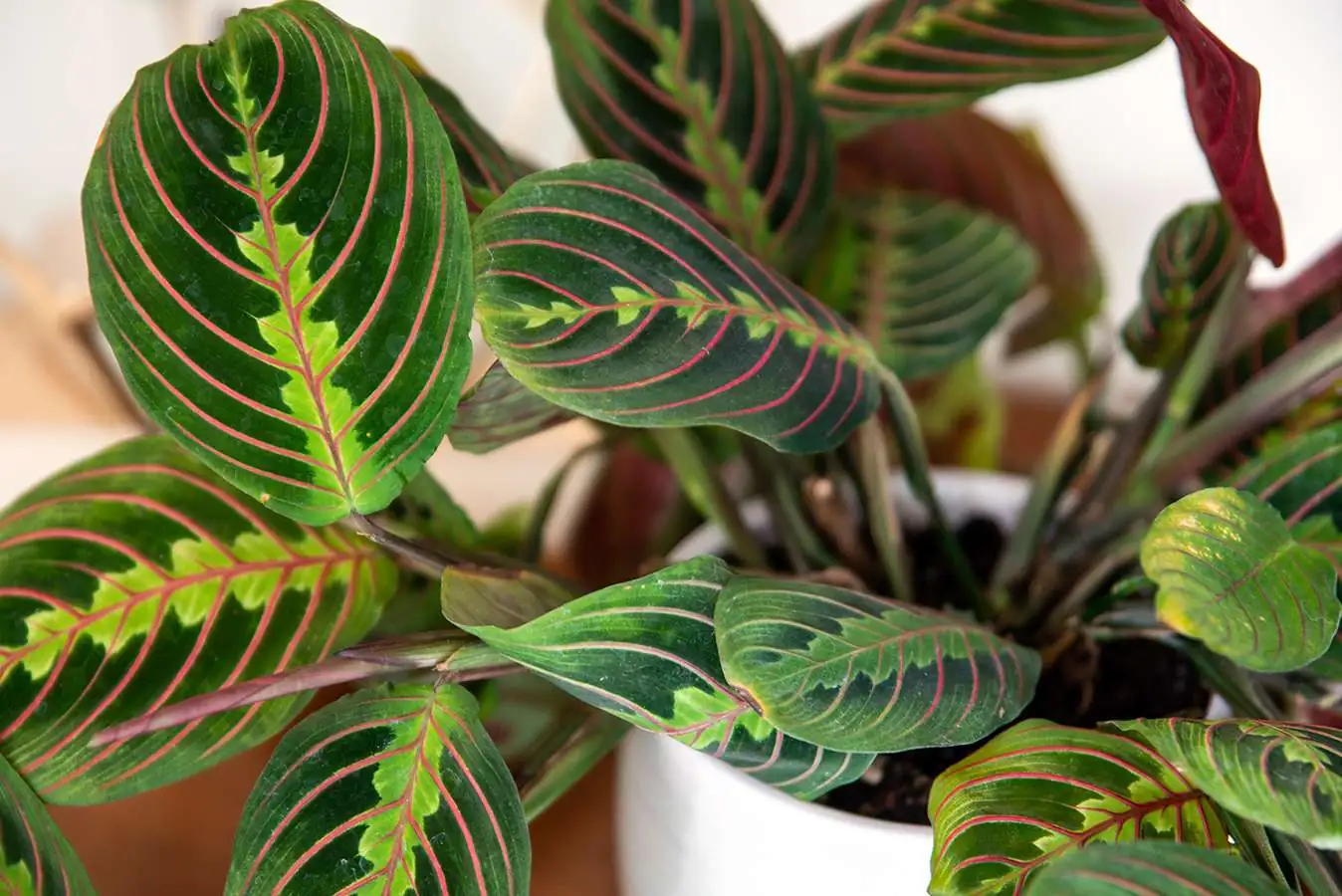
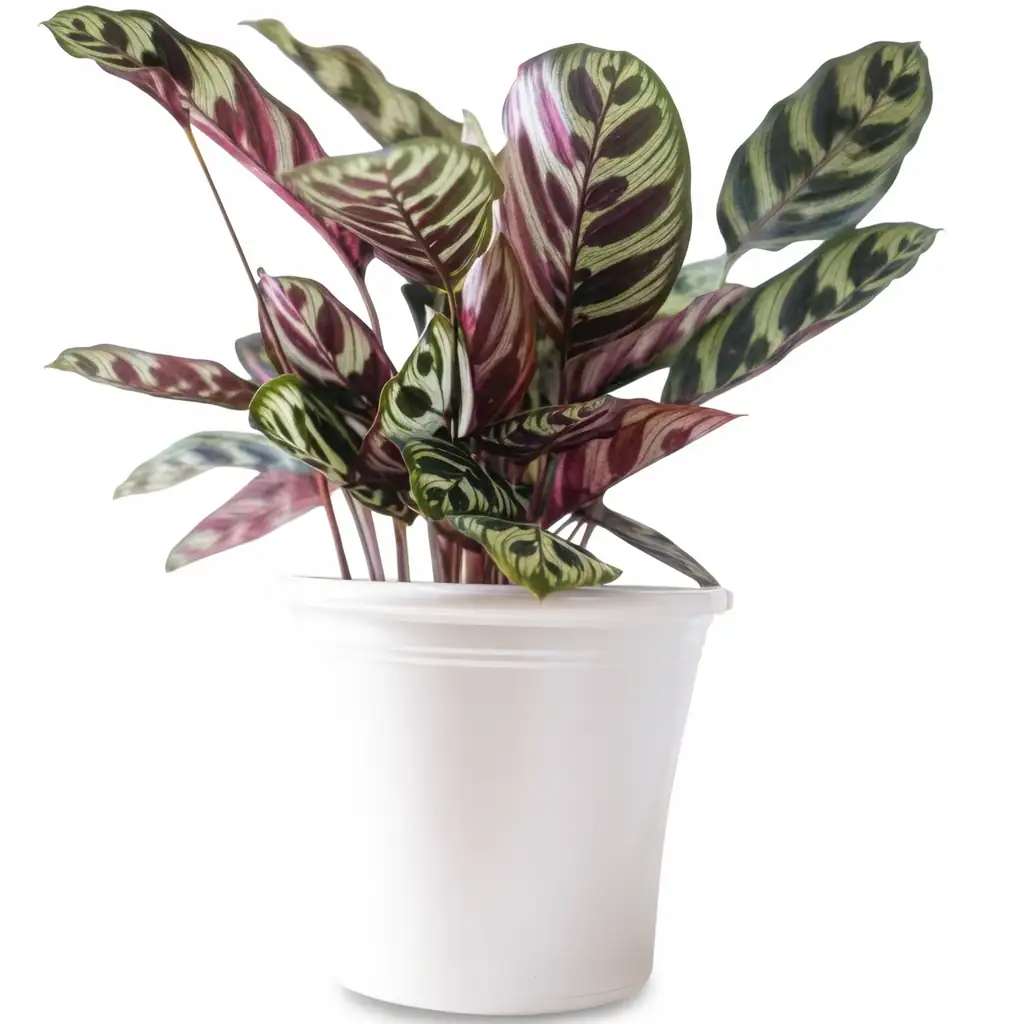
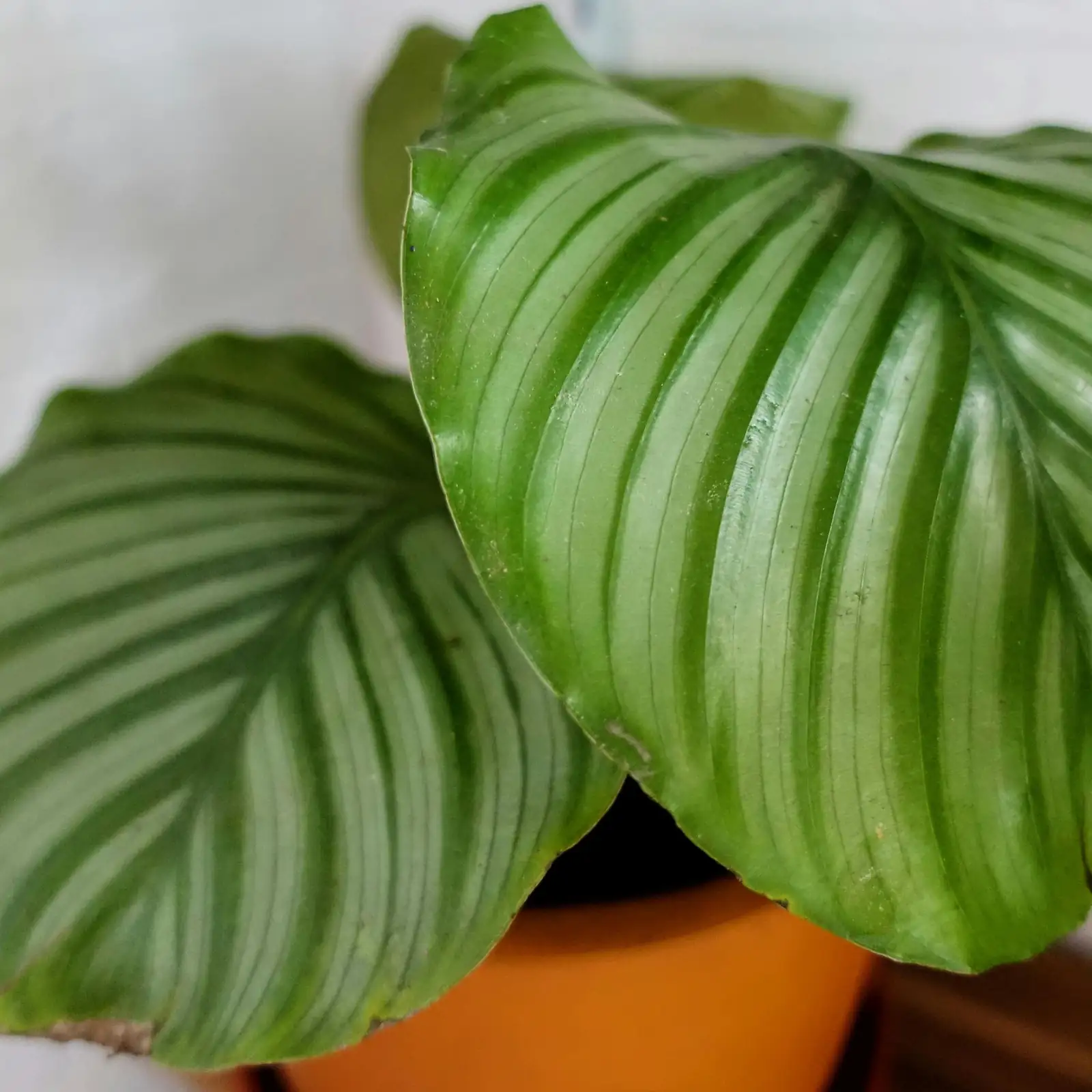
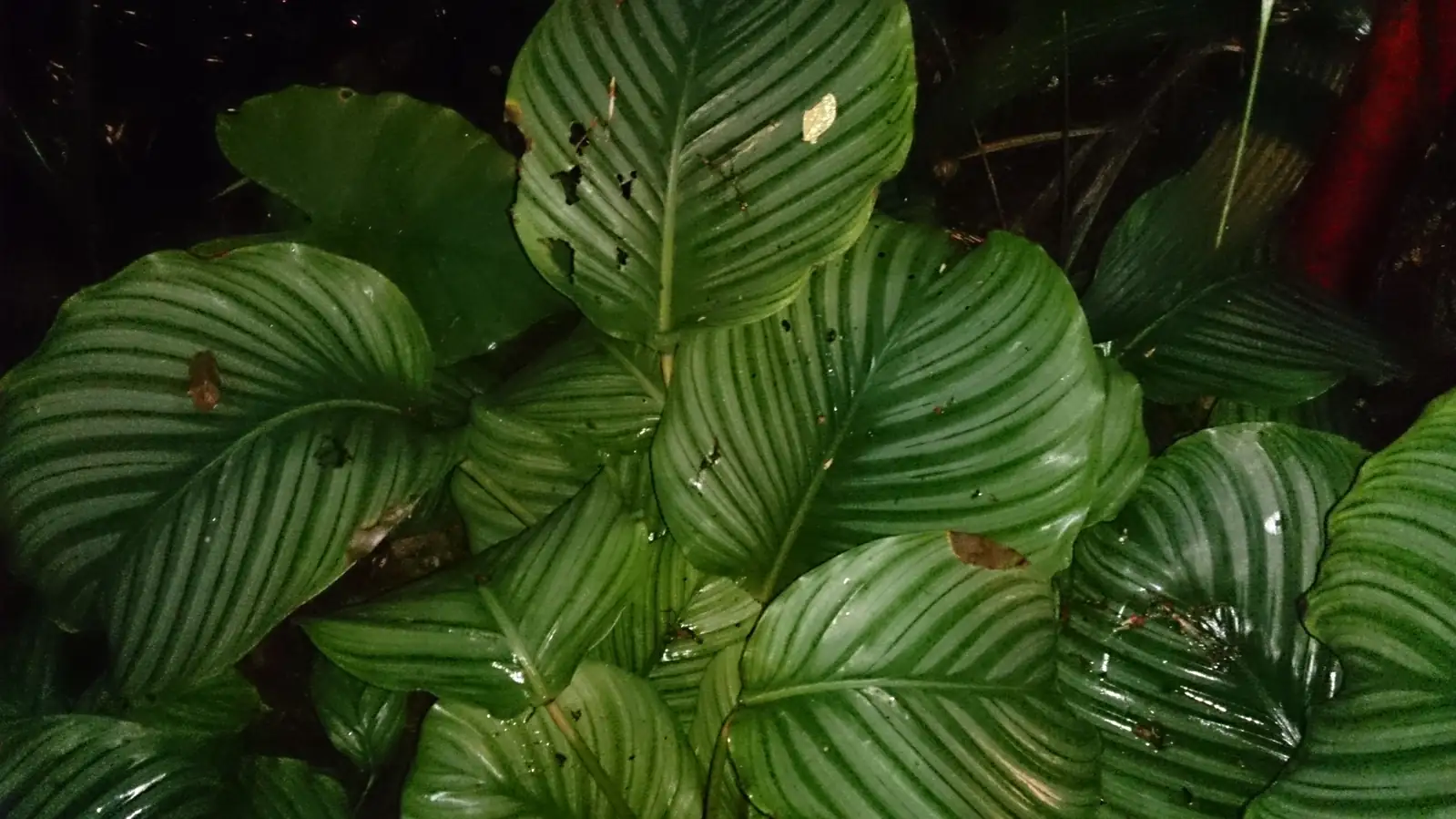
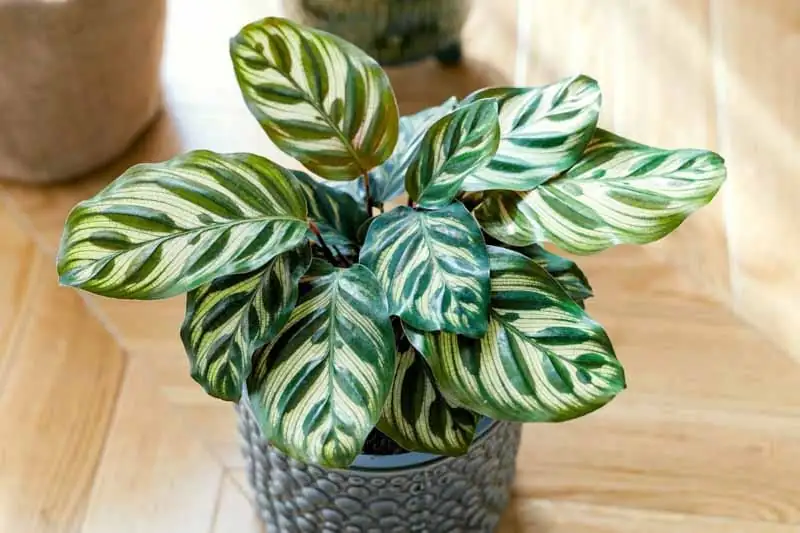
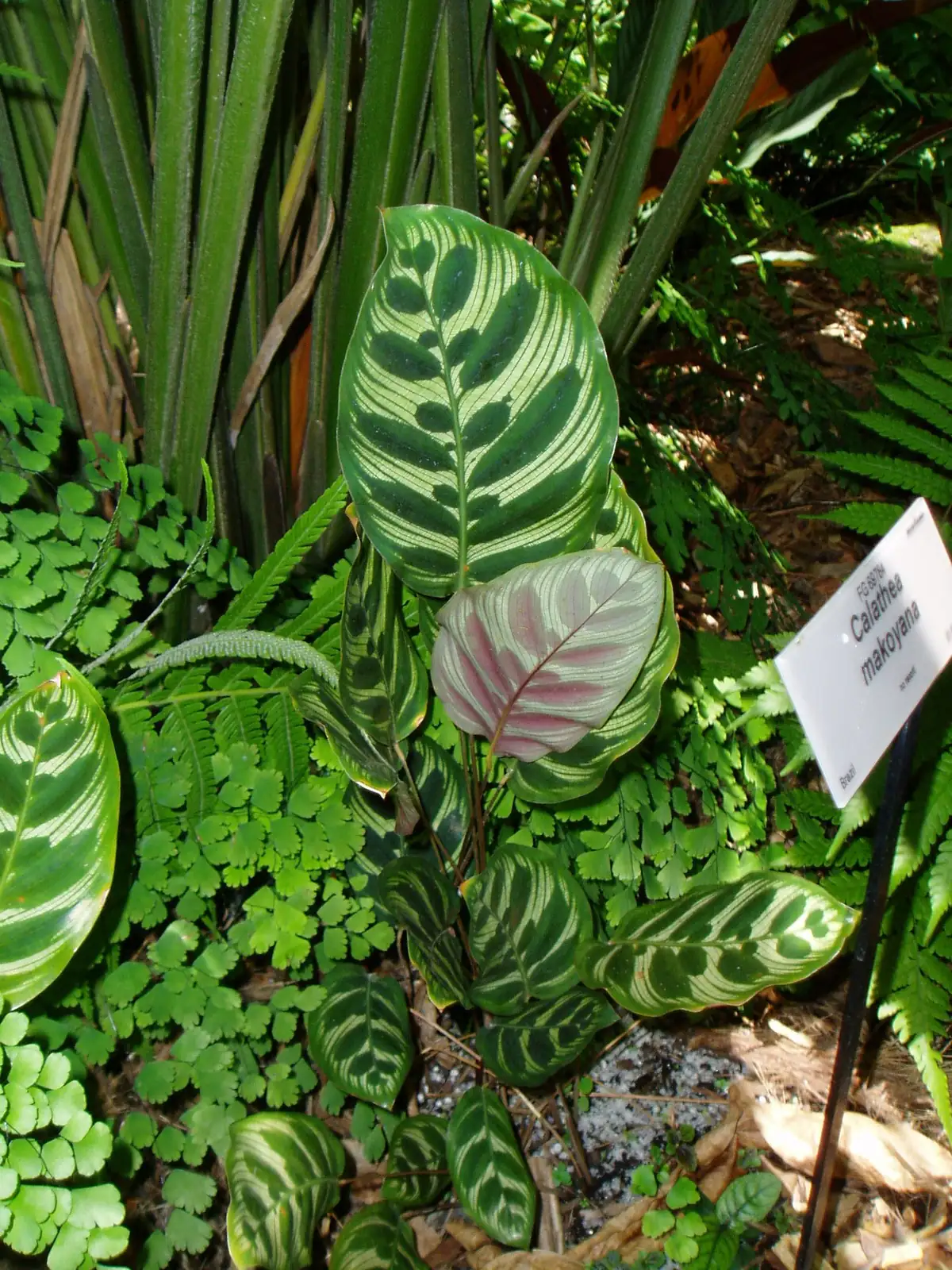
- Foliage: Oval to elliptical, thin-textured leaves with a pale silvery-green ground and dark green, brushstroke/feather-like bands that resemble peacock plumage or stained glass. Leaf margins may be slightly wavy. The undersides are typically deep burgundy to wine-red. A swollen joint (pulvinus) at the base of the leaf helps drive the day–night “prayer” movement.
- Flower: Flowers are small and usually not the main event indoors—often white to pale lavender and fairly inconspicuous, sometimes held in small clustered or spike-like inflorescences. Many indoor plants rarely bloom compared with their leafy display.
- Flowering Season: Late spring to summer (if it flowers).
- Growth Habit: Evergreen, herbaceous, clump-forming perennial with upright to gently arching leaves arising from short stems/rhizomes; generally slow-growing.
Environment
Sunlight
Bright to medium indirect light; tolerates partial shade. Avoid direct sun, which can scorch leaves and fade the pattern. Very low light is survivable but may slow growth and dull the markings.
Temperature
Best at about 16–24°C (61–75°F), with an overall comfortable range around 15–27°C (59–81°F). Avoid cold drafts and sudden swings; try not to let it drop below about 10–15°C (50–59°F).
Humidity
High humidity is key: aim for 60–80% when possible (at least 50%). Humidifiers, grouping plants, and pebble trays can help; consistent humidity is especially helpful when new leaves are emerging.
Soil
A moisture-retentive but airy, well-draining mix (slightly acidic to neutral). A reliable blend is 2 parts quality peat-free houseplant mix or coco-based substrate to 1 part perlite (or coarse sand). Keep evenly moist, never waterlogged, and always use a pot with drainage.
Placement
Indoors near an east- or north-facing window, or set back from a brighter window behind a sheer curtain. Bathrooms and kitchens with good light can be excellent thanks to humidity. Keep away from heaters, AC vents, and strong airflow.
Hardiness
Not frost hardy; suitable for USDA Zone 11–12 outdoors. In most climates it’s an indoor plant year-round.
Care Guide
Difficulty
Moderate to difficult: it dislikes dry air, mineral-heavy tap water, and temperature swings. The secret is consistency—steady warmth, high humidity, and evenly moist soil without sogginess.
Buying Guide
Pick a plant with crisp leaf edges, strong coloration/patterning, and a full, balanced clump. Avoid lots of brown tips, yellowing, or limp growth. Check leaf undersides for spider mites and other pests, and inspect the crown/pot for signs of rot or sour, soggy soil.
Watering
Keep soil evenly moist in spring through autumn. Water when the top 2.5–5 cm (1–2 in) feels just dry, then water thoroughly and let excess drain. In winter, reduce slightly—aim for “barely moist,” not bone-dry. Use rainwater, distilled, or filtered water when possible (fluoride/minerals in hard tap water often cause browning and spotting). Avoid waterlogging to prevent root rot; misting can help a little, but a humidifier is usually more effective.
Fertilization
Feed during active growth (spring through autumn) about every 2 weeks with a balanced liquid fertilizer at 1/2 strength. In winter, pause or reduce to about once monthly if growth continues. Avoid overfertilizing—salt buildup can burn roots and crisp leaf edges.
Pruning
No heavy pruning needed. Remove yellowing or damaged leaves by cutting the leaf stem at the base with clean scissors. You can trim brown tips for appearance, but also fix the cause (low humidity, inconsistent watering, or poor water quality). Light tidying in spring/summer can encourage a neater, bushier look.
Propagation
Best by division during repotting: split a healthy clump so each section has roots and several leaves, then pot up and keep warm and humid while it re-establishes. Some related prayer plants can also root from stem cuttings (more typical for Maranta than Goeppertia), but division is the most reliable for peacock plant.
Repotting
Repot every 1–3 years depending on growth (often 2–3 years is fine), or sooner if badly rootbound and water rushes through. Spring is ideal. Move up one pot size, refresh the mix, and keep drainage excellent; these plants prefer being comfortably snug rather than overpotted.
📅 Seasonal Care Calendar
Spring: resume stronger watering rhythm; start feeding; best time to repot/divide. Summer: maintain high humidity, evenly moist soil, and protect from direct sun. Fall: gradually ease off watering and fertilizer as growth slows. Winter: water less but don’t let it fully dry; keep warm (above ~16°C/61°F if possible), humid, and away from drafts; reduce or pause feeding.
Pests, Diseases & Safety
Common Pests & Diseases
Spider mites are the big one (especially in dry air), plus mealybugs, scale, and fungus gnats if the soil stays too wet. Root rot is the most common disease problem from overwatering/poor drainage; leaf spots can happen if foliage stays wet with low airflow. Prevention: stable humidity, good drainage, avoid soggy soil, and gentle airflow without cold drafts. Treatment: isolate, rinse/wipe leaves, and use insecticidal soap or horticultural oil/neem as needed; let the surface of the mix dry slightly to discourage gnats.
Toxicity
Generally considered non-toxic to cats, dogs, and people (commonly listed as pet-safe). Still, chewing any plant can cause mild stomach upset—discourage nibbling.
Culture & Symbolism
Symbolism: Often linked with beauty and quiet elegance (because of its ornate leaves). As a “prayer plant,” it’s also associated with gratitude, hope, new beginnings, and a calm, harmonious home vibe.
History & Legends: For years it was sold as Calathea makoyana; modern taxonomy has moved many popular “calatheas” into the genus Goeppertia. The broader prayer-plant group (Marantaceae) is famous for its nightly leaf-folding habit, which has inspired spiritual and “good energy” symbolism in many households.
Uses: Primarily an ornamental indoor foliage plant for homes, offices, and humid rooms like bright bathrooms. Valued for its patterned leaves and gentle-light tolerance. The wider Marantaceae family also includes species used traditionally for starch and crafts in parts of South America, though peacock plant itself is mainly grown for display.
FAQ
Why are the leaf edges turning brown?
Most often it’s low humidity, mineral-heavy tap water, or inconsistent watering. Raise humidity to 60%+ (a humidifier helps), keep the soil evenly moist, and switch to rain/distilled/filtered water. Also check for fertilizer salt buildup and flush the pot occasionally.
Can it handle low light?
It can tolerate lower light better than direct sun, but it will grow more slowly and the pattern may fade. Bright, indirect light keeps the leaves crisp and colorful.
Why are the leaves curling or rolling?
Curling usually means the plant is stressed—often from underwatering, overly bright/direct light, or low humidity. Water thoroughly if the mix is drying out, move it out of sun, and boost humidity.
Why do the leaves move at night?
That’s normal “sleep movement” (nyctinasty). A joint called the pulvinus changes water pressure in the leaf base, lifting or lowering the leaves with day–night cycles.
How often should I repot?
Typically every 2–3 years (sometimes 1–2 if it’s growing fast), ideally in spring. Repot when roots fill the pot or water runs straight through quickly.
Fun Facts
- The nickname “Cathedral Windows” comes from the leaf pattern, which can look like stained glass.
- In a quiet room you may even hear a faint rustle as the leaves shift position from day to night.
- Many plants still sold as “calatheas” are now botanically placed in Goeppertia, but the care style is very similar.