Plant Features
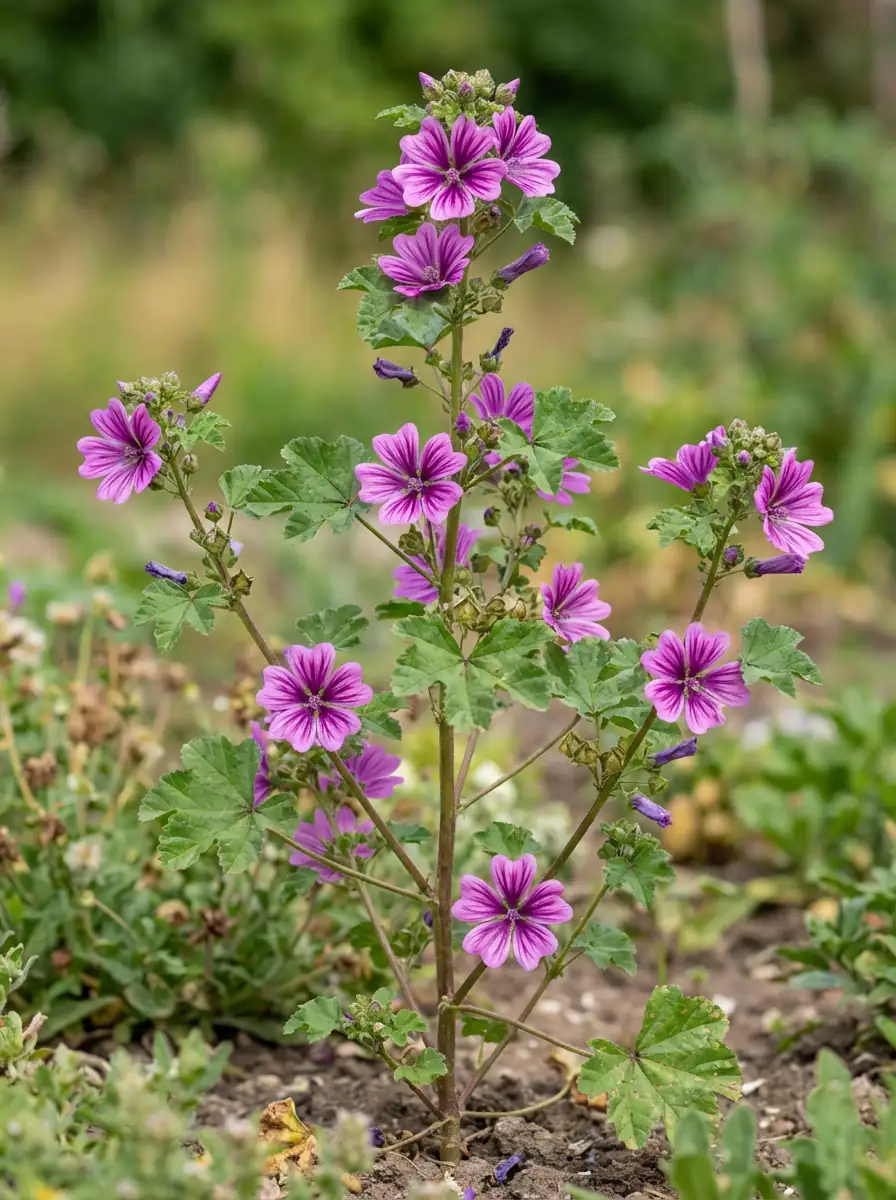
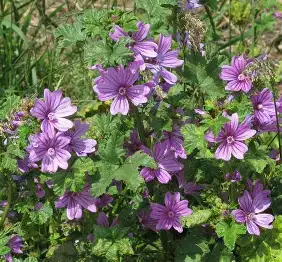
- Size: Typically reaches 60–120 cm (2–4 ft) tall and spreads about 60–90 cm (2–3 ft) wide, forming a bushy clump.
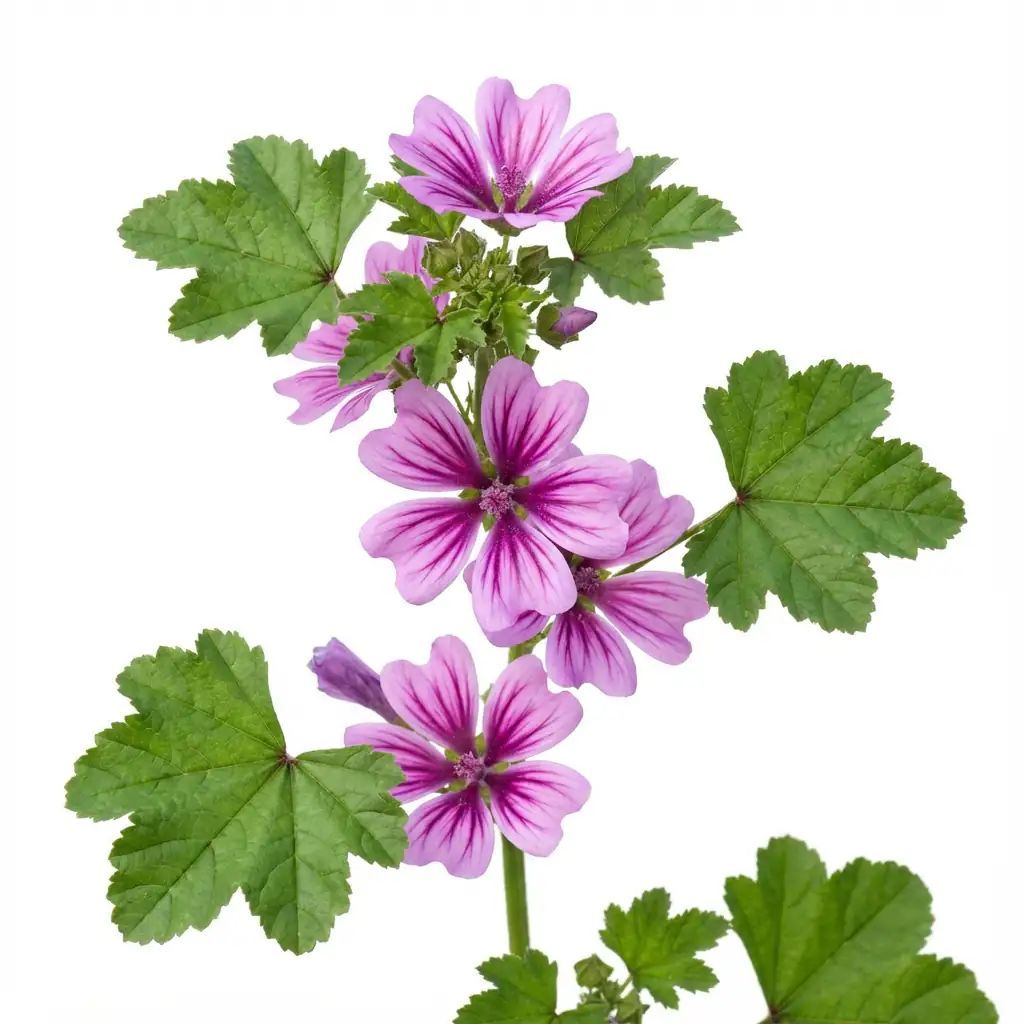
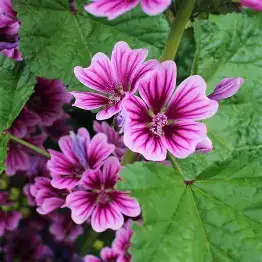
- Foliage: Leaves are soft-textured and slightly hairy, medium green, and palmately lobed—often kidney- to heart-shaped with 5–7 rounded lobes, giving the plant a classic “mallow” look.
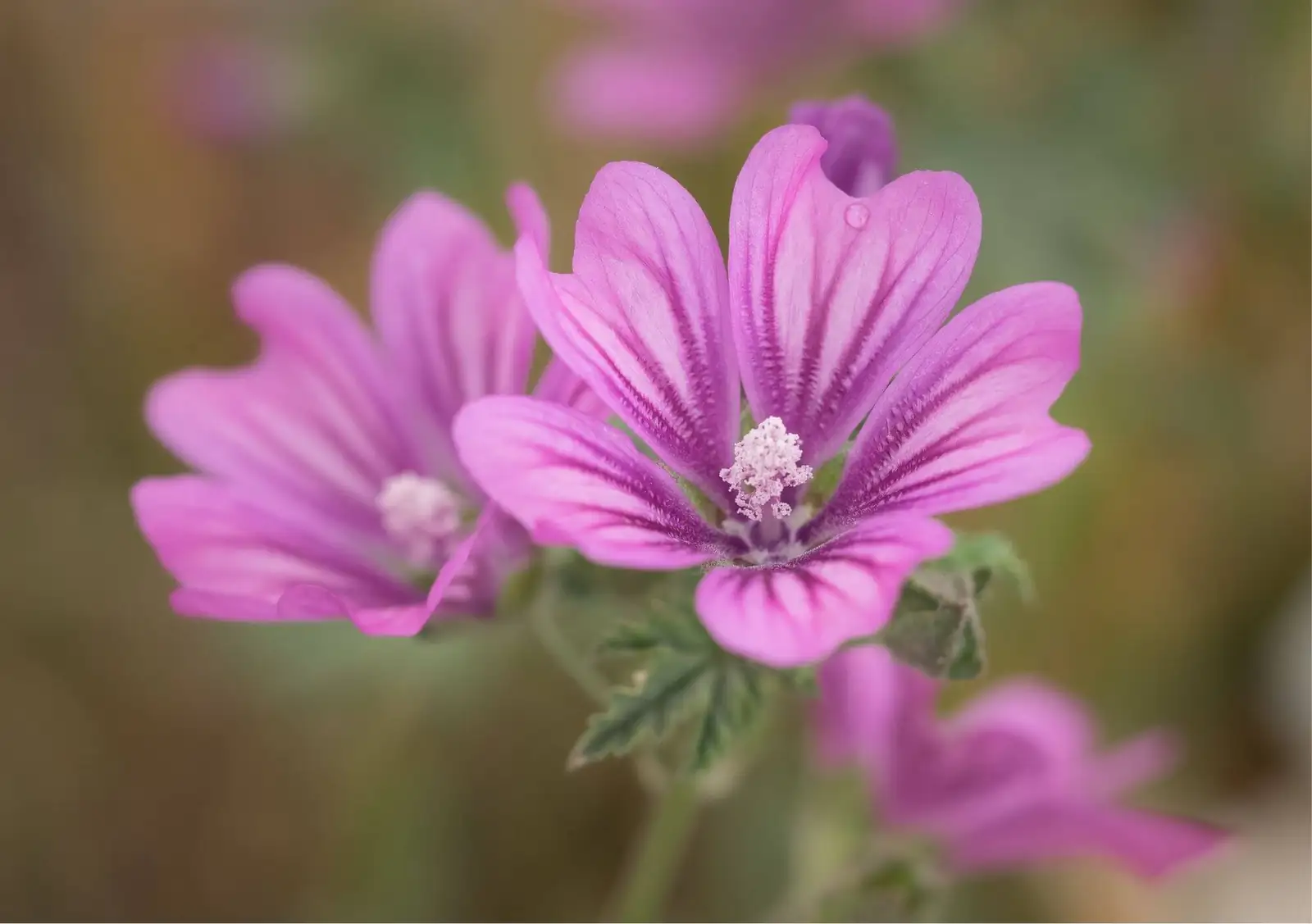
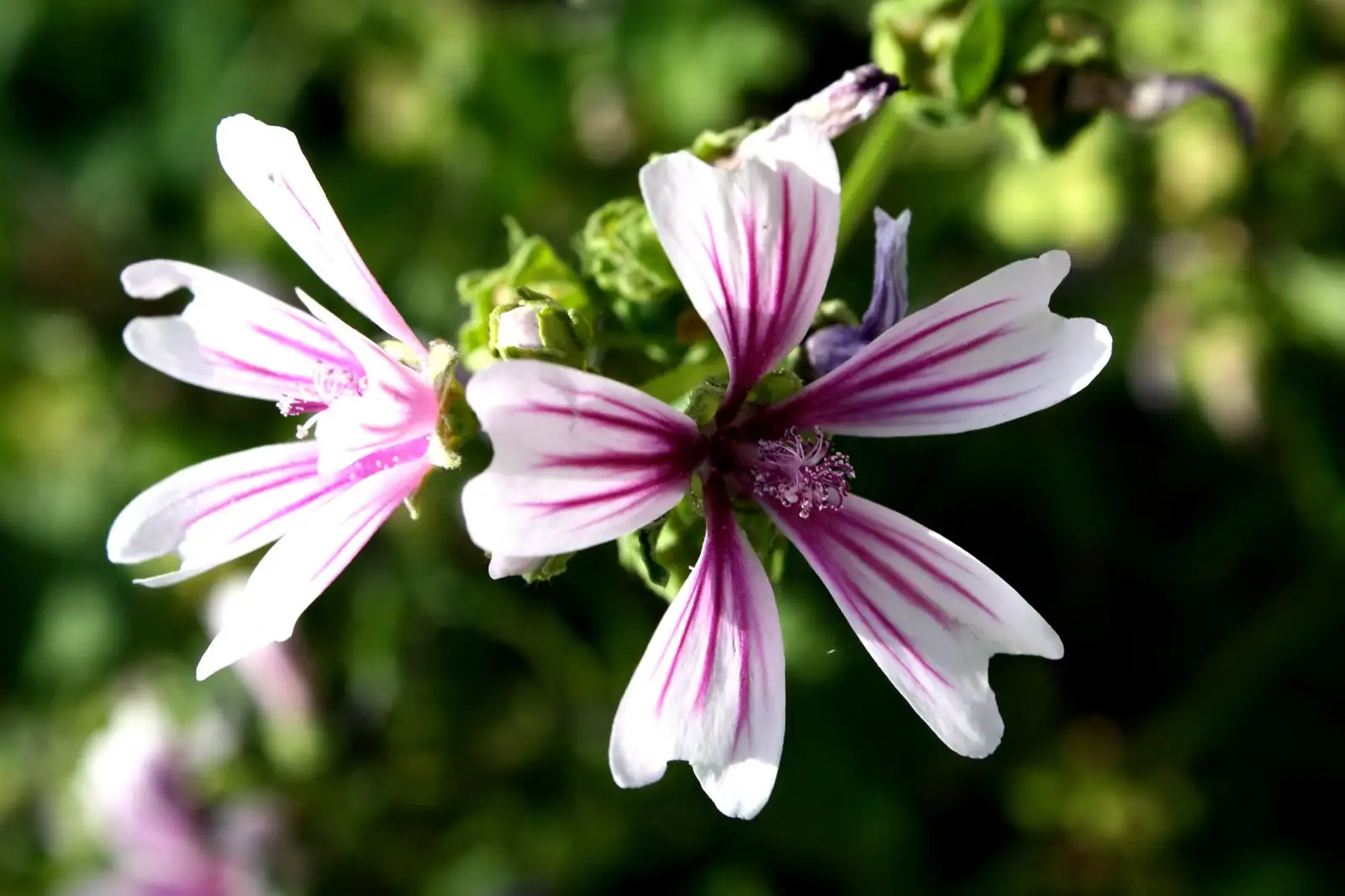
- Flower: Showy, five-petaled flowers about 5 cm (2 in) across, bright rose‑purple with darker purple stripes/veins. Blooms appear singly or in small axillary clusters (often 3–11 flowers) along the stems.
- Flowering Season: Late spring through autumn, roughly May to October (summer to fall peak).
- Growth Habit: Erect, bushy, multi-branched; commonly behaves as a biennial or short-lived perennial and often self-seeds.
Environment
Sunlight
Full sun to part shade; full sun generally gives the richest flower color and the most blooms.
Temperature
Prefers mild to warm growing temperatures around 15–27°C (65–85°F) but is notably tolerant of cold and can handle frost once established.
Humidity
Moderate humidity is ideal (around 40–60%); ensure airflow in humid weather to reduce rust issues.
Soil
Adaptable to many soils as long as drainage is good. Does well in average garden soil and often tolerates sandy or somewhat dry conditions once established.
Placement
Great for beds and borders, cottage gardens, wildflower meadows, and informal areas like roadsides; also suitable for containers with excellent drainage.
Hardiness
Cold hardy; commonly grown in USDA Zones 3–8.
Care Guide
Difficulty
Easy and beginner-friendly—generally low maintenance once it’s settled in.
Buying Guide
Choose plants with fresh green leaves and sturdy stems, avoiding specimens with obvious rust spotting, severe leaf damage, or visible pests. It’s also very straightforward (and often cheaper) to start from seed.
Watering
Water regularly while young (about once a week), then switch to deeper, less frequent watering after establishment—roughly every 10–14 days depending on heat and rainfall. Let the top layer of soil dry between waterings; avoid constantly soggy soil.
Fertilization
Light feeding is plenty: apply a balanced slow-release fertilizer (for example 10-10-10) once a year in early spring or late fall. Over-fertilizing can encourage leafy growth at the expense of flowers.
Pruning
Not strictly necessary. Deadhead spent blooms to prolong flowering and reduce self-seeding if you want a tidier plant. Cut back old stems in early spring to refresh growth; trim during the season if you need to control size.
Propagation
Most commonly grown from seed. Direct-sow outdoors after the last frost, covering seeds lightly (about 3 mm / 1/8 in). In mild-winter areas, fall sowing also works. The plant self-seeds readily. Clumps can also be divided where practical.
Repotting
For containers, use a pot around 40 cm (16 in) wide with strong drainage. Repot every 2–3 years or when rootbound, ideally in spring.
📅 Seasonal Care Calendar
Spring: sow seeds or plant starts; lightly fertilize; cut back old growth. Summer to fall: deadhead to keep blooms coming; water during dry spells. Fall: foliage may die back; allow some seedheads to mature if you want volunteers. Winter: dormant and hardy in cold climates.
Pests, Diseases & Safety
Common Pests & Diseases
Generally trouble-free. Japanese beetles may chew flowers and foliage. The main issue is mallow/hollyhock rust—orange-brown pustules often on leaf undersides, especially in warm, humid weather. Remove infected leaves, avoid overhead watering, improve airflow, and dispose of affected material (don’t compost if rust is severe).
Toxicity
Non-toxic and generally considered safe for people and pets; edible parts are commonly used in food (as with any edible plant, avoid areas treated with pesticides or contaminated soils).
Culture & Symbolism
Symbolism: Often associated with love, protection, and healing; in Victorian flower language it could suggest being “consumed by love.”
History & Legends: Mallow has a deep, old-world reputation as a soothing plant. Ancient Greek writers praised it as a broad remedy, and Pliny the Elder even recommended daily use. Through medieval and early modern Europe it was a familiar household herb, and it has also been cultivated as a vegetable in China for many centuries. It’s even mentioned historically as a famine food in biblical references.
Uses: Ornamental: a relaxed, romantic flower for cottage borders and wildflower-style plantings. Edible: flowers, young leaves, stems, and seeds can be eaten—often added fresh to salads or cooked like leafy greens. Traditional herbal use: leaves, flowers, and roots have been used in folk practices for soothing teas, skin preparations, and comfort for throat and digestive complaints.
FAQ
Is Common Mallow easy to grow?
Yes. It’s adaptable, cold hardy, and usually thrives with minimal fuss as long as the soil drains well and it gets decent light.
How long does Common Mallow bloom?
It can flower for months—often from May to October—especially if you remove spent blooms to encourage more flowers.
Does Common Mallow spread aggressively?
It’s not typically considered invasive, but it does self-seed readily. Deadhead if you want to limit volunteers, or let some seeds mature if you’d like a naturalized look.
Can I eat Common Mallow?
Yes. The leaves and flowers are commonly eaten (fresh or cooked). Harvest from clean, chemical-free areas and try younger leaves for the best texture.
Fun Facts
- Its flat, round seed pods look like tiny wheels of cheese—hence nicknames like “cheeseweed.”
- It’s in the same broader plant family as marshmallow (Althaea officinalis); mucilaginous plant extracts like these inspired early marshmallow-style sweets.
- The genus name is linked to the Greek root for “soft,” a nod to the plant’s soothing texture and traditional use.
- In some traditions, mallow tea (often sweetened with honey) is a classic comfort drink for scratchy throats.