

Plant Features
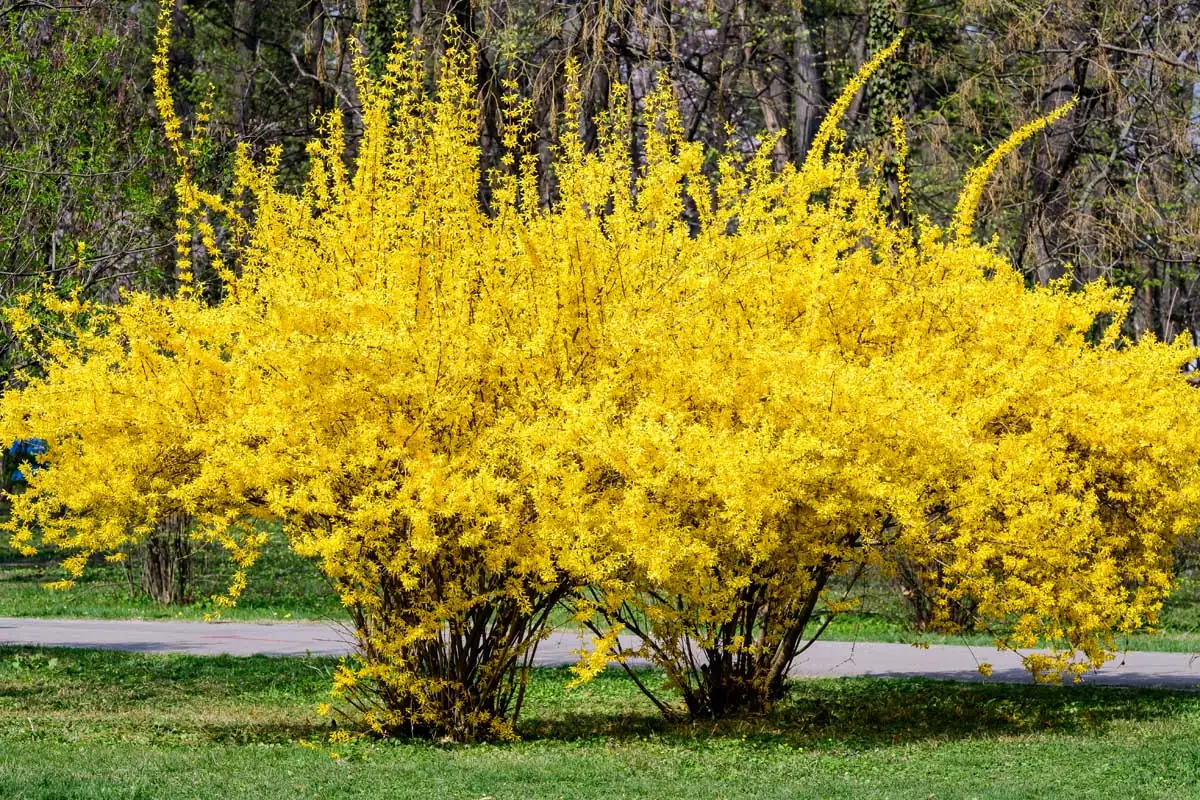
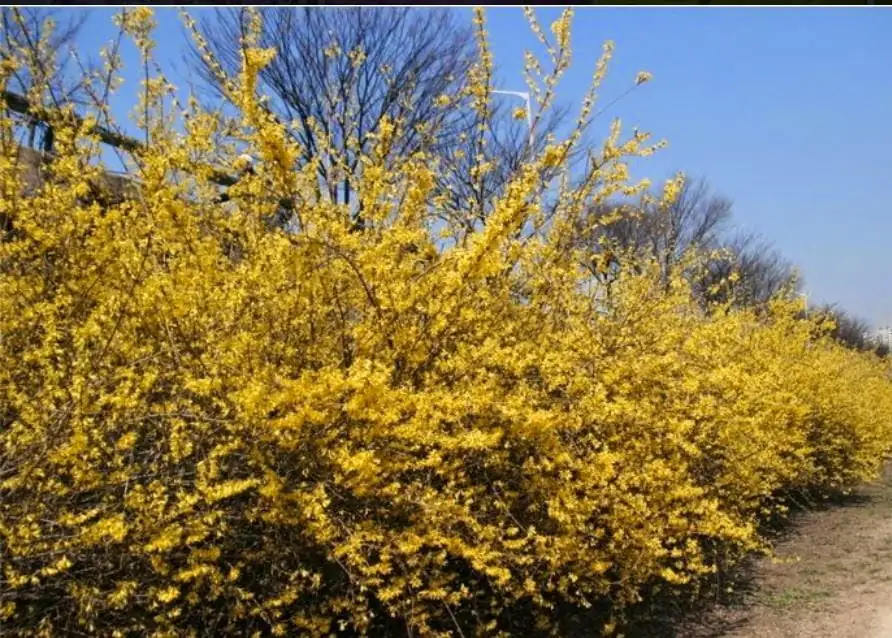
- Size: Deciduous shrub typically 0.6–3.0 m (2–10 ft) tall and 0.9–3.0 m (3–10 ft) wide, depending on variety and pruning
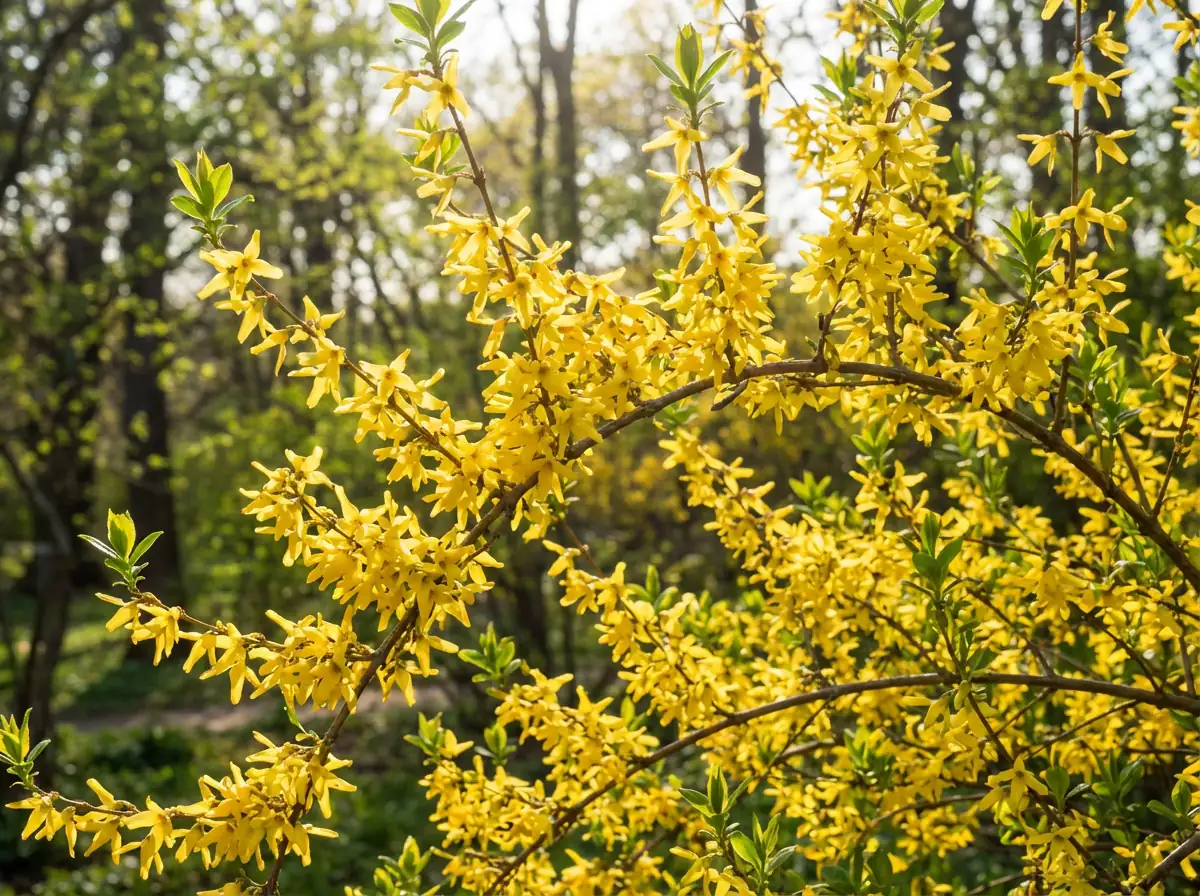
- Foliage: Leaves are simple (sometimes appearing three-parted), ovate to elliptic, about 2–10 cm (0.8–3.9 in) long with serrated edges. They’re usually dark green on top with a paler, yellow-green underside.
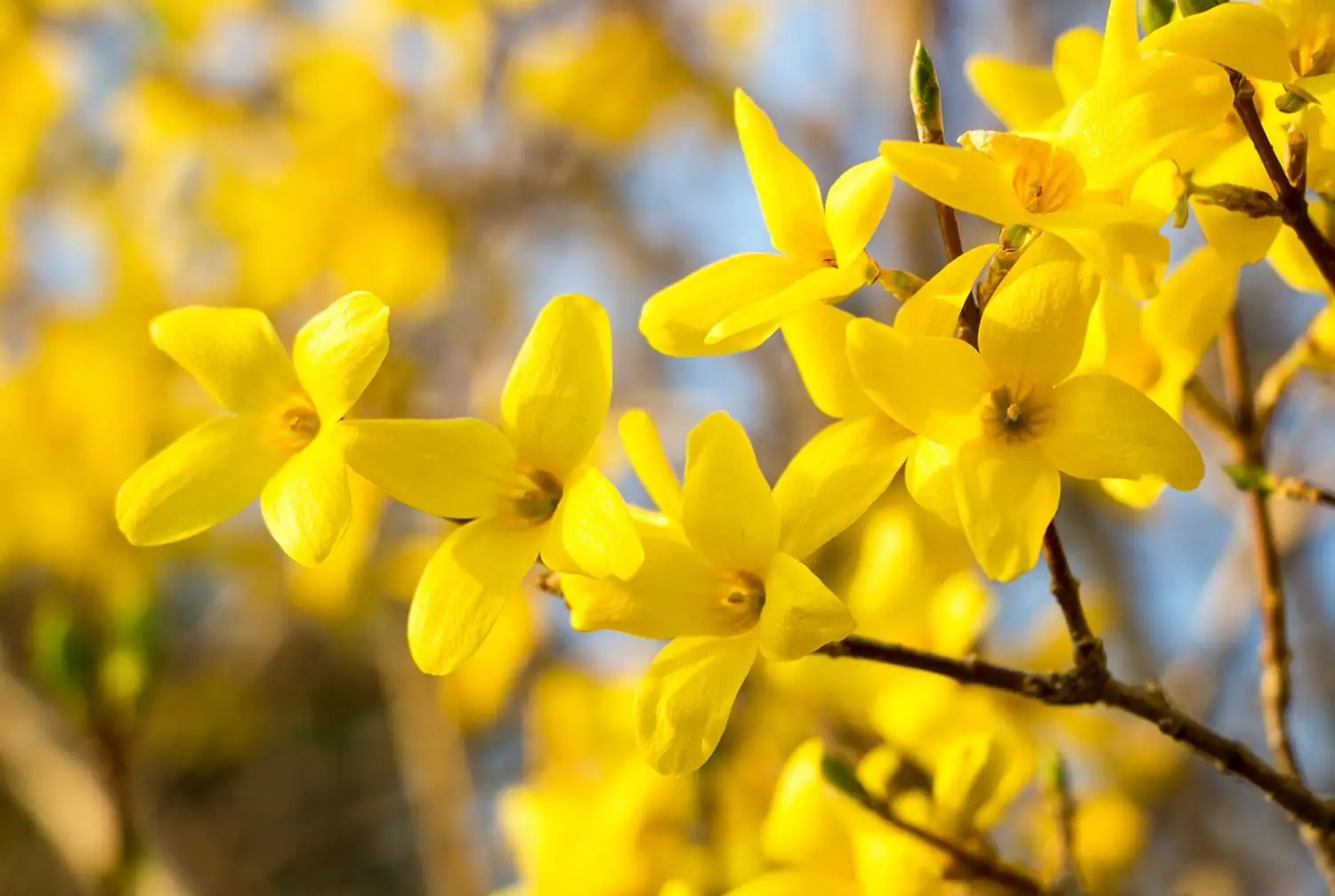
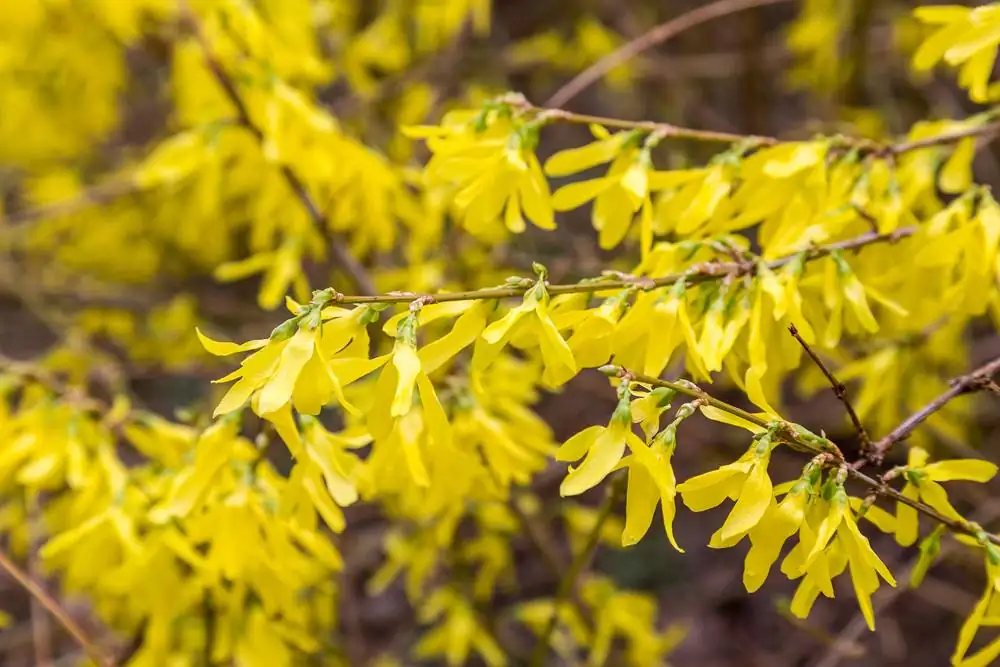
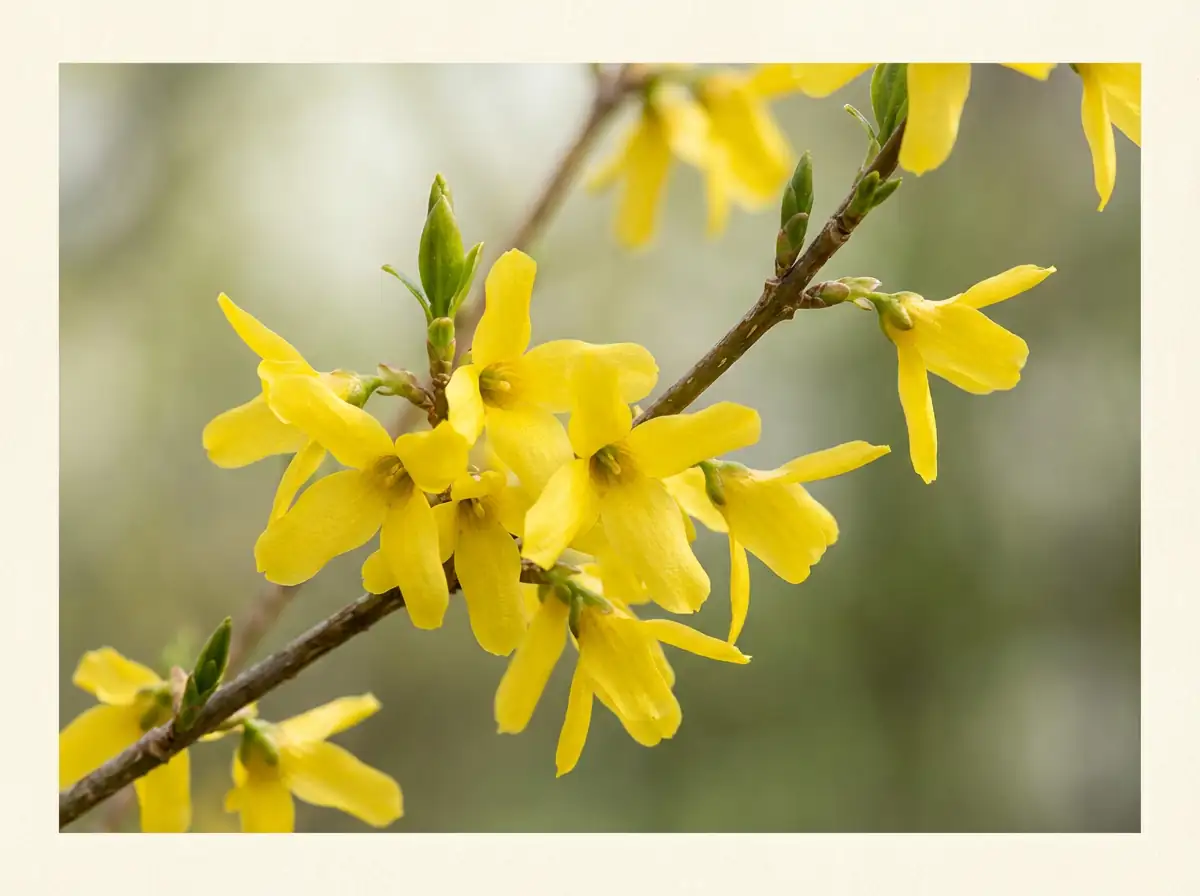
- Flower: Bright golden-yellow, four-lobed flowers about 1–2 cm (0.4–0.8 in) long, appearing in clusters along the stems and opening before the foliage emerges.
- Flowering Season: Early spring (March–April)
- Growth Habit: Vigorous, upright-to-arching shrub with spreading or sometimes weeping branches and a strong root system; stems may root where they touch the ground.
Environment
Sunlight
Full sun is best (aim for 6+ hours/day) for the heaviest bloom, but it will tolerate partial shade (often with fewer flowers).
Temperature
Thrives in temperate climates; very cold hardy. Many garden forsythias grow well in USDA Zones 5–8, with some selections tolerating colder areas (down to Zone 3). Can handle winter lows around −34°C (−30°F) in hardy varieties.
Humidity
Prefers moderate humidity; once established it’s fairly drought-tolerant, though it flowers and looks best with occasional deep watering in prolonged dry spells.
Soil
Adaptable—including clay if drainage is reasonable. Prefers fertile, well-draining soil; tolerates roughly neutral to slightly acidic/alkaline conditions (about pH 6.8–7.7).
Placement
Great for sunny borders, hedges, foundation plantings, slopes (erosion control), large containers (especially dwarf forms), and naturalized edges of woodland gardens.
Hardiness
USDA Zones 5–8 (some varieties 3–9); generally not bothered by cold once established, but late freezes can sometimes damage flower buds.
Care Guide
Difficulty
Easy and beginner-friendly—fast-growing, forgiving, and generally low maintenance once established.
Buying Guide
Choose plants with sturdy, undamaged stems and plenty of healthy buds (especially if buying near bloom time). Avoid shrubs with obvious dieback, galls, or heavy insect activity.
Watering
During establishment, water consistently—about 2.5–5 cm (1–2 in) per week from rain/irrigation. After it’s settled in, it’s moderately drought-tolerant but appreciates deep watering during extended dry periods. Avoid constantly soggy soil to prevent root problems.
Fertilization
Often needs little feeding in decent soil. If growth is weak, apply a balanced, slow-release shrub fertilizer in early spring. Don’t overdo nitrogen—too much can mean lots of leaves and fewer flowers.
Pruning
Prune right after flowering in spring (this protects next year’s buds). Annually remove dead, damaged, or crossing stems. For rejuvenation every 2–3 years, cut about 1/4–1/3 of the oldest canes down to ground level to encourage vigorous new shoots.
Propagation
Very easy to propagate by stem cuttings in spring/early summer; layering is also natural and reliable (stems that touch soil can root). Division and seed are possible, but cuttings/layering are fastest. Rooting hormone can boost success rates.
Repotting
If grown in containers, repot about every 2–3 years in spring using a fresh, well-draining potting mix and a pot with excellent drainage.
📅 Seasonal Care Calendar
Early spring: enjoy flowering; protect buds from late frosts if possible. Late spring: prune immediately after bloom. Summer: water during drought and keep an eye out for aphids and other pests. Fall: a great planting time; mulch to buffer winter temperature swings. Winter: dormant—structure is visible, and in milder regions bare-root planting can work.
Pests, Diseases & Safety
Common Pests & Diseases
Usually trouble-free. Possible issues include aphids, Japanese weevils, nematodes, crown gall, and twig blight. Good airflow, avoiding frequent overhead watering, and promptly removing infected stems help keep problems minor.
Toxicity
Generally regarded as non-toxic to humans and common pets (dogs and cats) in typical household/garden exposure.
Culture & Symbolism
Symbolism: A classic symbol of early spring: hope, renewal, and bright anticipation after winter. It’s also associated with good fortune and prosperity in Chinese cultural contexts, and its “first bloom” energy makes it a favorite for welcoming the new season.
History & Legends: The genus was named to honor William Forsyth, an 18th-century Scottish botanist. In East Asia, forsythia has long been valued beyond ornament—its fruit (连翘) has been used in Traditional Chinese Medicine for centuries. A common bit of folk wisdom says that after forsythia blooms, winter may still have a few last “snowy surprises.”
Uses: Ornamental: prized for early spring color in borders, hedges, and mass plantings. Environmental: useful on slopes for erosion control thanks to its robust rooting. Medicinal (Traditional Chinese Medicine): the dried fruit (连翘) is used in herbal formulas traditionally associated with clearing heat and supporting recovery from febrile conditions. Other: seeds have been reported as a source of oil used in niche culinary/industrial contexts (e.g., cosmetics/soaps), though ornamental cultivation is by far the most common use in gardens.
FAQ
Why isn’t my forsythia blooming?
Most often it’s due to too little sun (aim for 6+ hours), pruning at the wrong time (always prune right after flowering), winter damage to buds, an older shrub that needs rejuvenation pruning, or heavy nitrogen fertilizer pushing leafy growth instead of blooms.
When is the best time to plant forsythia?
Fall or early spring while the plant is dormant. Fall planting is especially helpful because roots can settle in before the next growing season.
How fast does forsythia grow?
It’s famously fast—under good conditions it can add up to about 60 cm (24 in) of growth in a year.
Can forsythia be grown in containers?
Yes—dwarf varieties do best. Use a large pot with drainage holes, a well-draining mix, full sun, and steady watering (containers dry out faster). Repot every 2–3 years.
How do I force forsythia branches to bloom indoors?
Cut stems with plump buds about 2–4 weeks before outdoor bloom. Recut the base at an angle, place in lukewarm water in bright light, and refresh the water every few days. Blooms usually open in about 1–2 weeks.
Fun Facts
- Forsythia often flowers while snow is still on the ground, making it a true “spring alarm clock” in the garden.
- Its flowers are brilliantly showy even though they offer little to no nectar—yet they still draw attention from early-season insects looking for resources.
- Branches that bend to the soil can root on their own, so an old plant may slowly “wander” outward over time.
- Forsythia stems are characteristically hollow between nodes, with solid pith at the nodes.


