Plant Features
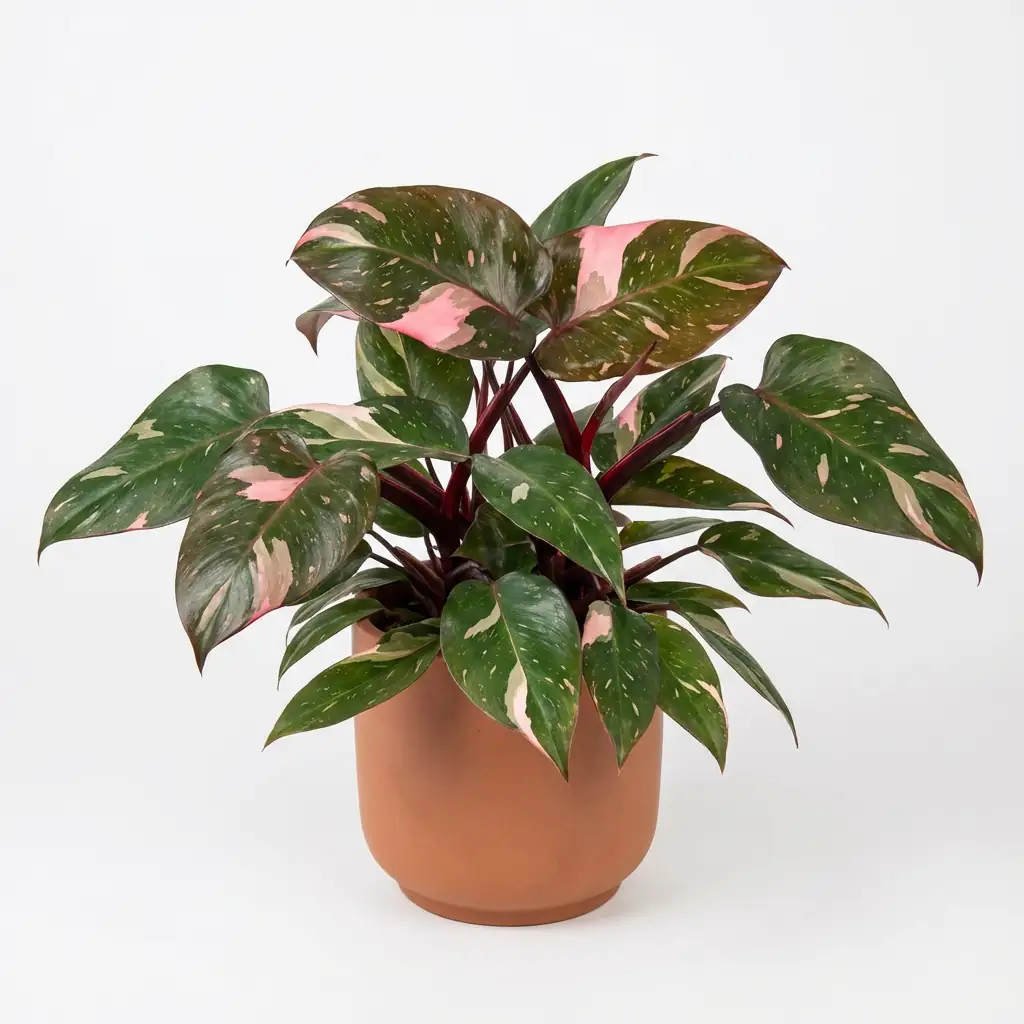
- Size: Indoors, typically reaches 90–150 cm (3–5 ft) tall and about 30–60 cm (1–2 ft) wide, depending on support and conditions.
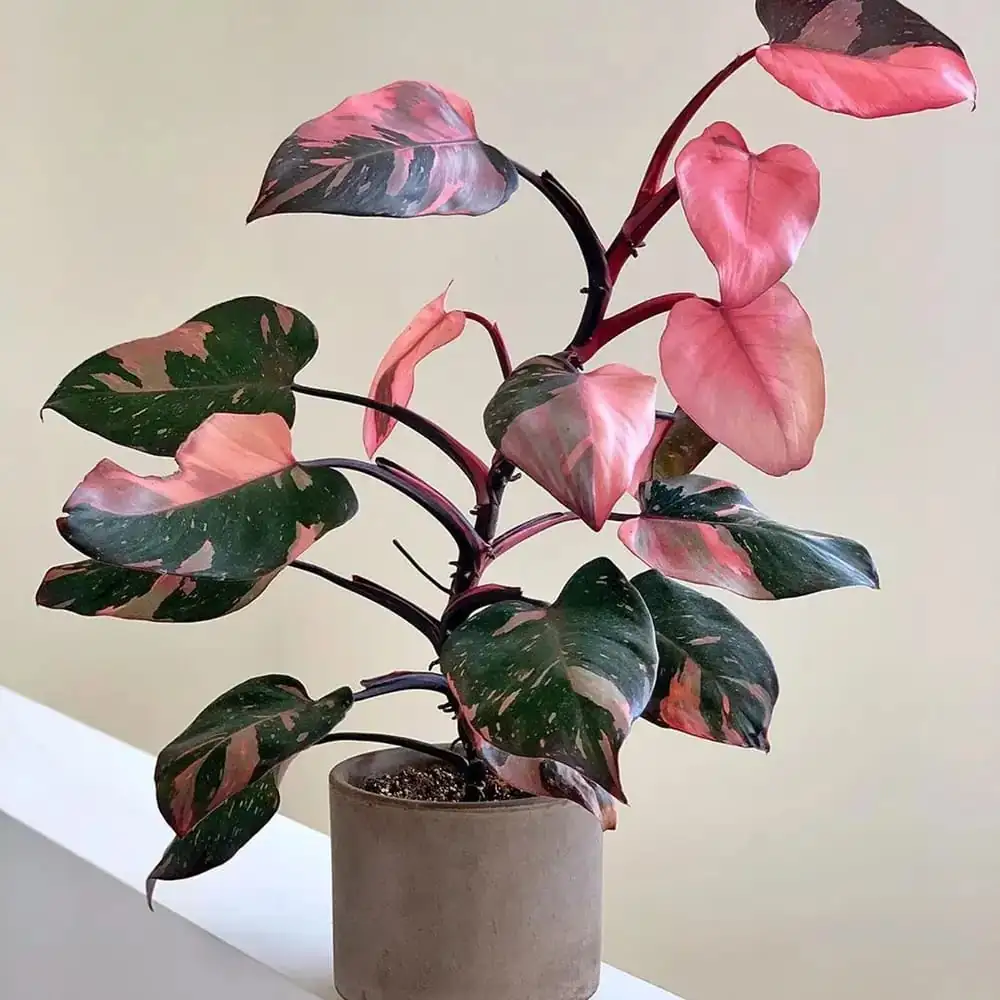
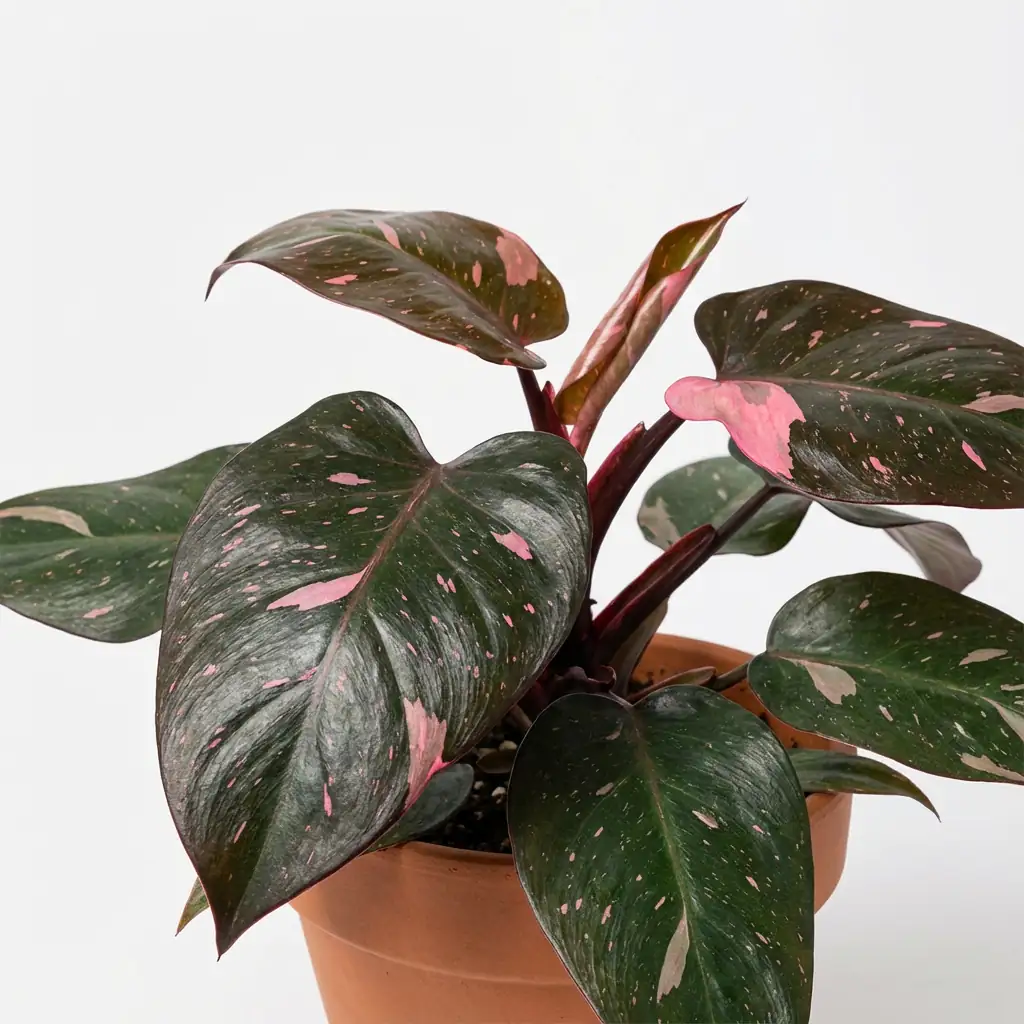
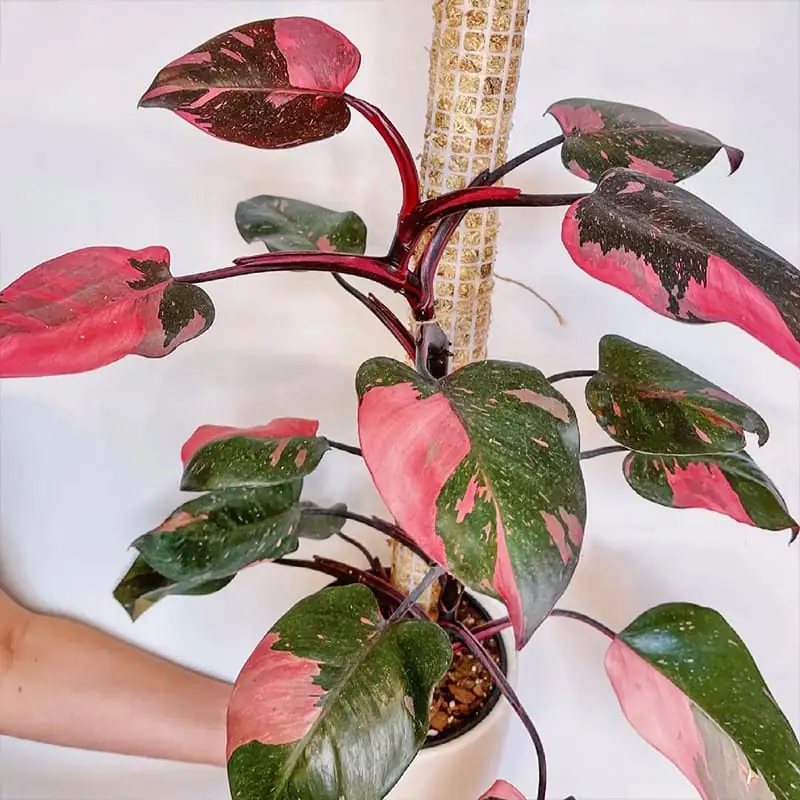
- Foliage: Glossy, heart-shaped to oval leaves with a deep green to near-black base and irregular pink variegation ranging from soft blush to bright fuchsia. Veins can stand out strongly, creating a dramatic pattern where green and pink meet. The pink portions are more delicate because they contain less chlorophyll.
- Flower: Rare indoors. When it does flower, it produces a typical aroid bloom: a pale spadix surrounded by a purple-red to reddish spathe—interesting, but far less showy than the foliage.
- Flowering Season: Spring to summer (rare in indoor cultivation)
- Growth Habit: Climbing/trailing aroid that grows upward with support; develops better-sized leaves when trained on a moss pole or trellis. Can also be grown as a freer trailing plant if allowed to spill.
Environment
Sunlight
Bright, indirect light is ideal. Too little light encourages greener growth and can reduce pink variegation; harsh direct sun can scorch leaves—especially the pink sections.
Temperature
Prefers 18–27°C (65–80°F). Keep above 15°C (60°F); avoid cold drafts and any frost.
Humidity
Likes higher humidity, ideally 50%+; adapts to average indoor humidity but grows best with a humidifier, pebble tray, or other humidity support.
Soil
A chunky, well-draining aroid mix that stays airy: for example, peat-based potting mix + perlite + orchid bark in roughly equal parts (1:1:1). Good drainage is essential to prevent root rot.
Placement
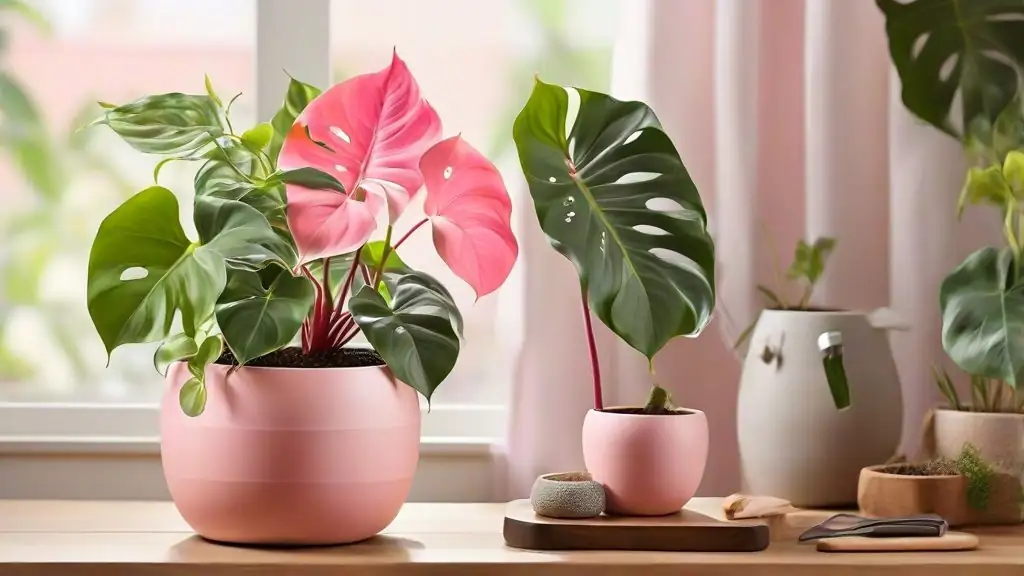
A bright spot out of direct sun—near an east window or set back from a south/west window with a sheer curtain. Great for living rooms, bedrooms, and offices; add a moss pole if you want larger, more mature leaves.
Hardiness
USDA Zone 10–12 outdoors; commonly grown as an indoor plant in most climates.
Care Guide
Difficulty
Moderate. Easy enough to keep alive with standard philodendron care, but getting strong, stable variegation and handsome growth takes consistent bright light and good conditions.
Buying Guide
Choose plants with healthy, glossy leaves and visible (but not damaged) pink variegation, plus short, compact node spacing. Check carefully for pests (especially mealybugs and scale) and look for a healthy root system if possible. Avoid suspiciously “all pink” plants marketed as Pink Princess—these may be the chemically induced ‘Pink Congo’ type, which typically reverts and is not the same plant. Buying from reputable sellers greatly improves your odds of getting authentic Pink Princess.
Watering
Water when roughly the top half of the potting mix has dried. As a general rhythm, this may be about weekly in spring/summer and every 1–2 weeks in fall/winter, but always judge by soil dryness and your home conditions. Thoroughly water until it drains, then empty the saucer—soggy soil invites root rot. Slight drooping can be a sign it’s thirsty, while persistent yellowing and mushy stems often point to overwatering.
Fertilization
Feed about once a month in spring and summer with a balanced liquid fertilizer (for example 20-20-20) diluted to half strength. Slow down or pause feeding in winter when growth naturally slows.
Pruning
Trim back leggy growth and remove yellow or damaged leaves to keep the plant tidy. Make cuts just above a node using clean, sharp shears. Pruned stems with nodes can be reused for propagation.
Propagation
Stem cuttings are the go-to method. Take a cutting with at least 1–2 nodes (often with 2–3 leaves), remove the lowest leaves, and root in water or in moist sphagnum/perlite. Keep warm and in bright, indirect light. Roots often form in about 2–4 weeks; pot up once roots are around 2.5–5 cm (1–2 in) long. Rooting hormone is optional but can help.
Repotting
Repot every 1–2 years, or when roots circle the pot and emerge from drainage holes. Step up only slightly (about 2.5–5 cm / 1–2 in wider). Spring is ideal. Use a pot with drainage and refresh with a well-aerated mix.
📅 Seasonal Care Calendar
Spring: active growth—repot, propagate, and resume regular feeding; water a bit more as days brighten. Summer: keep bright indirect light, steady watering, and higher humidity; protect from direct sun. Fall: growth slows—reduce feeding and water a bit less. Winter: minimal growth—water sparingly, keep warm, and avoid drafts; feeding is usually unnecessary.
Pests, Diseases & Safety
Common Pests & Diseases
Common pests include mealybugs, spider mites, scale, aphids, and fungus gnats. Treat early with insecticidal soap, neem oil, or spot-treatment with diluted rubbing alcohol (especially for mealybugs/scale). The most common disease issue is root rot from overwatering or heavy soil; improve drainage and let the mix partially dry between waterings. Good airflow and avoiding wet foliage for long periods help prevent fungal spotting.
Toxicity
Toxic if ingested by humans and pets (cats and dogs). Like many aroids, it contains calcium oxalate crystals that can cause mouth/throat irritation, drooling, and digestive upset. Sap may irritate sensitive skin—wash hands after pruning.
Culture & Symbolism
Symbolism: Often associated with rarity, individuality, and a bit of “collector’s pride,” thanks to its unpredictable, one-of-a-kind pink patterns.
History & Legends: Pink Princess is a cultivated form selected for its stable pink variegation, commonly described as being developed through selective breeding in the 1970s. Its parent species, Philodendron erubescens, comes from tropical South America (commonly cited from Colombia, with related native range extending into nearby regions).
Uses: Primarily an ornamental indoor foliage plant and a standout statement piece for plant collectors. Like many leafy houseplants, it can contribute modestly to a fresher-feeling indoor space when grown well (though it’s not a substitute for ventilation).
FAQ
Why is my Pink Princess losing its pink variegation?
Low light is the most common reason—give brighter, indirect light. Also note that stems can produce greener leaves naturally; if a vine starts putting out mostly green leaves, pruning back to a node with better variegation can help guide future growth.
Why is it growing slowly or making small leaves?
Usually it needs more light, support (like a moss pole), nutrients during the growing season, or a repot if it’s root-bound. Consistent warmth and humidity also improve leaf size.
Why are leaf edges turning brown?
Common causes are low humidity, inconsistent watering, or mineral buildup from hard tap water. Raise humidity and consider filtered, rain, or distilled water if buildup is an issue.
Why do brown spots appear on the pink parts?
Pink tissue burns more easily because it has less chlorophyll. This is often sun scorch from too much direct light or a sudden jump in brightness—move it to gentler, filtered light.
Is it normal for older leaves to drop?
Some lower leaf loss is normal over time. If it’s dropping lots of leaves quickly, check for overwatering, cold stress, pests, or poor light.
Fun Facts
- Each leaf’s pink pattern is naturally unique because it comes from variegation rather than a paint-like pigment layer.
- New leaves often emerge with the brightest pink, then may deepen or slightly fade as they harden off.
- A moss pole can encourage larger, more mature leaves compared with a fully trailing setup.
- During the 2020–2021 houseplant boom, Pink Princess prices spiked dramatically—especially for highly variegated specimens.
- It’s in the Araceae family, making it a close relative of Monstera, Anthurium, and peace lilies.