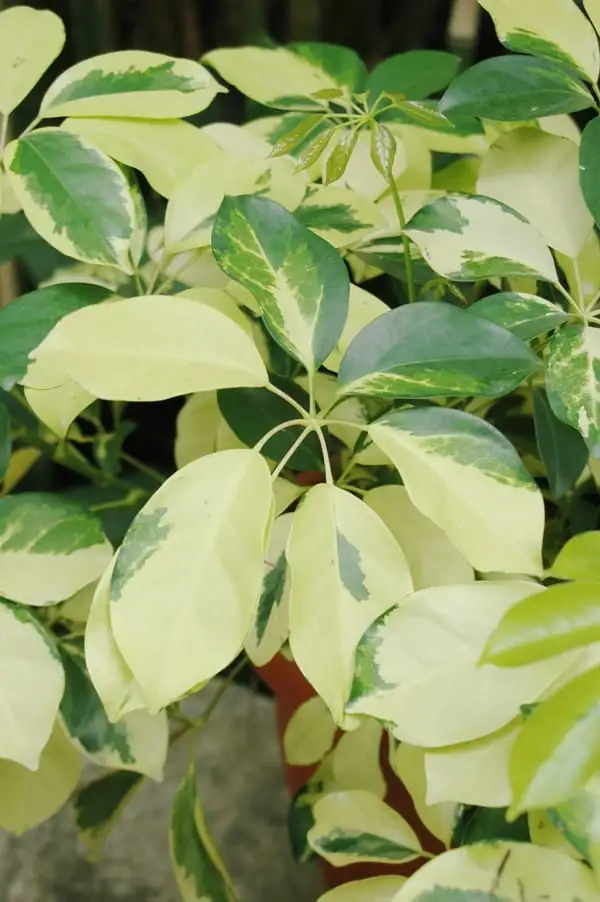
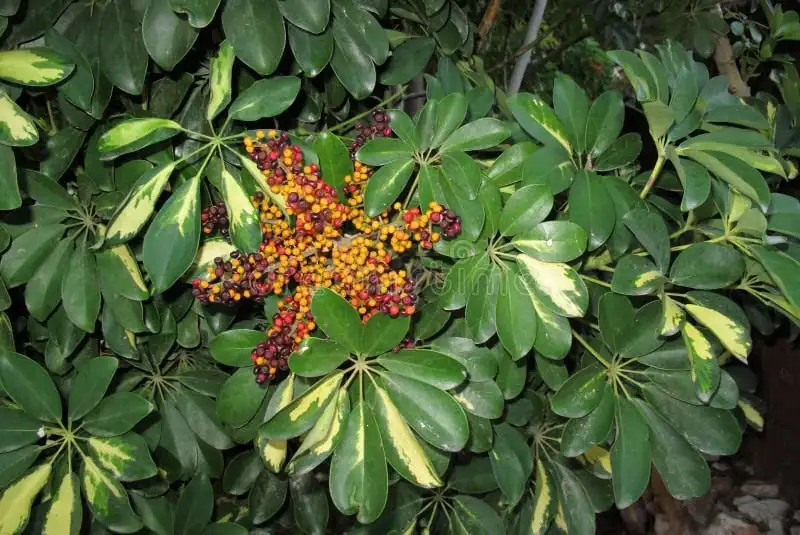
Plant Features
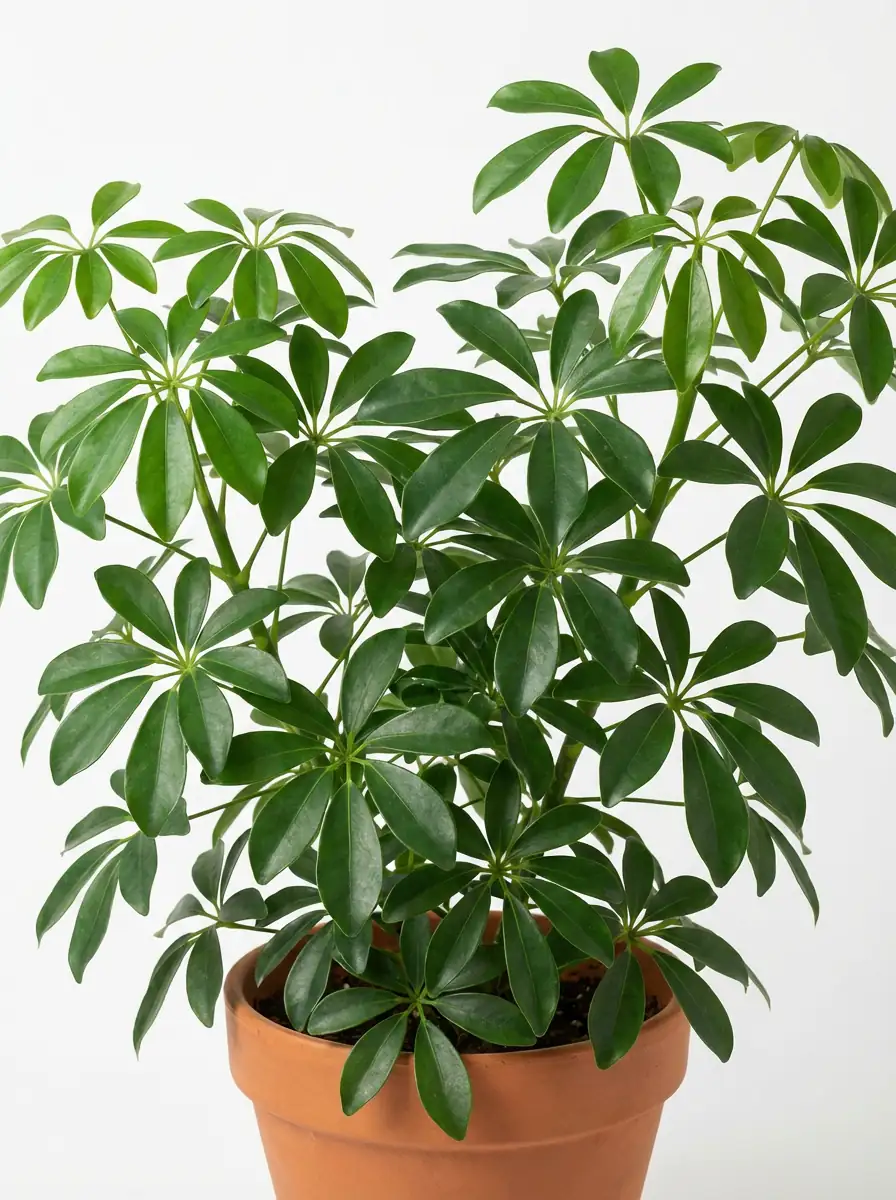
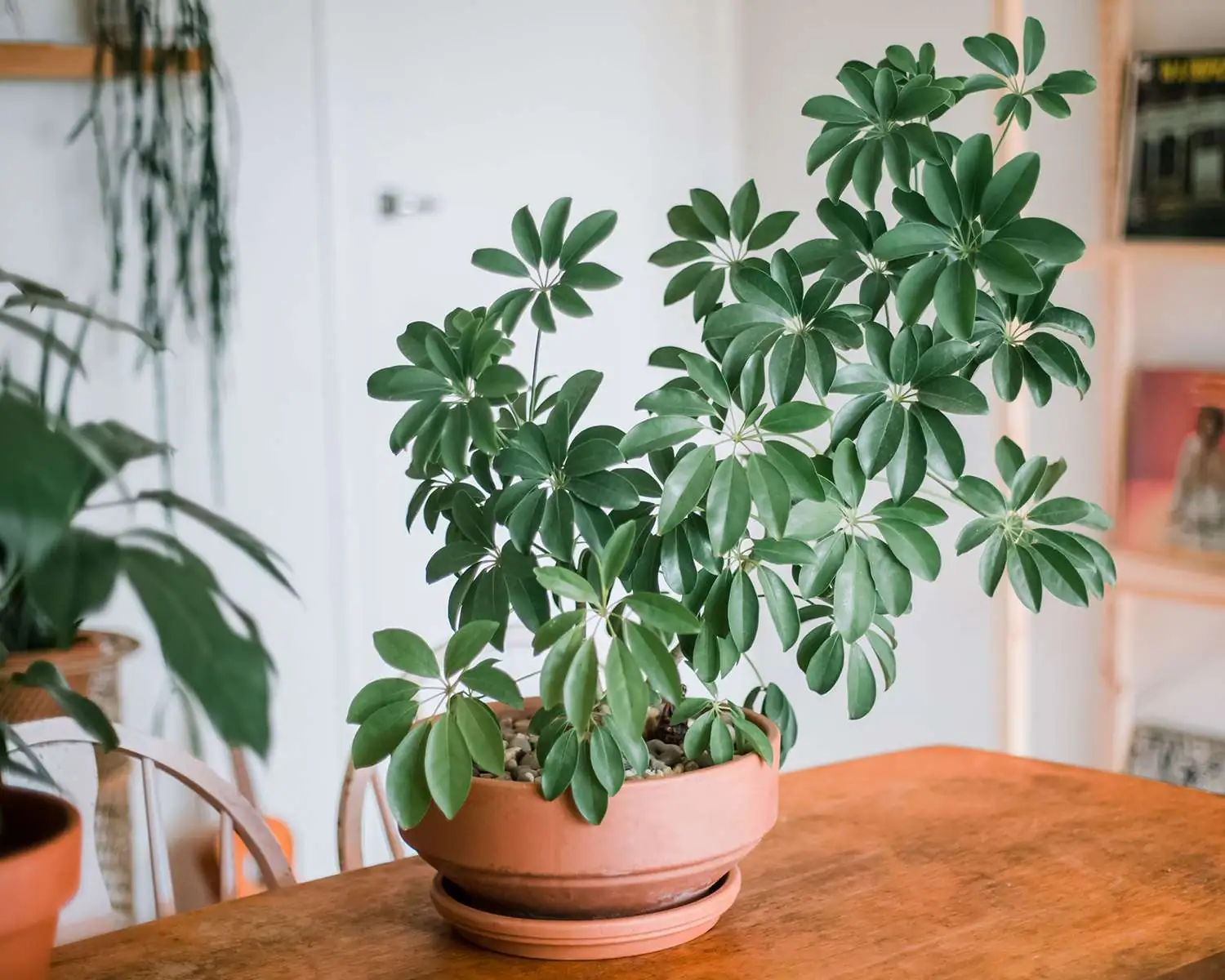
- Size: Indoors typically 1.2–1.8 m (4–6 ft) tall and about 0.9–1.8 m (3–6 ft) wide; outdoors it can reach around 7.6 m (25 ft) or more in warm climates.
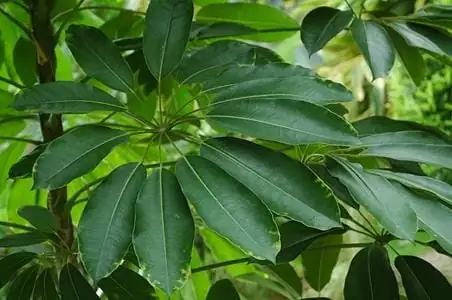
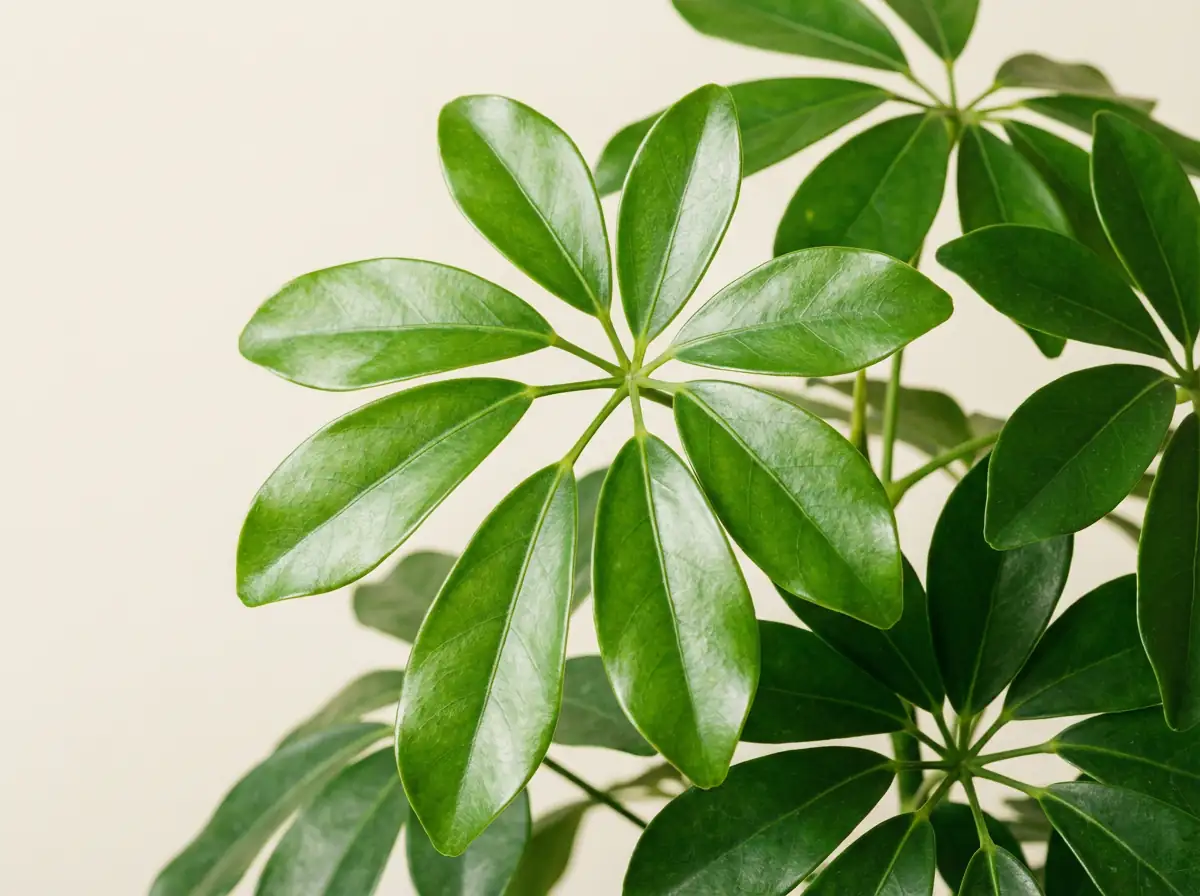
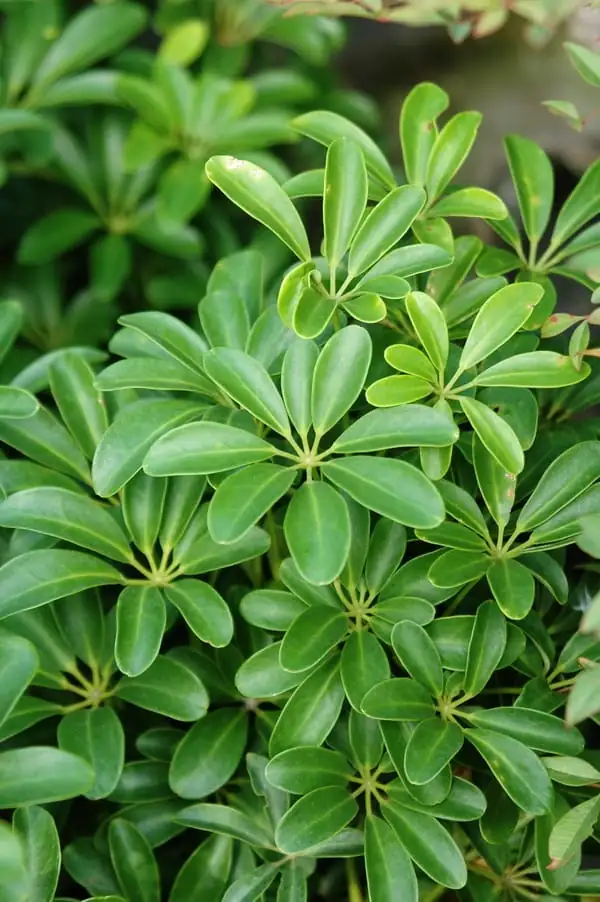
- Foliage: Palmate compound leaves with usually 7–9 glossy, oval leaflets arranged like fingers on a hand. Leaflets are leathery, dark green, and typically about 10–15 cm (4–6 in) long, radiating from a central stalk for the plant’s signature “umbrella” look.
- Flower: Produces small white flowers in branching clusters (panicles), sometimes lightly fragrant; flowering is uncommon indoors and is mainly seen on outdoor plants in suitable climates.
- Flowering Season: Summer (mainly outdoors)
- Growth Habit: Upright, multi-branched evergreen shrub/small tree. Can be shaped into a single-trunk standard or maintained as a fuller, bushier plant through regular tip-pruning.
Environment
Sunlight
Best in bright, indirect light. It tolerates medium to low light (with slower growth and possible legginess). Avoid harsh direct sun, which can scorch leaves; an east/west window or filtered south light is ideal.
Temperature
Prefers 15–24°C (60–75°F). Can handle warmer conditions up to about 32°C (90°F) if watered appropriately. Protect from chills and drafts; avoid prolonged exposure below 10°C (50°F), and keep consistently above about 15°C (60°F) for best performance indoors.
Humidity
Comfortable in average indoor humidity, but looks best with moderate humidity—around 30–40% or higher. Very dry air can contribute to brown tips and spider mite issues.
Soil
Rich, well-draining potting mix (loamy) with good aeration; slightly acidic to neutral is fine. Drainage is crucial to prevent root rot—use a pot with drainage holes and avoid waterlogging.
Placement
Great for living rooms, offices, bedrooms, and bright public interiors (lobbies, libraries). In warm months it can vacation outdoors on a shaded patio or under dappled light—bring it back inside before temperatures drop.
Hardiness
USDA Zones 10–12; not frost-tolerant.
Care Guide
Difficulty
Easy and forgiving—excellent for beginners. Most problems come from too much water, too little light, or cold drafts.
Buying Guide
Choose a plant with lush, glossy leaves and sturdy stems. Avoid specimens with lots of yellowing, brown spots, sticky residue (pests), or a sour smell from the pot (possible rot). A compact, well-branched shape is a good sign of healthy growth.
Watering
Water when the top 2.5 cm (1 in) of soil feels dry. Typically this is about once a week in active growth, less in winter. Water thoroughly until excess drains, then empty the saucer. Avoid constant sogginess (a common cause of yellow leaves and root rot), but also don’t let the pot go bone-dry for long stretches.
Fertilization
Feed during spring and summer with a balanced liquid houseplant fertilizer (follow label rates). This plant responds well to regular feeding during active growth; reduce or stop feeding in fall and winter when growth slows. Slow-release fertilizer pellets can also be used according to the product directions.
Pruning
Prune in spring to control height and encourage branching. Cutting back leggy stems prompts multiple new shoots below the cut, making the plant fuller and bushier. Remove weak or damaged growth any time.
Propagation
Commonly propagated from stem cuttings in spring. Take a 15 cm (6 in) cutting, remove lower leaves, optionally dip in rooting hormone, then root in moist potting mix in warm, bright indirect light. Humidity (a loose plastic cover with ventilation) speeds rooting. Cuttings can also be rooted in water, then potted up once roots are established.
Repotting
Repot about once a year or when rootbound, ideally in spring. Move up one pot size—about 2.5–5 cm (1–2 in) wider—and ensure strong drainage. Keeping it slightly snug in its pot can help limit overly fast, lanky growth.
📅 Seasonal Care Calendar
Spring: Repot, prune, and propagate; gradually increase watering and feeding. Summer: Keep in bright indirect light, water as needed, and maintain moderate humidity; can move outdoors to shade. Fall: Reduce watering and taper off fertilizer. Winter: Water sparingly, keep warm (away from drafts), and provide the brightest indoor spot you have (bright light helps prevent leaf drop and legginess).
Pests, Diseases & Safety
Common Pests & Diseases
Watch for spider mites (especially in dry air), mealybugs, scale, and aphids—treat early with insecticidal soap or neem oil and improve humidity/air circulation. Overwatering can lead to root rot and yellowing. Leaf spot issues (including bacterial and fungal spots such as Alternaria) are helped by avoiding overhead watering, removing affected leaves, and using an appropriate copper-based fungicide if necessary.
Toxicity
Toxic if chewed or swallowed (especially for cats and dogs). The plant contains calcium oxalate crystals, which can cause mouth and throat irritation, drooling, vomiting, and gastrointestinal upset. Sap may also irritate sensitive skin. Keep out of reach of pets and small children.
Culture & Symbolism
Symbolism: Often associated with harmony and a fresh, welcoming home. In Feng Shui, it’s popularly linked with attracting prosperity—its “hand-like” leaflets are said to help ‘gather’ good fortune from many directions.
History & Legends: Widely used as a Feng Shui houseplant in Chinese culture, sometimes described as a plant that helps “activate” a space. It has also been mentioned in folk/traditional use contexts for various ailments (note: ornamental use is most common today, and medicinal use should be approached cautiously and under professional guidance).
Uses: Primarily grown as an ornamental indoor foliage plant for homes and offices. It’s also commonly marketed as an air-freshening houseplant due to its association with reducing certain indoor pollutants. In some regions, the wood has been used for small wood products.
FAQ
Why is my umbrella tree dropping leaves?
Leaf drop usually means stress: sudden temperature changes, cold drafts, inconsistent watering, or a big change in light. Keep it warm (ideally above 15°C/60°F), water only when the top layer dries, and avoid moving it around repeatedly.
How often should I water an Umbrella Tree?
Water when the top 2.5 cm (1 in) of soil is dry. For many homes that’s roughly weekly in spring/summer and less often in winter—always adjust to your room conditions and pot size.
Can it live in low light?
Yes, it can survive in lower light, but it will grow more slowly and may become leggy. If light is low, water less often and rotate the plant occasionally so it grows more evenly.
Is Umbrella Tree safe for pets?
No. It’s considered toxic to cats and dogs if chewed. Place it completely out of reach or choose a pet-safe plant if your pets like to nibble greenery.
How do I make it bushier?
Prune the tips of long stems in spring. New shoots typically sprout below the cut, creating a fuller, bushier shape over time.
Fun Facts
- The species name “arboricola” roughly means “tree-dwelling.”
- It rarely flowers indoors, but in warm outdoor conditions it can produce clusters of small white blooms.
- With good care, an Umbrella Tree can live for decades and become a striking indoor “mini tree.”
- Its umbrella-like leaf pattern is the reason behind many of its common names, including Parasol Plant and Octopus Tree.